

 Christian Ryan
Have you ever wondered why kangaroos and koalas can only be found in Australia? Did you know that mosquitos did not live in Hawaii until relatively recently? Did you also know that, before Europeans arrived in the Americas, no one on the continent had ever seen a dandelion, a house sparrow, or wheat? These are all questions relating to the field of study called biogeography!
The views expressed in this article reflect those of the author, and not necessarily those of New Creation.
Biogeography is the study of where we find different species of living things and how they came to be there. This field of study is especially important to creationists, because we know that every living thing on the planet today descended from the relatively small number of survivors of a world-destroying Flood in the days of Noah. That means the distribution of plants and animals we see today is the result of their ancestors multiplying and spreading around the world. Today, a great variety of lifeforms fill every corner of the world. How did they reach the places where we find them today? Biogeography can help us solve this mystery.
Where You Live and How You Got There
The word “biogeography” is a portmanteau of bio (meaning “life”) and geography (referring to the study of lands, features, and inhabitants of the Earth). Putting these ideas together, we understand that biogeography is the study of where species live and how they got there.
This is a tantalizing question for biologists because living things flourish everywhere across the planet’s surface. But we don’t see lifeforms evenly distributed across the Earth. Some plants and animals are widely distributed, while others only live in certain continents or islands separated by great expanses of water. This means that where many plants and animals live doesn’t seem to make sense, at least at first glance.
Disjunct Populations
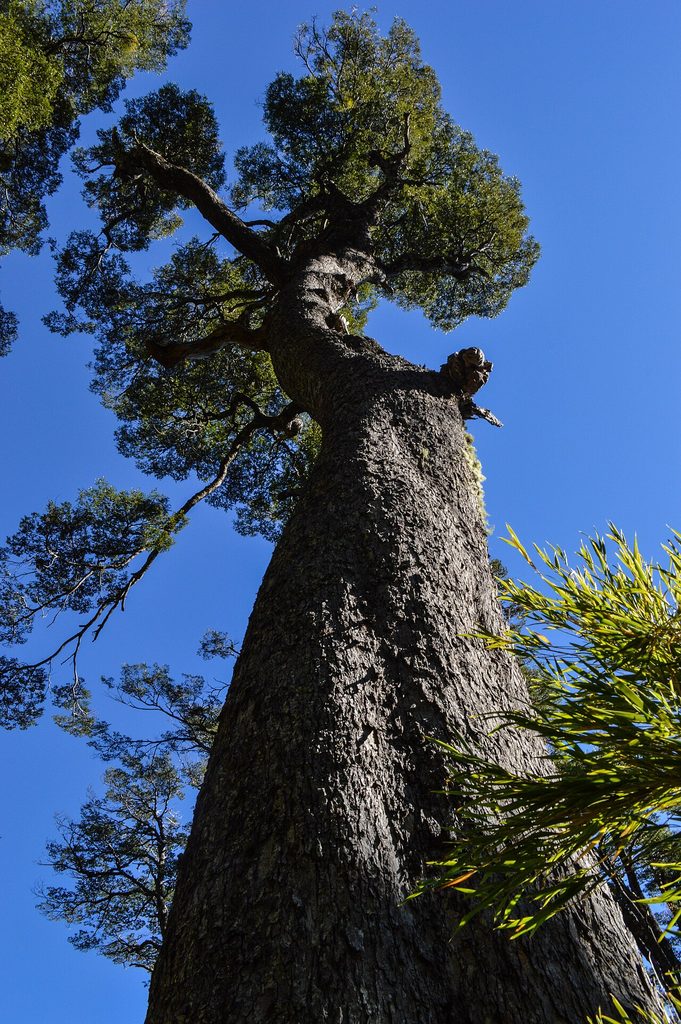
Many people are familiar with cichlids, a type of colorful, freshwater fish sold by the millions in pet stores around the world. But you might not know they are native to South America and Africa, separated by almost 2,000 miles of saltwater. The tapir, a hoofed mammal with a small trunk, is another puzzling example. These animals are found exclusively in South America and Southeast Asia, and nowhere in between. Perhaps even more confusing are plants like the southern beech tree (Nothofagus). Despite being unable to fly, swim, or walk, they managed to plant themselves natively in South America, Australia, New Zealand, New Guinea, and New Caledonia. Biogeographers call these disjunct populations, referring to two or more groups that are related but separated from each other by uncrossable geography.
Island Species
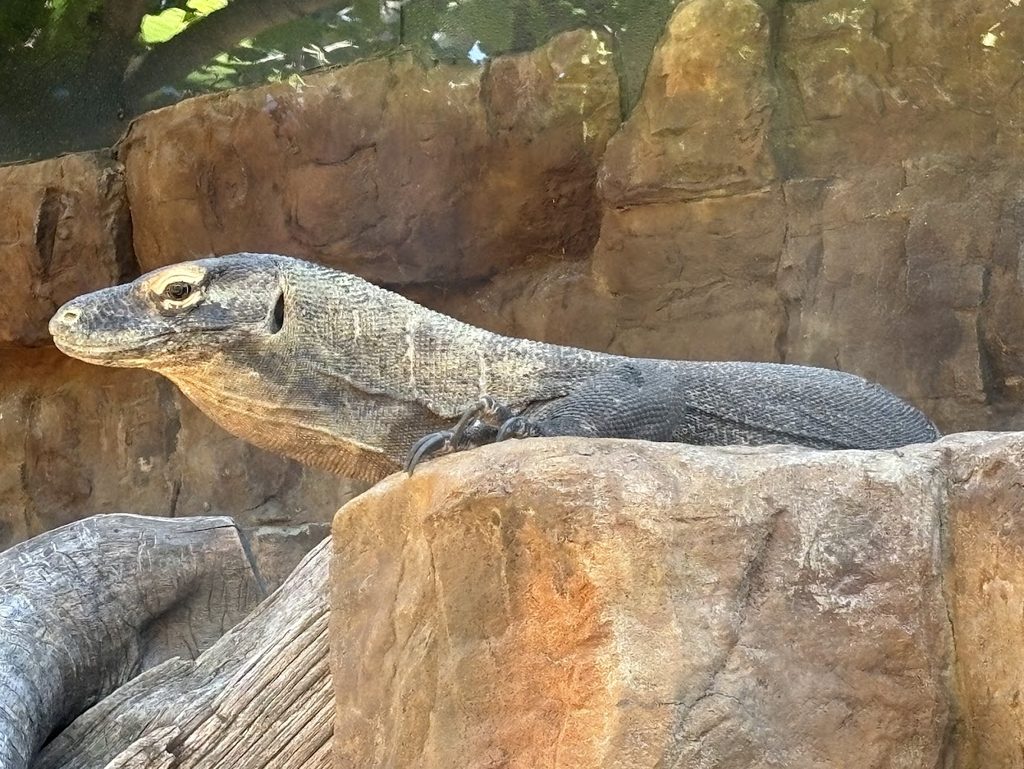
Many species are native to specific islands and appear nowhere else on Earth. The Komodo dragon, for example, lives only on a collection of islands in Southeast Asia. The Haleakalā silversword (Argyroxiphium sandwicense subsp. macrocephalum) is a critically endangered species of plant native to the Hawaiian island of Maui. Specifically, it can only be found on the dormant Haleakalā volcano, at an elevation of 2,100 metres (6,900 ft). And who can forget Madagascar, with its plethora of unique plant and animal species (including over 100 species of lemurs!)?
Australia is technically classified as a continent. But from a biogeography perspective, it also functions as a giant island. Many of the living things native to Australia can only be found here. These most famously include most marsupials, like kangaroos and koalas. But they also include the egg-laying mammals, like the duck-billed platypus and echidna.
Somehow, in the past, the ancestors of these plants and animals must have crossed geographical obstacles that cannot be crossed today.
Historical Musing in Biogeography
The word biogeography was not coined until the late 19th century.1 But people have been asking and answering questions related to biogeography for thousands of years. During the Age of Exploration, the not-yet-named field of biogeography hit the accelerator. As Europeans were setting off in ships to explore the world, they encountered a myriad of new species of plants and animals they had never seen before. This encouraged European naturalists and explorers to theorize how these species came to live in such far-off places. Try to imagine what it would be like to live in a world where entire undiscovered continents are out there across the sea. Each one has new species, even entire ecosystems, undescribed by science. In those days, other continents may well have been distant planets.
Jose de Acosta
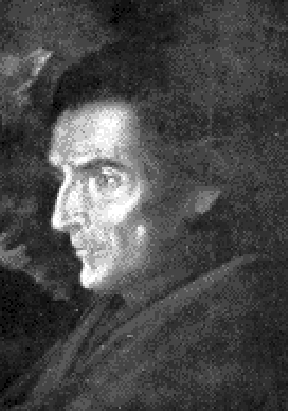
Interestingly, one of the efforts among several early biogeographers was to explain how species came to be where they are living within the context of a world that had recovered from the Flood of Noah’s time. Jose de Acosta was a 16th-century Jesuit missionary from Spain. His missionary travels took him throughout Central and South America. He was also a naturalist, and he recorded many of the species he observed.2 Acosta knew that all air-breathing land animals died during the Flood except for those on the Ark. He also knew that the Ark landed in the Mountains of Ararat, in the Middle East on the other side of the world. The Americas were separated from the Middle East by thousands of miles of ocean. So how did animals get here?
Acosta briefly considered whether God simply created these species here in the New World. He ultimately rejected that idea, however. He knew that God went through all of the effort of saving at least two of each kind aboard the Ark, while all others perished in the Flood. Why would God save them if He just planned to recreate these species after the Flood was over? This led him to conclude that the animals in the New World must have descended from ancestors that originated in the Old World. But how was this accomplished? Next, Acosta considered whether humans brought these animals to the Americas after the Flood by boat. He ended up rejecting this idea also, arguing that many New World species were useless or even harmful to humans and their livestock.
The hypothesis Acosta ultimately landed on was that there was some sort of land connection—a land bridge—that connected the Old World with the New World.3 That way, land animals could simply walk from one to the other on their own.
Carl Linnaeus
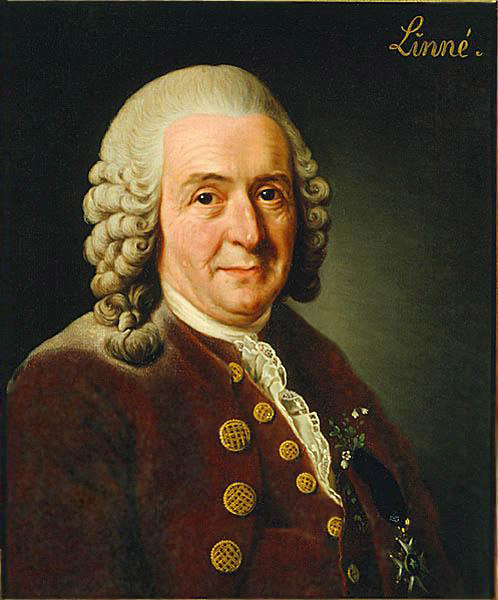
Not all early biogeographers had such a high view of Scripture, however. Best known as the Father of Taxonomy, Carl Linnaeus was an 18th-century Swedish naturalist. Like creationists today, he accepted divine creation. For a substantial part of his career, he believed that there “are as many species as the Infinite Being produced diverse forms in the beginning.”4 In other words, he thought that each species of plant and animal had been separately created and could not change. This was one major factor that led him to move away from a straightforward reading of the events and timeline the Book of Genesis describes.5
Linnaeus recognized that the first man, Adam, was assigned to name all of the kinds of animals God created. Since he thought these “kinds” were equivalent to species, that must have meant there were representatives of each species of animal within the geographic proximity of where Adam lived, in Eden.6 But this created a biogeographic problem: species require different habitats in order to survive. Sloths live in the hot, humid rainforests of Central and South America. Roadrunners can be found in the hot, dry deserts of the American southwest. Polar bears are found on the pack ice of the high Arctic. How could all of these species from so many different habitats live in the same geographic location?
Linnaeus proposed that in the beginning, God created a near-global ocean covering the Earth. There was a small island located near the Equator with an enormous mountain. The slopes of this mountain were covered in a continuum of different habitats corresponding to elevations for the original land plants and animals to live, from hot, humid jungles at its base to frigid tundra-like conditions toward the top. As time passed, the sea became deeper and drew back, exposing more and more dry land. This allowed plants and animals to radiate out from this “Paradise Mountain” and spread to the appropriate habitat wherever it was found around the world.7
Comte de Buffon
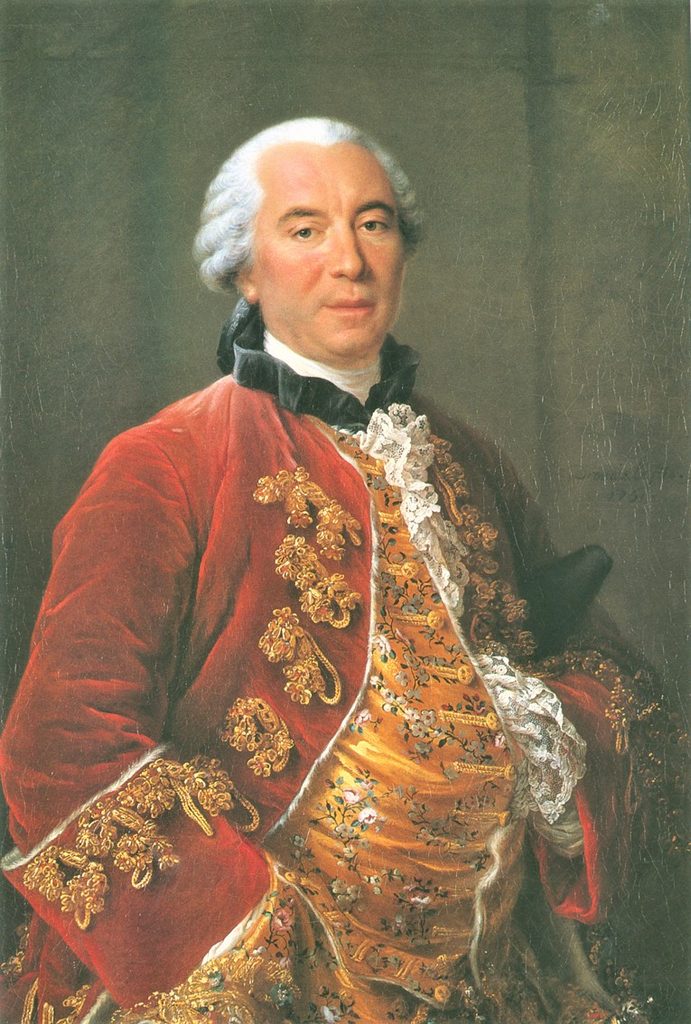
As one might expect, Linnaeus’ hypothesis was not without criticism. Comte de Buffon, also known as Georges-Louis Leclerc, was a contemporary of Linnaeus. He identified at least two problems with Linnaeus’ proposal.
One was that different parts of the world with the same climate and environment were often home to very different types of plants and animals. For example, open grasslands can be found in both North America and Africa. But North America is home to American bison, while the African plains are roamed by herds of Cape buffalo. But Buffon identified an even bigger problem. Even if there were an enormous, equatorial mountain where every species could find suitable habitat, they would still have to cross inhospitable environments in between there and where they are found today. How would the polar bear, for example, be able to travel from “Paradise Mountain” at the Equator to the Arctic?
Buffon’s study of modern and fossil plants and animals led him to his own explanation for their distribution. Unlike Acosta and Linnaeus, he rejected the historical Creation/Flood framework of Genesis wholesale. Instead, he suggested that life originated somewhere in what is now the far north of Eurasia and North America, at a time when the planet had a more uniform climate. Eventually, the Earth began to cool, forcing many plants and animals to migrate south, with some ending up in the New World. As time passed, plants and animals on either side of the Atlantic adapted to their local conditions, becoming increasingly different from one another.8
The Irony of Fixed Species
As you have probably noticed, species fixity was often-discussed in early dialogue related to biogeography. Many Christian naturalists historically understood this as a direct teaching of Scripture. Be that as it may, it is quite ironic that this is not something the Bible actually teaches.
According to Hebrew Bible scholar A. Rahel Davidson Schafer, the Hebrew word min, often translated as “kind” in English, simply refers to a multiplicity of animals or plants and denotes boundaries between basic kinds of animals.9 This is similar to how we use categorical words like sort, type, or even kind itself in English. It is a general categorical term, not a technical taxonomic rank.
In the Creation account (Genesis 1 & 2), it is simply being used to describe the results of God’s creative acts on the third, fifth, and sixth days of Creation. By the end of Creation Week, the Earth was filled with diverse groups of plants and animals, from flying and swimming creatures, to land plants and animals, large and small. Each was created according to its kind. While this does preclude the evolution of all things from a common ancestor, it does not alone tell us how much, or how little, living things can change. And it certainly does not say that species cannot change at all.
With all of this in mind, what would a modern creationist take on biogeography look like? One that does not reject the events and timeline of Scripture, but also embraces the idea that one species can diversify into new and different species? These are questions that creationist biogeographers are eagerly investigating.
How Did Plants & Animals Get Everywhere?
As the field of biogeography developed, scientists discovered several different mechanisms by which plants and animals have traversed to the far reaches of the planet. We will briefly explore the most important of these.
Dispersal On Their Own
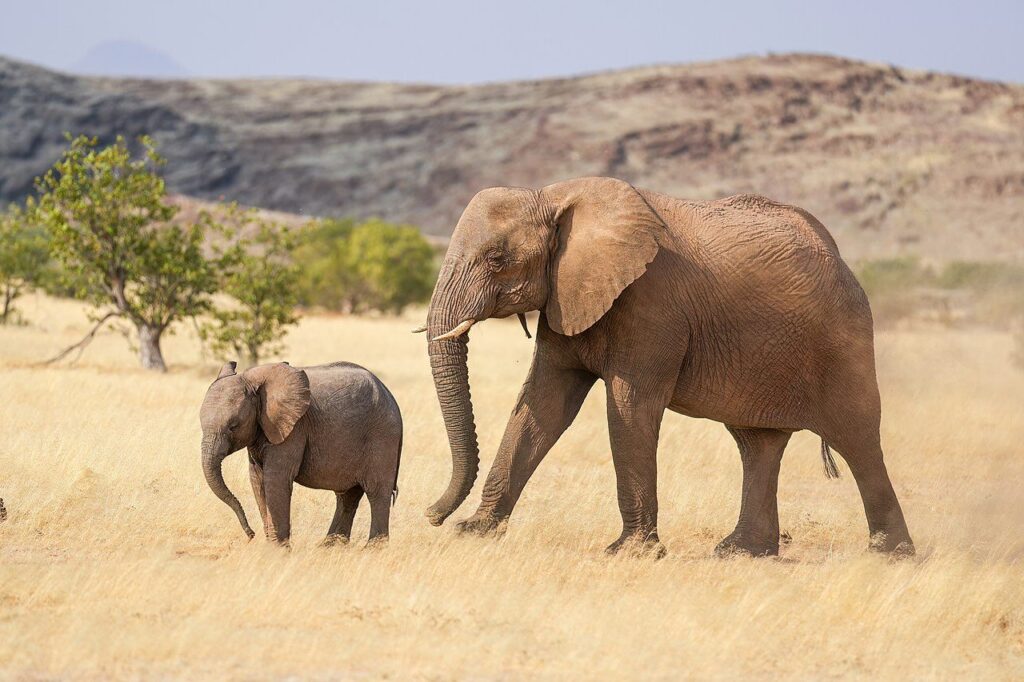
This is by far the simplest way for living things to have gotten to where we find them today. Many regions were populated by animals that walked, flew, or swam there. While plants cannot move on their own, per se, their seeds can often be transported to other places by wind, water, or even by passing through an animal’s digestive system.10
The Old World continents are connected by dry land. Since Noah’s Ark landed in the Mountains of Ararat, animals could easily travel from there and through much of Africa, Asia, and Europe. Plants with seeds that were carried by wind, water, or animals’ stomachs would be dispersed through many of these same regions.
Land Bridges
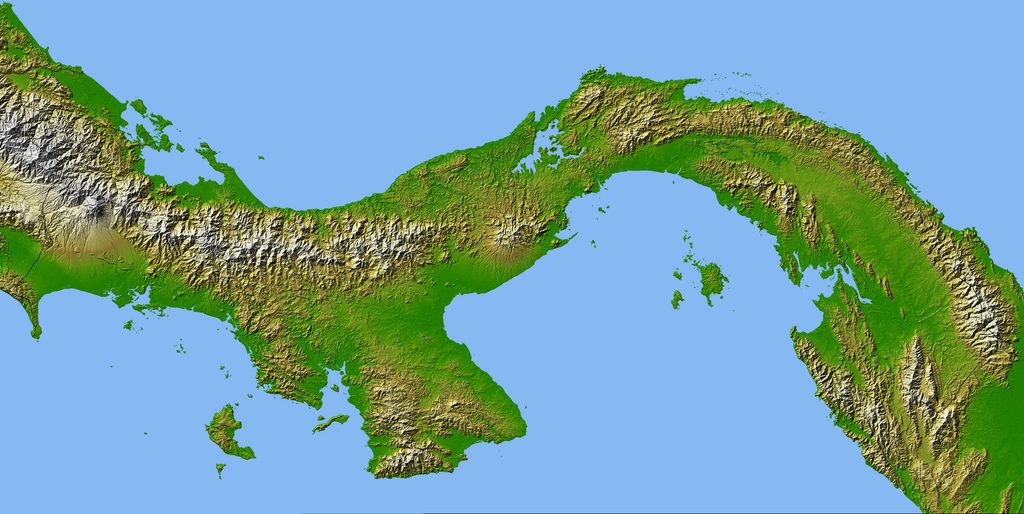
A land bridge is a strip of land that connects two larger landmasses. Some examples still present today are the Isthmus of Panama, which connects Central and South America, and the Isthmus of Suez, which connects Africa with Asia.
There are other land bridges that no longer exist today, but could have been utilized by plants and animals radiating out across the world in the centuries following the Flood. For example, geologists have identified a series of land bridges in the North Atlantic that connected Europe with Greenland and the rest of North America.11 It is thought that some of these routes incorporated expanses of uplifted continental crust and volcanic ridges that were exposed above sea level. These land connections may have provided a path by which plants and animals could traverse between the Old and New Worlds.
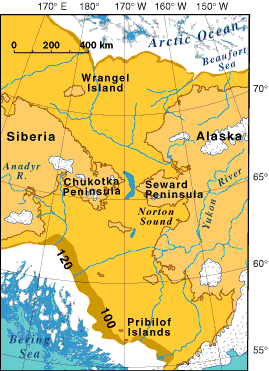
Several land bridges formed during the post-Flood Ice Age as well. This is because, during this time, so much of the Earth’s water was frozen in the form of giant ice sheets on land that sea levels dropped hundreds of feet around the world. This exposed what used to be vast stretches of shallow seafloor. One of these Ice Age land bridges, Beringia, connected Siberia with Alaska. It allowed mammoths and bison to travel into North America, while animals like horses traveled in the opposite direction.12 As the ice sheets melted at the end of the Ice Age, sea levels rose once again and flooded Beringia.
Rafting
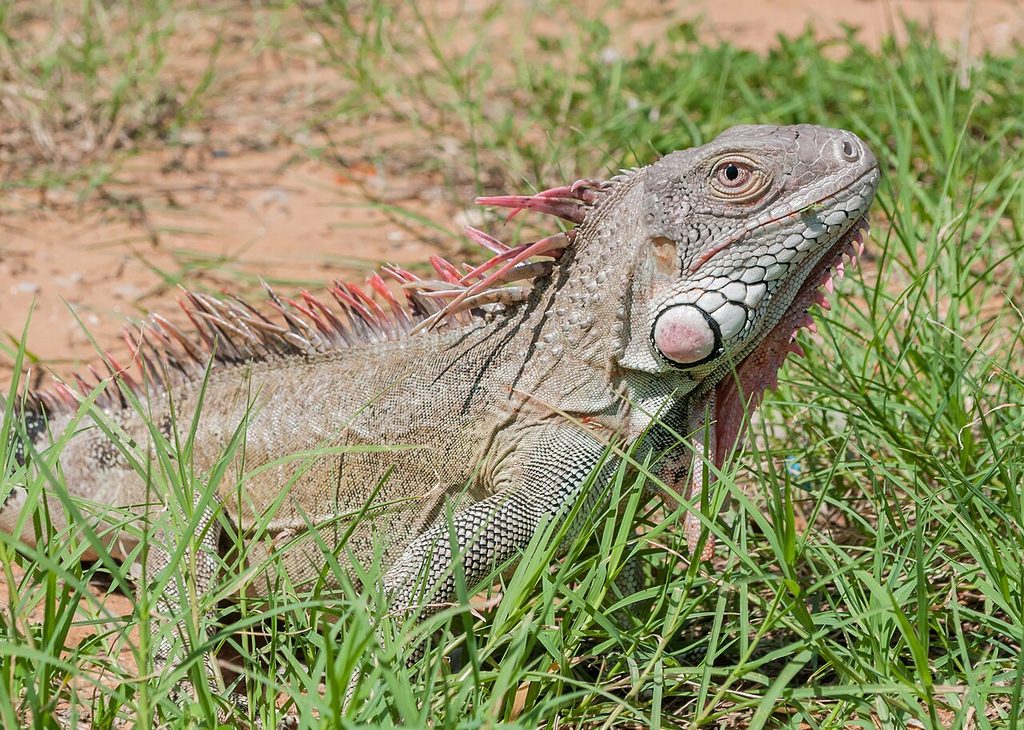
Sometimes when animals are washed out to sea on floating mats of vegetation, they can wash ashore on a new landmass and establish a new population. This phenomenon is called rafting. This dispersal mechanism is not as daft as it sounds, and has even been observed to occur in modern times. In 1995, a group of at least 15 green iguanas were washed out to sea by hurricanes in the Caribbean. Fishermen on the east side of the island of Anguilla, a few hundred miles away, were surprised to see these reptiles wash ashore on a floating mat of uprooted trees.13 Previously, no green iguanas lived on this island. Today, the island is home to a breeding population of them.
Scientists think rafting explains how many island animals ended up so far from the nearest mainland. Lemurs, for example, are thought to have gotten to Madagascar this way. In fact, scientists think that many animals living in the New World today descended from ancestors in Africa. These include New-world monkeys; caviomorph rodents; tortoises (Chelonoidis); the hoatzin (a bird incapable of flying long distances); burrowing, legless reptiles (Amphisbaenidae); and possibly even the flightless terror birds.14,15,16,17,18 All of these animals are thought to have descended from ancestors on the opposite side of the Atlantic. And since their fossils do not appear in the Americas until after the Atlantic Ocean formed, they most likely got to the New World by rafting.
The young-age creationist model potentially provides even more additional opportunities for rafting in the centuries following the Flood. The Flood would have destroyed the forests of the pre-Flood world. While many of those trees sank and became fossilized, a lot of them likely remained floating on the ocean’s surface for decades or centuries afterward. This was the foundation for the post-Flood rafting model proposed by paleontologist Dr. Kurt Wise and Dr. Matthew Croxton in 2003.19 They argued that these felled trees and other vegetation would collect in large, floating mats. If a mat temporarily washed ashore, animals might be tempted to forage it for food. But when the mat washed back out to sea, the animals would be along for the ride. And whenever the mat washed up on another shore, the animals disembarked and were able to colonize this new land mass.
Human Transport
Many plants and animals were carried around the world not by natural means, but by human activity. Evidence for humans does not occur outside of the Old World until well into the Ice Age.20 As such, it is unlikely that humans played much of a role in the initial distribution of most species. But once humans started to radiate around the world, they played a major role. Plants or animals introduced to new areas by humans are called “introduced species.”21
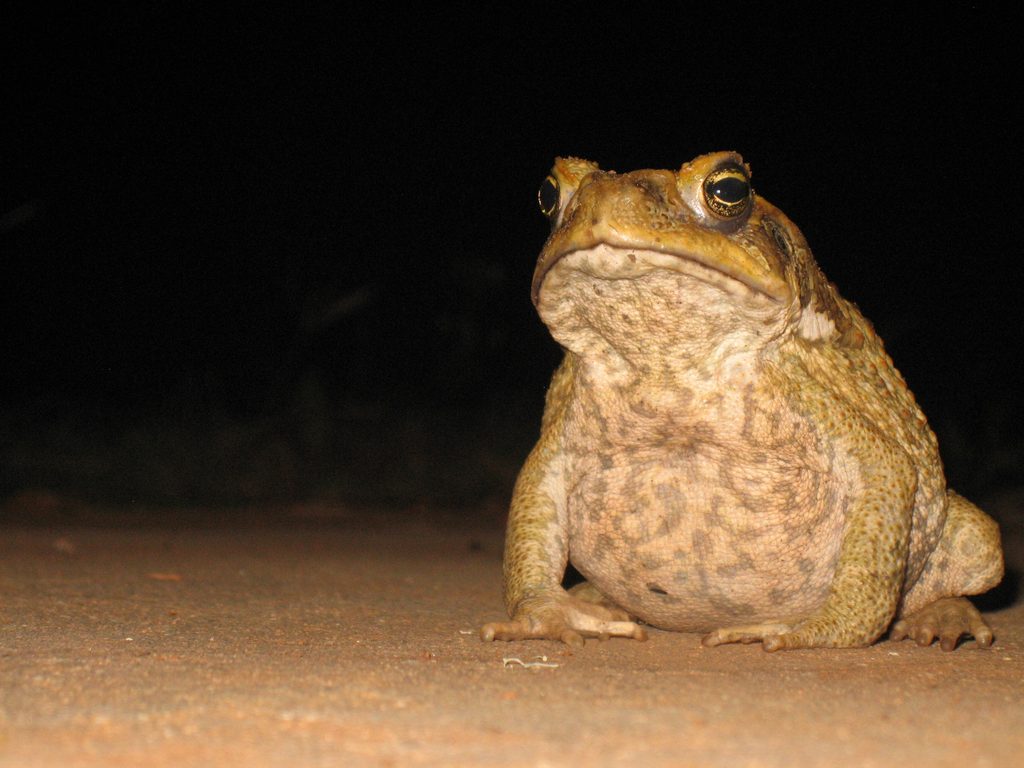
Humans intentionally transported some species, such as livestock, pets, or crops, to new places. This is why cattle, house sparrows, and bananas exist in the New World, and why corn, tomatoes, potatoes, and cocoa beans ended up in the Old World. It is also why the Australian outback is currently being overrun by camels, red foxes, rabbits, and cane toads.22 Other times, humans introduced species into new land masses by accident. Brown rats often stowed away aboard ships and mosquitoes laid their eggs in pools of water among luggage.
Introduced species are most often known for their negative impacts on the environment of the new place they are colonizing. Rats and mosquitoes spread diseases. It is thought that the introduction of rats, pigs, and monkeys to the island of Mauritius was a major factor in driving the dodo bird into extinction.23
Is Biogeography a Problem for Young-Age Creationism?
According to the National Center for Science Education (NCSE), “The geographical distribution of animals and plants is a powerful piece of evidence for evolution and is satisfactorily explained only by that theory. In a simple creation model, biogeography becomes merely quixotic; when the straitjacket of the flood is added, with a rapid distribution from a single point in the Middle East…the whole thing becomes completely impossible and incomprehensible.”24
Their reasons for believing this to be the case can be summed up with the three main talking points:
- Many plants and animals seemingly returned to the exact same places their fossil progenitors are found.
- Many terrestrial animals managed to reach isolated oceanic islands despite having no obvious means of crossing the surrounding ocean.
- Some types of plants and animals are only native to the Americas or Australia and are absent from the Old World.
In reality, the distribution of most post-Flood organisms can be readily accounted for within the Creation model. The talking points presented above are largely based on faulty assumptions critics often have about the young-age creation model. We address these talking points below.
Objection #1: “Many plants and animals seemingly returned to the exact same places their fossil progenitors are found.”
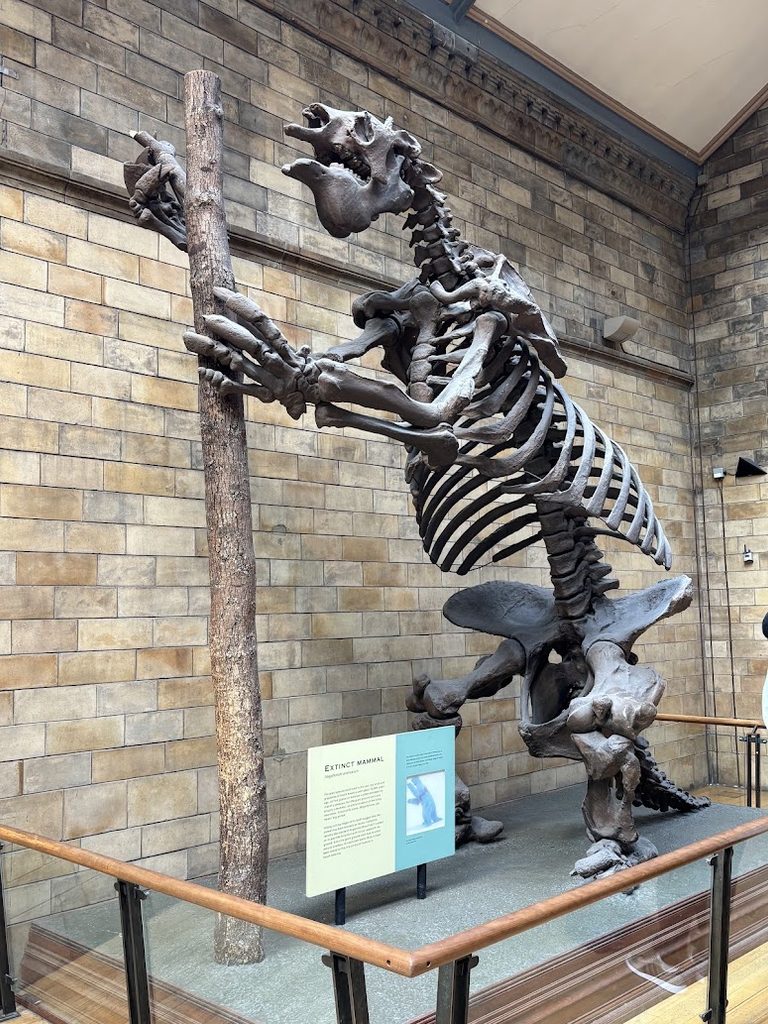
Many critics correctly point out that marsupials like kangaroos, koalas, wombats, and Tasmanian devils are only found in Australia and its surrounding islands. Fossils belonging to these same groups are likewise found in this region.25 Similarly, anteaters, sloths, armadillos, and other animals are native only to the New World, where their fossils are found.26 If these fossils were formed during the Flood Flood, creationists would have to argue that representatives of each kind boarded the Ark, survived the Flood, and then just-so-happened to migrate back to where their pre-Flood ancestors just-so-happened to have been buried.
But young-age scientists have already acknowledged this fact. This objection assumes that creationists believe the entire fossil record was formed during the Flood. But this is incorrect. Most creationists agree that the majority of the fossil record was created during the Flood, but at least some portion of the Cenozoic (the uppermost division of the fossil record) formed during the post-Flood era.27,28 During this time, many fossils formed when plants and animals caught in localized or regional catastrophes as the Earth recovered from the Flood. Others became caught in natural traps such as sinkholes, caves, and tar pits, and were preserved by these means. Thus, the occurrence of fossil organisms in the same general regions inhabited by their living relatives can actually provide a clue that those particular fossil sites are post-Flood rather than Flood deposits.
The reason fossils of kangaroos and koalas appear in Australia, and anteater and sloth fossils appear in South America, is that these are post-Flood fossils. These are the places where these animals were living at the time their fossil records were formed. Kangaroos did not travel from Australia, to the Ark, and then back to Australia. Their ancestors migrated to Australia for the very first time after the Flood.
Objection #2: “Many terrestrial animals managed to reach isolated oceanic islands despite having no obvious means of crossing the surrounding ocean.”
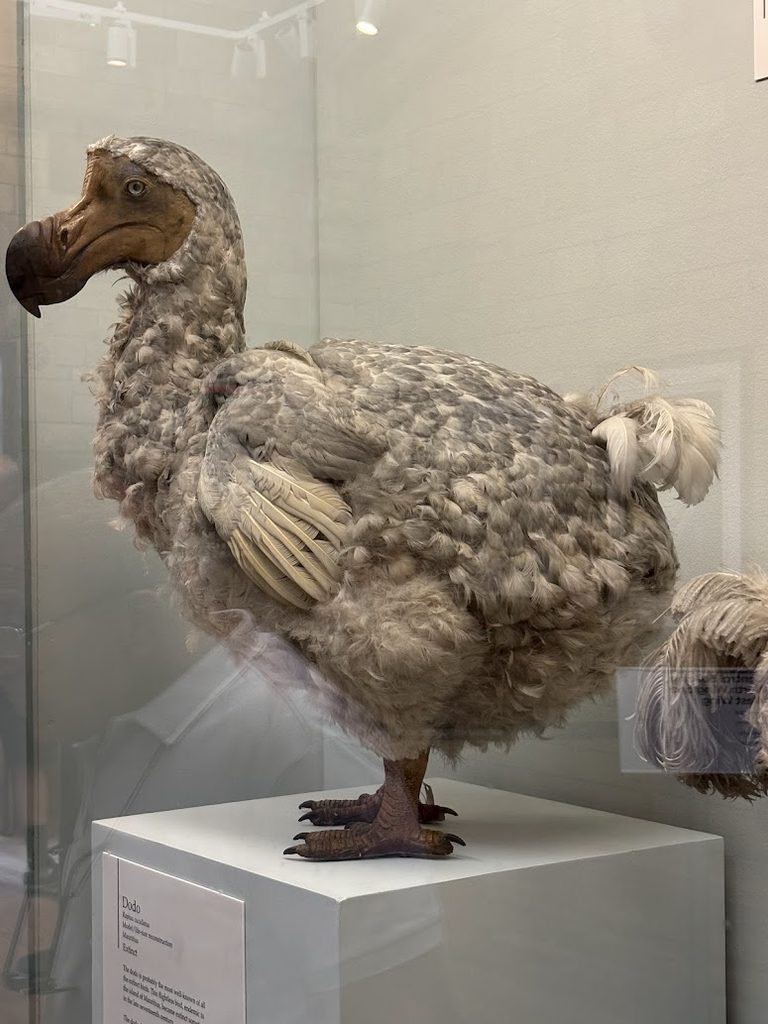
Many plants and animals are native only to certain regions that are difficult to reach and nowhere else on the planet. These include many island species, like the nine-foot tall elephant bird (now extinct) on the island of Madagascar. Consider also the now-extinct dodo bird of the island of Mauritius, or the kiwi of New Zealand. All of these birds are flightless, and yet they live (or once-lived) on islands far away from the nearest mainland.29
These observations are only problematic if one assumes that the species living on these islands today (or in recent history) are identical to the animals that originally colonized them. Young-age scientists do not make this assumption. Modern young-age biology holds that representatives of each created kind were taken aboard the Ark and saved from the Flood. Afterward, each kind multiplied and gave rise to entire lineages of species. Many species within each kind changed quite dramatically. Some even adopted an entirely different lifestyle. For example, the kakapo of New Zealand belongs to the same created kind as other parrots.30 But it has lost the ability to fly and lives entirely on the ground. In many ways, the kakapo is the bird equivalent of a burrowing mammal, like a rabbit!31
As we can see, the fact that a living species could not reach an isolated oceanic island does not mean that its ancestors could not have done so.
Objection #3: “Some types of plants and animals are only native to the Americas or Australia and are absent from the Old World.”
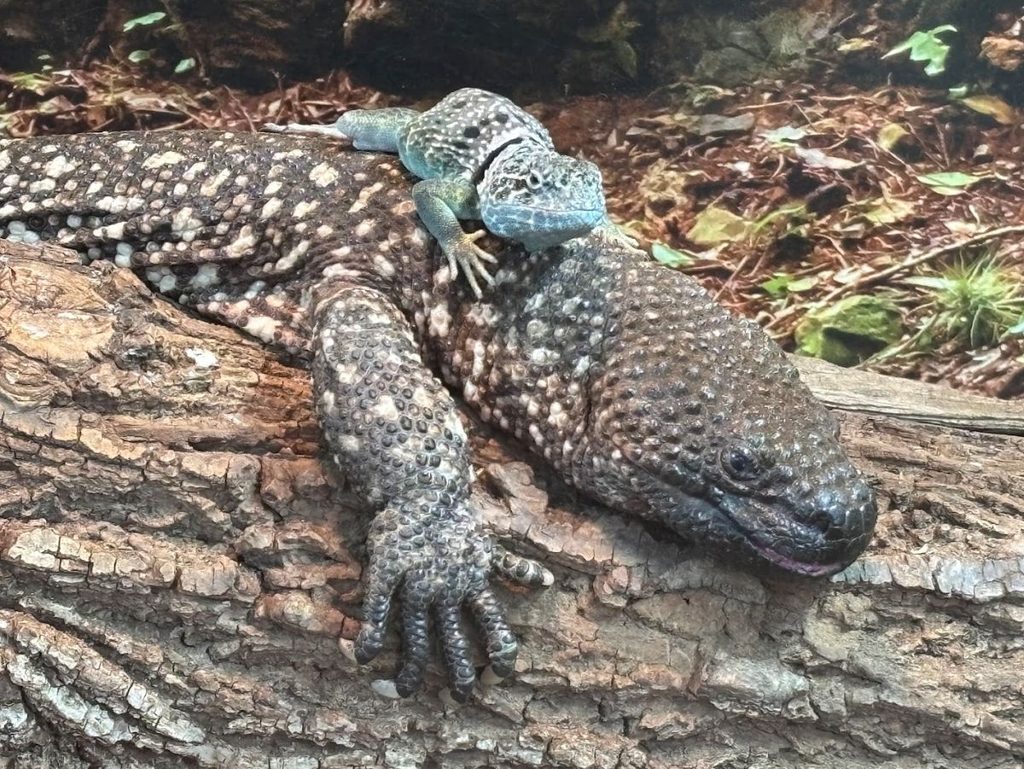
Scientists have identified dozens species of rattlesnakes, and not a single one of them is known in the Old World. All live in the Americas.32 Similarly, there are five living species of beaded lizards (Helodermatidae), of which the Gila monster is probably the best known. Once again, all of them reside in the Americas.33 But if all of the ancestors of modern animals that survived on Noah’s Ark landed in the Middle East, shouldn’t they still be present in the Old World as well? Not necessarily.
Many times, the answer to this objection can be found by looking at other members of a particular species’ created kind and its fossil record. Rattlesnakes are truly American in their origin, but they appear to belong to a much more diverse created kind of snake that may include all pit vipers.34 Pit vipers are found around the world, not just in the Americas. Rattlesnakes are merely an American lineage of the created kind to which all pit vipers belong. No living beaded lizard species are known in the Old World. However, the fossil record reveals that early (likely post-Flood) definitive fossils of this lizard family come from, not America, but France!35 This beaded lizard is called Eurheloderma, and its fossils have been found alongside fossils of other reptiles that also have New World relatives. Young-age biologist Chad Arment tentatively posits that beaded lizards and these other reptiles entered North America through Europe.36 Here, they diversified into modern species, like the Gila monster. He further suggests that post-Flood climate change likely restricted the lineage to their present day biogeographic range.
The Truly Difficult Cases
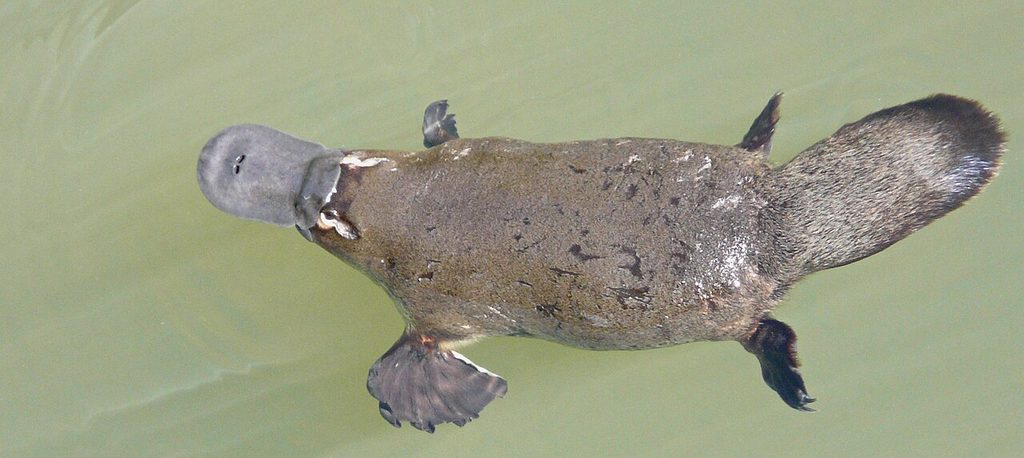
As established above, a better understanding of the young-age creationist model can readily account for most biogeographic puzzles that creationists face . Many fossils of modern plant and animal groups are post-Flood and reflect snapshots of modern lineages as they radiated around the Earth and adapted to new environments by becoming new, unique species. However, there are some truly difficult cases that we should not overlook.
Australia and South America are home to many unique animals found nowhere else in the world. Roughly two-thirds marsupial species are only native to the Australasian region. This part of the world is also home to the only egg-laying mammals, the platypus and the echidna. Similarly, as José De Acosta recognized, Central and South America also have very unique plant and animal life, including anteaters, sloths, armadillos, and cacti, found nowhere else on Earth.37 None of these plants and animals appear to have members of their respective created kind in living or fossil form anywhere in the Old World.
How Should Creationists Respond to Hard Biogeographic Questions?
We should remember that hard questions like these have precedents in creationism going back hundreds of years. Recall Acosta and his mystery of unique plants and animals in the Americas, or Linnaeus and his ponderings about “Paradise Mountain.” These challenges were intimidating in their time, and those involved responded in different ways.
Linnaeus increasingly departed from a straightforward, historical reading of the biblical account as he tried to solve these problems. But Acosta embraced the historicity of the Book of Genesis and sought hypotheses for how such questions might be answered. With the passage of time, we see that the concerns both of these men faced are no longer problematic. While Acosta never lived to see his hypothesis tested, later scientific discoveries vindicated his proposed solution. What was once a difficult biogeographic mystery eventually had an answer.
Biogeography Is Hard for Everybody, Not Just Creationists
Discussions about biogeography in relation to the historicity of Noah’s Flood and its aftermath often overlook how much we don’t know. And they also forget how much of what we do know we only know from indirect evidence, such as fossils.
The NCSE claims that “The geographical distribution of animals and plants is…satisfactorily explained only by that theory [of evolution].”38 But evolutionary theory by itself does not explain how organisms crossed oceans and other geographic barriers. Mainstream biogeographers must also reconstruct past dispersal using physical dispersal mechanisms, many of which are also invoked in creationist models.
Take, for example, the mechanism of rafting. The island of Madagascar is thought to have broken away from mainland Africa during the Jurassic Period, hundreds of millions of years ago. Since lemur fossils only appear recently on the island, they could not have been a part of that break-up scenario. Mainstream biogeographers therefore must invoke over-water dispersal, with rafting being one of the leading hypotheses. This is quite compatible with a post-Flood model in which animals dispersed onto already established landmasses after the Flood rather than being carried to their present locations by continental breakup.
Lack of Fossil Evidence
Another example can be seen in the plants and animals we just discussed. Old-age biogeographers believe that anteaters, sloths, and armadillos all evolved from a common ancestor in South America. But the fossil evidence for the early history of these groups is surprisingly incomplete. The oldest known fossil armadillos are already recognizable as armadillos. Meanwhile, the oldest known fossil sloths are likewise already recognizable as sloths. And the oldest known anteaters already resemble recognizable anteaters.
We do not see a rich sequence of earlier forms showing these three groups emerging from a common ancestor. This is quite unlike what we see in the much more extensive fossil sequences known within the horse, rhinoceros, and camel created kinds. Within each of these created kinds, numerous extinct forms allow scientists to reconstruct how they diversified over time. Currently, nothing of comparable detail exists for the earliest history of anteaters, sloths, and armadillos.39
Australian marsupials exhibit a similar problem. Old-age biogeography models generally propose that all Australian marsupials descended from a common ancestor that migrated to this landmass before it became an island continent. However, Australia’s early marsupial fossil record remains extremely sparse, and the fossils do not provide a continuous record documenting the dispersal and divergence of all the modern groups of Australian marsupials.40
Ratite Ramble
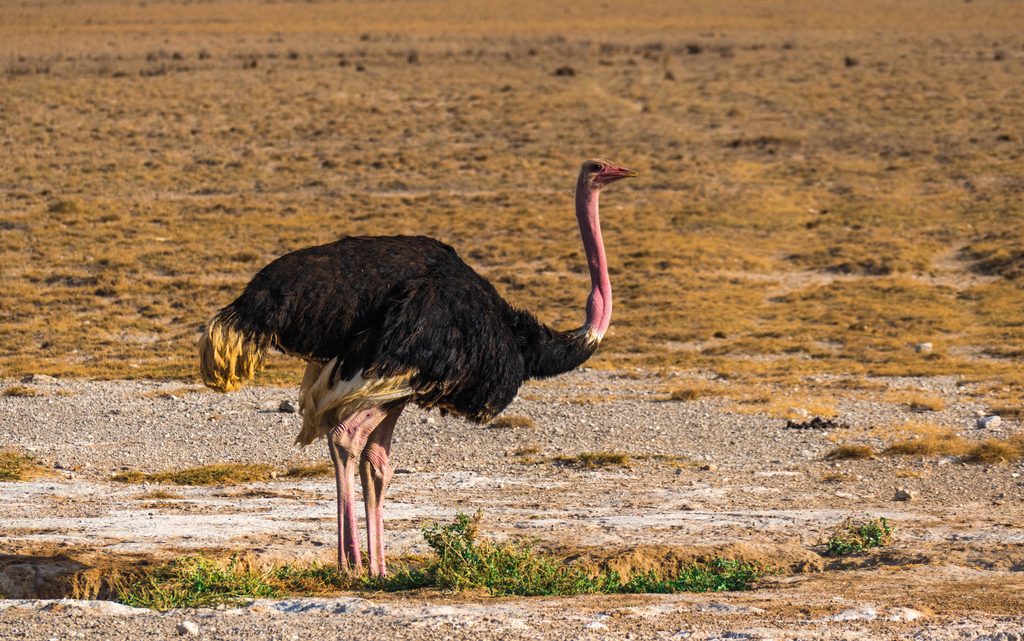
Flightless ground birds like the ostrich, rhea, emu, cassowary, elephant bird, moa, and kiwi belong to a group of birds traditionally called ratites. All of them are native to continents and islands in the Southern Hemisphere. For a long time, scientists have thought that they evolved from a common flightless ancestor that inhabited Gondwana, the ancient supercontinent that existed before it broke up to form these southern continents and islands. As Gondwana broke apart, each new landmass carried a population of ancestral ratites with it. The ratites on each landmass developed into their own unique lineages. The African lineage evolved into ostriches. Elephant birds evolved in Madagascar. In Australia, the emu and cassowary developed. New Zealand became home to the moa and kiwi. Meanwhile, ancestral ratites in South America evolved into the rhea. This story was simple and consistent with the known evidence at the time it was proposed. It was also completely wrong.41
More recently, genetic evidence has turned the natural history of ratites upside-down. As it happens, the extinct elephant bird of Madagascar is most similar to New Zealand’s kiwi.42 You might expect the moa, also native to New Zealand, to be the kiwi’s closest relative. But genetic evidence instead places the moa more genetically similar to the tinamou, a bird from Central and South America.43 And unlike the moa, the tinamou can actually fly! The researchers involved in this study concluded that the ancestors of all these birds were capable of flight. And as their ancestors traveled around the world and became isolated from each other, they independently became flightless. According to this study, flightlessness is not a trait ancestral to ratites. Rather, it evolved multiple different times within the ratite lineage.
Onward to Future Research
The point of showcasing the gaps in our knowledge and the ways new discoveries have shaped our understanding of biogeography is not to “disprove” evolutionary theory. Rather, it is to shed light on the incredible opportunities we as creationists have to step up to the plate. As creationists, we should aim to develop our own, biblically-consistent models with the goal of explaining the evidence even better than our mainstream colleagues. There are already many young-age creationist scientists and other researchers involved in trying to answer the hard questions posed by this field. Below are some examples, as well as avenues for future research.
Further Work in Baraminology
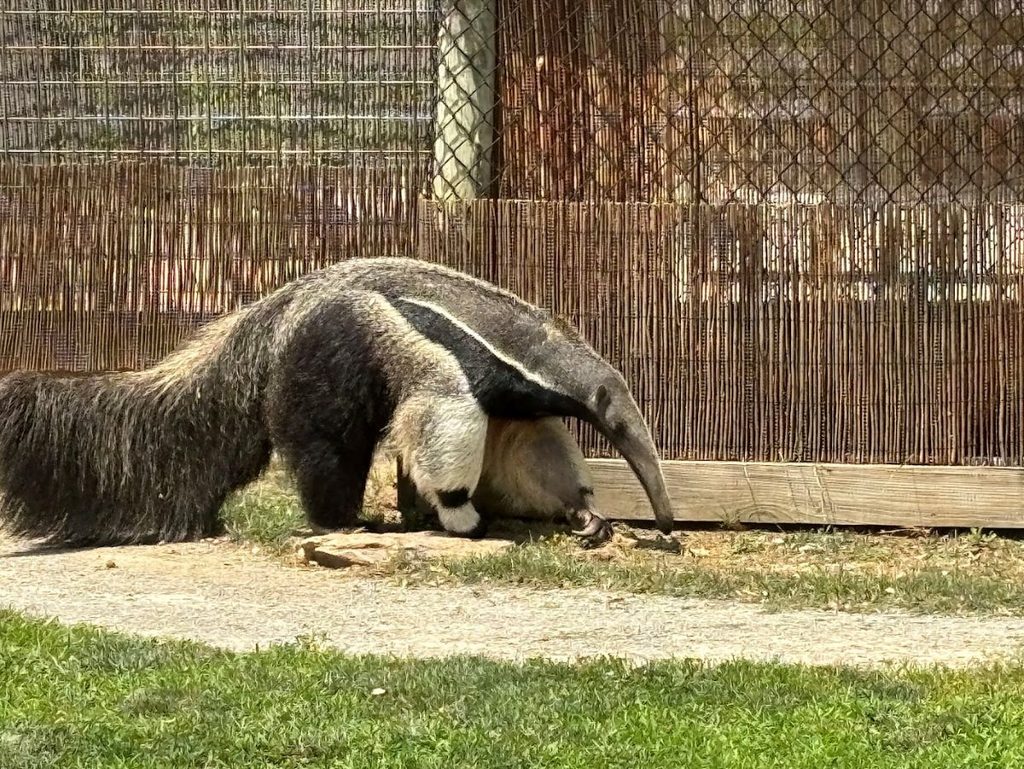
Baraminology is the study of created kinds and the relationships among the organisms within them. This is particularly important for biogeography because identifying created kinds can help us figure out how they diversified and spread around the world after the Flood. How many created kinds of marsupials are there? How many are represented in Australia? Do anteaters, sloths, and armadillos belong to the same created kind? Or do they belong to separate created kinds that simply were not fossilized for a time after the Flood? And what about ratites?
The field of baraminology has several different methods of testing whether species belong to the same created kind or not. Creationists have not yet extensively applied these methods to these animal groups.
Creationist Perspective Fossil Distribution Databases
We have already seen time and time again that modern plant and animal distributions do not necessarily reflect their distributions in the past. Despite this, modern distributions are often used to draw certain conclusions about the natural histories of these lifeforms. Maybe fossils can provide important guardrails by revealing the wider distributions that certain types of plants or animals had in the past.
Creation researchers would benefit from databases that compile fossil occurrences specifically with post-Flood biogeographic questions in mind. These databases would not require different fossil data from those used by mainstream paleontologists. But they could be organized in such a way to make it easier for creationists to reconstruct the dispersal patterns of each created kind after the Flood.
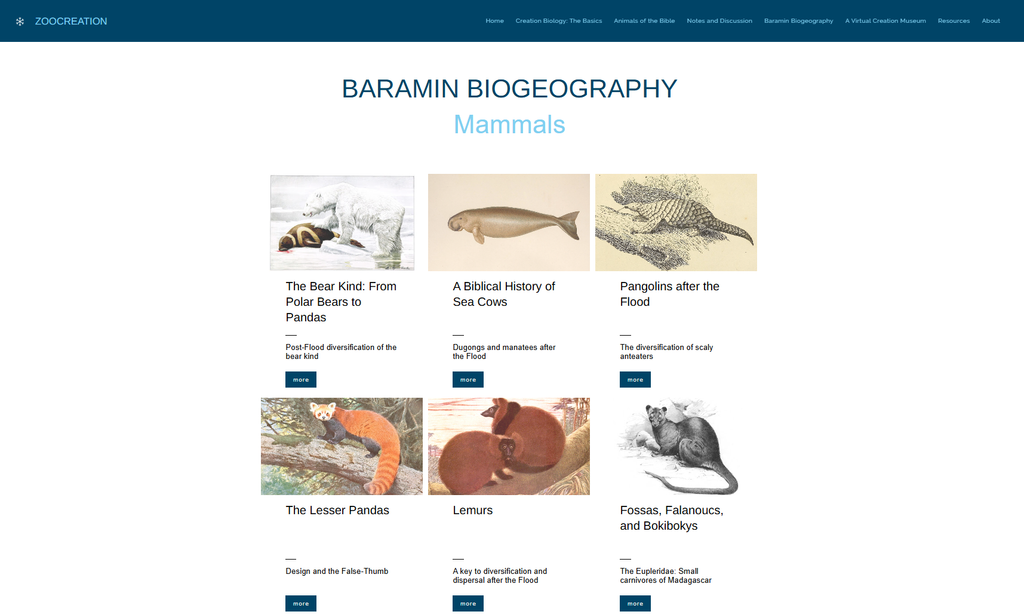
Resources like Zoo Creation have already made great strides in this direction, but there remains much more work to be done. Were plants and animals that live in only one part of the world today once found elsewhere? Where else did they live? And how has extinction shaped where we find their descendants today?
Post-Flood Dispersal Routes
Creationists regularly talk about animal migration after the Flood and how post-Flood changes in climate (like the Ice Age) may have impacted this. But there still remains lots of room for more detailed modeling of what the early post-Flood climate would have been like. This can help us better understand which pathways would have been more utilized by animals leaving the Ark than other paths. It might also give us a window into what temporary, in-between ecosystems might have existed as the Earth was recovering from the Flood. Could Chad Arment’s suggestion of a migration pathway through Europe into North America be worth investigating further?
New Species After the Flood
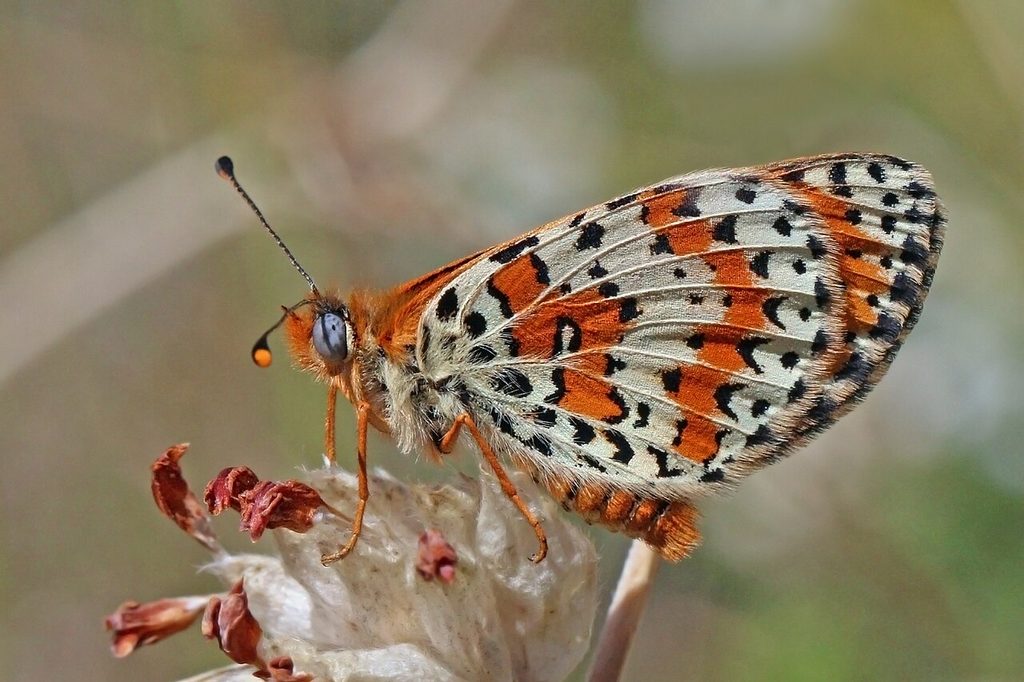
Once organisms colonized a new location, isolated populations could adapt to local conditions and eventually give rise to a new species found nowhere else on Earth. But how exactly does this process happen in just a few centuries or millennia after the Flood? Today, this process is normally a slow and gradual one. How might changing, post-Flood climates and built-in variability impact diversification? There is already current research underway to try and answer these and similar questions.
Some young-age researchers are trying to understand what mechanisms were involved in allowing these organisms to change and diversify so quickly. Take for example Dr. Todd Wood’s Altruistic Genetic Elements (AGE) model, which proposes that mobile genetic elements may have played a role in rapid diversification.44,45,46 Also consider Dr. Randy Guliuzza’s work with the Institute for Creation Research on the possibility that organisms have built-in sensors that trigger heritable change, as described in their Continuous Environmental Tracking (CET) model. There is even recent ongoing research into examples of rapid speciation observed today and what they might be able to tell us about rapid post-Flood diversification.47 Further investigation could help young-age scientists figure out which, if any, of these proposed mechanisms contributed to the rapid diversification of created kinds after the Flood.
Conclusion
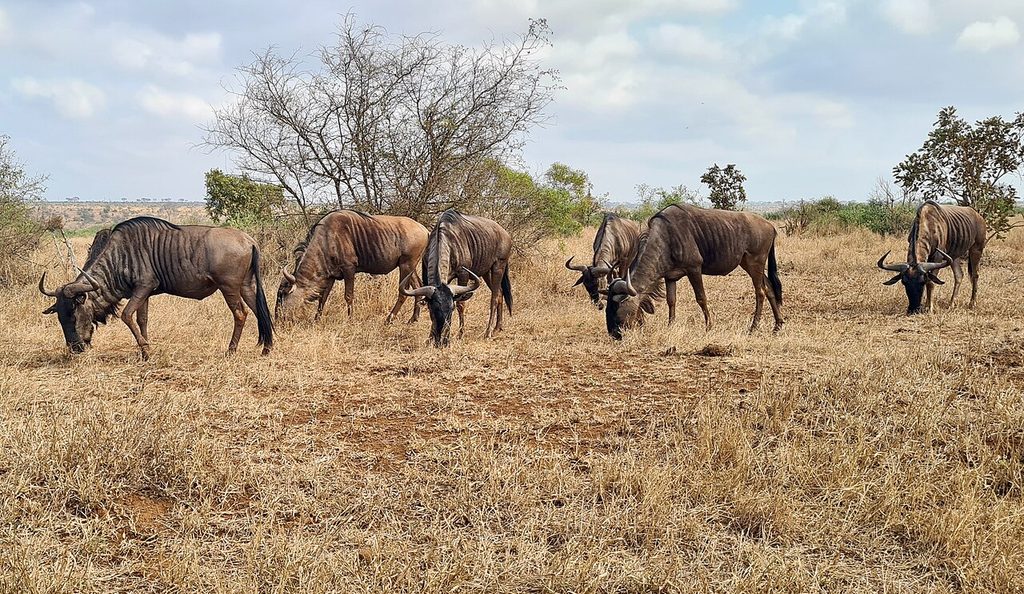
The sheer amount of diversity around the planet is mind-boggling. Even more incredible is thinking about all of the ways plants and animals of the world came to live where we find them today. And biogeography is the perfect field to study such phenomena. Our Creator truly has provided a myriad of ways for His creation to adapt and thrive, even in the most isolated of places. Biogeography can help us truly understand the resilience and diversity built into the original created kinds God made in the beginning. And with it, we also learn that the geographical distribution is not an insurmountable problem for the Flood. Rather, the Flood provides a framework within which creationists can investigate these patterns and deepen our understanding of how they arose.
Footnotes
- Egerton, Frank N. “History of ecological sciences, part 61B: Terrestrial biogeography and paleobiogeography, 1840s–1940s.” Bulletin of the Ecological Society of America 100, no. 1 (2019): 1-63. ↩︎
- López-Morillas F, translator. 2002. Natural and Moral History of the Indies. Durham, NC: Duke University Press. ↩︎
- Klein, Herbert S., and Daniel C. Schiffner. “The current debate about the origins of the Paleoindians of America.” Journal of Social History 37, no. 2 (2003): 483-492. ↩︎
- Allmon, Warren D. “Species, speciation and palaeontology up to the Modern Synthesis: persistent themes and unanswered questions.” Palaeontology 56, no. 6 (2013): 1199-1223. ↩︎
- Broberg, Gunnar. “Linnaeus and Genesis.” Svenska Linnésällskapets Årsskrift (1978): 30–42. ↩︎
- Broberg, “Linnaeus and Genesis,” 34–37. ↩︎
- Mark V. Lomolino, Brett R. Riddle, Robert J. Whittaker, and James H. Brown, Biogeography, 4th ed. (Sunderland, MA: Sinauer Associates, 2010), 17–19. ↩︎
- Mark V. Lomolino, Brett R. Riddle, Robert J. Whittaker, and James H. Brown, Biogeography, 4th ed. (Sunderland, MA: Sinauer Associates, 2010), 17–19. ↩︎
- Schafer, A. Rahel Davidson. 2003. “The ‘Kinds’ of Genesis 1: What Is the Meaning of Mîn?” Journal of the Adventist Theological Society 14 (1): 86–100. ↩︎
- Beckman, Noelle G., Erin K. Kuprewicz, Binod Borah, James M. Bullock, Amanda S. Gallinat, Juan P. González‐Varo, Abir Jain et al. “Animal‐mediated seed dispersal: A review of study methods.” Applications in Plant Sciences 14, no. 1 (2026): e70043. ↩︎
- Graham, Alan. “North Atlantic Land Bridge: Northeastern North America, Greenland, Iceland, Arctic Islands, Northwestern Europe.” In Land Bridges: Ancient Environments, Plant Migrations, and New World Connections University of Chicago Press, 2018. Chicago Scholarship Online, 2018. ↩︎
- Groves, Pamela. 2018. “Pleistocene Megafauna and the Bering Land Bridge.” National Park Service. June 7, 2018. ↩︎
- Censky, Ellen J., Karim Hodge, and Judy Dudley. 1998. “Over-Water Dispersal of Lizards Due to Hurricanes.” Nature 395: 556. ↩︎
- Bond, Mariano, Marcelo F. Tejedor, Kenneth E. Campbell Jr., Laura Chornogubsky, Nelson Novo, and Francisco Goin. 2015. “Eocene Primates of South America and the African Origins of New World Monkeys.” Nature 520, no. 7548 (23 April): 538–541. ↩︎
- Le, Minh, Christopher J. Raxworthy, William P. McCord, and Lisa Mertz. 2006. “A Molecular Phylogeny of Tortoises (Testudines: Testudinidae) Based on Mitochondrial and Nuclear Genes.” Molecular Phylogenetics and Evolution 40. no. 2 (August): 517–531. ↩︎
- Mayr, Gerald, and Vanesa L. de Pietri. 2014. “Earliest and First Northern Hemispheric Hoatzin Fossils Substantiate Old World Origin of a ‘Neotropic Endemic’.” Naturwissenschaften 101, no. 2 (February): 143–148. ↩︎
- Vidal, Nicolas, Anna Azvolinsky, Corinne Cruaud, and S. Blair Hedges. 2007. “Origin of Tropical American Burrowing Reptiles by Transatlantic Rafting.” Biology Letters 4, no. 1 (4 December): 115–118. ↩︎
- Angst, Delphine, Eric Buffetaut, Christophe Lécuyer, and Romain Amiot. 2013. “‘Terror Birds’ (Phorusrhacidae) from the Eocene of Europe Imply Trans-Tethys Dispersal.” PLoS ONE 8, no. 11 (November 27): e80357. ↩︎
- Wise, K. P., and M. Croxton. 2003. “Rafting: A Post-Flood Biogeographic Dispersal Mechanism.” In Proceedings of the Fifth International Conference on Creationism, edited by R. L. Ivey Jr., 465–477. Pittsburgh, PA: Creation Science Fellowship. ↩︎
- Pigati, Jeffrey S., Kathleen B. Springer, Jeffrey S. Honke, David Wahl, Marie Rhondelle Champagne, Susan R. H. Zimmerman, Harrison J. Gray, et al. 2023. “Independent Age Estimates Resolve the Controversy of Ancient Human Footprints at White Sands.” Science 382 (6666): 73–75. ↩︎
- Sinclair, James S., Julie L. Lockwood, Sarah Hasnain, Phillip Cassey, et al. 2020. “A Framework for Predicting Which Non-Native Individuals and Species Will Enter, Survive, and Exit Human-Mediated Transport.” Biological Invasions 22: 217–231. ↩︎
- Australian Government Department of Climate Change, Energy, the Environment and Water. 2026. “Feral Animals in Australia.” Last updated September 29, 2026. ↩︎
- Rijsdijk, Kenneth F., et al. 2015. “A Review of the Dodo and Its Ecosystem: Insights from a Vertebrate Concentration Lagerstätte in Mauritius.” Journal of Vertebrate Paleontology 35 (Supplement 1): 3–20. ↩︎
- Moore, Robert A. 1983. “The Impossible Voyage of Noah’s Ark.” Creation/Evolution Journal 4 (1). ↩︎
- Black, Karen H., Gilbert J. Price, Michael Archer, and Suzanne J. Hand. 2014. “Bearing Up Well? Understanding the Past, Present and Future of Australia’s Koalas.” Gondwana Research 25 (3): 1186–1201. ↩︎
- Springer, Mark S., et al. 2011. “The Historical Biogeography of Mammalia.” Philosophical Transactions of the Royal Society B 366: 2478–2502. ↩︎
- Ross, Marcus R. 2012. “Fossils and the Flood/Post-Flood Boundary: A Biostratigraphic Analysis.” Journal of Creation 26 (2): 82–87. ↩︎
- Oard, Michael J. “Difficult or Borderline Cases.” Chap. 35 in The Flood/Post-Flood Boundary. Accessed October 6, 2026. ↩︎
- Trewick, Steven A., and Gillian C. Gibb. 2016. “Phylogenetics and Conservation in New Zealand: The Long and the Short of It.” In Evolutionary Biology: Biodiversification from Genotype to Phenotype, edited by Pierre Pontarotti. Springer. ↩︎
- Lightner, Jean. “An Initial Estimate of Avian Ark Kinds.” Answers Research Journal 6 (2013): 409–466. ↩︎
- Livezey, Bradley C. 1992. “Morphological Corollaries and Ecological Implications of Flightlessness in the Kakapo (Psittaciformes: Strigops habroptilus).” Journal of Morphology 213 (1): 105–145. ↩︎
- Blair, Christopher, and Santiago Sánchez-Ramírez. 2016. “Diversity-Dependent Cladogenesis throughout Western Mexico: Evolutionary Biogeography of Rattlesnakes (Viperidae: Crotalinae: Crotalus and Sistrurus).” Molecular Phylogenetics and Evolution 97: 145–154. ↩︎
- Jansen, Dennis, Géraldine Garcia, Olga Otero, Marc Augé, Bernard Gomez, and Xavier Valentin. 2026. “Freshwater Amphibians and Squamates from Villeveyrac (Lower Campanian; Hérault, France): Palaeodiversity, Palaeoenvironment and Implications for the Late Cretaceous Palaeobiogeography of the European Herpetofauna.” Papers in Palaeontology 12, no. 1 (2026): e70055. ↩︎
- Arment, Chad. 2020. “Implications of Creation Biology for a Neogene-Quaternary Flood/Post-Flood Boundary.” Answers Research Journal 13: 241–257. ↩︎
- Ikeda, Tadahiro, Hidetoshi Ota, Tomonori Tanaka, Kenji Ikuno, Katsuhiro Kubota, Kohei Tanaka, and Haruo Saegusa. 2022. “A Fossil Monstersauria (Squamata: Anguimorpha) from the Lower Cretaceous Ohyamashimo Formation of the Sasayama Group in Tamba City, Hyogo Prefecture, Japan.” Cretaceous Research 130: 105063. ↩︎
- Arment, Chad. 2024. “Gila Monsters and Kin: After the Flood.” ZooCreation. Accessed October 6, 2026. ↩︎
- Technically, there is one species of cacti in the Old World. But this species is thought to have been a relatively recent migrant from the New World. Thus, for the purpose of this argument, we have no examples of cacti found outside of the New World. ↩︎
- Moore 1983, “Impossible Voyage.” See footnote 24. ↩︎
- Gaudin, Timothy J., and Darin A. Croft. 2015. “Paleogene Xenarthra and the Evolution of South American Mammals.” Journal of Mammalogy 96 (4): 622–634. ↩︎
- Beck, Robin M. D., Henk Godthelp, Vera Weisbecker, Michael Archer, and Suzanne J. Hand. 2008. “Australia’s Oldest Marsupial Fossils and Their Biogeographical Implications.” PLoS ONE 3 (3): e1858. ↩︎
- Harshman, John, et al. 2008. “Phylogenomic Evidence for Multiple Losses of Flight in Ratite Birds.” Proceedings of the National Academy of Sciences 105 (36): 13462–13467. ↩︎
- Mitchell, Kieren J., et al. 2014. “Ancient DNA Reveals Elephant Birds and Kiwi Are Sister Taxa and Clarifies Ratite Bird Evolution.” Science 344 (6186): 898–900. ↩︎
- Baker, Allan J., Oliver Haddrath, John D. McPherson, and Alison Cloutier. 2014. “Genomic Support for a Moa-Tinamou Clade and Adaptive Morphological Convergence in Flightless Ratites.” Molecular Biology and Evolution 31 (7): 1686–1696. ↩︎
- Todd Charles Wood, “The AGEing Process: Rapid Post-Flood Intrabaraminic Diversification Caused by Altruistic Genetic Elements (AGEs),” Origins 54 (2002): 5–34. ↩︎
- Todd Charles Wood, “Perspectives on AGEing: A Young-Earth Creation Diversification Model,” Proceedings of the Fifth International Conference on Creationism 5, no. 1 (2003): 479–490. ↩︎
- Francis, Joseph W., and Todd Charles Wood. “A creationists perspective on the origin of pathogenic Vibrio cholerae and Vibrio cholerae toxin” In Proceedings of the Seventh International Conference on Creationism, vol. 7. 2013. ↩︎
- J. Ramgren, “A Survey of Contemporary Evolution and Its Implications for Post-Flood Speciation Models,” New Creation Studies 1, suppl. 1 (2025): 20–21. ↩︎


 Noel Grimes
 Paul Garner
 Todd Wood

 Joshua Cedar
 Kurt Wise
 Abigail Van Huss
 Peter
Peter