
 Peter
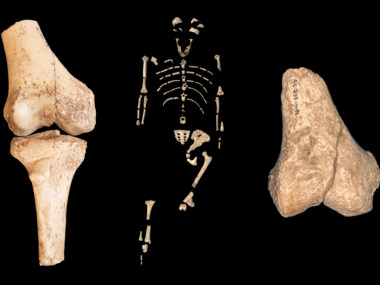
PeterIn 2005, a team of fossil hunters began to explore a new study site in Ethiopia. The region was famous for yielding ancient human and ape fossils. Ethiopian fossil hunter, Alemayehu Asfaw, scanned the dusty terrain looking for smooth, off-white shards of bone. His eyes fell across a small segment of bone. At once he recognized a characteristic notch which formed part of a hominin elbow joint. Once alerted, the team scoured the rocky surface for other bone fragments. They soon found part of a thigh bone, neck vertebrae, pieces of an upper arm bone, and parts of a sacrum. After picking the surface clean, the team began to dig. They found a hipbone, an almost complete shinbone, collarbones, ribs, and a shoulder blade. The bones all belonged to a single large male.1 The discoverers nicknamed the skeleton “Kadanuummu”, meaning “big man” in the Afar language.
The views expressed in this article reflect those of the author mentioned, and not necessarily those of New Creation.
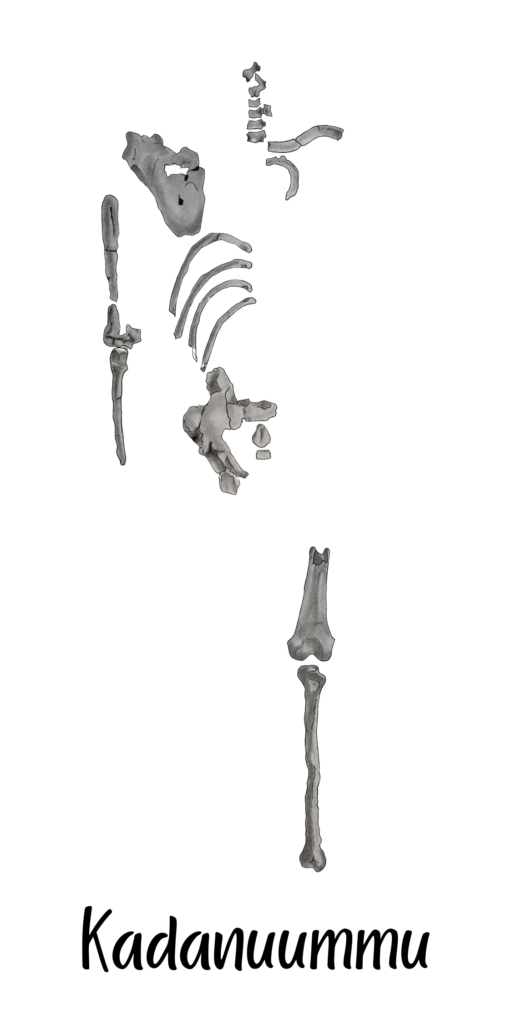
Kadanuummu’s discovery was significant for several reasons. Very few ancient hominin skeletons have ever been found. Kadanuummu’s skeleton is older than most of these skeletons; radiometric dating yielded an age of 3.6 million years. Kadanuummu is quite large compared to other australopithecine skeletons like Lucy and Little Foot. Prior to his discovery, large Australopithecus afarensis individuals were known only from fragmentary remains. Most creation scientists view Kadanuummu in a different light. They suggest that Kadanuummu was not an australopithecine ape, but a human. If true, this finding would push the oldest evidence of humanity back almost a million years. It might force evolutionists to reimagine the course of human evolution. So, let’s examine Kadanuummu’s skeleton and identify how he fits into a creationist understanding of human history.
Identifying a Headless Fossil
Was Kadanuummu a human or an ape? Which species did he belong to? These questions are difficult to answer because his skeleton is so incomplete. Scientists who study human origins typically rely on skulls and teeth to identify fossils. Isolated limb bones, fingers, and toes are more difficult to identify. This difficulty is partially due to the rarity of fossil skeletons. Without access to skeletons, scientists are unable to know which limbs belong with which heads. Isolated bones are also difficult to identify because fossil humans and apes can be very similar. Lucy and other australopithecines walked upright on their hind legs like humans. As a result, some of their bones exhibit similar functional traits.
Big Man or Big Ape?
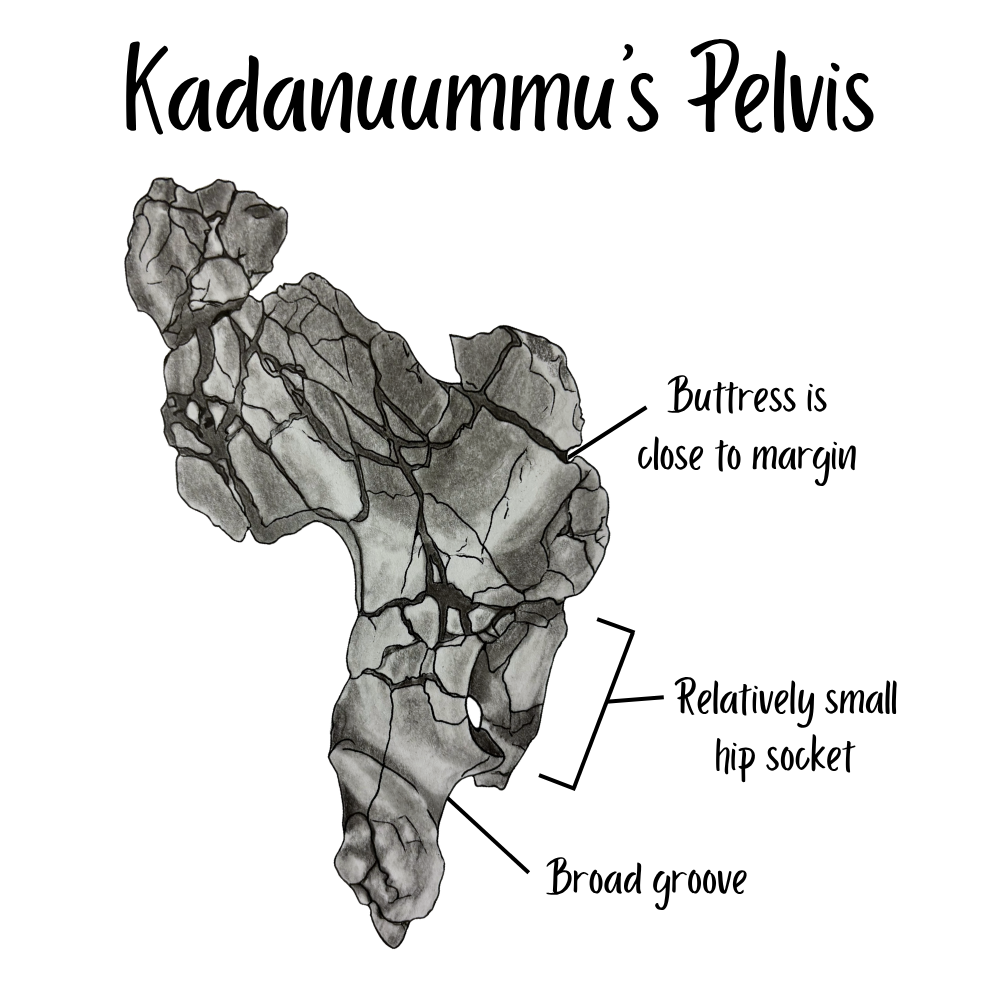
The clearest evidence that Kadanuummu is an australopithecine ape comes from his pelvis.2 Like other australopithecines, Kadanuummu had a small hip socket, a bony support pillar near the edge of the hip, and a long ischium (the part of the pelvis you sit on).3 Based on my personal observations of hominin fossils, I can confirm that this is a consistent pattern with only a few exceptions. As a result, I’m reasonably confident that Kadanuummu was an australopithecine ape.
Kadanuummu’s skeleton was uncovered in the Afar region of Ethiopia, an area famous for its A. afarensis fossils. In this context, it seems possible that Kadanuummu belonged to the species A. afarensis. However, fossils of A. anamensis and Paranthropus have also been recovered in this region. The postcranial anatomy of both groups remains largely unknown, limiting comparisons to Kadanuummu. In my opinion, his skeleton is too incomplete to allow species level identification at this time.
Are Evolutionists Manipulating the Evidence?
Many creationists think that Kadanuummu was a human.4 They believe that evolutionary scientists misidentified the fossil. Neuroscientist and young age creationist, Dr. Peter Line, wrote that, “if Big Man had been ‘dated’ to around 1.6 million years ago, instead of 3.6 million years ago, evolutionists would be talking about an early Homo skeleton… not Australopithecus afarensis.”5 He argues that Kadanuummu’s age influenced evolutionary interpretations of the fossil. Since Kadanuummu predates any known human fossil, evolutionists thought he must belong to a primitive ape species. Creationists argued that Kadanuummu was actually an ancient human.
A Big Boned Ape
This claim is based on Kadanummu’s large size, the shape of his ribcage, and his ability to walk upright on his hind legs. Estimates suggest that Kadanuummu was five and a half feet tall, strikingly large when compared to the three and a half foot Lucy. But soon after Lucy’s discovery it became clear that she was an unusually small female. Most australopithecines were larger than Lucy, a few were even bigger than Kadanuummu. The size difference between Kadanuummu and Lucy may also have been influenced by their sex. So, Kadanuummu’s height does not prevent him from being an australopithecine ape.
Kadanuummu’s Torso
Some creationist have argued that Kadanuummu’s ribcage was too different from Lucy’s to belong to the same species. Scientists traditionally interpreted Lucy’s ribcage as funnel shaped. The top of her ribcage was thought to be narrow like the spout of a funnel while the bottom flared out. Ancient human species, like Homo erectus had bell-shaped ribcages. The top of the ribcage was broad, but the bottom flared out like the skirt of a bell. Kadanuummu’s ribs seem to fit the bell-like shape seen in Homo erectus while Lucy’s ribs follow the ape-like funnel shape.6 But the team who described Kadanuummu’s skeleton argued that ape-like reconstructions of Lucy’s ribcage were inaccurate. At this point, it remains unclear how different Lucy and Kadanuummu’s ribcages were, and whether the differences could be a result of the sex.
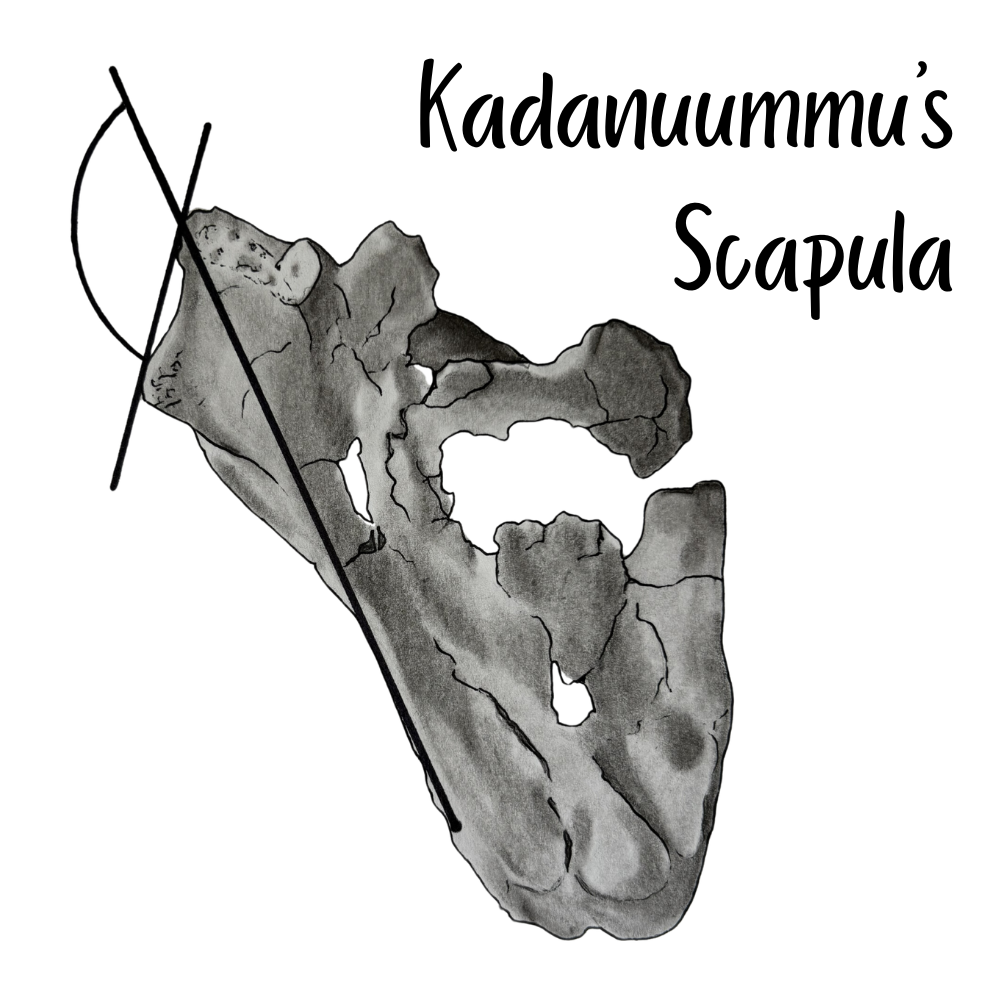
Kadanuummu’s shoulder blade shares some features in common with australopithecines. One example is the angle of the shoulder joint. Our shoulder blade bears a small oval “socket.” The corresponding “ball” is formed by a spherical cap on the upper arm bone. In humans, the socket typically points out to the side. This arrangement works well when your arms dangle down beneath the shoulder blade. An ape’s socket is angled upward. This orientation is more suitable for climbing and hanging. Kadanuummu’s shoulder joint was angled upward like that of an ape.78 The shoulder joint of large-bodied human species like Homo erectus and Homo georgicus was more human-like. One small-bodied human, Homo naledi, had an extremely angled shoulder joint.9 But the angle of Kadanuummu’s shoulder joint is higher and more typical of australopithecines.
Kadanuummu’s Thigh Bone
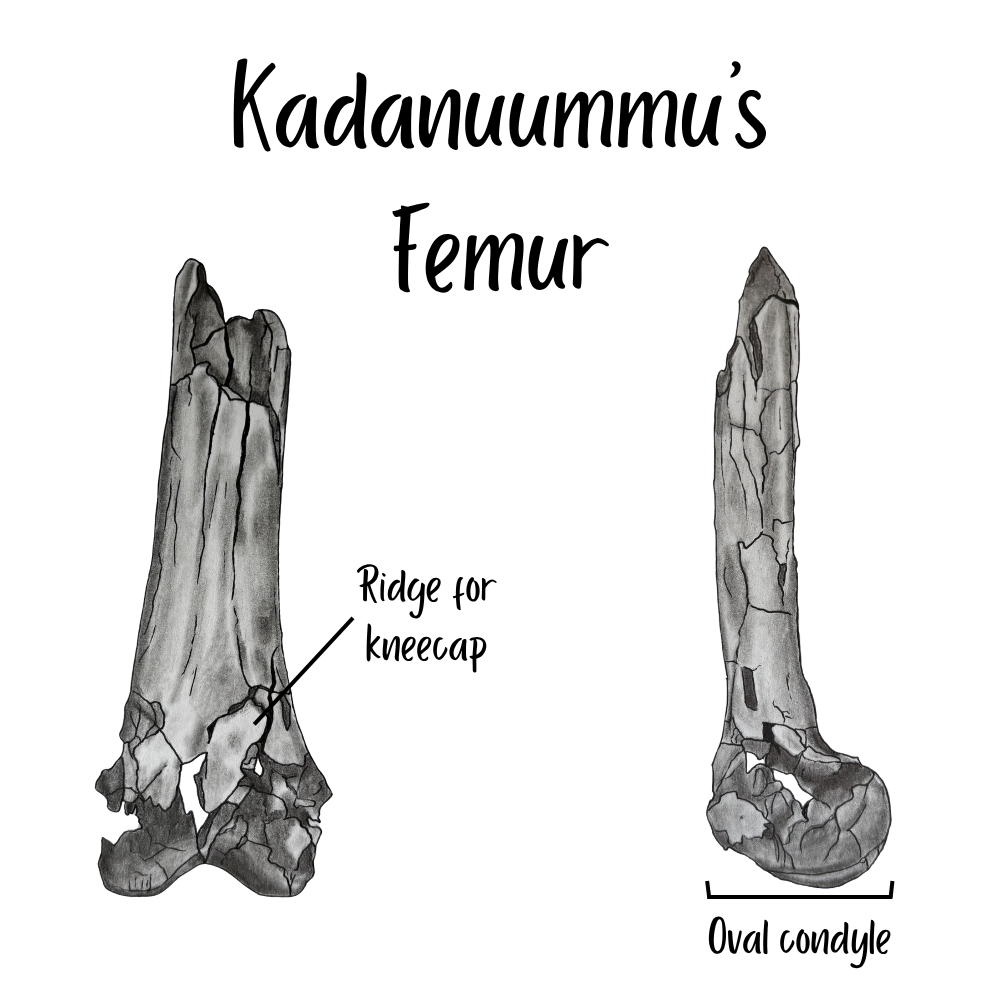
Kadanuummu’s hips and legs were clearly suited for bipedality. They bear many of the same features which allow humans to walk upright on our hind legs. Some of the best evidence comes from Kadanuummu’s thigh bone. The bottom end of the thigh bone is split into two knobs which form the knee joint. When you look at a human thighbone from the side, these knobs look like ovals. This shape allows for more contact between the thigh and shin bones. This condition stabilizes our knee joint when we stand or walk. Kadanuummu’s thigh bone also possessed this stabilizing feature. Like humans, Kadanuummu also had distinct ridges on the front of his knee joint, which keep the kneecap in place.10 Neither of these features is seen in modern apes like chimpanzees.
Creationists generally interpret the australopithecines as knuckle-walking apes. However, they accept the evidence indicating that Kadanuummu walked upright. They argue that Kadanuummu must have been a human since he walked upright, while Lucy must be an ape since she moved about on all fours. This view is simply untenable because the bones of Lucy and other australopithecines bear the same bipedal adaptations seen in Kadanuummu. Both Kadanuummu and Lucy were bipedal.
Interpreting Kadanuummu
Evolutionary scientists believe that australopithecines, like Kadanuummu, were ancestral to humans. Australopithecines were well adapted to life on the ground and walked upright on their hind legs. Roughly three million years ago, a group of australopithecines evolved into the first humans. Evolutionists believe that we inherited our ability to walk upright from the australopithecines. Early humans are thought to have retained ape-like proportions but had slightly larger brains.
But how does a large, bipedal ape fit into a young age creationist model? From my perspective, Kadanuummu was not related to humans. He belonged to a separate ape kind created on the sixth day of creation week. Kadanuummu’s kind included other australopithecines like Lucy and Little Foot. Although australopithecines walked bipedally on the ground, they may also have spent time climbing in the trees. Fossils of Kadanuummu’s kind appear in post-flood rock layers. This created kind appears to have spread across the woodlands and grasslands of Africa soon after the flood. Scientists have not yet uncovered human fossils from this time period. I believe that people were alive at this time based on biblical evidence. But contrary to the claims of certain creationists, Kadanuummu was not one of these early humans.
Footnotes
- Yohannes Haile-Selassie et al., “An Early Australopithecus afarensis Postcranium from Woranso-Mille, Ethiopia,” Proceedings of the National Academy of Sciences, 107, 27 (2010), 12121–12126. ↩︎
- Haile-Selassie, “An Early Australopithecus afarensis Postcranium,” 12121–12126 (Footnote 1). ↩︎
- C. Owen Lovejoy et al., “The Pelvic Girdle and Limb Bones of KSD-VP-1/1,” in The Postcranial Anatomy of Australopithecus afarensis: New Insights from KSD-VP-1/1, ed. Yohannes Haile-Selassie and Denise F. Su (Dordrecht: Springer, 2016), 155–178. ↩︎
- Answers in Genesis, “Relative of Ape-Woman Lucy?” Answers in Genesis, June 26, 2010, https://answersingenesis.org/human-evolution/hominids/relative-of-lucy/. ↩︎
- Peter Line, “‘Big Man’ and ‘Lucy’,” Creation.com, September 13, 2010, https://creation.com/en/articles/big-man-and-lucy. ↩︎
- Bruce M. Latimer et al., “The Thoracic Cage of KSD-VP-1/1,” in The Postcranial Anatomy of Australopithecus afarensis: New Insights from KSD-VP-1/1, ed. Yohannes Haile-Selassie and Denise F. Su (Dordrecht: Springer, 2016), 143–153. ↩︎
- Haile-Selassie, “An Early Australopithecus afarensis Postcranium,” 12121–12126 (Footnote 1). ↩︎
- Brian G. Richmond et al., “The Upper Limb of Paranthropus boisei from Ileret, Kenya,” Journal of Human Evolution, 141 (2020), 102727. ↩︎
- Jean-Luc Voisin et al., “The Homo naledi Shoulder Girdle: An Adaptation to Boulder Climbing,” Anthropologie France, 124, 5 (2020), 102783. ↩︎
- Lovejoy, “The Pelvic Girdle and Limb Bones of KSD-VP-1/1,” 155–178 (Footnote 3). ↩︎

 Abigail L.


 Christian Ryan


 Hannah Klein