

 Kurt Wise
In modern science there are many different natural sciences, distinguished by studying different aspects of the physical world. Biology, for example, is one of the natural sciences. Derived from the Greek words bios (‘life’) and logos (‘word’ or ‘discussion’), ‘bio-logy’ was originally understood to be the discussion or study of life and is often defined as ‘the study of life’. And, if you believe that the physical world is all that exists (the worldview of naturalism), this would be an accurate definition of biology. If, however, the biblical worldview is true, then there is more to the world (and more to organisms) than the physical.
The following article is a from Devotional Biology: Learning to Worship the Creator of Organisms, Chapter 1.4, pgs. 30-33. The views expressed in this article reflect those of the author, and not necessarily those of New Creation.
God is called the living God (e.g. Jer. 10:10; Matt. 16:16), but He is also spirit—not
physical. Since biology is a natural science and can only study the physical, God is at least one living being Who cannot be studied by biology. Consequently, biology does not study all of life—but only living beings with physical bodies. The Bible also refers to life itself as something different from the physical—or at the very least something more than physical. For example, God first formed man from the dust of the earth (Gen. 2:7a). It would seem that man’s complete physical being was formed at this time. But it was only after God breathed into man’s nostrils the ‘breath of life’ that ‘man became a living soul’ (Gen. 2:7b).
Our physical body is an essential part of being human (after all, God creates physical bodies even for believers in heaven). But the body alone is not alive. Adam’s body needed enlivening, so God gave it ‘life’, just as He did for all of us and even does for all animals (Psa. 104:29-30). Since it enlivens physical bodies (and is not itself the physical body), life involves something beyond the physical. And if life is non-physical, or something more than physical, then biology, as a natural science, may not be able to study life itself—at least not completely.1
Thus, although the nature of the word itself would suggest ‘biology’ is the ‘the study of life’, the science of biology may not actually be able to study life! At best, science can study only organisms—the bodies of those physical things that possess life. So, rather than say that biology is the study of life (a common definition and an acceptable one in naturalism), it would be more accurate to say that biology is the study of organisms (physical beings having life).
Why Study Biology?
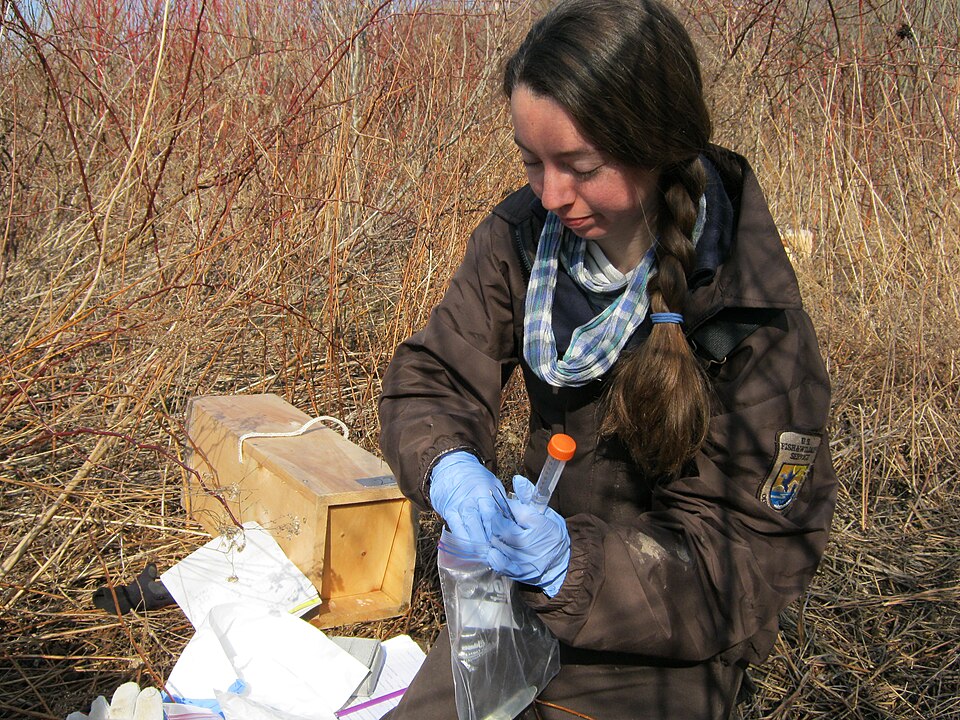
Whereas the first half of this article focused on what biology is, the second half of this article focuses on why we should study biology. Why should a student majoring in music, English, history, or a host of other non-science fields take a course in biology?
Since a pure science seeks to understand the physical world rather than produce something of value to humanity, what use is there then in studying science at all? And is not science dominated by unbelievers who attack Christianity? Did not biologists come up with evolution, and does not evolution contradict the Bible? Why should a Christian young person have to suffer through memorizing a bunch of useless facts, especially when he or she dislikes it, and it may even be an enemy to his or her faith?
I would suggest that there are a host of reasons why a Christian should study biology. A dozen of them are introduced below. It should be noted that because of the holistic nature of God and His truth, most of these reasons are strongly interrelated and often difficult to clearly distinguish.
Biology and our Preisthood

Theologians have pointed out that humans have an important priestly function. There are similarities between the Garden of Eden as described in Genesis 2 and Ezekiel 28:13 and the future abode of believers described in Revelation 21 and 22 (e.g. gems, gold, tree of life, God living with man, no curse, and no death). Both heaven and Eden are specially designed as places where man and God were to live together.
There are also similarities between the Garden of Eden and the tabernacle built by
Moses and the temple built by Solomon (e.g. cherubim, a single entrance, God interacting directly with man). Between the dismissal of humans from Eden and admittance of humans to heaven, the tabernacle and temple were to provide a picture of both Eden and heaven.
In both the tabernacle and the temple, God descended to earth to sit between the
cherubim of the ark, and there to dwell among priests. These priests in Numbers 3:7-8 were called upon to ‘keep’ and ‘serve’ (Hebrew words shâmar and ‘âbad respectively). First, of course, they were to ‘keep’ or look out for the physical care of the temple. At the same time, however, these priests were called upon to maintain a pure relationship with God which would compel them to worship God. In this manner they were also to ‘keep’ the temple a place of continual worship. Furthermore, this relationship with God was to compel them to share that relationship with others, thereby cultivating a similar love of God in others. In this way they were to ‘serve’, or meet the spiritual needs, of the remainder of the people by bringing them into temple worship. And all this was to bring glory to God.
When God charged Adam (and thus all humanity) in Gen. 2:15, He used the same
Hebrew words, to ‘dress’ (‘âbad) and ‘keep’ (shâmar) that He would use later for the
temple priests. Man has been called upon from the very beginning to be a creation priest, or a priest of God in the creation. He is to preserve or care for the creation as the abode of God (as the temple priest was to care for the temple). He is to make it a place of continual worship by deepening his own relationship with God and using the creation as a stimulus to worship (as the temple priest was to do for the temple).
Finally, he is to serve others by bringing them into that worship (as the temple priest was to do for the people of Israel). In fact, man should bring the entire creation into the worship of its Creator. Towards that end, the study of biology can help a Christian be a better creation priest in at least three different ways.
Through Biology We Can Better Understand God.
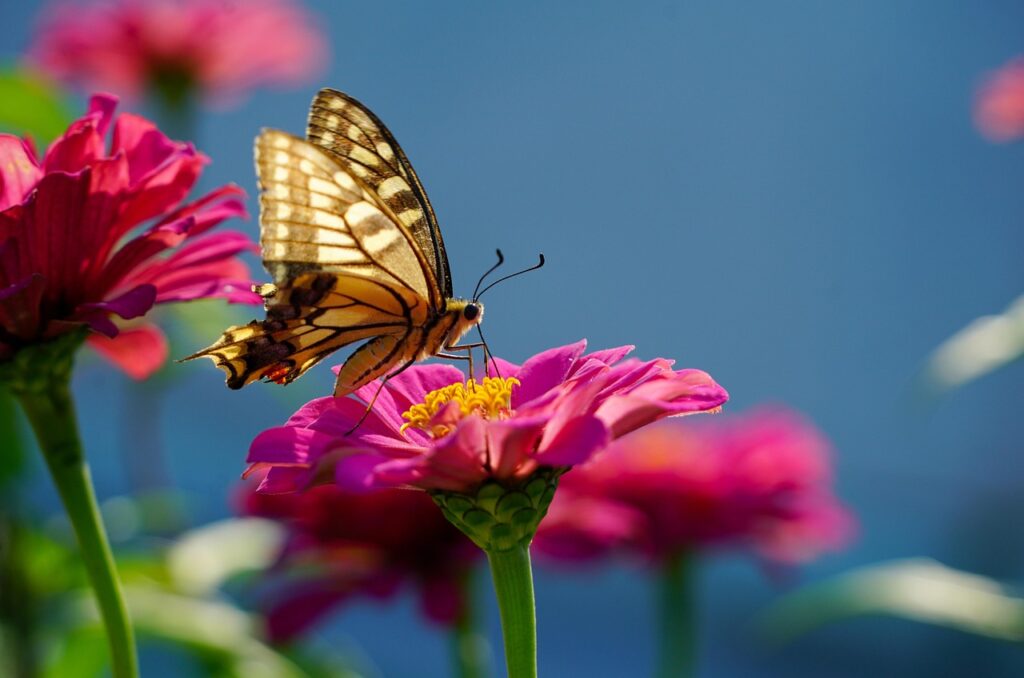
The more familiar a person is with an artist’s work, the more intimate is his understanding of the artist. A careful study of God’s handiwork (such as a careful study of organisms) has the potential of providing an intimate understanding of God Himself.2 This would be the case even if God was not trying to teach us about Himself. However, Romans 1:18-20 indicates that God does intend to teach us about Himself. He carefully designed the physical world to provide physical illustrations of His invisible qualities and He carefully designed humans to recognize those qualities. The passage indicates that God reveals these truths to all people, even to unbelievers.
The Bible, especially as the Holy Spirit reveals its truths to believers, provides much more specific information about God than is revealed in His Creation. However, physical illustrations from the creation can help us understand abstract truths. Witnessing a pattern throughout the entire creation can also confirm and deepen our understanding of biblical claims. The deeper our understanding of God the more effectively we can fulfill our responsibilities as priests of the creation. A study of biology can thus deepen our understanding of God and help us be better creation priests.
Through Biology We Can Better Worship God

Once you recognize how a biological feature teaches something about God, I believe you will be forever changed. I pray that for the rest of your life, every time you see that biological feature you will be reminded of God.
Sometimes seeing such things can even cause us to spontaneously erupt into worship. Psalm 19:1-6, which begins with “The heavens declare the glory of God…,” is an example of the worship that David experienced in response to viewing God’s creation. In fact, following David’s example, there is a long tradition among the Hebrews and in the church to produce psalms, and hymns and praises to God based upon the creation. A few of many examples would include All Creatures of Our God and King (1225 A.D.), “Fairest Lord Jesus, Ruler of all nature… Fair are the meadows, Fairer still the woodlands…” (Fairest Lord Jesus, 1677), “…There’s not a plant or flower below But makes Thy glories known…” (We Sing the Greatness of Our God, 1715), “…Birds in song His glories show…” (I Am His and He is Mine, 1876), “…When through the woods and forest glades I wander… Then sings my soul…” (How Great Thou Art, 1885), “All nature sings… This is my Father’s world…” (This is My Father’s World, 1901), “…Join with all nature in manifold witness…” (Great is Thy Faithfulness, 1923).
Once we learn to recognize how God shows Himself through His creation, the
biological creation can be used to stimulate us to worship. Sharing these experiences with others, such as David did in Psalm 19, can then stimulate others to worship. As this text introduces biological illustrations of God’s nature, the author will be reminding you of the responsibility we have to respond in worship.3 I hope that you are compelled to worship in response to first learning these things. Even more, though, I pray this begins a life-long experience of priestly activity—using His creation to worship our God and bringing others into that same worship.
Through Biology We Can Better Glorify God
God created the physical world for his own pleasure (Rev. 4:11). The chief end of man is to glorify Him (“…whatsoever you do, do all to the glory of God”: I Cor. 10:31). One way a person can glorify God is by recognizing that a specific aspect of the creation was placed there as an illustration of His nature. God is further glorified when we share those truths with others. In short, as we fulfill our priestly function, we bring glory to God. Every time this text reveals how the biological world illustrates a characteristic of God, you will learn a tool for glorifying God that you can use for the rest of your life.
Learn More About the Importance of Studying Biology
Footnotes
- More discussion on the non-physical nature of life is found in Chapter 2. ↩︎
- Noting here that, tragically, because of man’s rebellion, some can come to an intimate knowledge of the creation, but reject its Creator (“…the invisible things of Him from the creation of the world are clearly seen… so that they are without excuse… [But]…when they knew God, they glorified Him not as God…”: Rom. 1:20-21) ↩︎
- This reminder to worship is found in multiple chapters under the ‘Our Responsibility’ section of each chapter. ↩︎


 Christian Ryan
 Sara Anne
 Matt McLain

 Todd Wood
 Abigail Van Huss
 Peter
Peter
