
 Christian Ryan
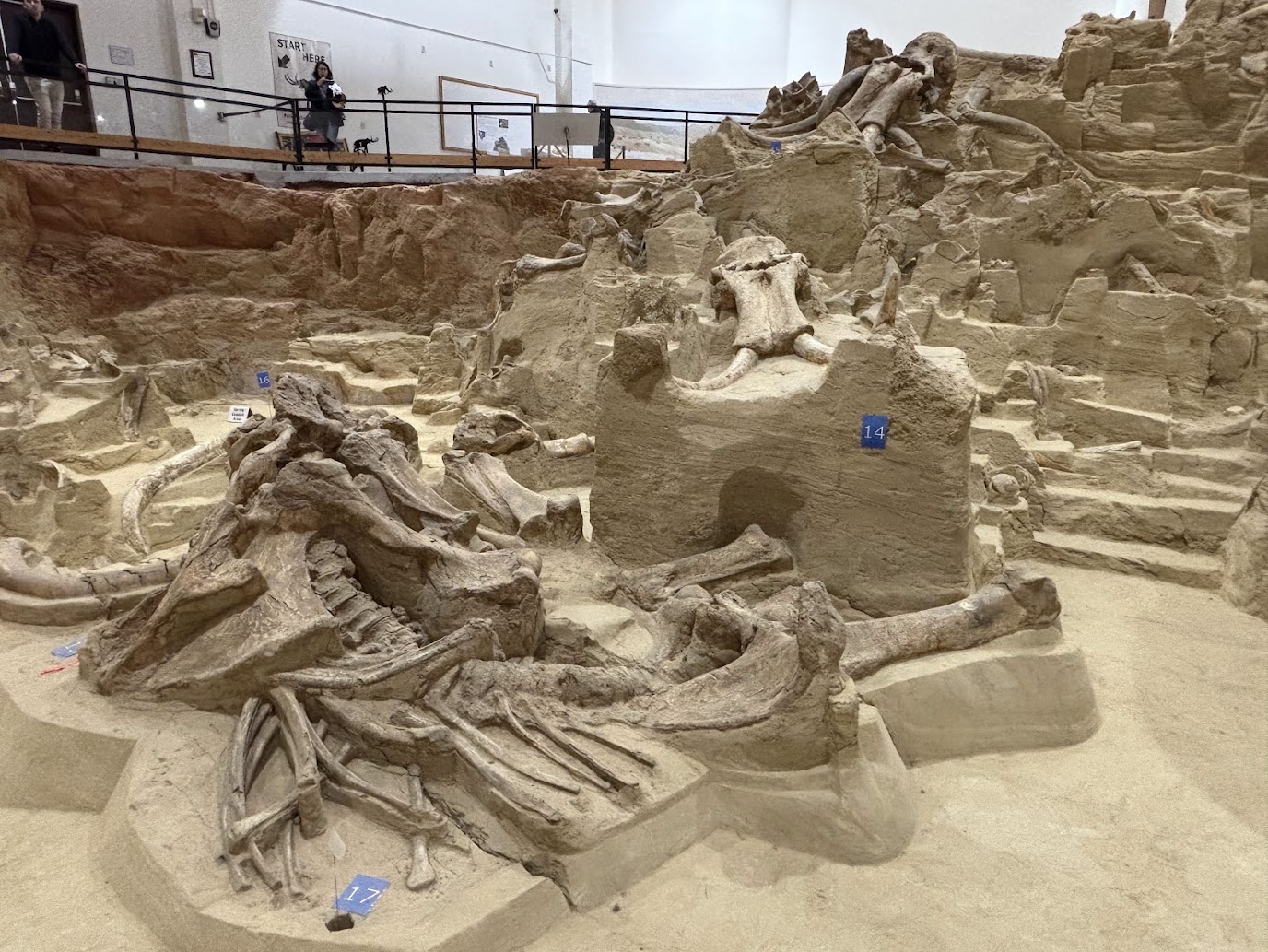
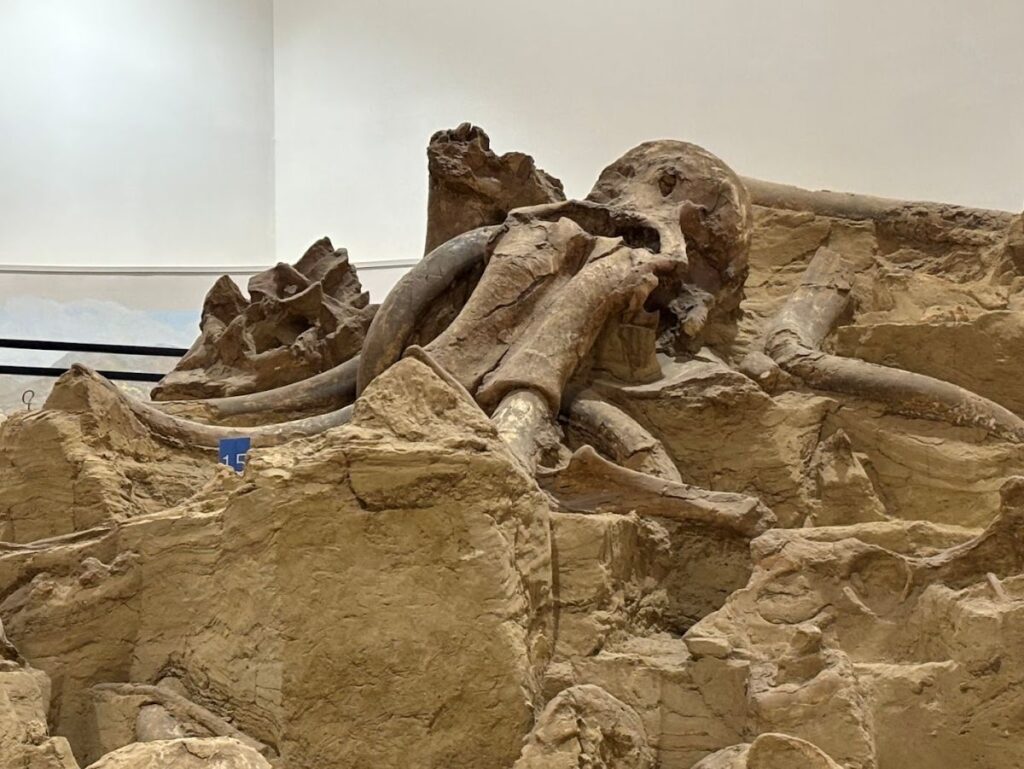
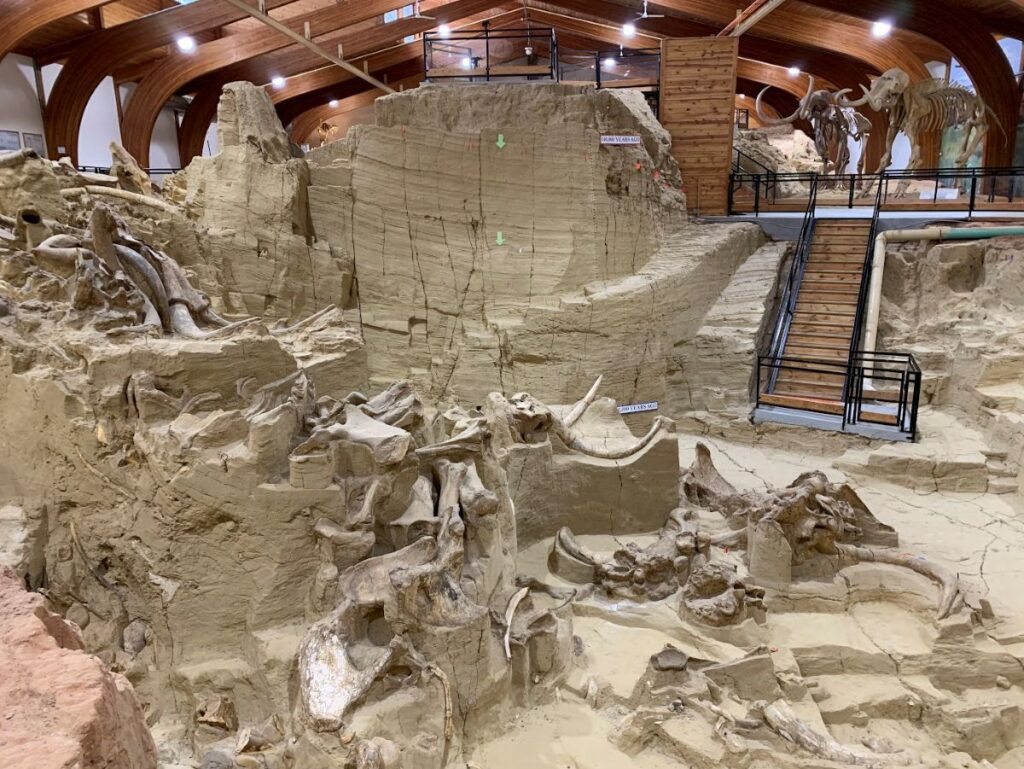
Imagine scores of once-ivory tusks sticking out of the earth. The skulls of elephants with their ominous, empty stares. Pachyderm skeletons strewn about everywhere. This sounds like a description straight out of the elephant graveyard in The Lion King. But this is actually a very real place. Not one somewhere in the depths of Africa, but right here in the United States of America, in South Dakota to be exact! And these skeletons are not those of modern elephants, but mammoths! Welcome to the Mammoth Site, located in the southern stretches of South Dakota’s Black Hills.
The views expressed in this article reflect those of the author mentioned, and not necessarily those of New Creation.
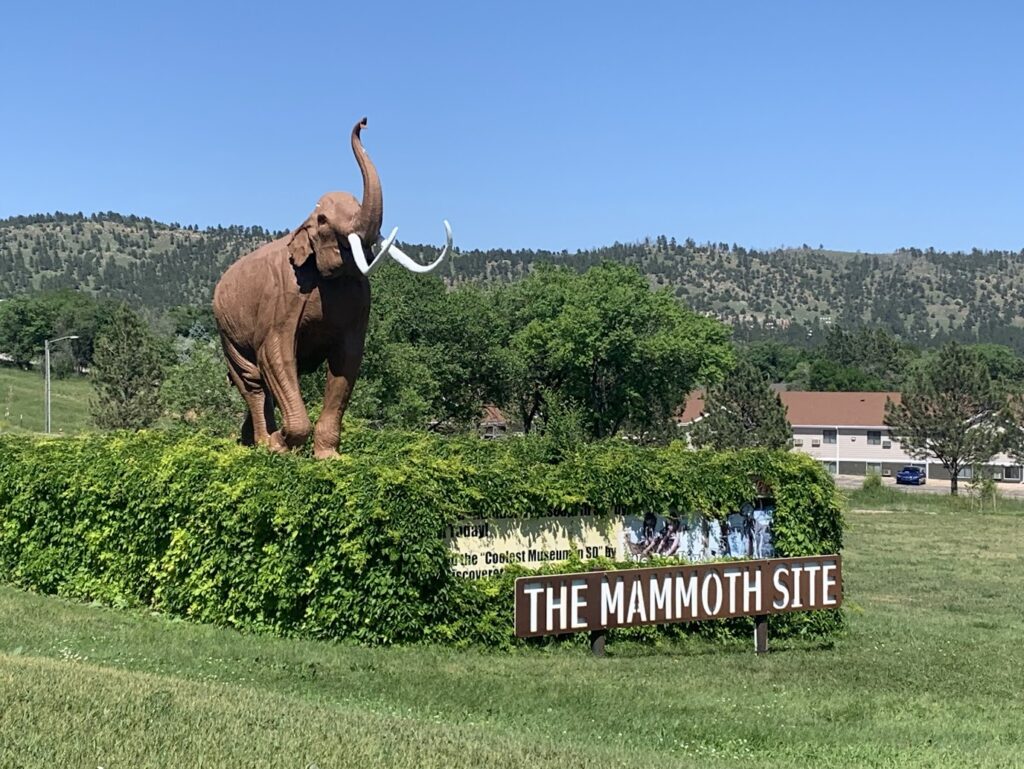
The Mammoth Site is a museum and active paleontological dig site in Hot Springs, South Dakota. Here, more than 60 mammoths and other animals left behind skeletal remains that have been uncovered. How did all of these animals perish in one place? For the young-age creationist, any location with lots of fossils buried in a single place is tantalizing. Are these creatures casualties of Noah’s Flood? Are human hunters to blame? Maybe this is some kind of mammoth version of an “elephant graveyard”?
Scientists had a sinking feeling that it was something else. What exactly does the Mammoth Site have to tell us about this region from a biblical perspective?
How was the Mammoth Site Discovered?
In 1974, Hot Springs, South Dakota, preparation for a routine new subdivision came to a halt when George Hanson, a construction worker, discovered strange bones and teeth in the ground. The discoverers brought this to the attention of the landowner, Phil Anderson. Before long, workers unearched a complete skull and tusk from an extinct mammoth. But the discoveries did not stop. There were more and more mammoth bones, teeth, and tusks just underneath the surface. There was more than a single mammoth buried here. It was an entire mammoth graveyard!
Phil Anderson decided that the land would be more useful as a scientific resource, so he sold the land at cost to the specially formed non-profit entity called The Mammoth Site of Hot Springs, South Dakota, Inc. Officials designated the site as a National Natural Landmark in 1980. To protect the fossils, researchers decided to preserve as many as possible in place rather than excavate them all. They built a museum over the bonebed to protect the fossils from the elementsand allow scientists to study them in an environmentally controlled indoor setting. Today, people know this museum as the Mammoth Site.1
The Columbian Mammoth: Bigger & Less Hairy
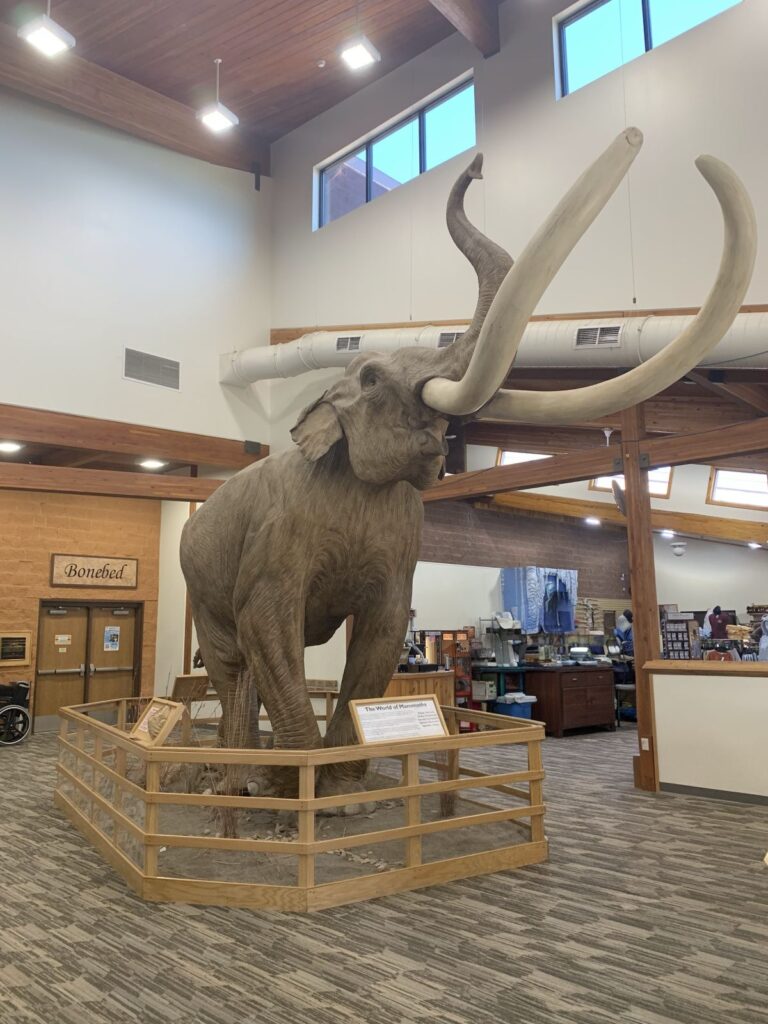
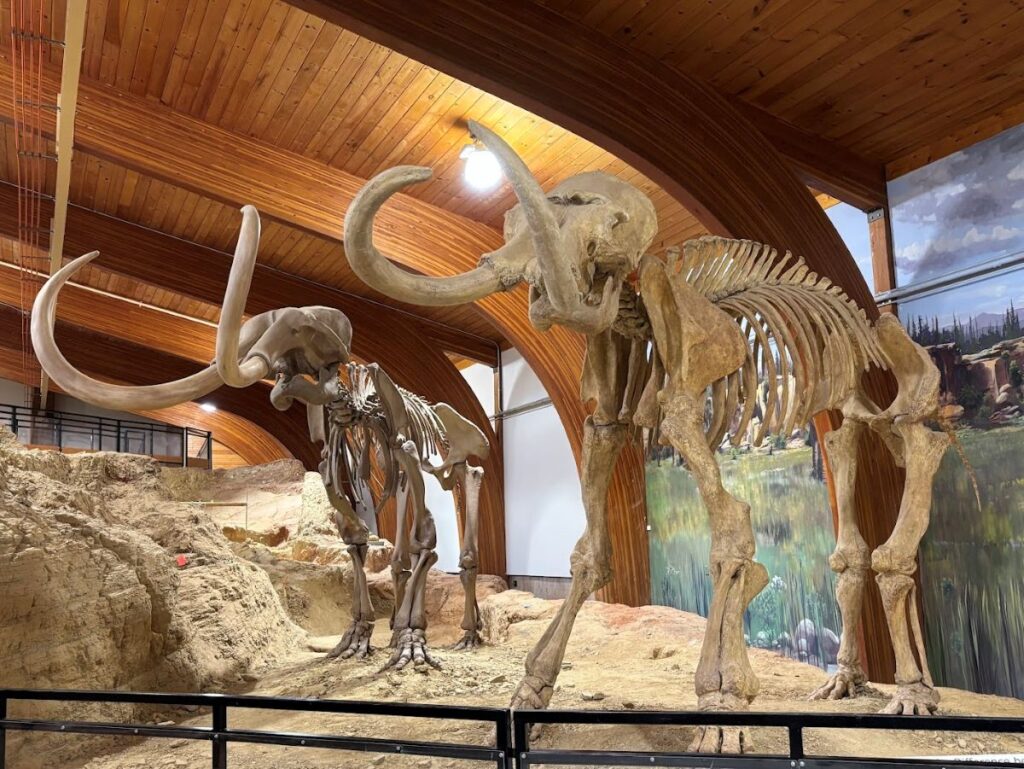
The 61 mammoths at the Mammoth Site belong to two species. Three of them reportedly belong to the icon of the Ice Age, the woolly mammoth (Mammuthus primigenius). But the vast majority of mammoths found here belong to another species called the Columbian mammoth (Mammuthus columbi).
The Columbian mammoth is larger than its woolly cousin, measuring 12 to almost 14 feet tall at the shoulder and weighing 10-13 tons. This made them even larger than the African bush elephant of today. Measuring over 13 feet long and weighing 440 lbs, their tusks were larger than any other member of the elephant family.
Paleontologists have found fossils of Columbian mammoths throughout the lower 48 states, usually farther south than woolly mammoths, and even down into Mexico and Central America. They appear to have been a warm-weather adapted species, and as such would have had considerably less hair than woolly mammoths. Recent genetic studies suggest a very convoluted history. They appear to be the result of hybridization of woolly mammoths and another, mysterious lineage called the Krestovka mammoths.2 We have additional evidence of hybridization occurring between Columbian mammoths and woolly mammoths after this point as well.3
The Geology of the Mammoth Site
Absolute Date (And Why We Can’t Trust It)
For fossils thought to be less than 50,000 years old, paleontologists often use a technique called carbon-14 dating. The researchers at Mammoth Site were unable to obtain sufficient bone collagen from the mammoth fossils, which is more regularly used for C-14 dating. So they instead resorted to using the bone mineral apatite, which gave dates ranging from 21,000 to around 26,000 years ago give or take a few hundred.4 This places them during the late Pleistocene epoch.
Young-age paleontologists are often wary of the unverifiable assumptions used in this process, but there was another problem with using carbon-14 dating on the bones at Mammoth Site. Apatite, the only available material that could be used for carbon-14 dating, performs notoriously poorly with this method.
Another issue was the absence of bison fossils.5 Bison were prevalent in North America during the late Pleistocene and up until the late 19th century when overhunting by humans almost sent them into extinction. So researchers found it rather strange that no bison fossils have ever appeared at the Mammoth Site.
A New Way to Date
Researchers employed a newer dating technique called optically stimulated luminescence (OSL), which estimates the amount of time that elapsed since direct sunlight last struck a layer of sediment. Based on this technique, the researchers estimated that the sediment layers holding the mammoth remains range from 140,000 to 190,000 years old.6 This predates the oldest bison fossils in this part of the continent.
While young-age paleontologists reject these exact dates due to the same sorts of assumptions used in carbon-14 dating, they help establish a relative chronology. OSL firmly places the Mammoth Site fossils in the mid-Pleistocene epoch. But this alone does not tell us much about how or when these animals died on the young-age timescale.
Relative Date
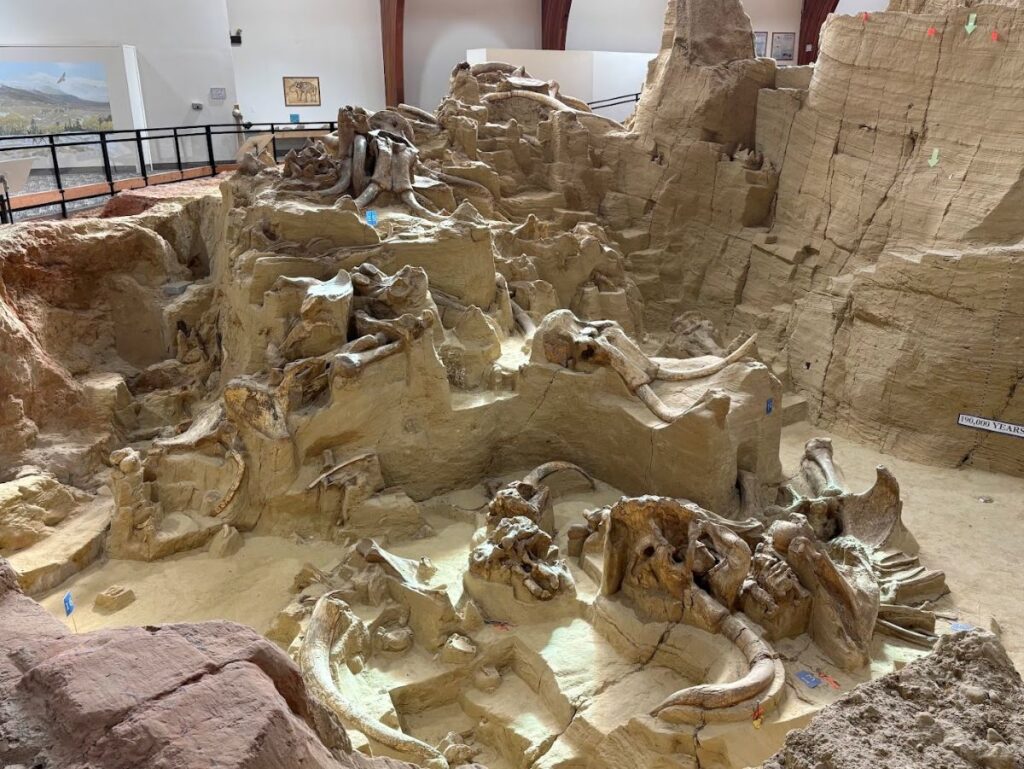
In order to better place the Mammoth Site into biblical history, we must consider its geologic context. The fossils of mammoths and other animals are all buried in layers of sand, silt, and clay. They appear to be cutting into a sequence of sedimentary rock layers: the Minnelusa Limestone and the overlying Spearfish Shale. When a deposit of sedimentary layers are intercutting other rock layers, we know that the rock layers they are cutting into must have been formed first. After all, what could be cut into if they were not?
This allows us to put the geologic and fossil features of Mammoth Site into a sequence of events. The Minnelusa Limestone was formed first, and the Spearfish Shale was formed on top of it. These layers are extensive, and the Minnelusa specifically is composed of marine rock and fossils. This most young-earth scientists place these rock layers during the worldwide Flood of Noah’s time.
After the Rise of Mountains
Now, there are enormous blocks of the Minnelusa Limestone and Spearfish Shale underlying the mud and sand layers containing the mammoths. This means that underground cavities must have developed within the Minnelusa Limestone. This could only have happened before the mammoth-bearing layer accumulated. Once they could not support the overlying weight, they and the Spearfish Shale over top collapsed, creating a sinkhole.
Geologists time this with the rise of the Black Hills and the wider Rocky Mountain region. As movements within the Earth’s crust uplifted the mountain ranges, cracks and cavities formed in the rocks, creating caverns. In the case of the Mammoth Site, this particular cavern collapsed. Over time, layers of mud, sand, and fossils filled the sinkhole.
The absence of marine rocks and fossils in this region at the time the mountains were forming suggests that this was going on during and/or after the floodwaters had receded from the region. This places the fossil-carrying sediment layers filling in the sinkhole either late or after the Flood. There are other ways we can narrow this down even further.
The Mammoth Site Sinkhole Trapped Living Animals
How did the animals end up in the sinkhole to begin with? Were they alive when they got trapped? Or were they transported into the sinkhole after they died? Young-age paleontologists often identify large bonebeds, like the Hanson Ranch Bonebed, as the result of catastrophic transport burial of already-dead animals. However, there are signs that the animals buried here were very much alive at the time they were trapped.
Alive & Not-Well
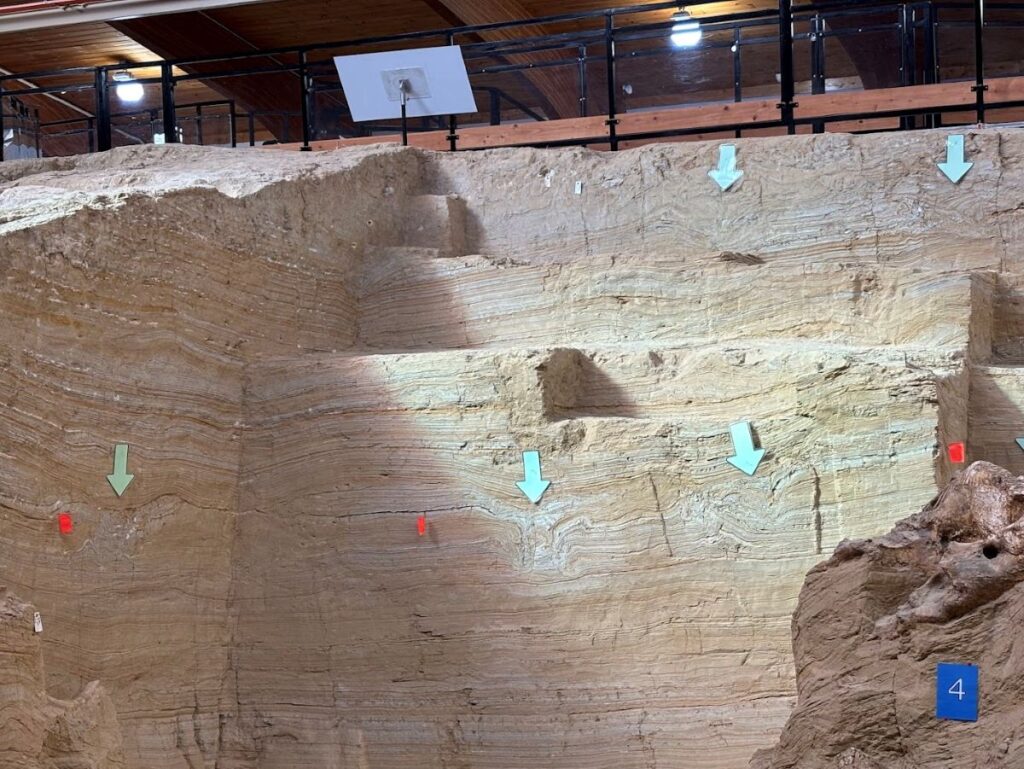
Scientists observed mammoth footprints in sediment layers within parts of the sinkhole that would have been just deep enough for a swimming mammoth to touch the bottom.7 Other footprints occur higher in the deposit, where mammoths left them as sediment gradually filled the sinkhole and reduced its depth. These footprints are similar to when you step into deep mud, your foot sinking down, and then as you pull your foot back up, the mud sucks at your feet, distorting the ground underneath. Clearly, living mammoths made these footprints.
It’s Lonely Down in This Pit
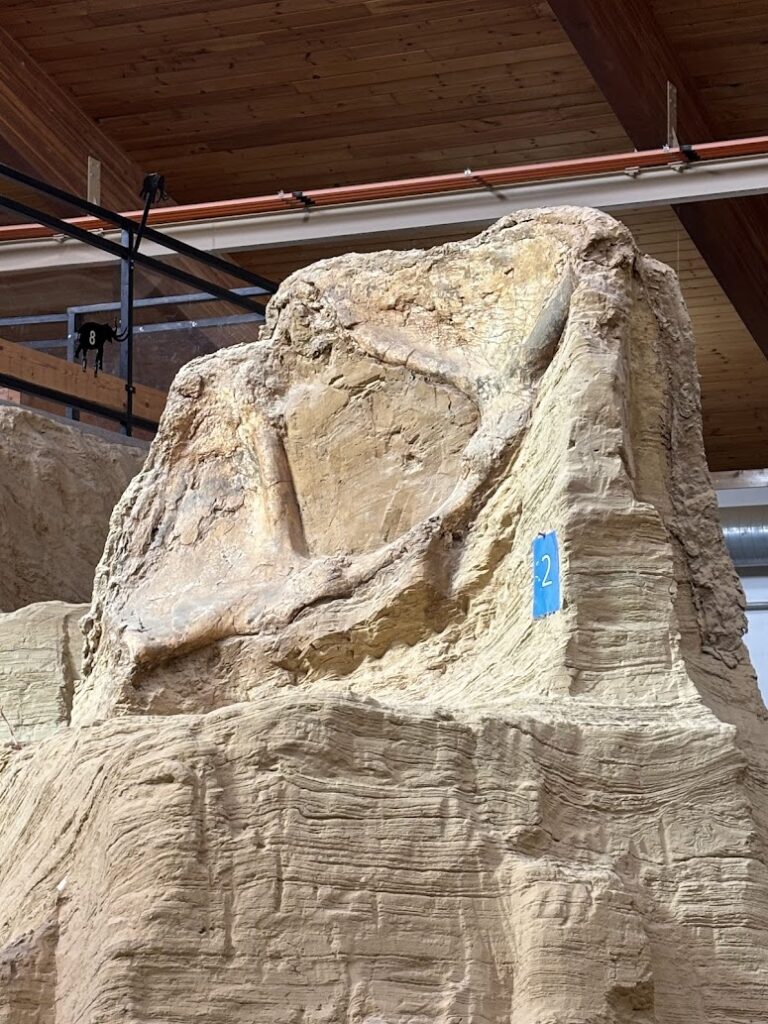
All of the mammoths found at the dig site are young males, most between 25 and 38 years old at the time of death. We can tell the gender of a mammoth by looking at its hip structure. Males tend to have much narrower hips than female mammoths do. When you consider females had to give birth to a baby weighing over 200 lbs, you will understand why!8
The Mammoth Site researchers think a clue to the sinkhole’s selective nature can be found in modern elephant behavior.9 Today, female African and Asian elephants live in herds with their offspring, led by a matriarch. Elephant bulls leave the herd as they mature, living alone or in a loosely-associated bachelor herd. Scientists think mammoths behaved in much the same way. Other fossil sites preserving multiple mammoth specimens, such as the Waco Mammoth National Monument in Texas, are heavily dominated by females and their calves.
Young and Dumb
So why are mostly young male mammoths preserved at the Mammoth Site? Answer: they were young and dumb. The researchers think that once these animals set off on their own, they did not have much guidance. So they often got themselves into dangerous situations, like investigating a sinkhole. Another study conducted on isotopic analyses of the mammoths’ teeth found that the animals lived their whole lives in the southern and western Black Hills region. They were not migrating, as all of the water they drank and food they ate came from within the hot spring region and surrounding landscape. This suggests that the high-sloped landscape of this region was a “bull-only” zone, meaning females and their calves must have frequented elsewhere.10
If the mammoths preserved in Mammoth Site were the result of a large-scale catastrophe, why were only young male mammoths swept into the sinkhole?
Wider Context
Let us take the rest of the Black Hills context into consideration. Recall that the formation of the sinkhole is a direct result of the uplift of the Black Hills. There is also no evidence for marine presence at the time the sinkhole was forming. This suggests, at the absolute earliest, it formed very late in the Flood, after the floodwaters had receded. If sediments were filling the sinkhole at this point during the Flood, there would still be living animals at this time.
This conflicts with what we know from Scripture. The Flood was meant to kill off all air-breathing land animals. We would not expect to see animals surviving well after the floodwaters had receded. This would show the Bible’s account of the Flood to be historically inaccurate. A few creationists have suggested that there was extensive volcanic activity late during the Flood.11 But there is no evidence for such rampant volcanic activity at this point in the geologic record.
The best explanation is that these mammoths willingly chose to enter the sinkhole and were unable to escape. The Mammoth Site researchers think the sinkhole was filled over a prolonged length of time, perhaps somewhere between 350 to 700 years or so.12 Why would so many mammoths and other animals willingly descend into this death trap?
How Did the Animals Get Fossilized?
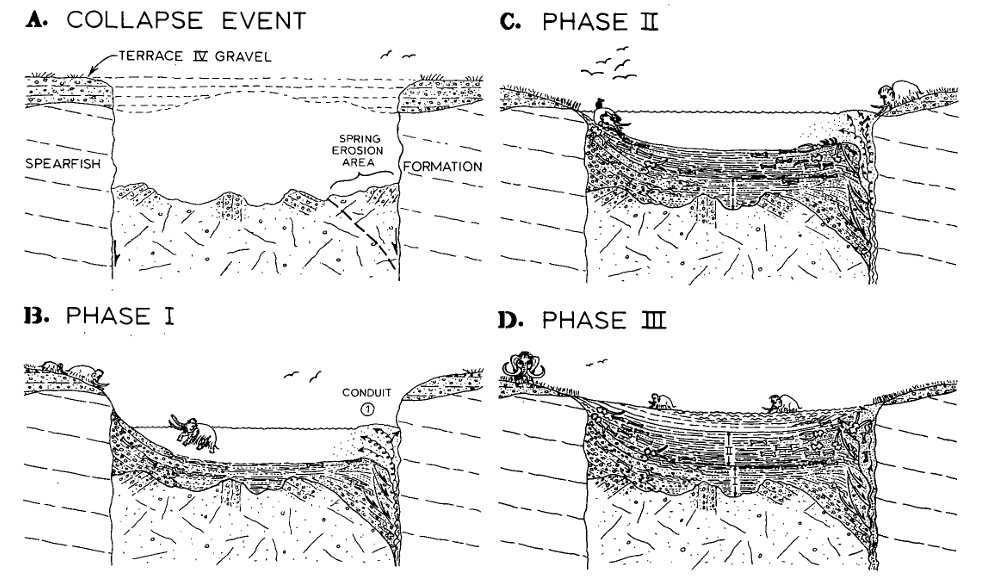
A. Underground cavern collapses, creating a sinkhole.
B. Warm spring water filled the sinkhole, attracting mammoths and other animals.
C. Over time, repeated deaths and sediment accumulation buried the skeletons.
D. Eventually, the basin became filled.
Clearly, there must have been something that attracted 60+ mammoths into the sinkhole. A closer look at the geology of this sinkhole may reveal the answer.
Being landlocked, most of the water flowing into the sinkhole came up from an artisan spring. The water was warm. In fact, as you might have guessed by the name of the town, Hot Springs is still home to many active hot springs today. Steam rises from the rivers flowing through town, even in the middle of winter.
A Mammoth Trap
This would have generated a pond where lush vegetation could grow. The warm water and abundant food would have lured animals into the sinkhole. What they did not know is that the water concealed a sharp drop-off in the pond where the Spearfish Shale gave way. Shale is very slippery when wet. So when mammoths took a wrong step, they slipped into the deep part of the pond. Unable to get out, the poor animals died by exhaustion and drowning. Before long, they sank to the bottom, where they lay preserved to this day.
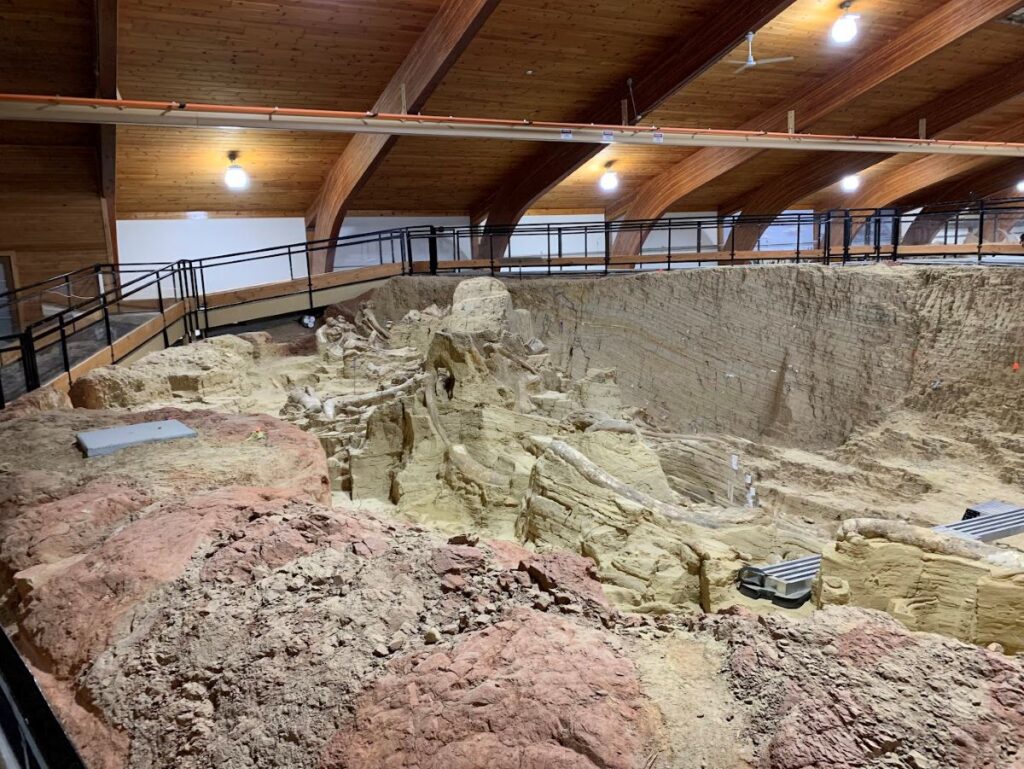
The Mammoth Site is an excellent example of a “natural trap.” In addition to sinkholes, caves and tar pits are also natural traps. A similar example to the Mammoth Site can be found in the modern day Coxes Lake, located in the northern Black Hills of South Dakota.13 Like the pond at Mammoth Site, the edges of Coxes Lake are shallow with plentiful vegetation. People and animals can readily walk quite far out into the lake. However, there is a deep sinkhole toward its center, the edges of which are hard to see above water.
After Their Kinds
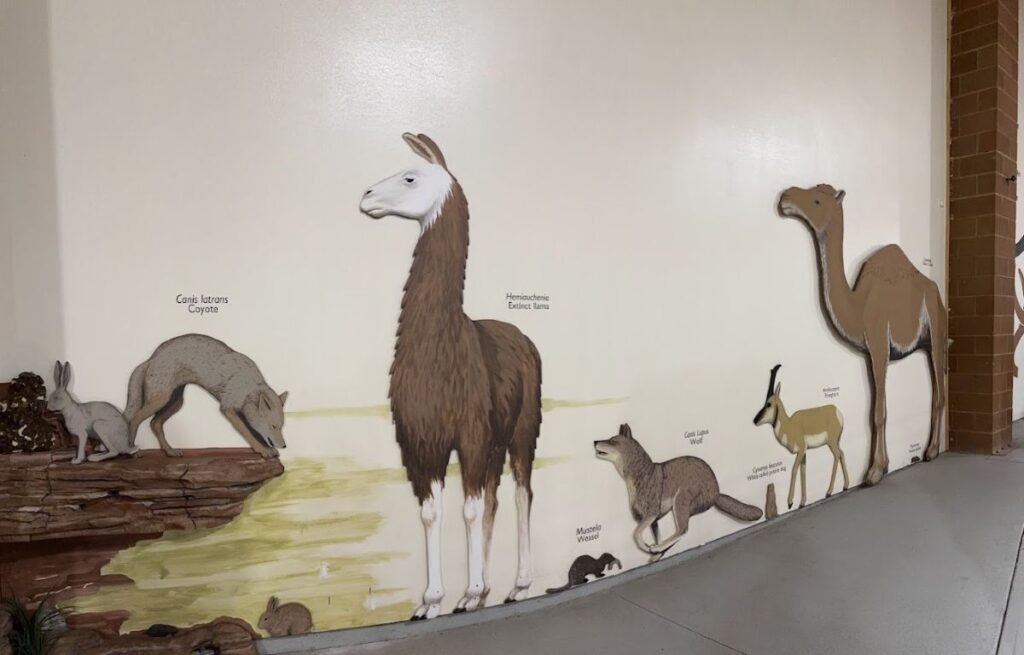
Another clue that can help us establish where the Mammoth Site fits into our biblical chronology comes from the diversity of animals found at the site.14 While mammoths are the most common, others are known as well. Some—like coyotes, prairie dogs, rabbits, mule deer, gray wolf, and pronghorn—are even still alive in the Black Hills today. With the addition of certain extinct species aside, the suite of animals preserved here is remarkably similar to that found in the modern central Great Plains ecosystem of North America.
Do They Interbreed?
Of particular note, the site contains multiple distinct representatives of the same created kinds. “Created kinds” are lineages of animals that God created in the beginning as well as their descendants. For example, the gray wolf and coyote both belong to the same created kind. Researchers have also identified American llamas (Hemiauchenia) and giant camels (Camelops) at the Mammoth Site. Modern llamas and camels can successfully interbreed, confirming they belong to the same created kind. And as we already have noted, woolly mammoths interbred with Krestovka mammoths and produced the hybrid Columbian mammoth.
Why is this significant? God only preserved two of each kind of air-breathing land animal on the Ark. Let us use llamas for this illustrative example. In this scenario, if the Mammoth Site were the result of the Flood and God brought two llamas to the Ark, camels would have never existed after the Flood. This is problematic because both camels and llamas are alive today. Llamas could not simply produce carbon-copied pre-Flood camels again because recombination would have reassembled and rearranged the genetic information. Since camels and llamas belong to the same created kind, they both must have diverged from an ancestor that came off the Ark.
This implies that the suite of species found fossilized at the Mammoth Site lived well after the Flood.
The American Serengeti: An Established Ecosystem
The Mammoth Site is a window into the ecosystem which it sampled. It appears to have been a thriving ecosystem, with every link in the food chain preserved. In a lot of ways, it was similar to the African Serengeti of today. For this reason, many scientists call the wider ecosystem that once existed across the Great Plains the American Serengeti.
Fossil plants from the site show a variety of grasses, sedges, hackberry trees, and scattered oak, willow, and pine trees in the area.15 From these fossils, scientists have concluded that a grass parkland similar to modern central Alberta covered the southern Black Hills at the time, rather than the endless grasslands seen today.
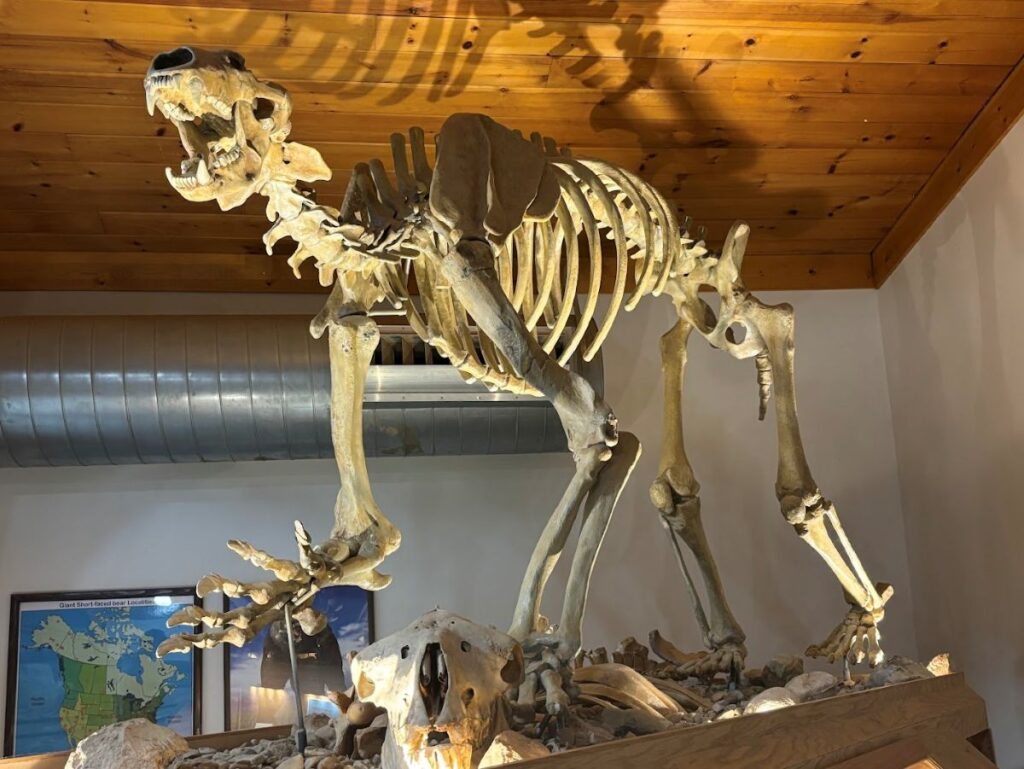
Grazing and browsing on these plants were a slew of herbivores. Instead of wildebeest, giraffes, and elephants, there were shrub oxen, giant camels, and two species of mammoths. And where there are prey, there are also predators. Among gray wolves and coyotes, also found at the Mammoth Site are American lions (Panthera atrox) and the giant short-faced bear (Arctodus simus).
Lessons We Can Apply Elsewhere
The Mammoth Site is useful for creation researchers because it can serve as a blueprint for how we can interpret other geologic and fossil observations elsewhere. Together, they give us a better picture of the end of the Flood, the post-Flood world, and how we can distinguish between the two.
Order of Events is Key
The Mammoth Site is a sinkhole that lured and trapped countless animals before turning them into fossils. Sinkholes and caves are excellent settings for fossilization because they cut off once-living things from the elements that encourage rotting and scavengers that eat up the remains. In addition, caves and sinkholes cannot form until after the rock through which they are cut has formed. And these natural traps must select from established ecosystems after the floodwaters receded. So natural traps also help us to delineate Flood-related from post-Flood-related rocks and fossils.
There are several other examples across America and around the world. Archaeologists commonly find Neanderthal skeletal remains and their artifacts in caves carved into Flood rocks across Eurasia.16 Many sinkholes in Australia contain the remains of ancient kangaroos, giant monitor lizards, and car-sized wombats.
Diversity of Created Kinds after the Flood
Like the Mammoth Site, many fossil-bearing locations around the world contain multiple genera or species within created kinds that are still alive today.17 For example, the Optima fossil site (Ogallala Formation) in Oklahoma contains fossils of both modern wolves (Canis) and foxes (Vulpes), both of which are still alive today. These species belong to the same created kind, thus suggesting that this fossil bed formed after the Flood. Similarly, researchers have found the fossils of both the snake Pantherophis and the pine snake (Pituophis) at the Gray Fossil Site in Tennessee, and they belong to the same created kind as well.
Don’t Reject Something Just Because It Comes from Secular Scientists
There is no direct published research by young-age scientists on the Mammoth Site. This means virtually all of the published research that exists on it was done by old-age scientists. Some creationists express caution in accepting the conclusions of research done by old-age scientists. There is good reason to be cautious with the conclusions of anyone—whether they are scientists or not, creationists or not—because all of us are living in a fallen world full of sin and examining the data with a fallible mind. Everyone can succumb to mistakes and errors in their work. And it is true that old-age scientists are interpreting the data based on the presupposition that the historical record in Genesis is not true. However, this does not necessarily mean every conclusion that comes from an old-age scientist is wrong.
After all, they are still studying the same data, even if they are using a different paradigm or worldview to do so. We should carefully examine all conclusions, whether or not they come from a creation scientist. This is why Christians are instructed to “test all things and hold onto what is good.” We should test all conclusions against what the Bible actually says, while also making sure we are properly and contextually understanding it.
How Do We Figure Out Which Interpretations to Accept or Reject?
In the case of the Mammoth Site, since no young-age scientists have examined the site as of yet, old-age scientists are actually doing young-age scientists a favor by making observations and collecting and recording their data. This allows us to go through their published work, testing it against God’s Word. Aside from how long ago it is supposed to have formed, there is not really anything a young-age creationist should find objectionable. Therefore, there is no reason to doubt most of the conclusions they have made about the Mammoth Site. This means their work, even done from an old-age perspective, is helpful to creationists by providing us with more information we can use to better understand what the world was like after the Flood.
Conclusion
A common theme within science is that it builds on itself over time. This principle is clearly on display at the Mammoth Site. From one seemingly insignificant location in-the-middle-of-nowhere, South Dakota, we can learn a great deal about mammoths and other incredible animals that once roamed our world. We can also learn about the ever-changing world they lived in, how they adapted to this world, and how they died. We can even learn where they fit into a biblical understanding of the history of life on earth.
Footnotes
- The Mammoth Site, “History,” accessed August 18, 2026, https://mammothsite.org/history/. ↩︎
- Van Der Valk, Tom, Patrícia Pečnerová, David Díez-del-Molino, Anders Bergström, Jonas Oppenheimer, Stefanie Hartmann, Georgios Xenikoudakis et al. “Million-year-old DNA sheds light on the genomic history of mammoths.” Nature 591, no. 7849 (2021): 265-269. ↩︎
- Dehasque, Marianne, Tom Van Der Valk, J. Camilo Chacón-Duque, Laura Termes, Petter Larsson, Hannah M. Moots, Florentine Tubbesing et al. “Genomic and morphological analysis reveals long-term mammoth hybridization in British Columbia, Canada.” Biology Letters 21, no. 9 (2025): 20250305. ↩︎
- Agenbroad, Larry D. “Geology, hydrology, and excavation of the site.” The Hot Springs Mammoth Site: a decade of field and laboratory research in paleontology, geology, and paleoecology. Mammoth Site of Hot Springs, SD (1994): 15-27. ↩︎
- Personal correspondence with staff members at The Mammoth Site, June 2026. ↩︎
- Mahan, Shannon A., P. R. Hanson, Jim Mead, Steven Holen, and Justin Wilkins. “The Mammoth Site at Hot Springs, South Dakota: use of OSL dating to calibrate the sinkhole time machine.” In Geological Society of America Abstracts, vol. 48, p. 281798. 2016. ↩︎
- Laury, Robert L. “Paleoenvironment of a late Quaternary mammoth-bearing sinkhole deposit, Hot Springs, South Dakota.” Geological Society of America Bulletin 91, no. 8 (1980): 465-475. ↩︎
- In fact, one study has found that of the mammoths found that could be determined to be one gender or the other, the vast majority are males: Pečnerová, Patrícia, David Díez-Del-Molino, Nicolas Dussex, Tatiana Feuerborn, Johanna von Seth, Johannes van der Plicht, Pavel Nikolskiy, Alexei Tikhonov, Sergey Vartanyan, and Love Dalén. “Genome-based sexing provides clues about behavior and social structure in the woolly mammoth.” Current Biology 27, no. 22 (2017): 3505-3510. ↩︎
- Louguet-Lefebvre, Sophie.”The Columbian mammoths from the Upper Pleistocene of Hot Springs (South Dakota, United States).” PALEO. Revue d’archéologie préhistorique 24 (2013): 149-171. ↩︎
- Harrington, Matthew. “Isotopic Analysis and Mobility Mapping of Mammuthus columbi from the Mammoth Site in South Dakota.” Master’s thesis, East Tennessee State University, 2021. ↩︎
- Heerema, S. (2024). “Not all life died before Day 150 of the Flood.” Journal of Creation 38(3), 60. ↩︎
- Agenbroad, “Geology, Hydrology, and Excavation of the Site,” (Reference 4). ↩︎
- Laury, “Paleoenvironment of the late Quaternary mammoth-bearing sinkhole deposit, Hot Springs, South Dakota,” (Reference 7). ↩︎
- Mammoth Site of South Dakota, Inc. 2008. List of Recovered Species at the Hot Springs Mammoth Site (85 Species on January 2008). Hot Springs, SD: Mammoth Site of South Dakota, Inc. ↩︎
- Fredlund, Glen G., and Larry L. Tieszen. “Phytolith and carbon isotope evidence for late Quaternary vegetation and climate change in the southern Black Hills, South Dakota.” Quaternary Research 47, no. 2 (1997): 206-217. ↩︎
- Ross, Marcus R., Todd C. Wood, and Peter Brummel. “Human History from Adam to Abraham: Integrating Paleoanthropology with a Young-age Creation Perspective.” In Proceedings of the International Conference on Creationism, vol. 9, no. 1, p. 11. 2023. ↩︎
- Arment, Chad. “Implications of Creation Biology for a Neogene-Quaternary Flood/Post-Flood Boundary.” Answers Research Journal 13 (2020): 241–257. ↩︎

 Noel Grimes
 Ken Coulson

 Kurt Wise

 Joshua Cedar

 Abigail Van Huss
 Peter
Peter
Excellent article! Recent genetic studies have indicated that interbreeding between Woolly and Columbian mammoths was very common, which has led to some suggestions that they were subspecies rather than true species. Of course, “species” is a rather slippery term.
Good article. However, you might want to restudy your scripture. It wasn’t just two of every air-breathing creature that entered the ark. In some cases, there were 7 pairs.