
 Jake Ramgren
In the 2000 superhero film X-Men, Professor X explains the origin of superpowers. He says, “Mutation: it is the key to our evolution… But every few hundred millennia, evolution leaps forward.”
The unrelated TV show “Heroes” (2006) offers the same explanation for its own superpowered beings: “The Human Genome Project has found tiny variations in man’s genetic code are taking place at increasingly rapid rates. Teleportation, levitation, tissue regeneration. Is this outside the realm of possibility? Or is man entering a new gateway to evolution? Is he finally standing at the threshold of human potential?”
Leaving aside the obviously science fiction elements, the biological process behind these superhero franchises is an observable scientific reality. Mutations, as the creepy tv-show voiceover ominously said to the audience of Heroes in 2006, is a mistake in the genetic code: a nucleotide that is either added, lost, or replaced by a different nucleotide. But merely having mutations is not what made these superheroes unique. All humans have mutations, including you and me. The interesting thing about the X-Men is that their mutations gave them new abilities; superhuman “traits” that give them a distinct advantage over other people. The theory of evolution relies on the same (albeit less supernatural) process: mutations creating new genes which give organisms new functions in order to eventually result in different organisms. Creationists have long disputed that this is possible, arguing that mutations are always neutral or detrimental to the organism. The pivotal question thus remains: are mutations the bare materials natural selection uses to install new traits in populations of organisms, or are they the result of Adam’s first sin, which deteriorate or decay the genome? Or, alternatively, are they both?
The History of Genes in Creationism and Evolution
The commonly held viewpoint that mutations and natural selection together drive evolution is the fundamental concept of “neo-Darwinism,” which was developed by John Scott Haldane and Sewall Wright in the 20th century. This modern synthesis of evolution combined the then-recent rediscovery of genetics with Charles Darwin’s theory of natural selection to give a comprehensive model for the evolution of all living things.
For decades now, young-age creationists have challenged not the existence of random mutations but the implication that positive traits can arise through them. They proposed instead that all genetic information was programmed in the original created kinds by God. In this perspective, all genetic variations within kinds are the result of genes that God built into the original ancestor that survived on Noah’s Ark. God made creatures with genetic potential; there is no “bottom-up” evolution or new information added to the genome. Mutations, meanwhile, are always detrimental mistakes that are incapable of improving anything.
The conventional evolutionary perspective and the contrarian traditional creationist position generally seem to be the only possible explanations of biological traits. But this article considers a third option: a creationist paradigm that incorporates novel traits as a means of adaptation.
What are Traits?
In biology, a trait is a specific characteristic or feature of a living thing. They can be physical traits (such as color or size), physiological traits (such as “warm-blooded” or having a carnivorous digestive system), or behavioral traits (such as mating calls or migration). Ultimately, any given characteristic of an organism is a trait. Each trait, in turn, is determined by a host of genes. Some genes directly contain the genetic information for a trait while others are regulatory genes that dictate how the trait is expressed. For example, one gene might control hair growth while another gene essentially tells the first gene how quickly to grow the hair.
Traits and genes are important in a Creation model. In the generally accepted young-age creationist’s view of biology, Noah’s Ark preserved two of each kind of land-dwelling, air-breathing animal. After the Flood, these representatives diversified into many different species and even genera. Variations within each kind are attributable to smaller-scale adaptations (i.e. “microevolution”) which explain Earth’s biodiversity without the need to appeal to universal common ancestry. In creationism, then, there is no need for new genes or genetic information to appear or evolve.
But what if God did allow mutations to create new information, new genes, and therefore new traits as opportunities for His creatures? Would this inherently be a contradiction to the young-age paradigm? Is it theologically problematic? Or is it just an idea creationists reject based solely on its association with the theory of evolution?
There are two reasons why creationists should accept the natural occurrence of new traits arising in organisms. First, it is crucial to our current creation biology model. Second, it is a phenomenon that we can actively observe in nature!
New Traits Are Essential for Creation Biology
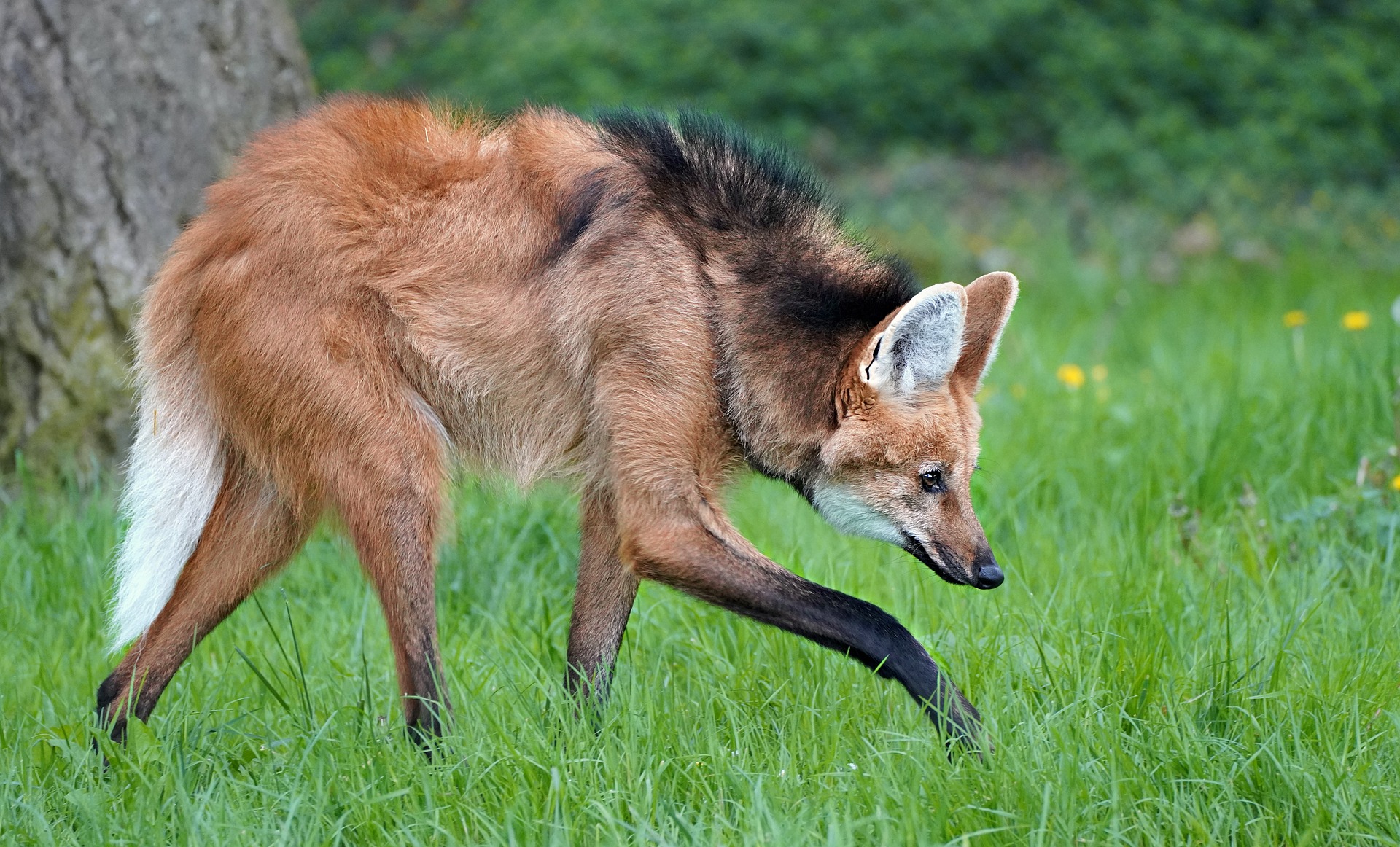
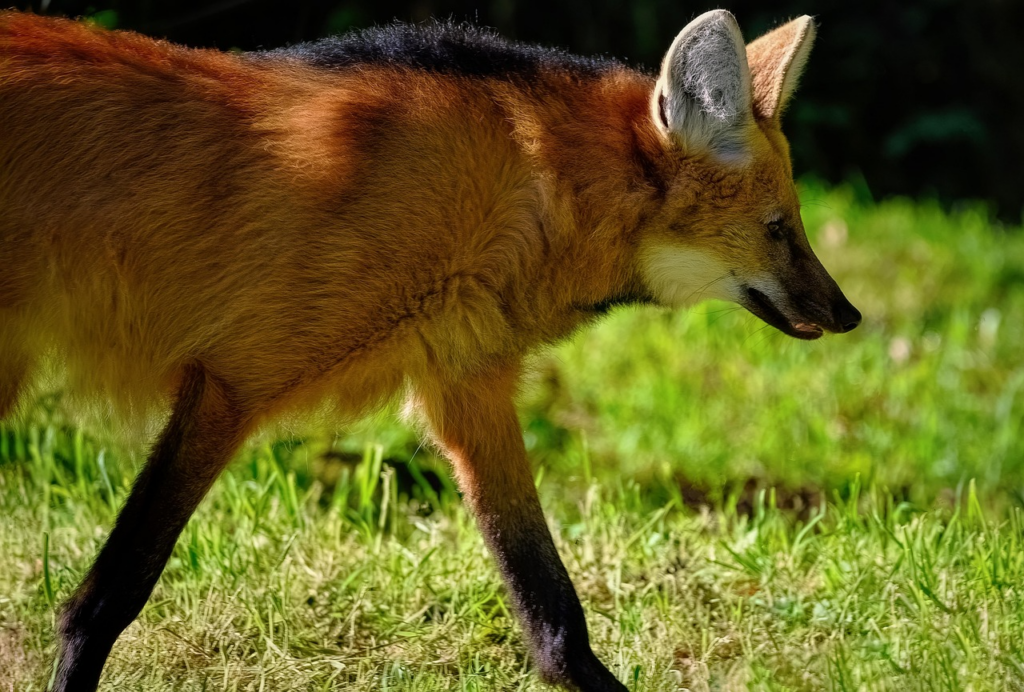
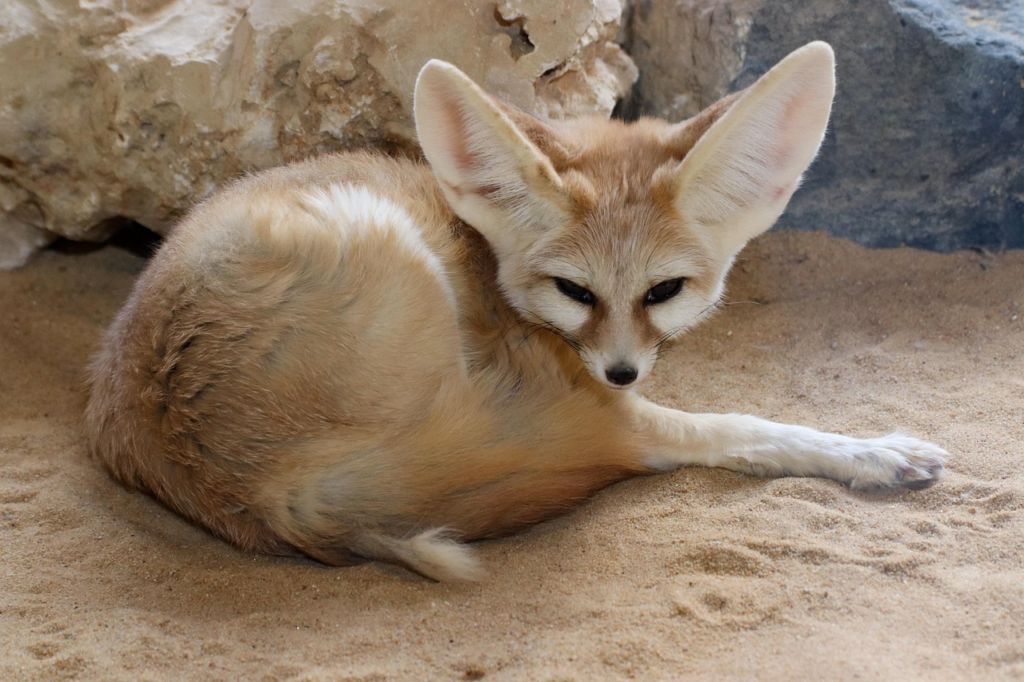
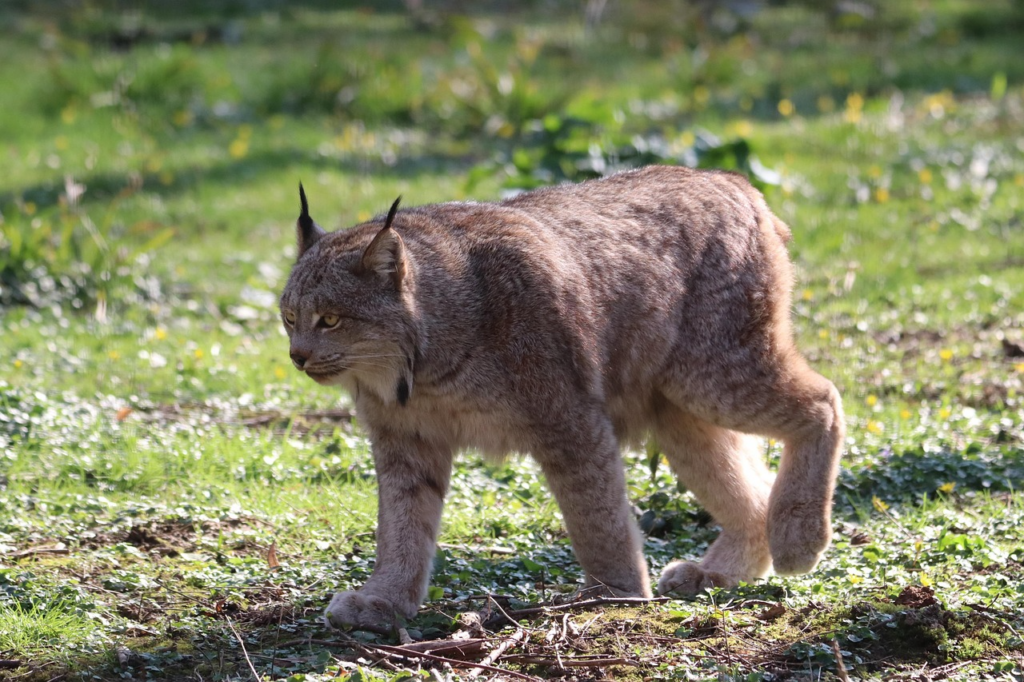
Even young-age creationists who believe no new genetic information can arise naturally believe that brand new traits have appeared physically over time. A quick logical demonstration shows this to be true. For example, all felines are thought to belong to the same kind. If this is true—and all species of cats descended from two ancestral cats on Noah’s Ark just 4,500 years ago—then many traits must have arisen over time that were (in all probability) not expressed in the original two cats. These include the lion’s mane, the ocelot’s unique coloration, the bone-crushing jaws of jaguar, the large “snowshoe” paws of the lynx, and the habit of leopards to climb trees to eat their prey. Similarly, in the dog kind, we find a wide diversity of forms, from the maned wolf (with a lion-like mane of fur) to the fennec fox (which has large ears, very little fur, and even a different number of chromosomes!).
Clearly, created kinds contain lots of variation, both genetic and physiological. Is it enough to say all the variation within these kinds is the result of genetic frontloading in the original ark pairs? To many scientists, this seems biologically far-fetched considering the wide range of trait diversity within kinds. What is worse, saying new traits do not arise, when our own model necessitates that they do, sounds like we are being quite inconsistent with the data in the name of demonstrating biblical creation. As scientists, we should aim to be consistent with how we interpret the data and not shy away from ideas that are necessary to our own theory.
Do Not Be Afraid… of Biology
Creationists should not be afraid to accept that new biological traits arise in populations over time. But should they also concede that mutations can add genetic information that creates new traits? Or is that giving too much ground over to the evolutionists? Much of this conversation boils down to how one defines “new information” which could be as simple as a random nucleotide addition and as dramatic as an entire gene duplication. It is one thing to say organisms can express new traits that were already genetically present in the genome, perhaps in a silent gene that was suddenly “turned on” (i.e. epigenetics). It is another claim entirely that mutations can create new functional genes and novel traits that were not present before. Creationists have done excellent work demonstrating the reality of the former but are usually skeptical or dismissive of the latter.
Let’s take a look at biology. Remember, the idea that new genetic information can lead to new beneficial traits in an organism is not the same claim as the evolution of all organisms from one universal ancestor. While there is a lot of evidence that organisms have genetic potential to adapt to new environments (as creationists have consistently predicted) there is also an abundance of evidence that organisms sometimes gain genetic information in order to adapt. Here, we will take a brief tour through the animal kingdom, beginning with the “lower animals” and working our way up the ladder of life.
Swimming Upstream
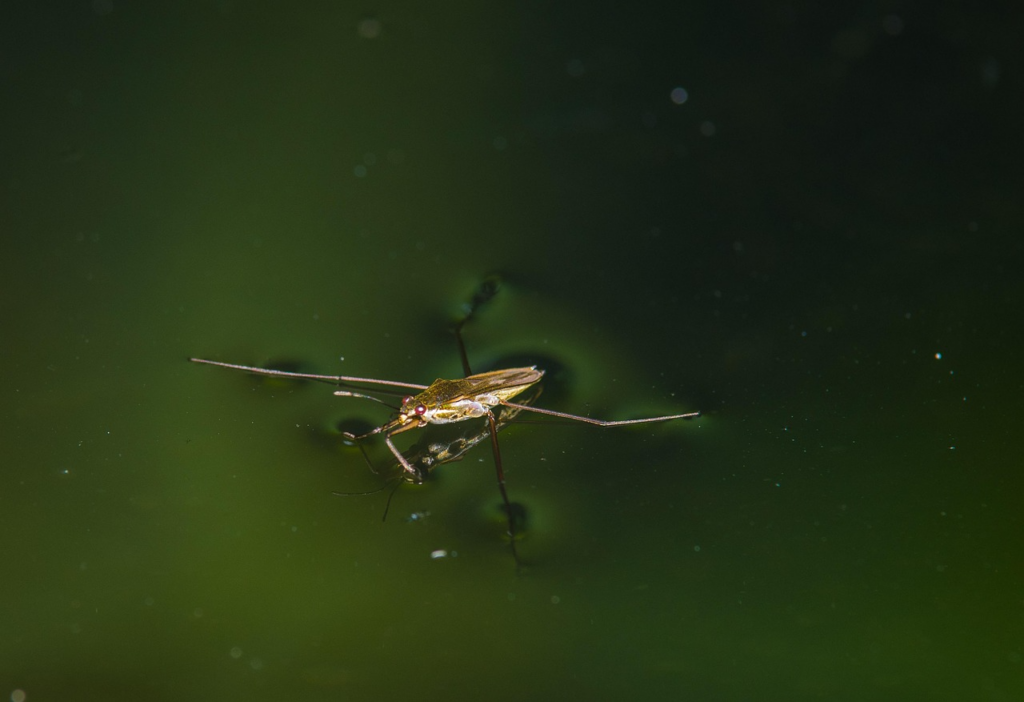
In the insect world, there is a textbook example of mutations causing new genes which, in turn, spread through a population via natural selection. Introducing: the water strider. Famous for its ability to stay on top of the water without breaking the surface tension, the water strider is an insect family with a shockingly rich number of species and genera. One of these genera (which includes 200 species), is notable for having fan-shaped extensions of their middle legs. One study proposes that these fans are the result of mutations creating a new feature in the insects.
Why do the researchers think these fans were the result of mutation? To answer this, we need to look at the genetics. What researchers observed were two water strider genes that were clearly duplicates. One of these duplicates contained clear genetic markers indicating mutation had occurred. This duplicated gene, which the scientists named “geisha,” was controlling the expression of the leg fans!1
What does this mean? Well, sometimes mutations can cause a gene to be copied so there are two identical versions of the same gene. Initially, the copy has no function, because the original gene still performs its task and there is no need for two genes to do the same thing. But if the copy undergoes more mutations, it can develop a new function that is beneficial to the organism. In this case, the duplicated gene’s new function was creating new wing fans!
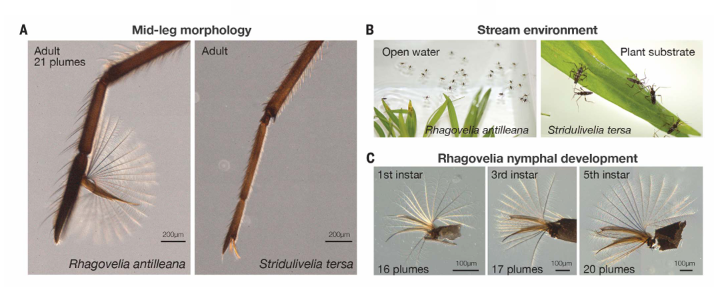
These new leg fans helped the striders swim upstream against a current, allowing them to access new resources and environments that were unavailable before.2 It is a clear example of a beneficial trait appearing because of the input of new genetic information!
A New Kind of Arms Race
Have you ever heard of an “arms race”? In the world of humans, this refers to a race between two or more parties to attain weapons to gain an advantage in a conflict. In biology, an arms race refers to competition between predators and their prey. Both species are desperate to adapt quickly in order to survive. The “weapons” in this analogy are positive biological traits that allow a species to overcome the competition. One such arms race exists between garter snakes (the predator) and newts (the prey).
In this case, the newt species is adapting towards increased toxicity to escape the snakes, while the garter snake is continually developing immunity to the newt poison, allowing them to consume more prey. The newt’s toxin, called tetrodotoxin (TTX), causes paralysis and death to creatures that eat them. The exception to this rule is garter snakes, which have varying degrees of immunity and therefore varying degrees of susceptibility to the toxin.3

This all seems fair and square, except the garter snake has a special trick. While the arms race has pressured garter snakes and newts to increase immunity and toxicity respectively, garter snakes that live closely with newts have developed a new genetic trait that gives them complete immunity to the newt toxins. Once again, this was not an adaptation obtained from genes already present in the organism. This was new genetic code that prevented TTX from binding to the snake’s proteins.4 Without being able to bind, the newt toxin could no longer cause paralysis and death in their predators. In this case, mutations substituted entire amino acids from the binding site, which in turn gave certain snake lineages complete immunity to newt toxins.
Is This Really New?
We know this was a derived trait and not one that was already present in the species and simply turned on or off as creationists might suspect. Why? Because populations of snakes that encounter less newts have less immunity.5 Some studies focused on the snake-newt arms race have found that snakes with immunity are slower than those with less immunity, meaning that immunity has a “trade-off.”6 7 It is therefore quite possible that garter snakes eventually branch into two distinct populations: immune but slow populations that live near newts, and faster but non-immune snakes that are more at risk of predation than newt toxin.
In other words, immunity to TTX is a genetically based trait that arose independently in some lineages, but not others, based on their proximity to the poisonous newt populations.8 It was not a feature that was present in the ancestral garter snake before these garter snake lineages diverged.
Already, these examples seem to indicate that, generally speaking, new genetic traits can arise through mutation and spread in response to pressures in the environment. But let’s keep going up the chain of being. Are there any examples of new traits arising in mammals?
I Can Digest That… Now
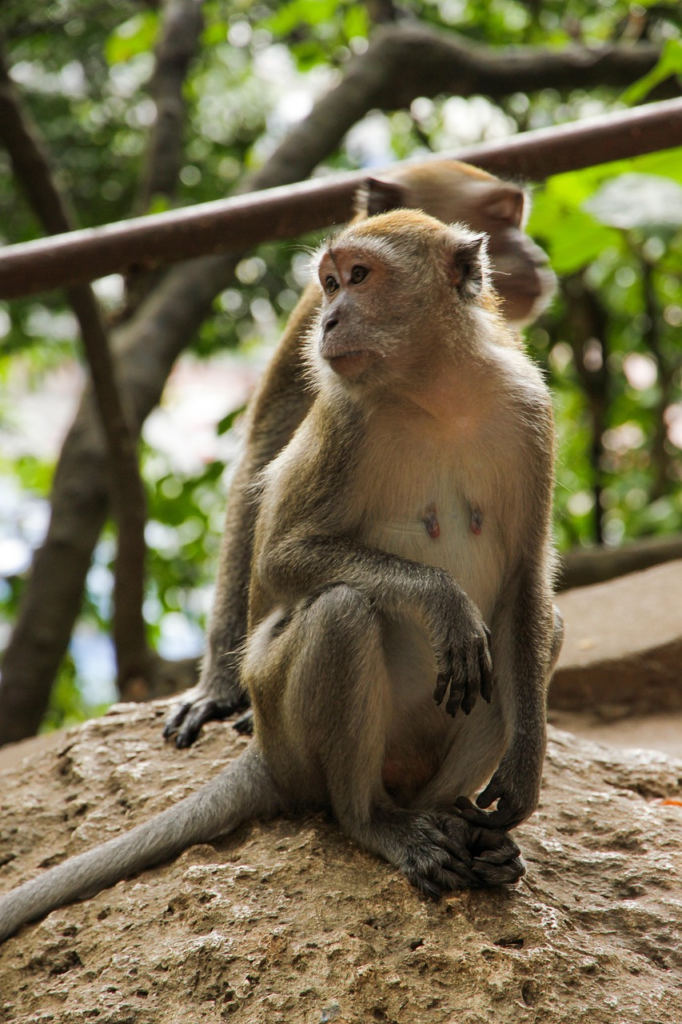
Let’s take a closer look at the primates. Rhesus monkeys typically only digest leafy plant material. This is unusual for primates. Most kinds eat fruit or insects. In fact, mammals typically cannot digest cellulose, so these monkeys (like cows) have symbiotic bacteria in their stomach to digest the leaves for them. Their pancreas then secretes enzymes called RNase which break down the bacteria in the small intestine so their bodies can reuse the nitrogen from the plants.
The gene that produces RNase (creatively named RNASE1) is not unique to rhesus monkeys. All leaf-eating monkeys (subfamily “colobines”) have this gene, as do humans. But in the rhesus monkey, a random duplication event created a sister gene, dubbed RNASE2.9 After undergoing several mutations of its own, RNASE2 is now quite unique, and differs from the original gene by nine amino acids. It also has a novel function. It turns out, RNASE2 allows rhesus monkeys to digest that bacterial RNA at a lower pH level (6.3) than the original gene RNASE1 (7.4). This lower pH level has been shown experimentally to be six times more efficient for RNA digestion!10 So, in summary, a gene duplicate underwent several mutations which caused rhesus monkeys to digest their food far more effectively.
Gene Duplications: Difficult to Digest?
Similar to the water striders, this new feature of the rhesus monkeys arose through a novel gene that did not exist previously. In this case, the gene was a duplication. It was useless for a time before mutations changed the gene and gave it a new function. In turn, this novel innovation allowed the organism to adapt to new environments and access new resources. Such a mechanism is so efficient that some evolutionary biologists believe gene duplication is the primary mechanism by which new genes arise and organisms evolve.11
In all likelihood, RNASE2 was not a gene that was present in the originally created monkey kind. It arose through a combination of gene duplication and beneficial mutations, in response to environmental or selective pressure. This does not mean the entire theory of evolution is proven true. It just means creationists should adopt the appearance of new traits and new genes into their biological models, because we can observe it happening in real time.
Got Lactase-phlorizin Hydrolase?
If you are getting tired of this tour through the natural world, fear not. I saved the best for last. It turns out, we humans are not without our genetic adaptations. In perhaps the most famous of these beneficial mutations, humans evolved a new genetic ability: to digest milk!
People digest food with special proteins called enzymes. All proteins are made and regulated by genes. The enzyme that digests lactose, in humans, is called lactase-phlorizin hydrolase (LPH). In mammals, this enzyme is only produced during early development when offspring is weaning. LPH has different regions which break down different substances. Lactase is the part of the enzyme responsible for digesting lactose. In lactose intolerant people, LPH activity rapidly declines after the weaning stage (around 2 years of age). In fact, this is how it is for most mammals, and humans used to be no exception. It was a small but dramatic turn of events that led to lactose digestion in human adults. Several random mutations near the lactase gene caused some humans to produce LPH past the weaning stage and into adulthood, and this newfound trait is now called “lactase persistence” (LP).12
How Lactase Persistence Crossed Continents
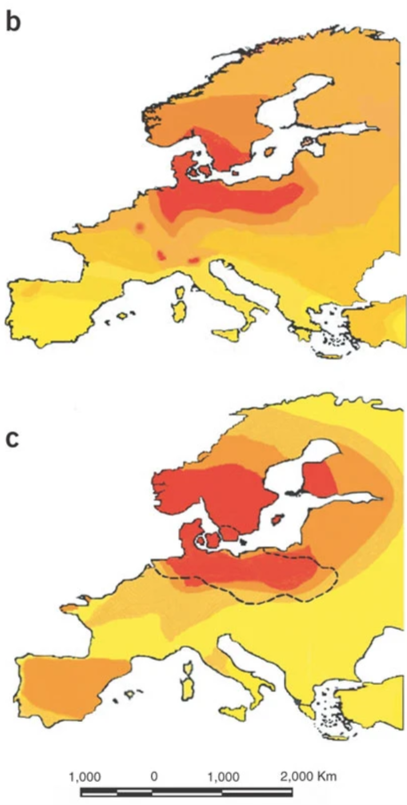
Now, not everyone has the LP trait. The mutation spread through only some populations of humans. Which ones? Well, it was by observing maps of LP that led scientists to explore the genetic features behind the trait. They noticed that only the descendants of dairy breeding populations could digest lactose as adults. Human populations that do not breed dairy would get no selective advantage from LP, and therefore the trait did not catch on.13 When a genetic trait spreads quickly through a population because it is biologically advantageous, biologists refer to it as a “selective sweep.” The fact that LP not only arose by mutation but also swept through a population makes it an observable example of adaptation at work. Every time you drink milk, then, you are utilizing random mutations that gave your ancestors a novel genetic trait!
Hopefully it is now clear that novel genetic information can introduce new beneficial traits to a population. The question now posed to creationists is: what does this mean for young age creationism?
Novel Traits and Creationism: Does it Actually Work?
Personally, I have no reservations about accepting the occurrence of novel innovations appearing in organisms as a means of adaptation.
In fact, when I researched “contemporary evolution” as a means of post-Flood diversification, I discovered that biologists had settled on four events that could drive rapid adaptations. These drivers of “adaptive radiation” are: 1. Colonization of new land masses, 2. Extinction events, 3. Appearance of new resources, and 4. Novel innovations.14 Our current creation model already relies on the first three events to drive post-Flood diversification. While this alone is not a sufficient reason to accept the fourth, it does pose a provoking question: is it reasonable to reject the idea of novel innovations a priori, purely on the grounds that it originated as part of the theory of evolution? Instead of dismissing ideas for purely philosophical reasons, let’s incorporate good ideas into our model instead, and allow the evidence to bring us closer to discovering the incredible mechanisms that God designed in His creation.
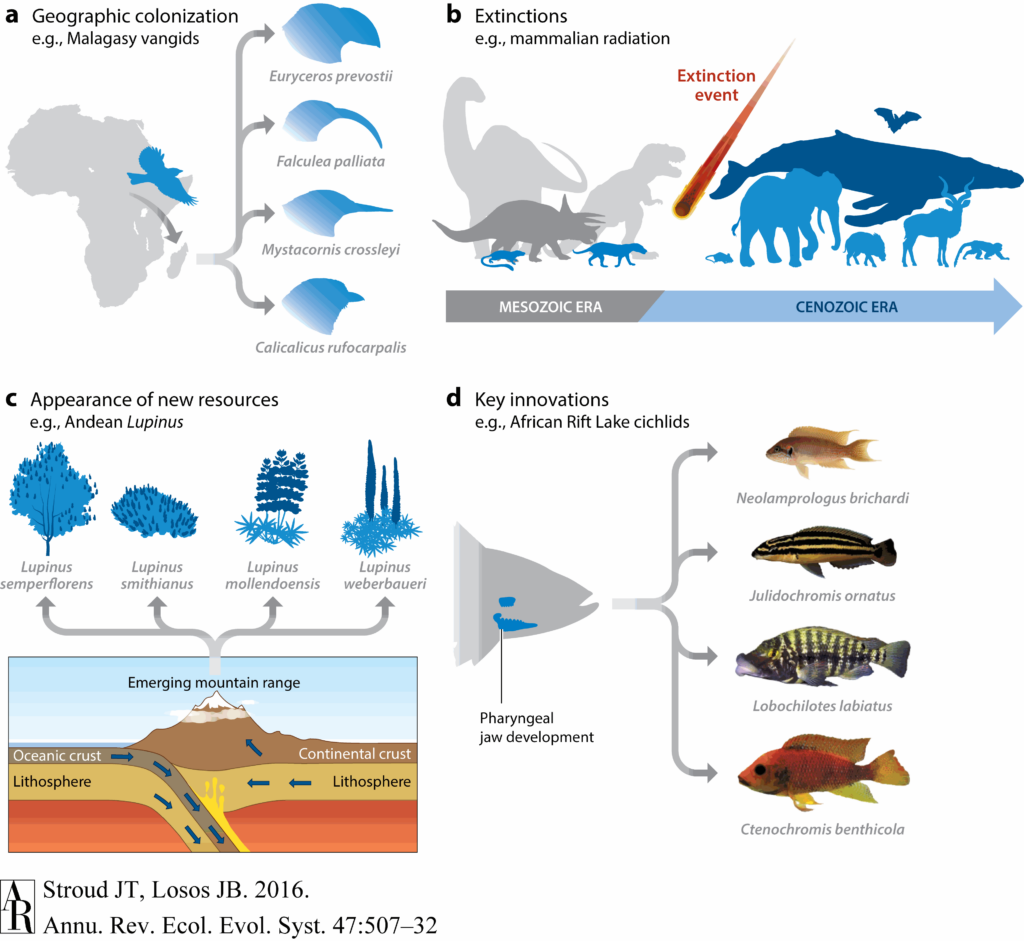
In many ways, this singular biological topic reflects a broader issue within creation discourse. Of course, all creationists should recognize that evolutionary interpretations and biases do impact mainstream scientific research. But this should not cause us to quickly disregard good ideas or legitimate scientific evidence on the basis that non-creationists came up with the ideas. Recall that creationists and evolutionists agree on a vast quantity of natural processes but disagree on the timeline of the past. We universally accept processes such as erosion, sedimentation, radioactive decay, fossilization, cosmological processes, bioturbation, and plate tectonics. We only disagree about how long those processes took to shape the world we see today. It seems only natural that creationists take this interpretive approach to biology.
Accepting the Mechanisms, Challenging the Theory
Once again, it is hopefully clear that I am not advocating that creationists should accept the theory of evolution wholesale. The acceptance of new genes, novel traits, or beneficial mutations is an altogether different claim (both in scale and in substance) from the theory that mutations and selection produced all living organisms from a single-celled ancestor over the course of billions of years. It is quite possible and reasonable to accept observable mechanisms of adaptation while still challenging the claim that these mechanisms are the sole forces that produced all of Earth’s biodiversity.
Scripture tells us that humans did not evolve from lower primates and that God created all of life in distinct kinds as special creations. We believe the Flood of Noah was worldwide and catastrophic. But the Bible never categorically rules out such biological process as beneficial mutations, novel traits, or even new genes. From a biological standpoint, one can make a better argument that a historical reading of Genesis necessitates these processes rather than rules them out.
The best available interpretation of biology is that mutations can cause the appearance of new traits in organisms, and selective sweeps can cause these traits to spread throughout a population in a radically short period of time. Whether it is digesting new food sources, developing toxin immunity, or just swimming upstream, these mutations and their subsequent novel genes help a population access new resources and adapt to new environments. Such adaptations are a mechanism for adaptive radiation and a powerful tool in each animal’s quest to replenish the earth after the Flood. Considering creationists have long been trying to explain how thousands of species originated from ancestral created kinds in the days of Noah, this news should fill us with wonder and excitement. It seems quite detrimental to reject this well-grounded theory on ideological grounds when that very idea fits so well into a creation model that it brings us closer to solving one of our biggest questions in biology!
Creationism Adapts Too!
The future of creationism remains bright not because we are making discoveries that far outpace the research of conventional scientists, but because all discoveries—Christian or secular—can be incorporated into the ever-growing scope of the creation model. As creationists have correctly said for decades, we do not have a difference of observable data, but rather a difference in interpretation.15,16 It is therefore time for creationists to welcome this wealth of biological data and let it strengthen the creation model rather than hinder it. Even more importantly, we should celebrate and be awed by these biological wonders, because they are the handiwork of an almighty God Who wants us to dwell on his creation and give glory to Him!
Creationists have an incredible opportunity to give God the glory for these biological mechanisms. But if we unnecessarily reject scientific ideas on philosophical or ideological grounds, we leave it to conventional scientists to be the sole custodians of such intricate and fascinating data; scientists who will continue to attribute novel traits to mindless, unguided processes rather than design. Rather than make such a concession, Creationism must be like the organisms God created: able to accept and incorporate new information which leads to beneficial adaptation and ultimate improvement.
Footnotes
- Santos, M. E., Le Bouquin, A., Crumière, A. J., & Khila, A. (2017). Taxon-restricted genes at the origin of a novel trait allowing access to a new environment. Science, 358(6361), 386-390. ↩︎
- Santos, M. E., Le Bouquin, A., Crumière, A. J., & Khila, A. (2017). Taxon-restricted genes at the origin of a novel trait allowing access to a new environment. Science, 358(6361), 386-390. ↩︎
- Brodie III, E. D., & Brodie Jr, E. D. (1990). Tetrodotoxin resistance in garter snakes: an evolutionary response of predators to dangerous prey. Evolution, 44(3), 651-659. ↩︎
- Feldman, C. R., Brodie Jr, E. D., Brodie III, E. D., & Pfrender, M. E. (2009). The evolutionary origins of beneficial alleles during the repeated adaptation of garter snakes to deadly prey. Proceedings of the National Academy of Sciences, 106(32), 13415-13420. ↩︎
- Feldman, C. R., Brodie Jr, E. D., Brodie III, E. D., & Pfrender, M. E. (2009). The evolutionary origins of beneficial alleles during the repeated adaptation of garter snakes to deadly prey. Proceedings of the National Academy of Sciences, 106(32), 13415-13420. ↩︎
- Zhang, R., & Gray, P. M. (2017). Evolutionary GEM: The Evolutionary Arms Race of Garter Snakes and Newts. Western Undergraduate Research Journal: Health and Natural Sciences, 8(1). ↩︎
- Zhang, J., Zhang, Y., & Rosenberg, H.F. (2002). Adaptive evolution of a duplicated pancreatic ribonuclease gene in a leaf-eating monkey. Nature Genetics, 30, 411-415. ↩︎
- Feldman, C. R., Brodie Jr, E. D., Brodie III, E. D., & Pfrender, M. E. (2009). The evolutionary origins of beneficial alleles during the repeated adaptation of garter snakes to deadly prey. Proceedings of the National Academy of Sciences, 106(32), 13415-13420. ↩︎
- Zhang, J. (2006). Parallel adaptive origins of digestive RNases in Asian and African leaf monkeys. Nature genetics, 38(7), 819-823. ↩︎
- Zhang, J. (2006). Parallel adaptive origins of digestive RNases in Asian and African leaf monkeys. Nature genetics, 38(7), 819-823. ↩︎
- Zhang, J. (2003). Evolution by gene duplication: an update. Trends in ecology & evolution, 18(6), 292-298. ↩︎
- Cohen, C. E., Swallow, D. M., & Walker, C. (2025). The molecular basis of lactase persistence: Linking genetics and epigenetics. Annals of Human Genetics, 89(5), 321-332. ↩︎
- Beja-Pereira, A., Luikart, G., England, P. R., Bradley, D. G., Jann, O. C., Bertorelle, G., … & Erhardt, G. (2003). Gene-culture coevolution between cattle milk protein genes and human lactase genes. Nature genetics, 35(4), 311-313. ↩︎
- Stroud, J. T., & Losos, J. B. (2016). Ecological opportunity and adaptive radiation. Annual Review of Ecology, Evolution, and Systematics, 47(1), 507-532. ↩︎
- Ken Ham, “Creation: ‘Where’s the Proof’?,” Answers in Genesis, October 1, 1999, https://answersingenesis.org/creationism/creation-myths/creation-wheres-the-proof/. ↩︎
- Henry M. Morris III, “Contrasting Worldviews,” Institute for Creation Research, accessed June 11, 2026, https://www.icr.org/bible-worldview/. ↩︎



 Hannah Klein

 Peter
Peter
 Christian Ryan
 Abigail L.
Hi Jake,
Thanks for writing and posting this. I hope that it contributes to some new developments in creationary genetics.
Me again,
Having said that, I would like to suggest that you are using the term de novo gene in a non-conventional fashion.
A de novo gene is defined in this paper as follows: “De novo” genes evolve from previously non-genic DNA.
Hi Marc, looks like I mixed up “de novo” with “gene duplications” for a minute there. This has been fixed. Good catch. As you said, de novo is where a gene arises from non-coding DNA. Could be a good topic for a future article. Thanks for reading!
(Let me preface this by saying I am a creationist asking this question in good faith)
When I first got into creationism and intelligent design, I heard from many big names (Doug Axe and Stephen Meyer come to mind) who said that new genetic information cannot come into existence through undirected processes. This would appear to be a refutation of that claim. Is it correct to say that you are saying that undirected processes (at least sometimes and under certain circumstances) can in fact produce new genetic information?
Again, I am not trying to make accusations or start a debate. I am just trying to make sure I understood the article correctly.
Hi Theodore. Thank you for reading and commenting. Yes, the purpose of this article was to encourage creationists to abandon the traditional argument that new genetic information cannot come into existence. That being said, I don’t think we need to frame it as an “undirected purposeless process” as the naturalists might say. I think we can build a strong case that new information arises in such a way that helps animals adapt to new environments, which fits with the creation model. The mutations might be random, but the mechanism is God ordained. God wanted his creatures to fill the earth after the Flood (see Genesis 9) and these genetic adaptations help them do just that. I hope this helps!
Yes, it does, thank you very much!
I don’t think this idea is correct.
All your examples you used still fit into the
Idea of front loaded genetics placed there by God more than the idea that random variation, and selection built anything.
Most of what you cited is unequivocally just an instance of what is refered to as “loss of versatily” paired with steatification of populations. stratified populations have a larger pre-existing set of genes before they became stratified, and after being stratified, they endure differential “loss of versatility”. And there’s a little bit of selection, cause if your population loses something that would be needed to survive where they find themselves, they die off. But nothing is every build by random variation with selection. Its all pre-existing genetics that get filtered down.
Which brings me to the fact you said something along the lines of being critical of the idea that all the variation we see throughout kinds today could just be the result of front-loaded genetics God put there(and later presevered on the ark). You never really justify your critizism of this idea at all. You just seem to say it appears far fetched, and you leave it at that. I think in light of what we can actually observe about the processes of mutations, and “loss of versatility” and such, that said “far fetched” idea of epigenetic activation of a pre-existing gene set is far more likely to be true than any genuine novel sophisticated complexity being the result of random variation paired with selection.
There’s lots more to say on some of what you wrote, but this comment is already lengthy.
Hi Anthony, thank you for taking the time to read and comment.
I think it would be quite difficult to argue that the organisms discussed in the article had a loss of versatility. Your best bet would be the garter snakes, since they lose speed as a trade off for their toxin immunity. But in all the cases I described, the genetic adaptation expanded the organism’s access to resources specifically by gaining new genetic information. The water strider, rhesus monkey, and human lactase enzyme did not adapt at the cost of sophistication; they all gained sophistication, and the literature associated with each of these examples makes a great case that these are not, as you said, “pre-existing genetics that get filtered down.”
As for the “far-fetched” comment, I was referring to the broad consensus among scientists. There is a reason nearly all biologists do not accept the theory that Biblical created kinds were preserved from a cataclysmic flood in pairs only 4,500 years ago. A big reason for this is that based on our current understanding of genetics, containing all the traits that we see in those kinds today within pairs of representatives (whether expressed or not expressed) is definitely far-fetched. That might change, but as of now, you will be hard pressed to find any biologist who would accept the possibility of, for example, elephants and mammoths descending from an ancestral pair in just a thousand years or so, with their long generation time and low reproductive rate. Epigenetics is a powerful mechanism accepted by evolutionists as well as creationists, but it doesn’t solve the rapid diversification question by itself. I propose we consider that many mechanisms are at play here, including novel genes.
But to answer your real question, I encourage you to reread the article. For each case study, I made sure to describe why the observational evidence shows a gain of information and not a loss or a breaking of pre-existing DNA. Most of the new traits were controlled by entirely new genes. How could that be epigenetic? And how would strider leg fans or rhesus monkey digestion be decreasing sophistication, given that new genes gave them wider access to resources?
I am confident epigenetics plays a massive role in diversification of organisms after the flood. But based on observational data, we also need to recognize other mechanisms are at play too.