
 Hannah Klein
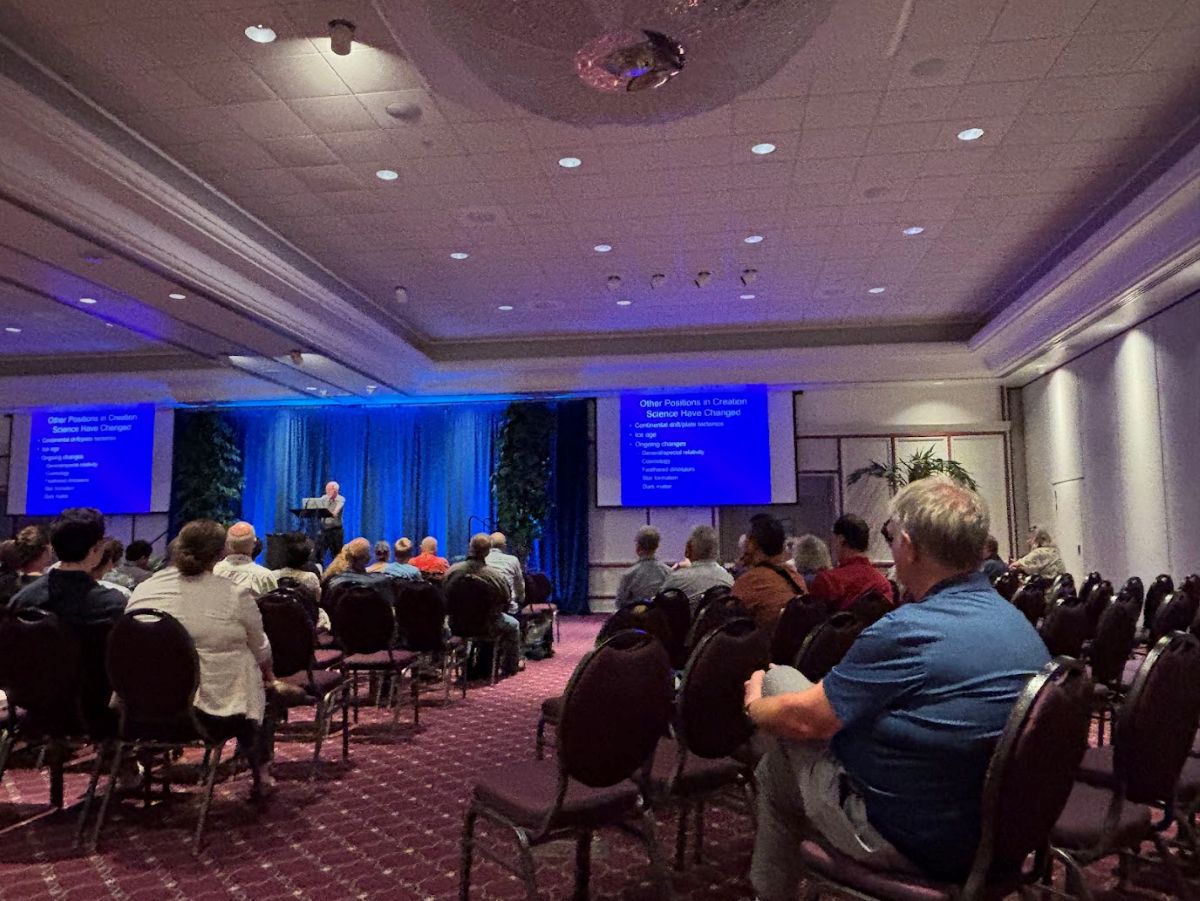
Three weeks ago, I attended the 2026 Creation Research Society Conference in Pensacola, Florida. Held on the campus of Pensacola Christian College, this event was attended by over 200 scientists, students, apologists, and other members of the young-age creation science community. I had a wonderful time reconnecting with friends and making new connections.
I’ve been attending the CRS conferences for several years now, and I felt like this was the best conference yet. The creation science movement can be described as working on two separate fronts: one front is focused on disproving naturalistic evolutionary theories, and the other is building a positive young-age creationist model. While both are important, here at New Creation we emphasize the positive work of building a creationist model. This year’s CRS meeting also showed an increased focus on research that contributes to our understanding of the world (and the universe) through a Biblical perspective.
The Astronomy Workshop
The CRS conference introduced their all-day workshops a few years ago, which take place on the Thursday preceding the main event. This year, the disciplines covered by the workshops were biology, geology, engineering/technology, and astronomy. The astronomy workshop was organized by Dr. Danny Faulkner and myself, and it was a very productive meeting.
Starting With A Biblical Foundation
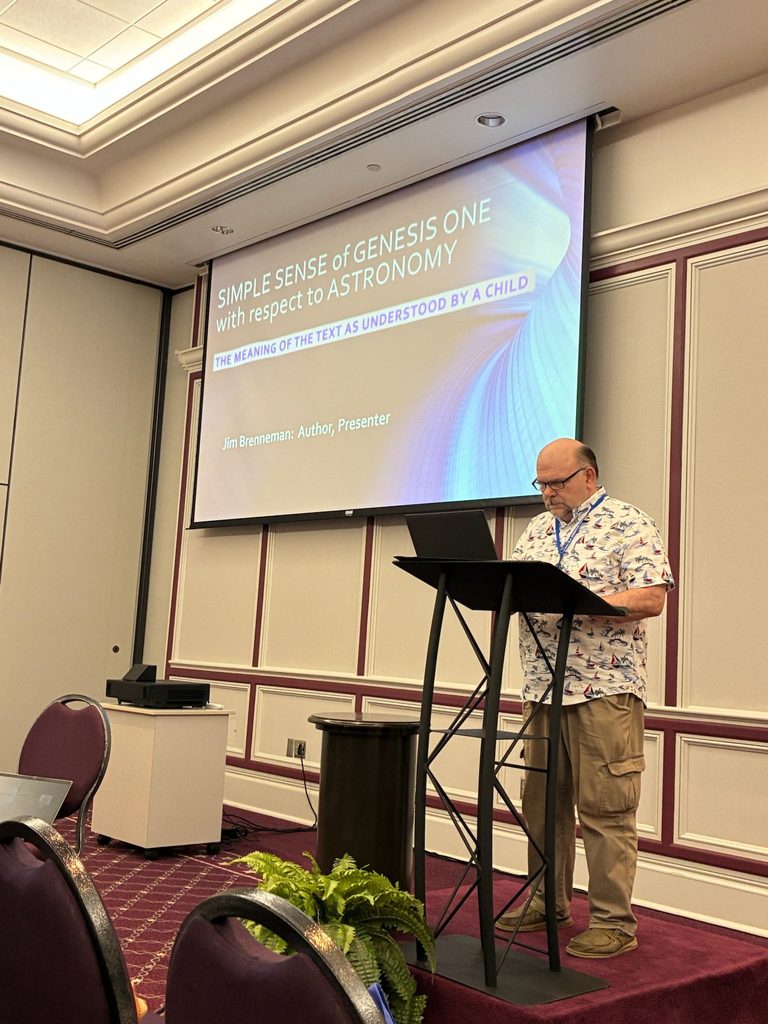
Jim Brenneman opened our day with a deep dive into the Hebrew text of Genesis 1:1–2. Genesis does not give creation astronomers much detail to guide or constrain our models of astronomy – at least, not much compared to what the biologists and geologists have to work with. This gives us a certain level of freedom, but it doesn’t leave us beyond the need of caution when dealing with the Biblical text. There’s been a tendency in creation astronomy to read between the lines of the Genesis account and try to derive complicated physics from the text. Jim’s presentation brought us back to an understanding of Genesis 1 that, while consistent with what we have learned from science, remains simple enough for any one to read and benefit from.
AI In Creationist Astronomy Research
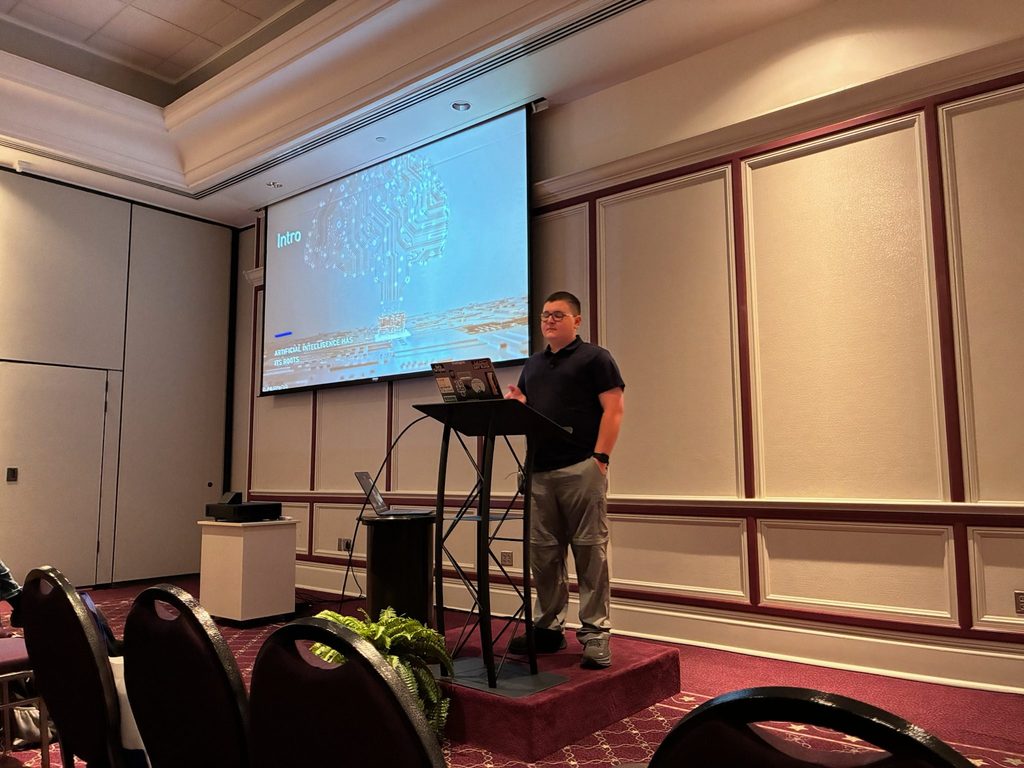
Next, Drew Hoorellbeck presented on AI technology and its usefulness for creationist astronomy research. He gave a very informative review of how different AI models work and how they process and find patterns in data. AI has its ugly side – Drew made us all laugh as he described a “new religion” developed by an AI agent – and must be used with caution, as every AI model has presuppositions built into it. But while recognizing the potential pitfalls, Drew also demonstrated the benefits we can gain from using this new technology, with the appropriate caution, in positive astronomy research.
A Creationist Model Of Stellar Astronomy
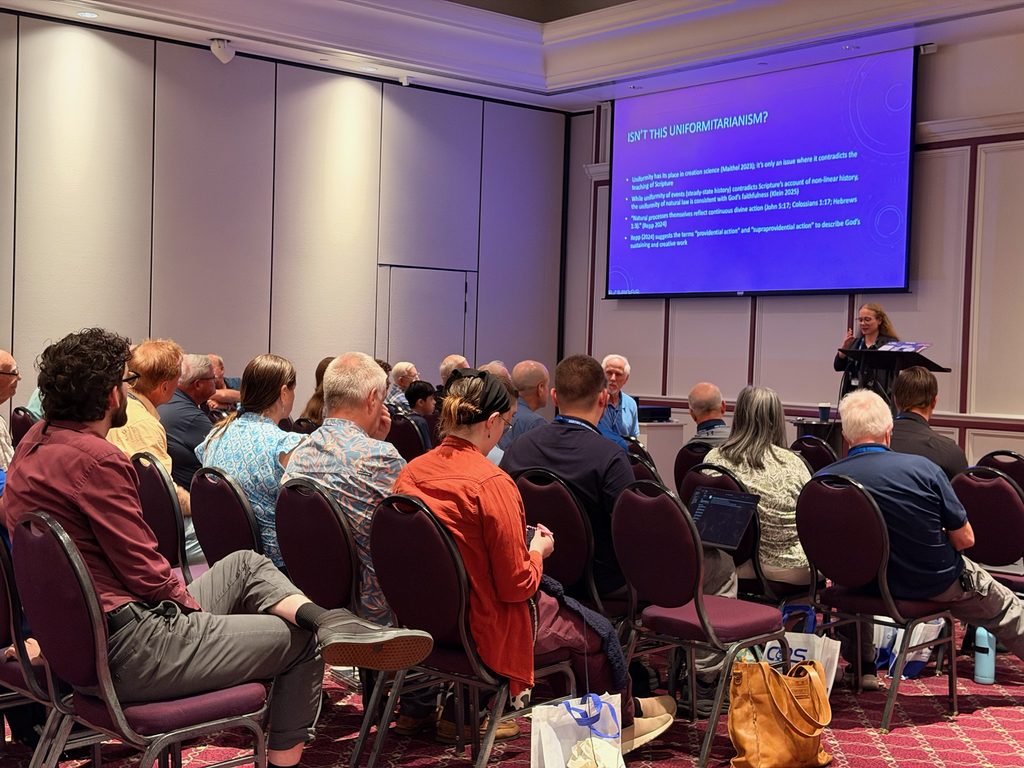
I gave the third presentation, which was on a creationist interpretation of stellar astronomy (the branch of astronomy that deals with the stars). Creation astronomers have mostly focused on issues like the age of the universe, the light travel time problem, or other arguments against the Big Bang. But when it comes to actually explaining astronomical data, our field is less developed. In my presentation, I gave an overview of what creationists have to say about the diversity of stars. As Paul said, “star differs from star in glory” (1 Corinthians 15:33), and while conventional astronomers have developed theories of stellar evolution to explain the different types of stars that we see, creation astronomers have done very little work in this department. In my presentation, I reviewed the Dasha solution for the light travel time problem (which explains light travel on Day 4 by means of supernaturally accelerated processes). I then expanded this same line of reasoning to explain stellar diversity by means of the developmental pathways (or stellar evolution) of stars as God brought them into existence through supernaturally accelerated processes on Day 4.
The Light Travel Time Problem
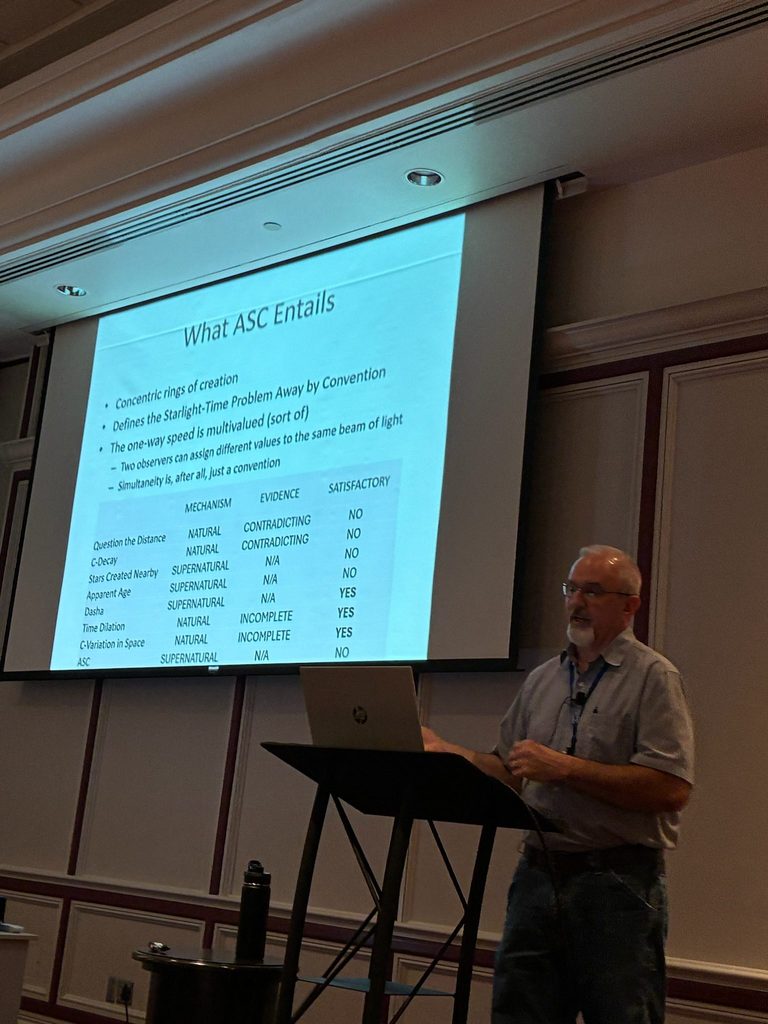
Doug Harold wrapped up our workshop with a very helpful overview of the light travel time problem and the various solutions to this problem that have been proposed over the years. I particularly enjoyed the way he contrasted these solutions, using a rubric to grade each one on a few major characteristics. First, is the solution appealing to a supernatural or natural mechanism? Second, does the evidence support, contradict, or is it not relevant to the solution? Third, is it a satisfactory solution? Rather than singling out one solution as the correct one, Doug’s presentation allowed us to evaluate them all on equal footing, and he ended up with a handful of satisfactory solutions. This is the nature of developing scientific fields; as we work toward solving a mystery, it’s good to have a variety of potential solutions that we can further investigate.
My Highlights from the Conference Sessions
When I attend technical conferences such as this, I try to spend as much time as possible in the astronomy track. This year, outside of the excellent presentations in the workshop, the astronomy track was a little light. So some of my highlights from this year’s conference sessions are a little more down to earth.
Design Triangulation and Positive Model Building
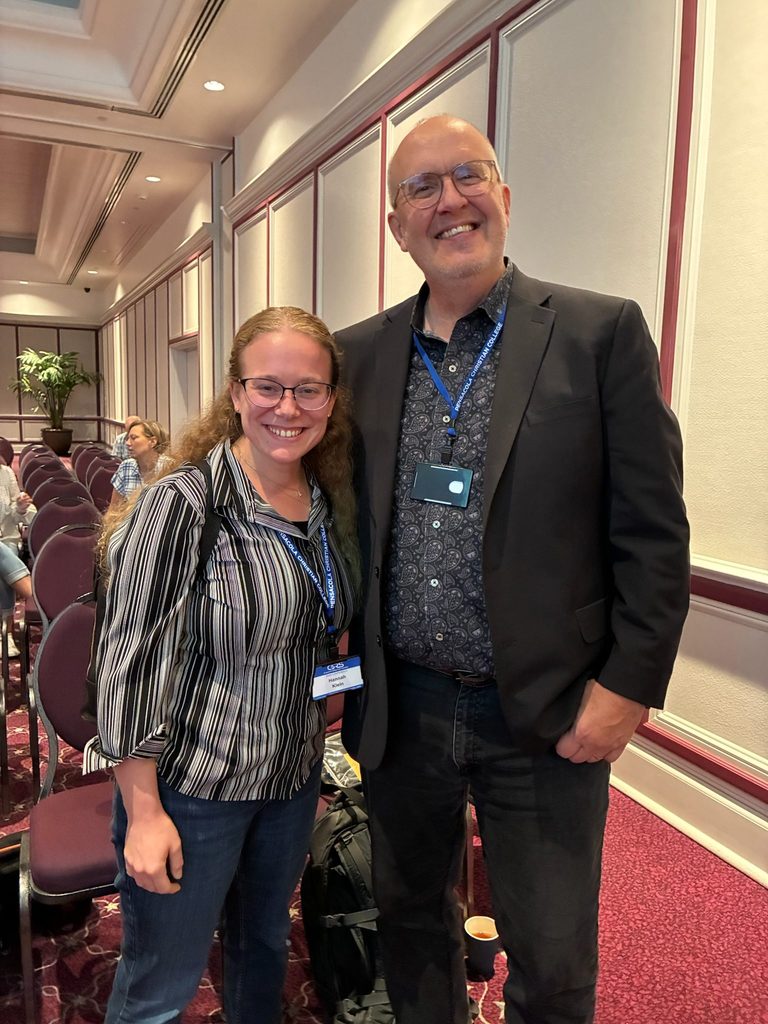
It was a real treat to hear from Dr. Paul Nelson at this conference. The documentary Unlocking the Mystery of Life was one of my favorite films as a child (yes, I was a nerdy child), and Dr. Nelson has long held semi-celebrity status in my family. Dr. Nelson gave a plenary presentation on the use of AI, but my favorite session from him was on “Design Triangulation as an ‘Evolution-Free’ Method for Biological Investigation.” He opened up the presentation with a thought experiment: If every scientist on the planet woke up on January 1st, 2027, and said “I believe that God created everything we see”, how would that change the way we do science, as creationists?
The point of this question is to cause us to evaluate how much our scientific investigation is motivated by trying to disprove evolution, as opposed to building a positive creationist model of science. Dr. Nelson admitted that much of biological research done in his field is aimed at disproving Darwinism, rather than offering a better alternative. So in this presentation, he elucidated for us the concept of design triangulation. This is, in biology, a way of predicting the results of biological investigation by observing the function of a system or organism. In other words, if we start with the assumption that organisms were designed, with a certain set of inherent functions, we can use that assumption to guide our research of those organisms.
Dr. Nelson gave a really interesting example of this from the work of Francis Crick, one of the two scientists who discovered the structure of the DNA molecule in 1953. Crick was, as Dr. Nelson put it, “a better biologist than he was an atheist.” He predicted the existence and structure of transfer RNA, the molecule that facilitates the processing of information from DNA, by considering the function of DNA in providing information to build proteins in the cell. Though an atheist, Crick could see that there was an obvious function to the DNA molecule, and that function guided him to the prediction of tRNA. As Dr. Nelson said, “Design as a framework gives you tools that naturalism simply doesn’t have.”
The Antimatter Problem For The Big Bang
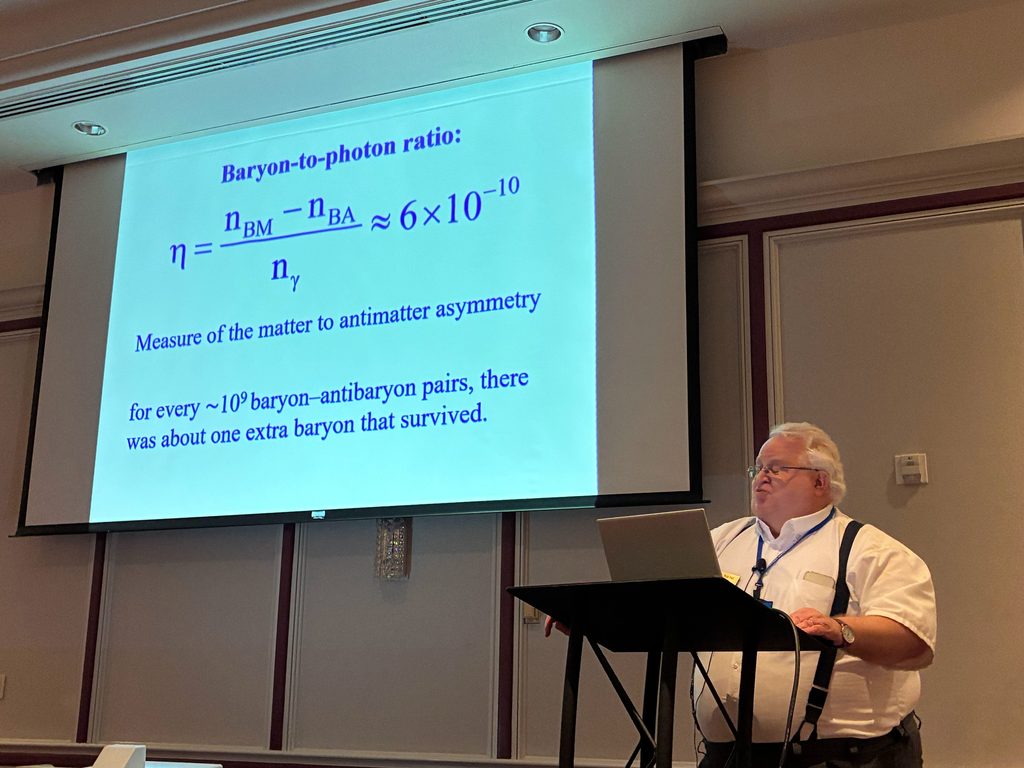
Dr. Bob Hill gave an in-depth (and pretty technical!) look at the antimatter problem for the Big Bang model. What is the antimatter problem, you ask? The Big Bang posits that the universe began in a very hot and dense state, which expanded very rapidly with an enormous amount of energy. Matter was created later, from this energy. Energy and matter have an equivalence – as per Einstein’s famous equation E=mc^2 – and thus, energy can be converted into matter and vice versa. The problem for the Big Bang is that when we convert energy into matter, the process always generates an equal amount of antimatter. Antimatter is a sort of opposite particle to matter. When matter and antimatter come together, they annihilate each other. So when the first matter was created, the corresponding antimatter should have caused the annihilation of both. Of course, this isn’t what we see – we exist, for starters, so obviously this annihilation didn’t occur. So how do we explain the absence of antimatter?
The antimatter problem was defined in greater detail in 1967 by a physicist named Andrei Sakharov, who gave three conditions that need to be met in order to create matter without creating the corresponding antimatter at the same time. These are called the Sakharov conditions. Dr. Hill walked us through these conditions, and then surveyed half a dozen proposed solutions to explain the existence of matter, without antimatter, despite these conditions. Ultimately, though each has its own appeal in certain ways, all of these proposed solutions fail in one point or another.
This presentation was a helpful review of a common argument used by young-age creationists against the Big Bang. Dr. Hill concluded that this argument remains a strong one. These sorts of reviews of common arguments are both helpful and needed in the community, since science is an ever-changing field, and it’s important to stay up to date and informed in our apologetic presentations of scientific concepts.
The Evolution Of Creationism
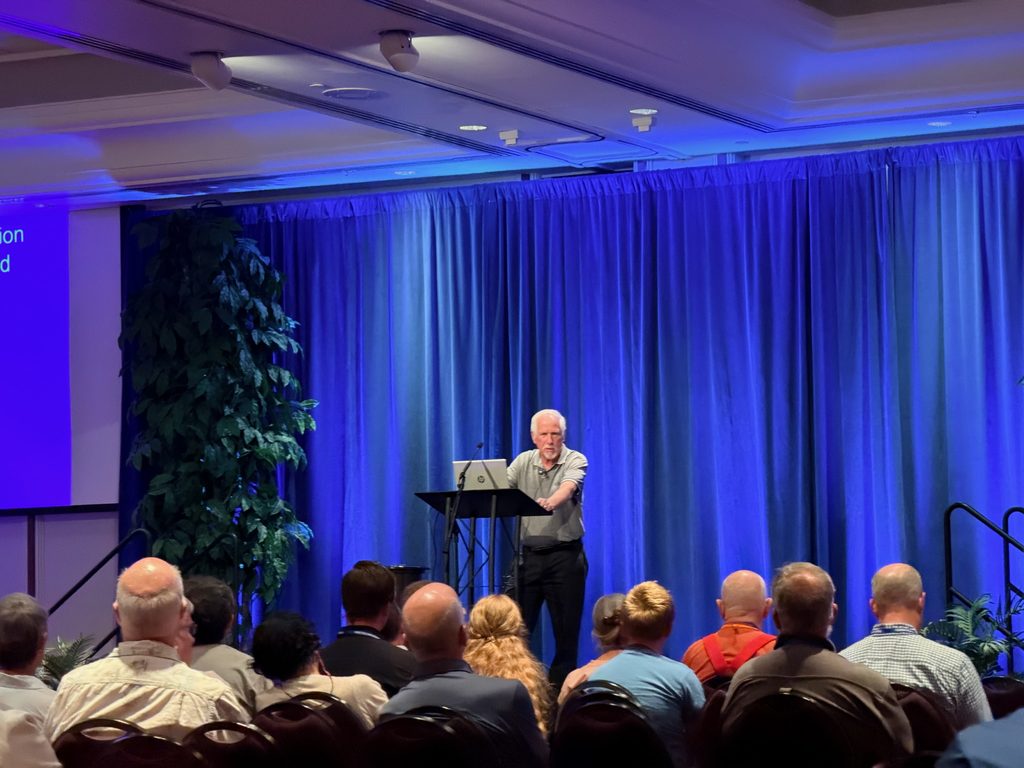
The Creation Research Society Conference hosts the Henry M. Morris Memorial Lecture every year on the Friday evening of the conference. These lectures are given by creationist legends who knew Dr. Morris and worked with him. Dr. Danny Faulkner gave this year’s lecture.
Dr. Faulkner’s topic was the evolution of the creation model. He shared some personal memories from his own experiences with Henry M. Morris, and he reviewed Morris’ legacy and impact on the creation science movement. All young age creationists can trace back much of their beliefs to Morris, whose influential book The Genesis Flood, co-authored with John C. Whitcomb, launched modern creationism. Dr. Faulkner also reminded us of some ideas, either developed or endorsed by Morris, which have since fallen to the wayside in the creation science community.
Among such ideas is the vapor canopy, a model that defined the “waters above the expanse” from Genesis 1:7 as a thick layer of water vapor that surrounded the pre-Flood Earth. This was supposed to provide a temperate climate with no rain or seasons, before becoming a major source of the Noahic Flood waters. Though creationist physicists and meteorologists put a lot of work into scientifically modelling this vapor canopy, in the end, they discarded this model as neither scientifically feasible nor scripturally warranted.
Another idea that Morris promoted was that the second law of thermodynamics was put in place at the Fall in Genesis 3. This notion grows from thinking of the second law of thermodynamics as a law of decay – usable energy tends to decrease over time – and as such, couldn’t have been present before sin. The problem with this line of reasoning is that the second law does a lot more for us than describing decay. In actuality, the second law describes energy transfer. Thus, the sun radiates energy, which provides for the needs of our planet Earth by means of the second law of thermodynamics. The friction that allows us to walk without slipping is also made possible by this same physical law. In other words, framing the second law of thermodynamics as a scientific statement of the Curse in Genesis 3 doesn’t make sense given what we know of how God’s very good creation operated before the fall of man.
Dr. Faulkner gave us these brief overviews to remind us that this is what a developing scientific field looks like. We have a firm foundation in God’s word, but the models that we build on that foundation are not infallible. They are subject to change. Part of being honest with both Scripture and science involves a willingness to develop, evaluate and sometimes discard models that we once held as part of the creation model. Dr. Faulkner reminded us of some of the disagreements that are happening today within the young age creation science community – did dinosaurs have feathers? Where is the Flood / post-Flood boundary? Do stars form today? – and urged us to frame these ongoing discussions as part of the evolution of creationism. We’re all on the same team, with the same Bible as our foundation, and we’re working together to try to build the creation model.
Until Next Time!
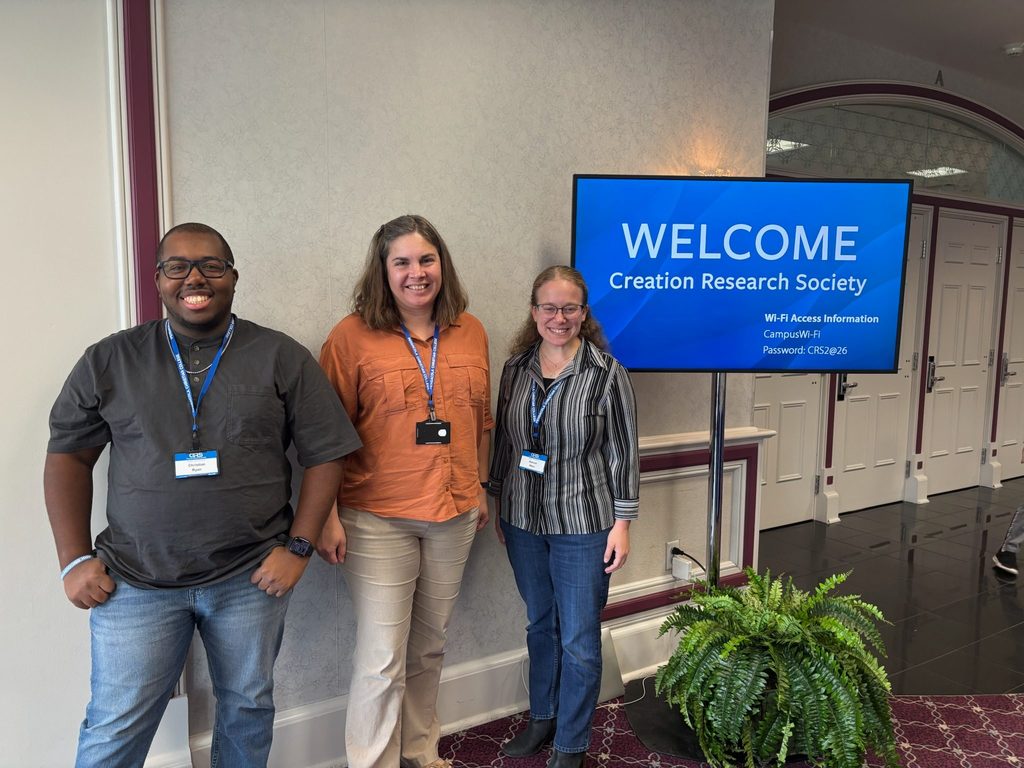
The 2026 Creation Research Society Conference was a really good event, both in the quality of presentations and the networking opportunities it offered. I left Pensacola encouraged and inspired by what we can do when we work together to build the creation model, and with a list of new projects to pursue toward that end.
More Perspectives from the 2026 CRS Conference
- Go TEAM Creation! A Report from the 2026 Creation Research Society Conference by Christian Ryan
- My First Creation Research Society Conference by Abigail L.


 Christian Ryan
 Sara Anne

 Matt McLain

 Todd Wood
 Kurt Wise
 Abigail Van Huss
 Peter
Peter