
 Christian Ryan
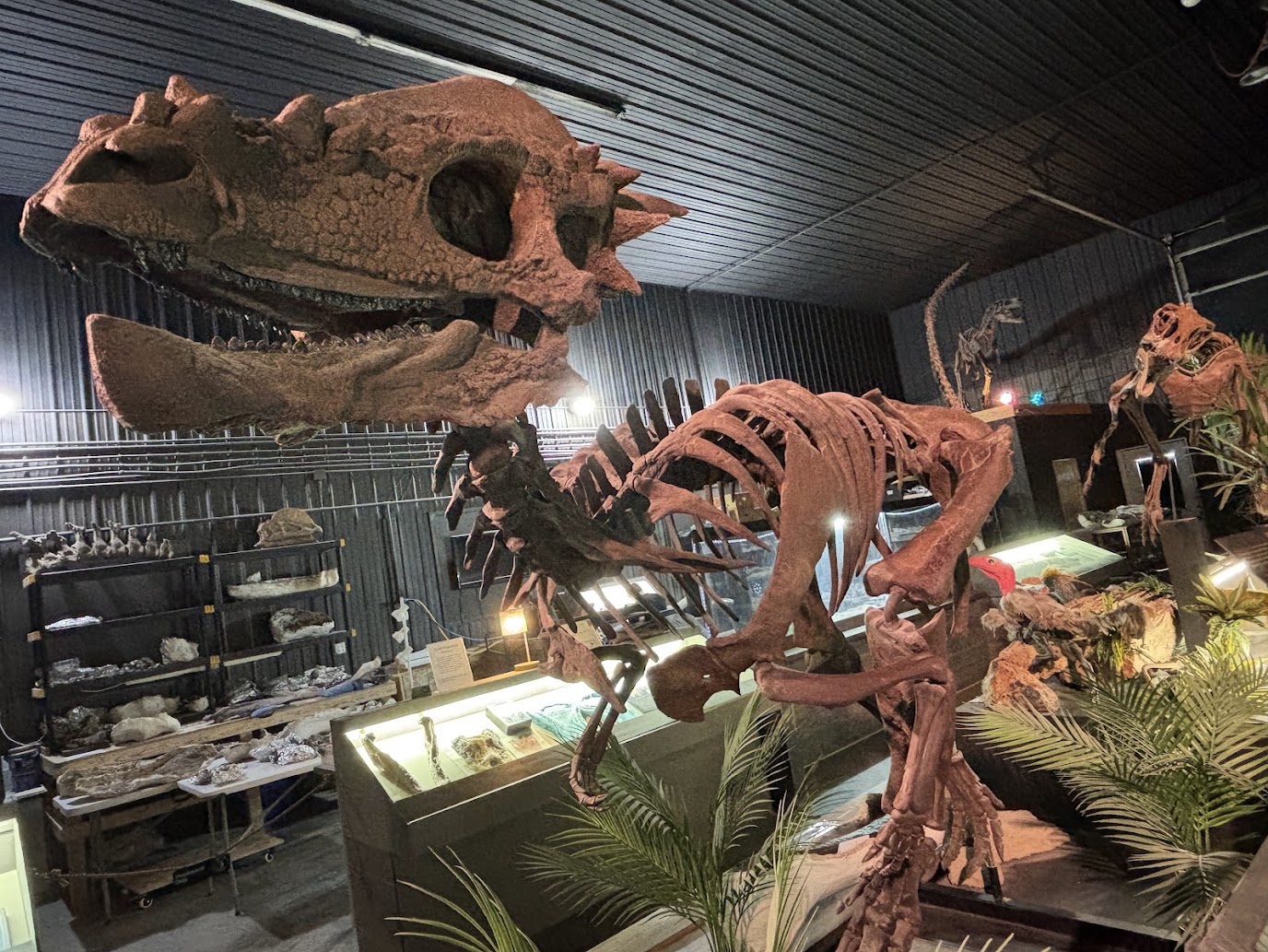
If you have a habit of being particularly stubborn, you might get called “hard-headed” or “thick-skulled” from time to time. This is usually meant as a figure of speech, but for one group of dinosaurs, it was literal. The pachycephalosaurs had some of the toughest skulls of any dinosaur, lined with solid bone. What did they use their massive skulls for?
The views expressed in this article reflect those of the author, and not necessarily those of New Creation.
Paleontologists have been giving themselves a headache as they asked themselves this question for decades. It turns out pachycephalosaurs are a very mysterious group of dinosaurs. But recent scientific discoveries are peeling back the mystery, allowing us to figure out what these animals may have really been like.
Hard-Hitters of the Cretaceous
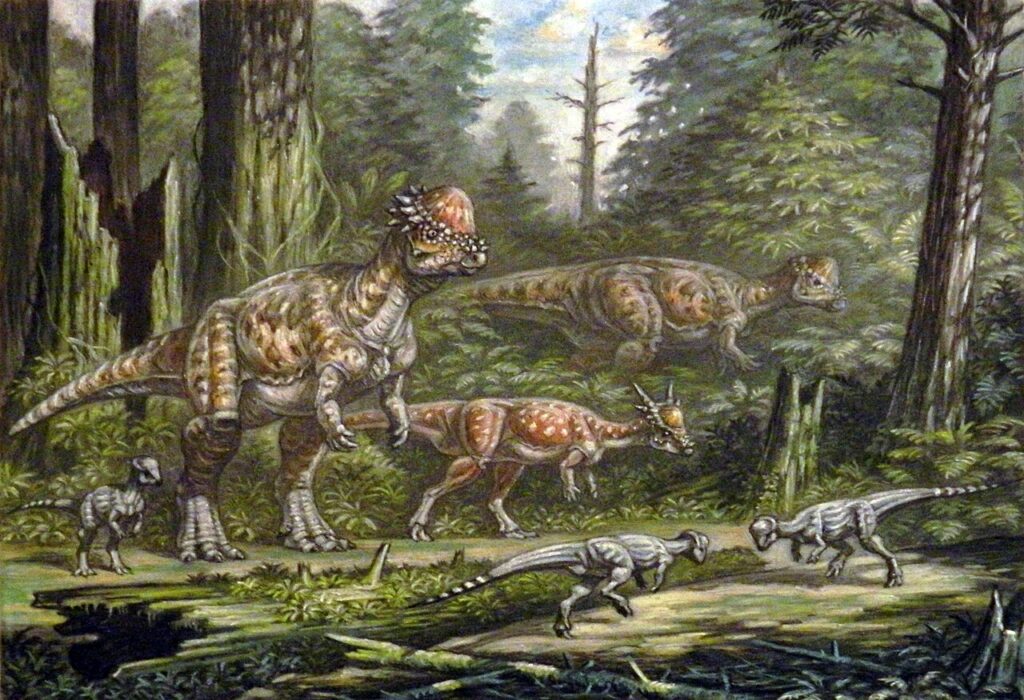
The term “pachycephalosaurs” is used to refer to a group of dinosaurs called Pachycephalosauria. Pachycephalosaurs were relatively small dinosaurs, ranging in size from the six-foot-long Homalocephale to the 14-foot-long Pachycephalosaurus itself. They come in two main types: the flat-headed pachycephalosaurs (Homalocephalidae) and the dome-headed pachycephalosaurs (Pachycephalosauridae). Head shape aside, flat-headed pachycephalosaurs tended to be smaller, while dome-headed pachycephalosaurs were more often larger. The exact size and arrangement of the head ornamentation varied, often significantly, from species to species. Some, like Stygimoloch, had both a small dome on its head in addition to very large spikes.
These dinosaurs are known exclusively from North America, Europe, and Asia. One specimen was once thought to have been found in Madagascar. But this later turned out to belong to a new species of theropod, now called Majungasaurus.1
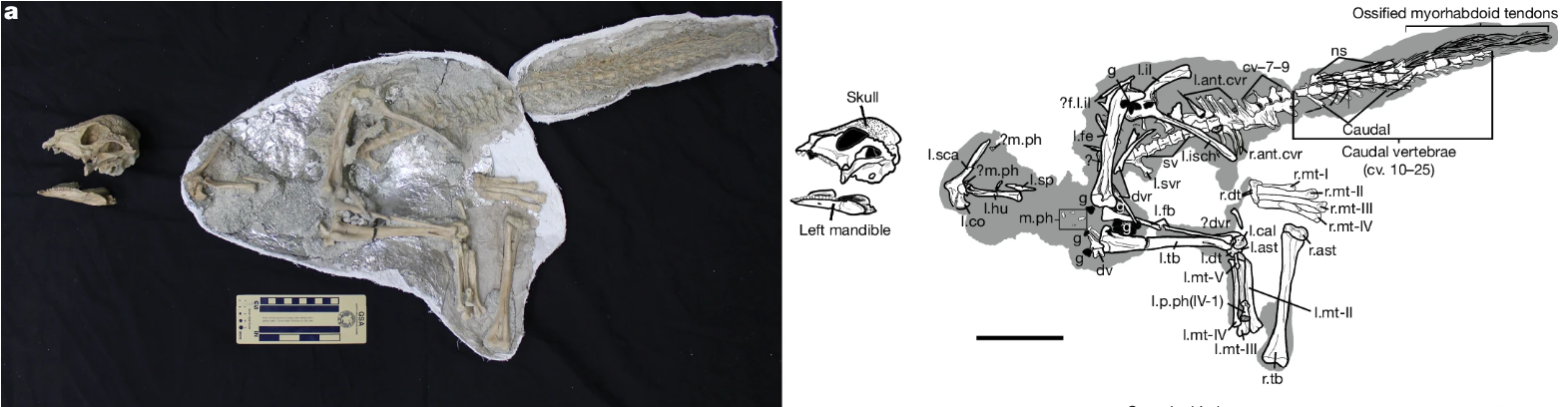
Since the 1940’s, most of what scientists know about these dinosaurs came from their tough skulls. This is because fossils from the rest of their skeletons are rare and incomplete. But in 2025, paleontologists described the discovery of Zavacephale.2 At around 54% complete, it is the most complete pachycephalosaur ever found. This includes a complete tail and bones from its hand, which have never been found in pachycephalosaurs before. It was also mostly articulated, meaning the bones were still arranged how they were when the animal was alive. Zavacephale has helped scientists learn a lot about how it and its family lived, looked like, and even ate.
It’s Time to Eat
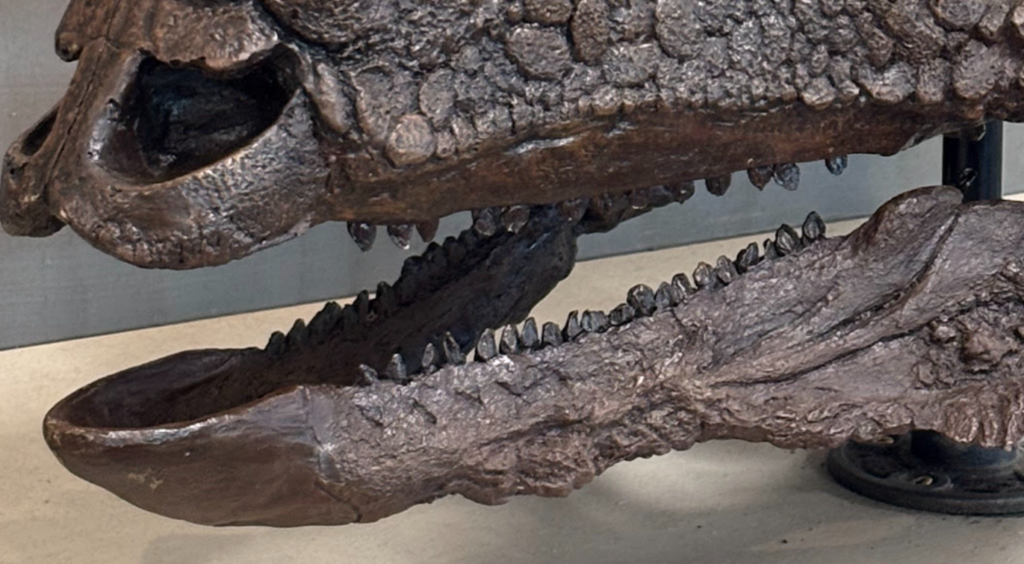
From studying their tooth structure and other aspects of their anatomy, we know pachycephalosaurs were herbivores. Small teeth were present throughout their jaw, including inside of their beaks. There are a series of leaf-shaped teeth at the back of the mouth. Another indication of herbivory is the barrel-like shape of their abdomen. Herbivores tend to have a very large gut. This allowed them to process large quantities of plant material.
The Zavacephale skeleton was found with a mass of small stones in its stomach region. These are gastroliths, which the animal swallowed when it was alive. Other dinosaurs, like the long-necked sauropods and modern birds, swallow small stones today to aid with digestion. This discovery suggests that pachycephalosaurs may have done this as well. The researchers noted that the swallowed stones still have their sharp edges. Plant-eating birds and sauropods tend to have well-rounded stones in their stomachs, while animals that eat both plants and meat often have sharp edges. Birds that engage in this behavior today are omnivorous, eating both plants and meat. It suggests that Zavacephale, and perhaps other pachycephalosaurs as well, also supplemented their diet with small animals.
What Were They Using Their Domed Heads For?
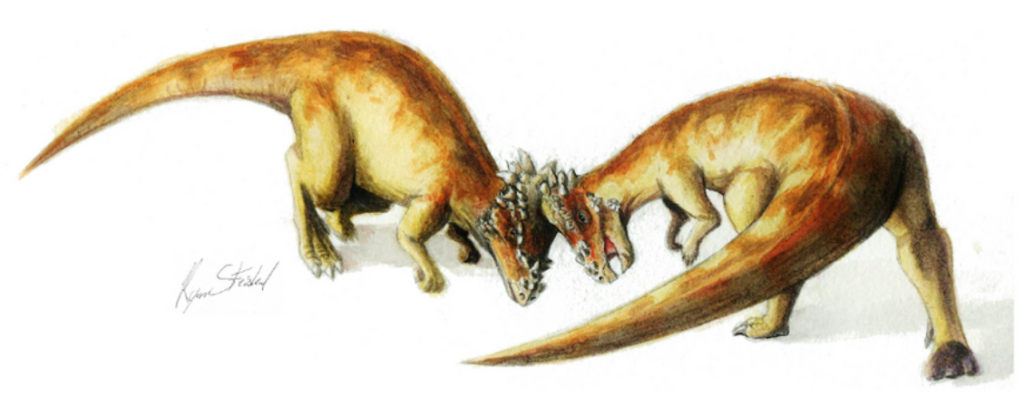
These creatures are almost always portrayed as the head-butters of the dinosaur world. Despite its prevalence, this idea is hotly contested in scientific circles. In fact, the hypothesis was initially based on a throw-away line by paleontologist Edwin Colbert in 1955 whilst speculating on the purpose behind pachycephalosaur skull shape.3 But it was a 1956 science fiction short story by L. Sprague de Camp called “A Gun for Dinosaur” that really made an impact. The idea was expanded upon by paleontologist Galton in 1970, who said:
“The thick dome of pachycephalosaurids would have formed an ideal battering ram if the head were lowered while such an animal was running with its backbone horizontal.”4
Subsequent studies have found supporting evidence for this idea.5,6 One of these is the thickness of the skull. Another has to do with how the neck vertebrae attach to the dinosaurs’ skull. In most dinosaurs the neck attachment is on the back of the skull. But in pachycephalosaurs, this joint (called the occipital condyle) is located toward the bottom of the skull. Allegedly, this would have helped pachycephalosaurs to absorb the impact from butting heads. We can see bighorn sheep and musk oxen engage in this same behavior today.
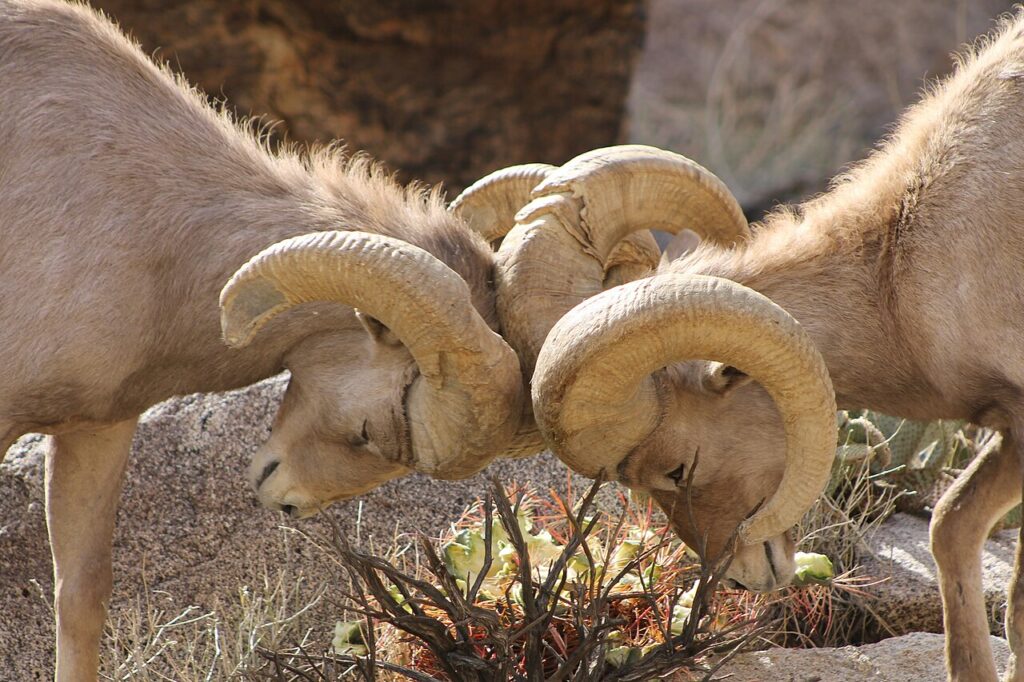
More recently, this idea has come under fire. In head-butting animals today, their skulls and horns have special ridges that allow them to interlock upon collision.7 One study from 2004 pointed out that the skulls of pachycephalosaurs (even flat-headed species) were too rounded.8 This would result in glancing blows. It would be like two people running at each other with bowling balls. Given that many pachycephalosaurs had spikes on their heads, the result would not be pretty. The researchers behind this study also looked at the microscopic structure of pachycephalosaur domed heads. They found that even though they superficially looked very tough, they could not withstand the blows of combat that comes with head-butting.
To Head Butt…Or Not to Head Butt
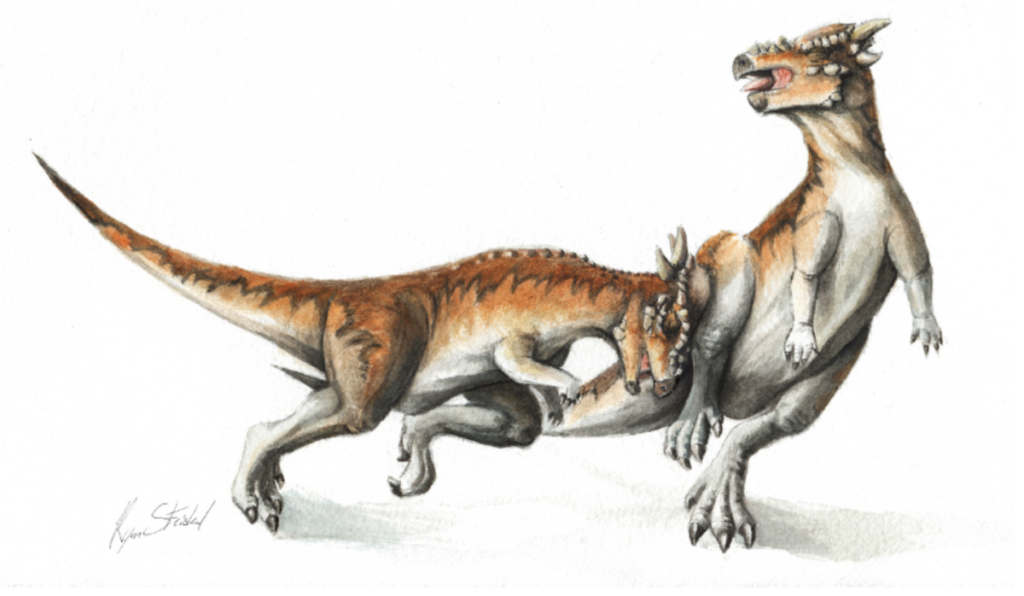
But if not for head-butting, what were these thick-headed dinosaurs using their skulls for? One likely use is display. As previously mentioned, pachycephalosaur skulls came in a wide range of shapes and sizes, with many varieties and arrangements of horns. In modern animals, like African antelope, similar traits are often used to help individuals recognize members of their own species. Is display really all they used their hard heads for?
Another study looking at the plausibility of pachycephalosaurs using their domed skulls for combat was published in 2008.9 These researchers carried out biomechanical analyses of pachycephalosaur skulls. Contrary to what earlier studies concluded, they found that pachycephalosaur skulls were quite durable, and capable of withstanding heavy blows.
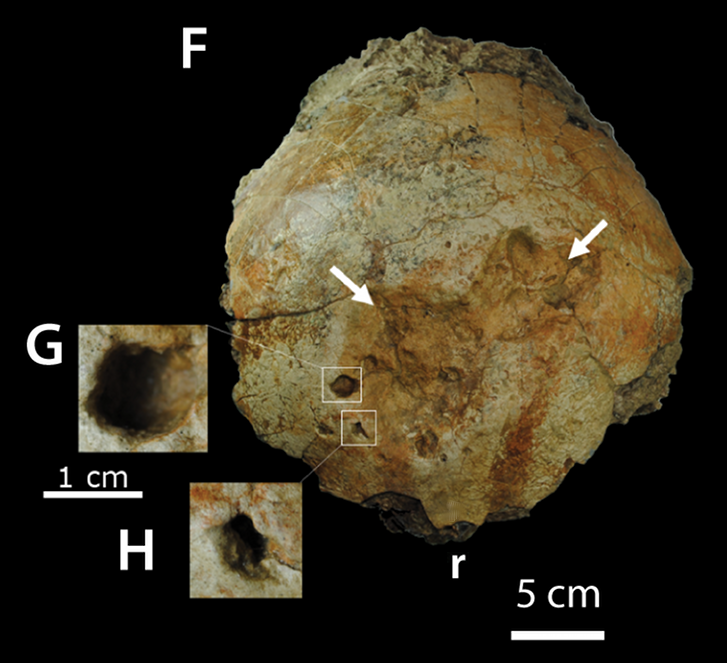
An even more recent study in 2013 of skulls from Pachycephalosaurus itself found that 25% of all skulls analyzed had evidence of head injuries.10 If pachycephalosaurs were only using their skulls for display, it is unlikely that they would exhibit this much damage. As such, they seemed to have been using their skulls for something abrasive, other than running their heads into each other at full speed like bighorn sheep and musk oxen do.
Today, most paleontologists think pachycephalosaurs engaged in “low-speed” combat behaviors. This could have involved head-butting at close range or flank-butting. Many animals also engage in flank-butting today, like elephants, giraffes, and water buffalo. This might be part of the reason pachycephalosaurs had barrel-shaped abdomens, as this would help protect their internal organs from impacts.
Diversity within Created Kind
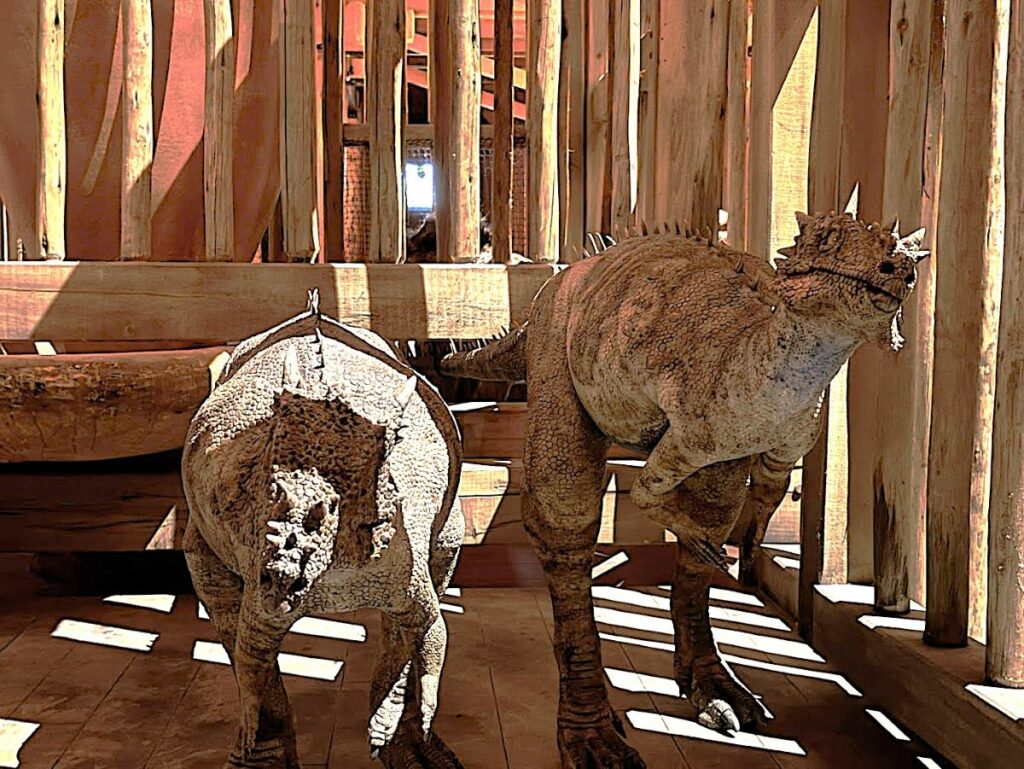
According to the Book of Genesis, God made all of the land animals according to their kinds. Since dinosaurs are land animals, this would have included them as well. Most young-earth paleontologists do not think all dinosaurs belong to the same created kind. Rather, they think there are different created kinds of dinosaurs. The study of created kinds is called baraminology. Pachycephalosaurs have been one interest in the study of the baraminology of dinosaurs. Where do they fall out?
A 2018 baraminological study performed statistical analyses on pachycephalosaurs and other dinosaurs.11 They used data gathered from different years in order to see how they compared. When they used data from a 2004 study, they found evidence for dissimilarity between the dome-headed (Pachycephalosauridae) and flat-headed (Homalocephalidae) pachycephalosaur families and homalocephalid family (flat-headed pachycephalosaurs). Ordinarily, this would suggest they belong to different created kinds.
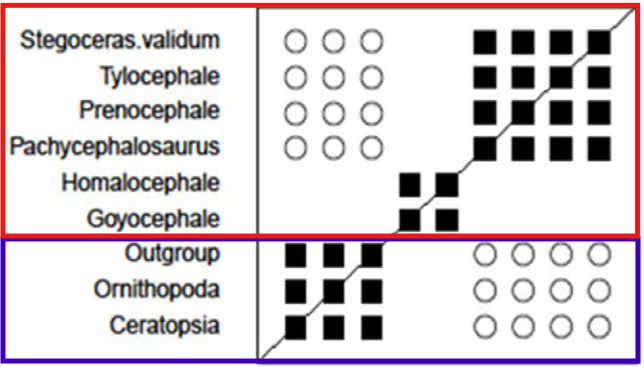
However, performing the same analyses on more recently collected data was able to encompass new fossil discoveries. This revealed that the dissimilarity between these two families of dinosaurs appears to have been unfounded. This more up-to-date result found that Pachycephalosauridae and Homalocephalidae both are still distinct groups, but there is no statistically significant dissimilarity separating them. The researchers also found that these two families appear to show very clear dissimilarity from other types of dinosaurs (including their alleged closest evolutionary relatives).
All of this suggests that homalocephalids and pachycephalosaurids are two branches within a single created kind.
It’s Complicated
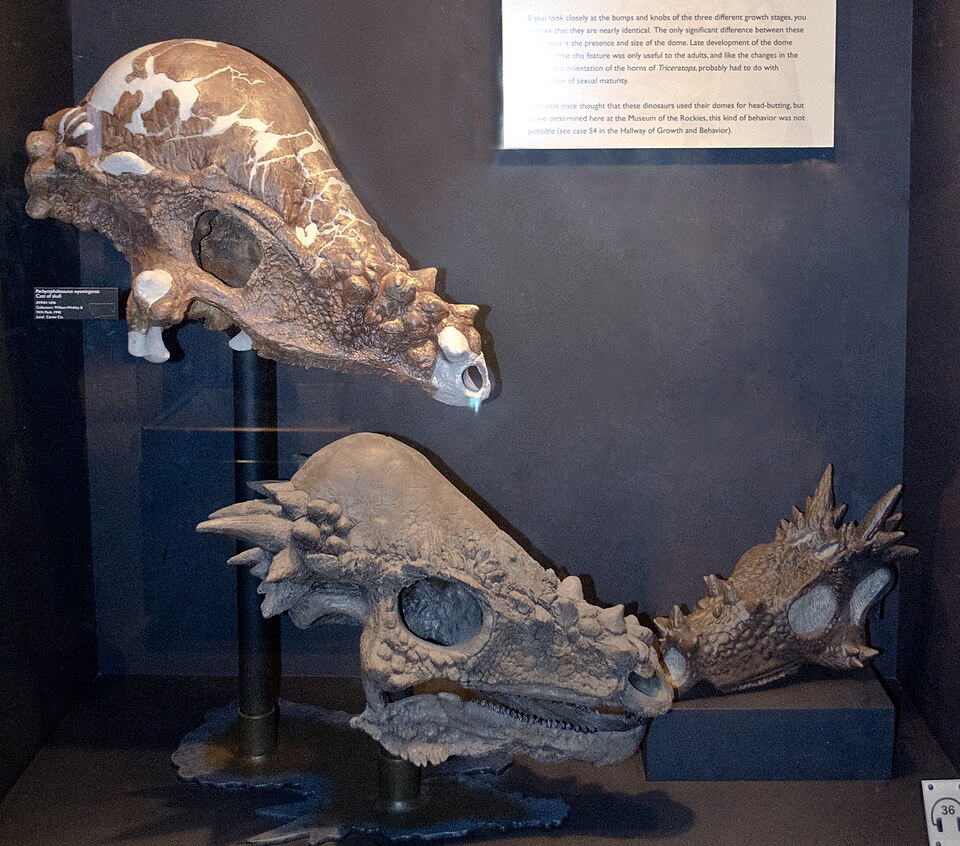
While these results are compelling, they will likely require more research as we continue to find more and better-preserved pachycephalosaur fossils and clarify these relationships. As mentioned before, most pachycephalosaurs are only known from skulls and other scant pieces of the skeleton. As such, the classification of pachycephalosaurs is far from settled. Scientists cannot even agree how many species of pachycephalosaurs there were. This is because some think that certain flat-headed species are young or female versions of dome-headed species.12,13
For example, some scientists have suggested that Stygimoloch and Dracorex may not be their own species. Rather, they think these dinosaurs may be juvenile versions of Pachycephalosaurus. This remains contested however, as other studies have suggested that Stygimoloch is its own species, but Dracorex could be a young version of either of the other two.14,15
Conclusion
Pachycephalosaurs are a very unique breed of dinosaur. No other dinosaur from the fossil record has been discovered with the tough, bony head these creatures had. And they continue to marvel us with their diversity in skull shape as we ponder over the use of their unusual headgear. We hope that further study will clarify the classification of these dinosaurs, which in turn will help us be more confident in their assigned created kind.
As we continue to mull over the mysteries, one thing remains clear. Pachycephalosaurs are a beautiful and very welcome addition to the menagerie God released onto the earth.
Footnotes
- Krause, D. W., Sampson, S. D., Carrano, M. T., & O’Connor, P. M. (2007). “Overview of the history of discovery, taxonomy, phylogeny, and biogeography of Majungasaurus crenatissimus (Theropoda: Abelisauridae) from the Late Cretaceous of Madagascar.” Journal of Vertebrate Paleontology, 27(S2), 1-20. ↩︎
- Chinzorig, Tsogtbaatar, Ryuji Takasaki, Junki Yoshida, Ryan T. Tucker, Batsaikhan Buyantegsh, Buuvei Mainbayar, Khishigjav Tsogtbaatar, and Lindsay E. Zanno. “A domed pachycephalosaur from the early Cretaceous of Mongolia.” Nature 646, no. 8087 (2025): 1138-1145. ↩︎
- Colbert, E. (1955). Evolution of the Vertebrates. New York: John Wiley. ↩︎
- Galton, Peter M. “Pachycephalosaurids: dinosaurian battering rams.” Discovery 6, no. 1 (1970): 23-32. ↩︎
- Sues, H.-D. 1978. “Functional morphology of the dome in pachycephalosaurid dinosaurs.” Neues Jahrbuch für Geologie und Paläontologie, Abhandlungen 156(3):459–472. ↩︎
- Carpenter, Kenneth. “Agonistic behavior in pachycephalosaurs (Ornithischia, Dinosauria); a new look at head-butting behavior.” Rocky Mountain Geology 32, no. 1 (1997): 19-25. ↩︎
- Geist, Valerius. “The evolution of horn-like organs.” Behaviour (1966): 175-214. ↩︎
- Goodwin, Mark B., and John R. Horner. “Cranial histology of pachycephalosaurs (Ornithischia: Marginocephalia) reveals transitory structures inconsistent with head-butting behavior.” Paleobiology 30, no. 2 (2004): 253-267. ↩︎
- Snively, Eric, and Andrew Cox. 2008. “Structural Mechanics of Pachycephalosaur Crania Permitted Head-Butting Behavior.” Palaeontologia Electronica 11, no. 1: 3A. ↩︎
- Peterson, Joseph E., Collin Dischler, and Nicholas R. Longrich. “Distributions of cranial pathologies provide evidence for head-butting in dome-headed dinosaurs (Pachycephalosauridae).” PloS one 8, no. 7 (2013): e68620. ↩︎
- Doran, Neal A., Matthew McLain, Natalie Young, and Adam Sanderson. “The Dinosauria: Baraminological and multivariate patterns.” In International Conference on Creationism Proceedings, vol. 8, no. 1, p. 5. 2018. ↩︎
- Horner, John R., and Mark B. Goodwin. “Extreme cranial ontogeny in the Upper Cretaceous dinosaur Pachycephalosaurus.” PLoS One 4, no. 10 (2009): e7626. ↩︎
- Goodwin, Mark B., and David C. Evans. “The early expression of squamosal horns and parietal ornamentation confirmed by new end-stage juvenile Pachycephalosaurus fossils from the Upper Cretaceous Hell Creek Formation, Montana.” Journal of Vertebrate Paleontology 36, no. 2 (2016): e1078343. ↩︎
- Evans, David C., Caleb M. Brown, Hailu You, and Nicolás E. Campione. “Description and revised diagnosis of Asia’s first recorded pachycephalosaurid, Sinocephale bexelli gen. nov., from the Upper Cretaceous of Inner Mongolia, China.” Canadian Journal of Earth Sciences 58, no. 10 (2021): 981-992. ↩︎
- Wroblewski, Anton F-J. “Southernmost record of the pachycephalosaurine Stygimoloch spinifer and palaeobiogeography of latest Cretaceous North American dinosaurs.” Lethaia 57, no. 4 (2025): 1-10. ↩︎
 Noel Grimes
 Ken Coulson

 Kurt Wise

 Abigail L.

 Hannah Klein