

 Peter
PeterHappy Easter! As we celebrate Jesus’ resurrection, I hope to ponder the mystery of our own resurrection for a few moments. Jesus went to the cross to bear our sin and rose to reign in heaven. Believers will also rise from the dead, equipped with new bodies suited to eternal life.
The views expressed in this article reflect those of the author, and not necessarily those of New Creation.

In 1 Corinthians 15 the apostle Paul defends the bodily resurrection of the dead. He writes in response to a heretical subset of the Corinthian church. This group rejected the doctrine of bodily resurrection. They likely followed Greek philosophy, which thought that only the spirit passed into the afterlife.1 Paul argues that the bodily resurrection of believers is inescapably tied to Christ’s resurrection. If dead bodies cannot come back to life, then Christ’s body must still lay in the grave.
Paul’s Analogy
The Corinthians questioned the practicality of resurrection. How could life be restored to a dead body? What form would a resurrected body even take? Paul answers these questions with an analogy, “what you sow is not the body that is to be… But God gives it a body as he has chosen…” (1 Corinthians 15:37–38). Our mortal body is likened to a seed sown in the grave. God will cause that corpse to grow and blossom into a new, incorruptible body.

However, our new body will be of a fundamentally different type. Paul writes, “For not all flesh is the same, but there is one kind for humans, another for animals, another for birds, and another for fish…” (1 Corinthians 15:39). Here, Paul uses the variety within the animal kingdom to express the degree of difference between our physical and spiritual bodies. Paul distinguishes between four types of creatures: humans, animals (or beasts), birds, and fish. Each of these groups is visually and behaviorally distinct. Paul points to the anatomical differences between life forms as an analogy for the distinction between our present body and our resurrected body. Our resurrected body will be distinct from our mortal body just as these bodies of different animals are distinct from one another.2
A Paddlefish Body
Many years ago, my family vacationed near Yankton, SD. We stayed in a campground on the banks of the Missouri River. My father retrieved his fishing rods and tackle box from the car. We walked down to the riverbank together and cast our lines out into the river. Soon, our lines began to twitch as little gar nibbled on the bait. The gar could not put up much of a struggle, but they looked mean. Their long snouts were full of sharp teeth. We tossed the gar back, hoping for something bigger. Suddenly, my dad stumbled forward. He jerked the rod up, attempting to set the hook. As the fish neared shore, I saw a long, brownish-green shape thrashing in the water. Using a net, we scooped out an alien-looking fish. It was nearly three feet long, with a bizarre oval snout that protruded over its lower jaw. Dad caught a paddlefish!
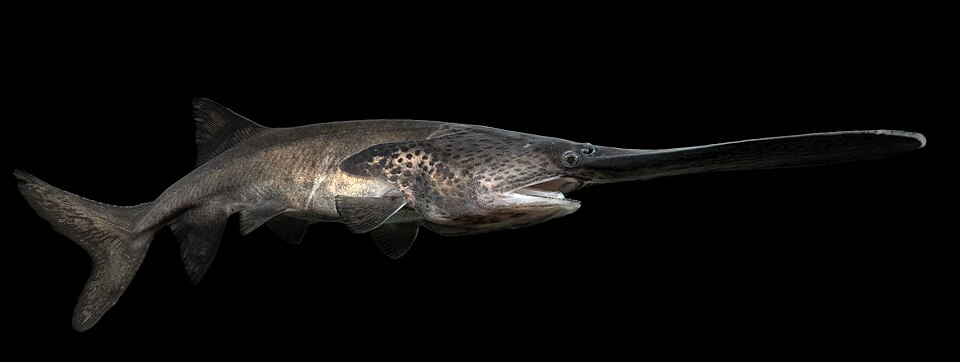
Paul’s metaphor brings this bizarre animal to mind. A paddlefish is so fundamentally different from a human that it is difficult to compare the two. Paddlefish swim through murky water using sensors in their snout to detect plankton. They have smooth skin covered in a slimy layer of mucus. Paddlefish have a cartilaginous skeleton like sharks. Imagine waking up in a paddlefish’s body. It is hard to comprehend what life would be like as a fish. Paul describes a similarly dramatic, but more glorious change. The resurrection will transform our mortal bodies into a form suited to eternal life. Our spiritual bodies will be radically different than our mortal bodies.
What will the Resurrected Body be like?
After His resurrection, Jesus appeared to a gathering of disciples. Initially, they believed Him to be a phantom. But Jesus said, “See my hands and my feet, that it is I myself. Touch me, and see. For a spirit does not have flesh and bones as you see that I have” (Luke 24:39). Clearly, Jesus’s physical body was raised from the dead. Christ was not an ethereal spirit or a ghost after His resurrection. He possessed a real, physical, human body. Similarly, believers will not live eternally as disembodied spirits. God has promised to raise our physical bodies from the grave.
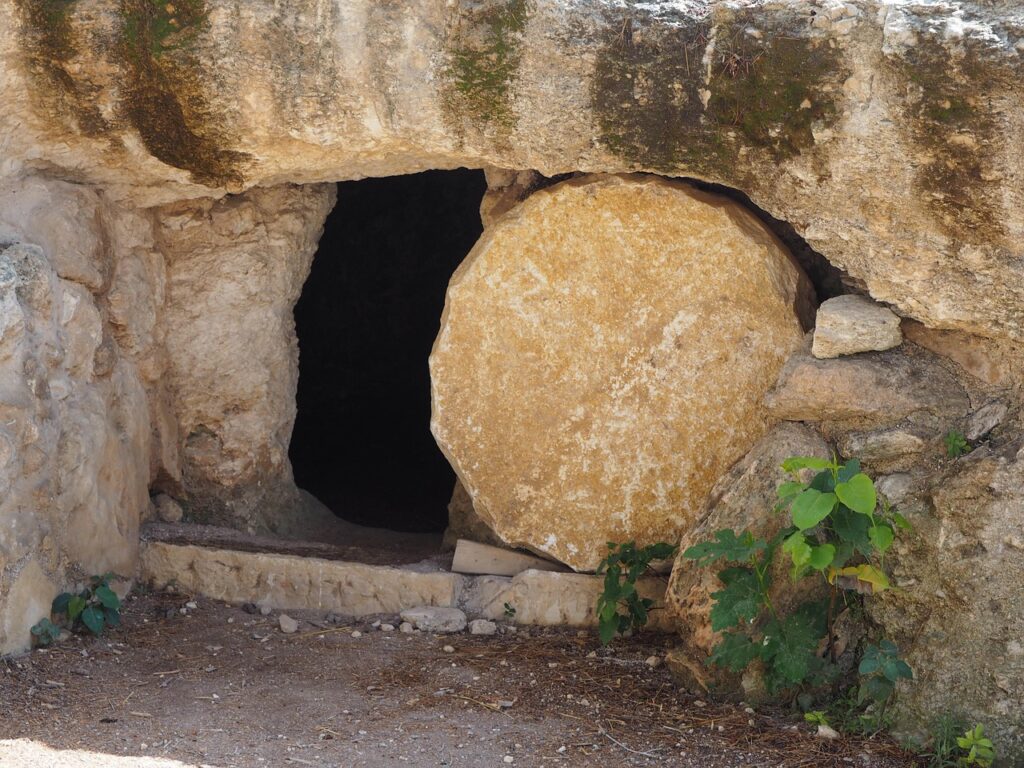
What will our resurrected bodies be like? Paul provides some details: “What is sown is perishable; what is raised is imperishable. It is sown in dishonor; it is raised in glory. It is sown in weakness; it is raised in power. It is sown a natural body; it is raised a spiritual body” (1 Corinthians 15: 42-44). Our mortal bodies are subject to decay and injury. As we age, our joints wear out, our teeth get cavities, and wounds take longer to heal. God reveals that our resurrected bodies will be imperishable, unable to decay.
Our bodies go to the grave at a time of ultimate weakness. Wounds, sickness, and age will cause us to succumb to death. But when we rise, our bodies will have power, strength, and vitality. Dead bodies are dishonorable and unclean. But when we rise from the dead, our impure bodies will be glorious and pure. Our imperishable, glorious bodies will be fit for eternal life.
Finally, Paul tells us that “Just as we have borne the image of the man of dust, we shall also bear the image of the man of heaven” (1 Corinthians 15:49). Our mortal bodies physically resemble Adam. Every human alive is a direct descendant of the first man. But upon resurrection, we will take on a new likeness. We will resemble Christ, being clothed in His righteousness and purity.
Conclusion
What a wonderful promise! God will not only grant us eternal life but also recreate our bodies. The apostle John tells us that “what we will be has not yet appeared; but we know that when he (Christ) appears we shall be like him, because we shall see him as he is” (1 John 3:2). Christ’s resurrection on a Sunday morning nearly two thousand years ago assures us that one day we will dwell with Him in a sinless and perfected state.
Notes
- Albert Barnes, Notes on the New Testament: Explanatory and Practical, 1 Corinthians (New York: Harper & Brothers, 1851), 1 Corinthians 15:12. ↩︎
- Matthew Henry, Matthew Henry’s Concise Commentary on the Whole Bible (London: J. F. Dove, 1828), 1 Corinthians 15:35–50. ↩︎


 Christian Ryan
 Noel Grimes
 Abigail L.
 Paul Garner
 Todd Wood

 Hannah Klein

 Joshua Cedar