
 Joshua Cedar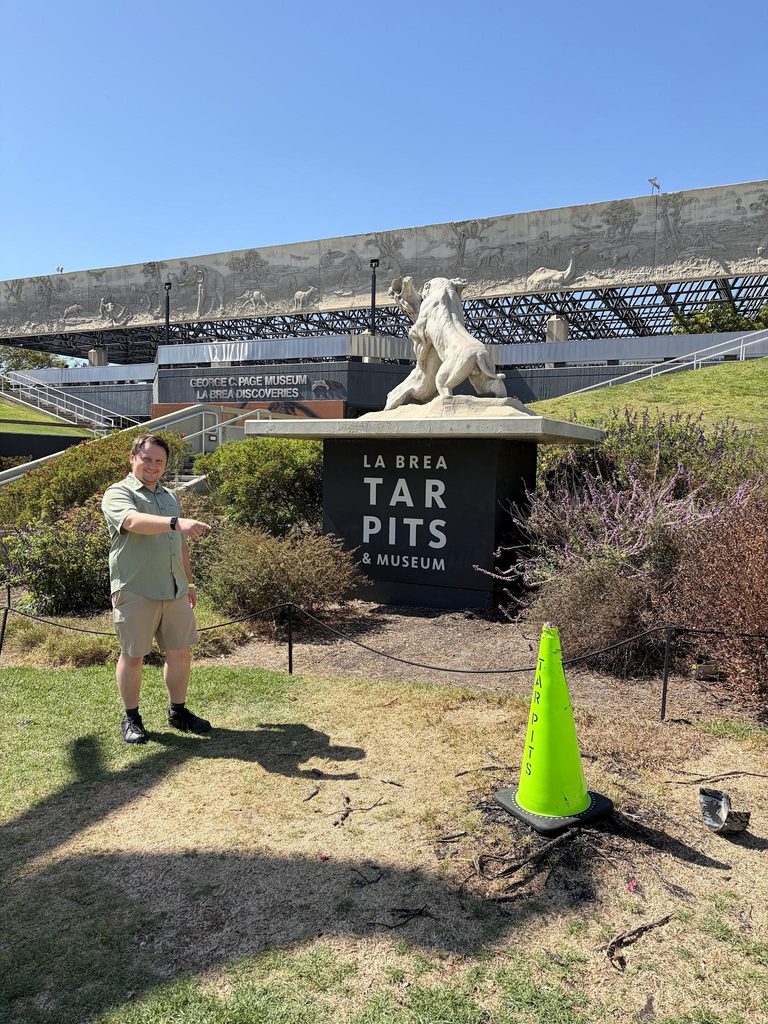
In every major city across the United States, from New York to San Francisco, there is a place where weary citizens can take a break from the hustle and bustle of urban life to enjoy the quiet and be rejuvenated by God’s creation. From Central Park to Golden Gate Park, these places act as sanctuaries where, amidst the confusion of these modern-day Babels, we can hear echoes of our original Garden home. Like the forests of Lothlórien in Tolkien’s Lord of the Rings trilogy, they preserve a remnant of what the land was like before the race of men came to dwell there.
My nearest metropolis, Los Angeles, is the home of Hancock Park. Here, between Hollywood and Beverly Hills, amid luxury highrises and monuments to Los Angeles’s cultural heritage, kids chase each other up and down the grassy slopes and strolling couples take in the cool coastal breeze. I recently had the opportunity to visit Hancock Park, though my reasons for visiting were not simply to enjoy the scenery. No, I wanted to see what lies underneath the scenery: the vestiges of a not-so distant time when the City of Angels was a realm of giants and monsters.
Asphalt Jungle
I am referring, of course, to La Brea Tar Pits. Brea is the Spanish word for tar or pitch. Thus, La Brea Tar Pits means “The Tar Tar Pits.” Despite the name, the black, sticky substance oozing up from the ground is actually asphalt. Unlike tar, which is produced by heating up plant material, naturally occurring asphalt is a product of petroleum seeping up from inside the earth. When the petroleum reaches the surface, its most volatile components evaporate away, leaving behind the sticky, semi-solid residue.
In the 1800’s locals would collect the asphalt for use in waterproofing the roofs of adobe houses. Later, it was quarried commercially and used to pave roads in San Francisco.1
Star-Studded Burial Ground
In 1865, Josiah Whitney, chief of the California Geological Survey and the namesake of Mt. Whitney—California’s tallest mountain—had the opportunity to visit Rancho La Brea (as it was known). He reported seeing “the bones of cattle and birds” that had become entrapped in the asphalt. Later investigators discovered that the asphalt contained the bones of Ice Age all-stars like saber-toothed cats and giant ground sloths. Since excavations began at the beginning of the 20th century, millions of fossils have been excavated from La Brea.1 These include fossils of mammals, birds, plants, and even invertebrates.
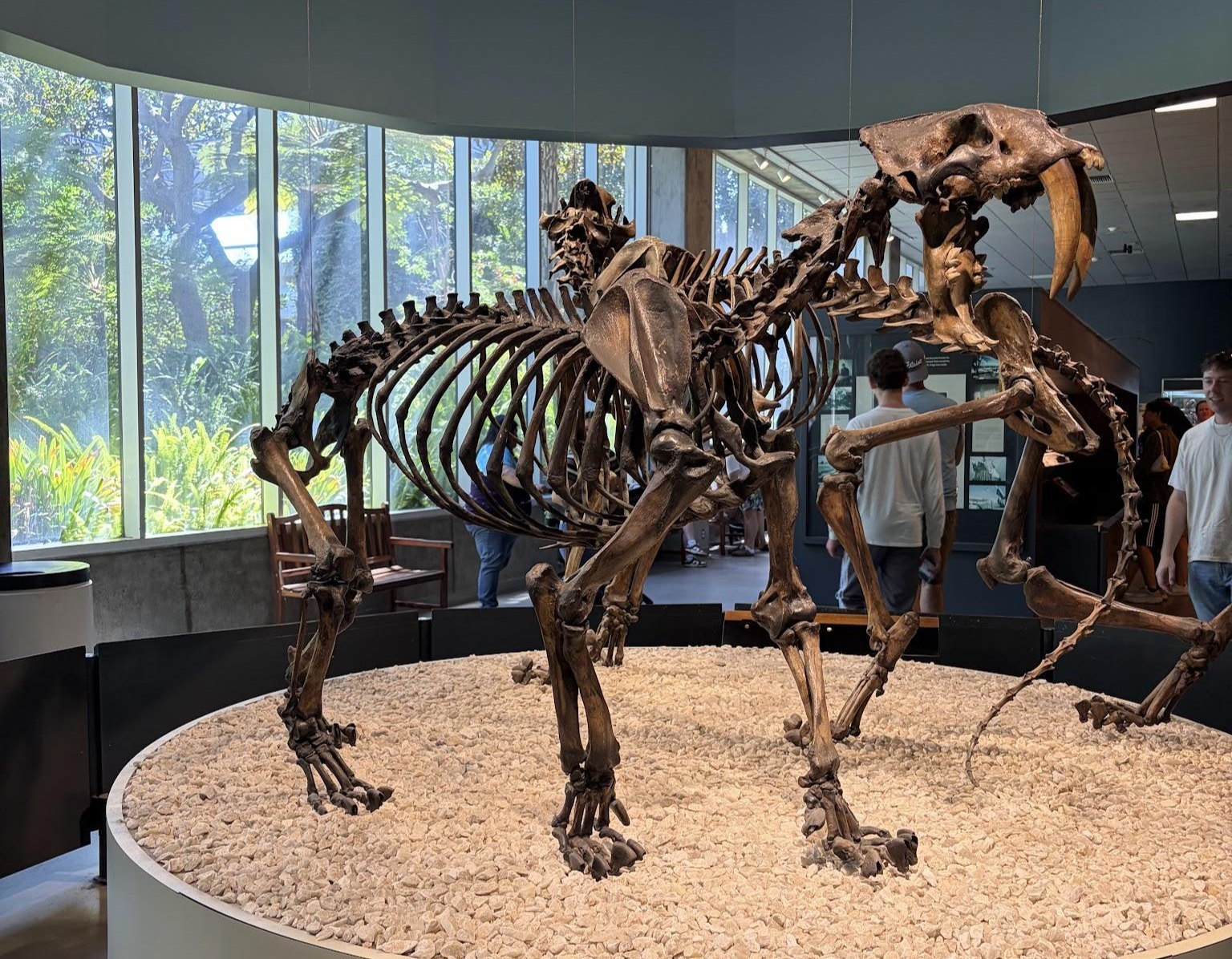
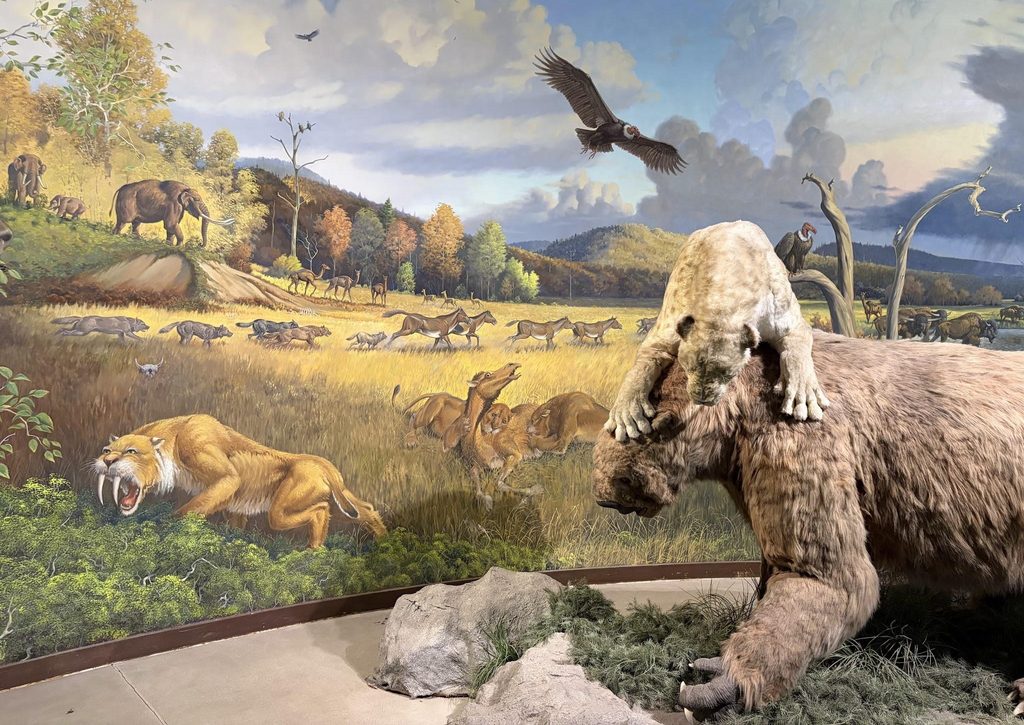
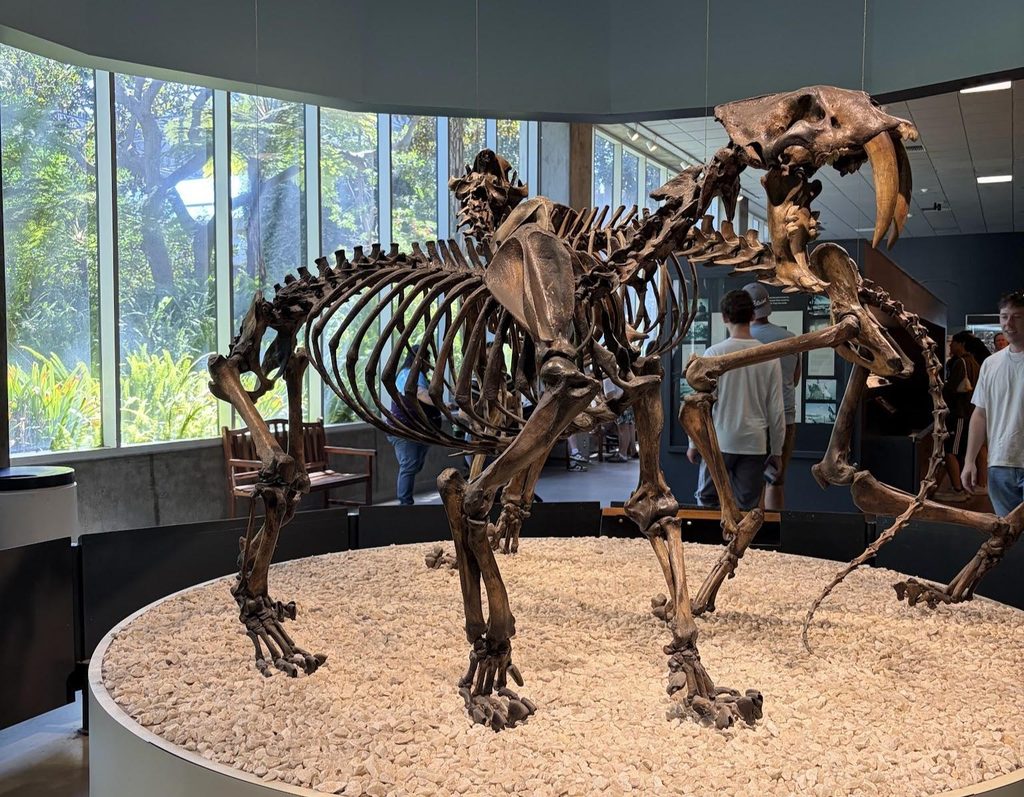
During my visit to La Brea, I was able to see hundreds of these fossils on display at the George C. Page Museum (now closed until 2028 for a major makeover), including some being actively prepared and cleaned in the Fossil Lab. Walking through the exhibits, I was greeted by the towering skeletons of mastodons, camels, American lions, and the hump-backed ancient bison (Bison antiquus).
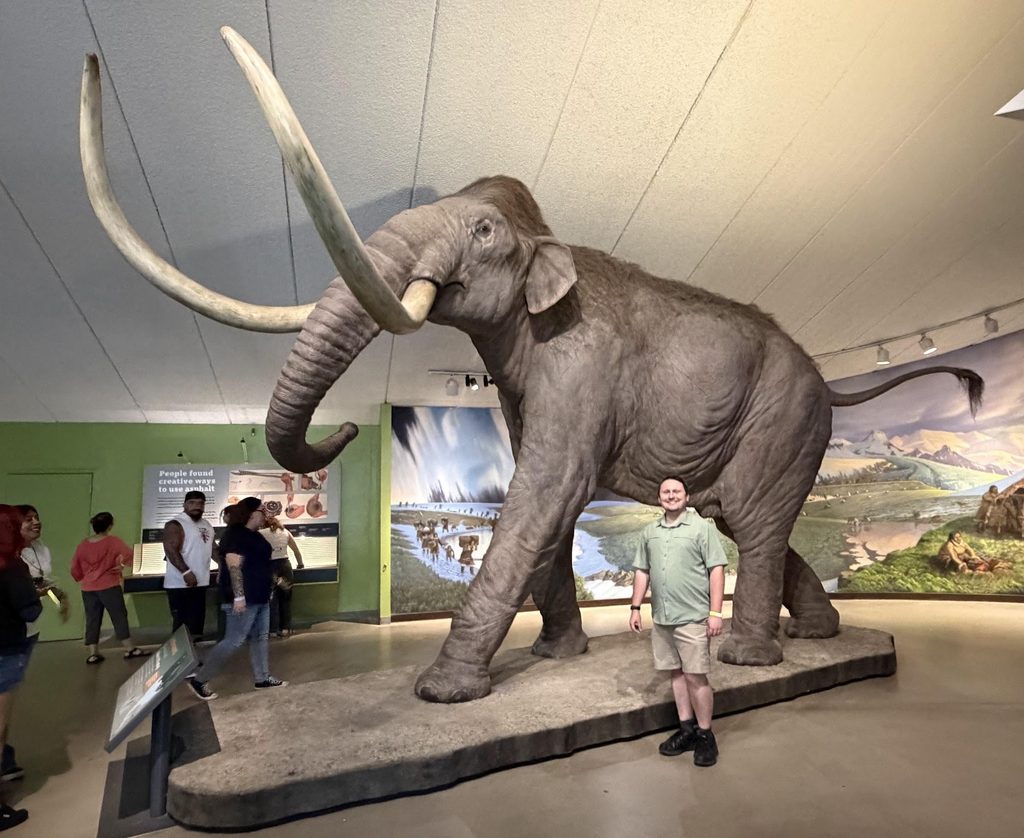
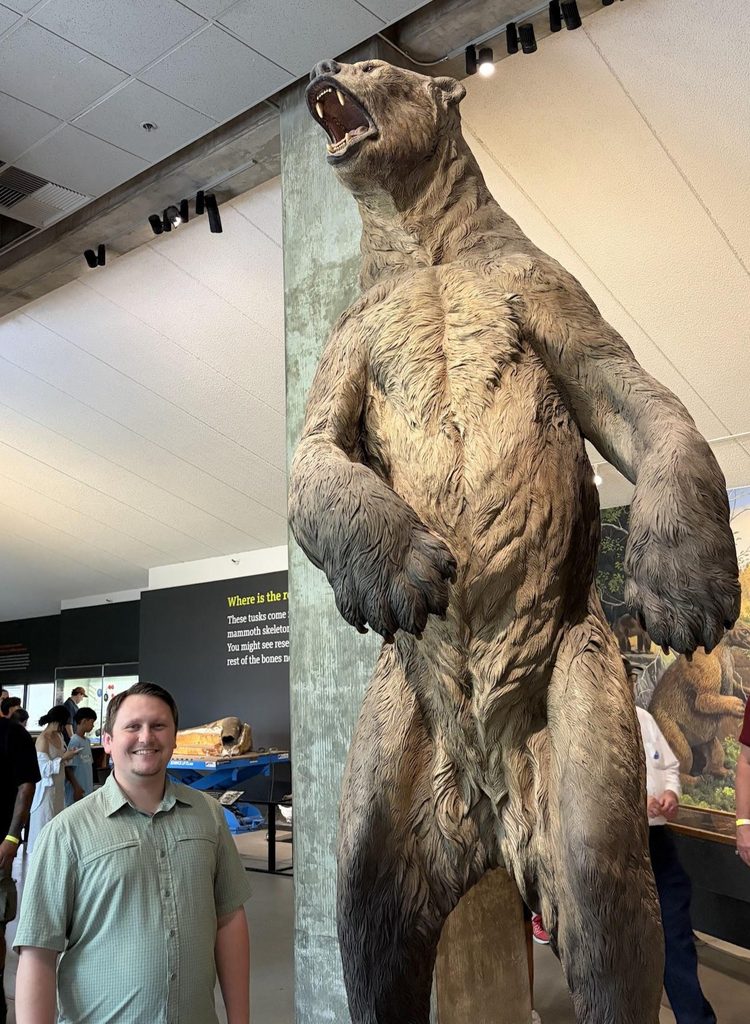
Soaring overhead were eagles, condors, and teratorns (large, condor-like birds). I stood in wonder at the colorful murals depicting the panoply of life that once inhabited the region (see below). I cowered beneath the gaping jaws of the short-faced bear (Arctodus, pictured above on the right) and the curved tusks of the Columbian mammoth (Mammuthus columbi, pictured above).
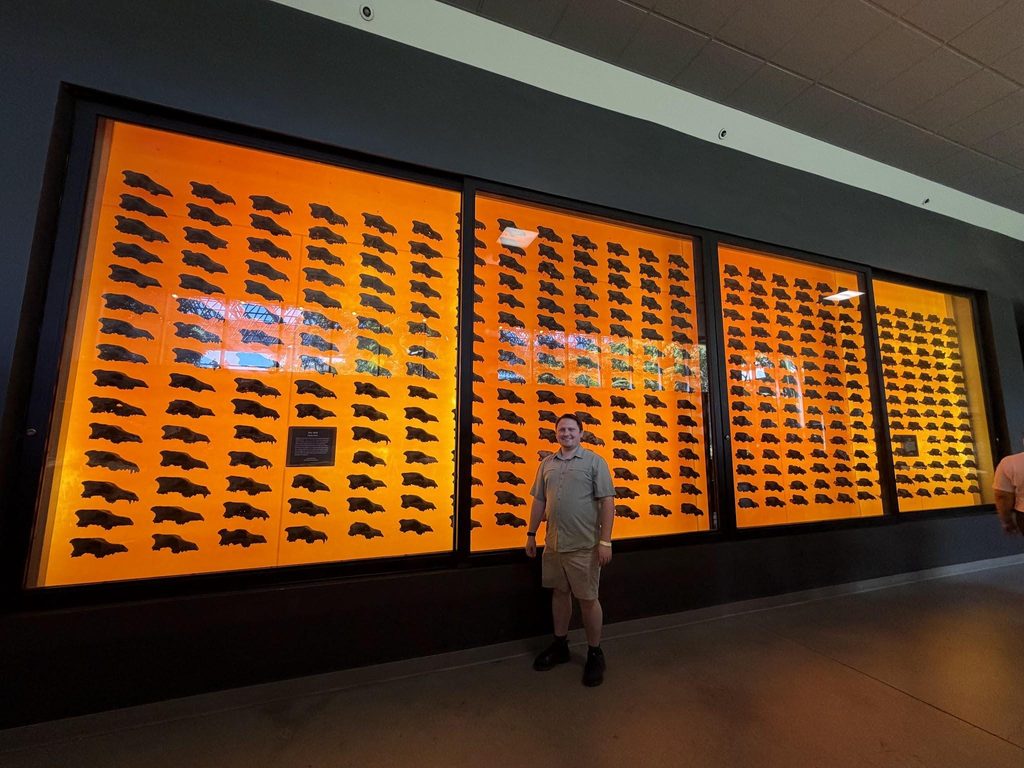
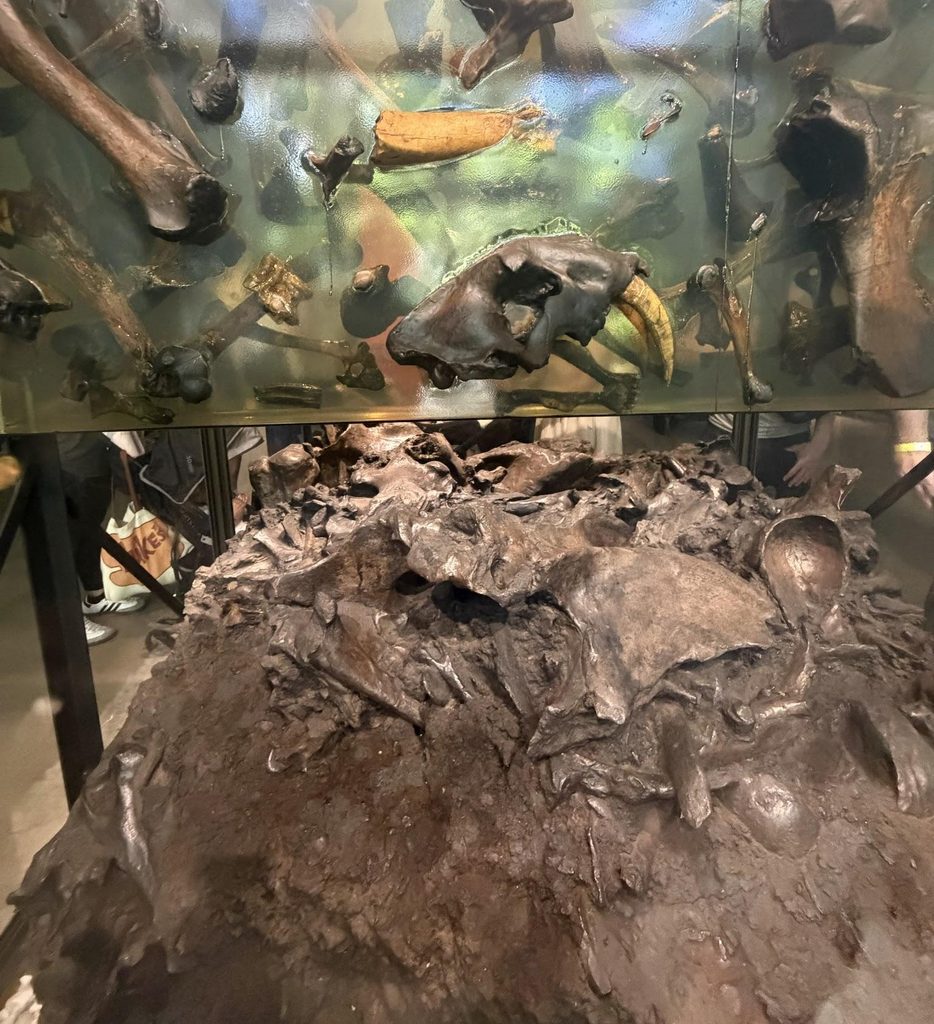
My favorite display, however, was the “Dire Wolf Skull Wall,” which features the skulls of 400 of the 3600 dire wolves (Aenocyon dirus) whose remains were discovered at La Brea (pictured below).2
Less-Flashy (but Still Fascinating!) Fossil Discoveries
As a paleontologist, I also appreciated the exhibits focused on the less glamorous (but important!) parts of my discipline. One such exhibit highlighted the preservation of the fossils (or taphonomy) at the site. Bones from La Brea vary in preservation quality, from well-preserved bones lacking weathering to bones that have been gnawed by rodents or infested with insect larvae. Many bones show “pit wear” marks caused by bone-on-bone (or other object) contact due to compaction and the shifting within the asphalt-laden sediments.
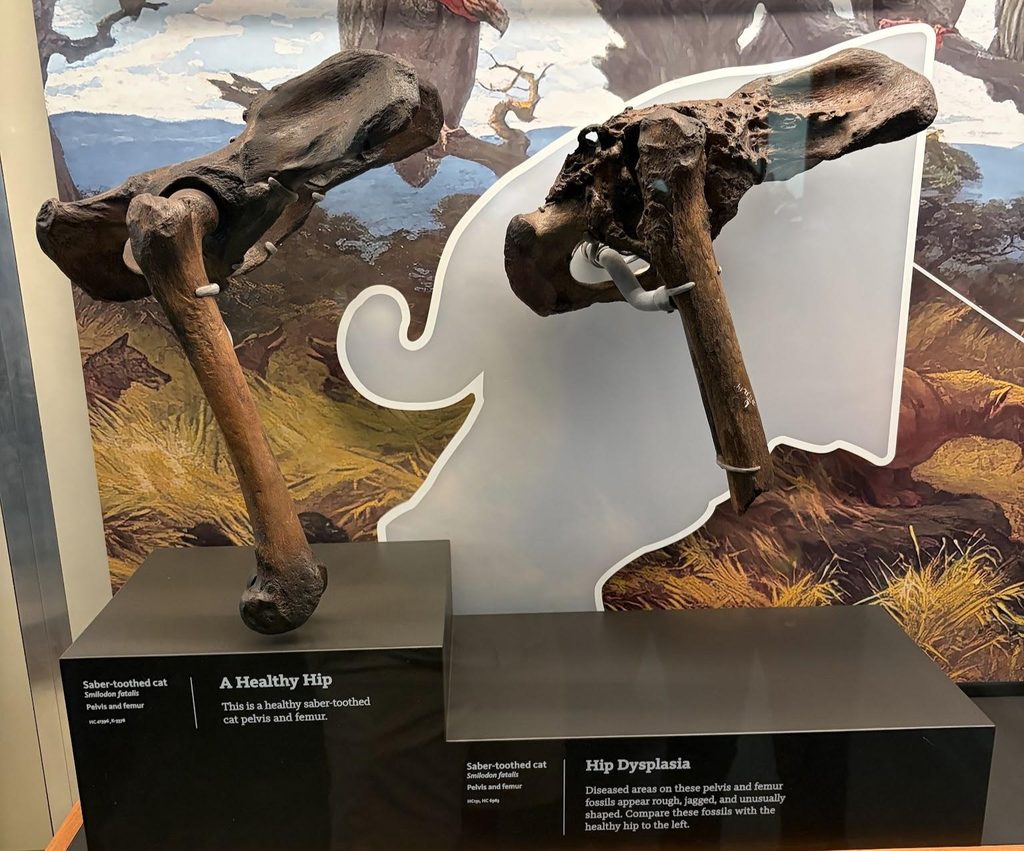
Another display featured research on hip dysplasia in a saber-toothed cat. Hip dysplasia is where a complete hip socket fails to develop, making it easy for the femur to become dislocated. The normal cartilage that envelopes the hip joint gets worn down, resulting in osteoarthritis.3 Hip dysplasia afflicts modern cats and dogs, as well as humans. While I sympathize with this poor animal for the pain it endured in life, I also find it fascinating that we can learn so much about diseases from fossils!4
How Did the Fossils Form?
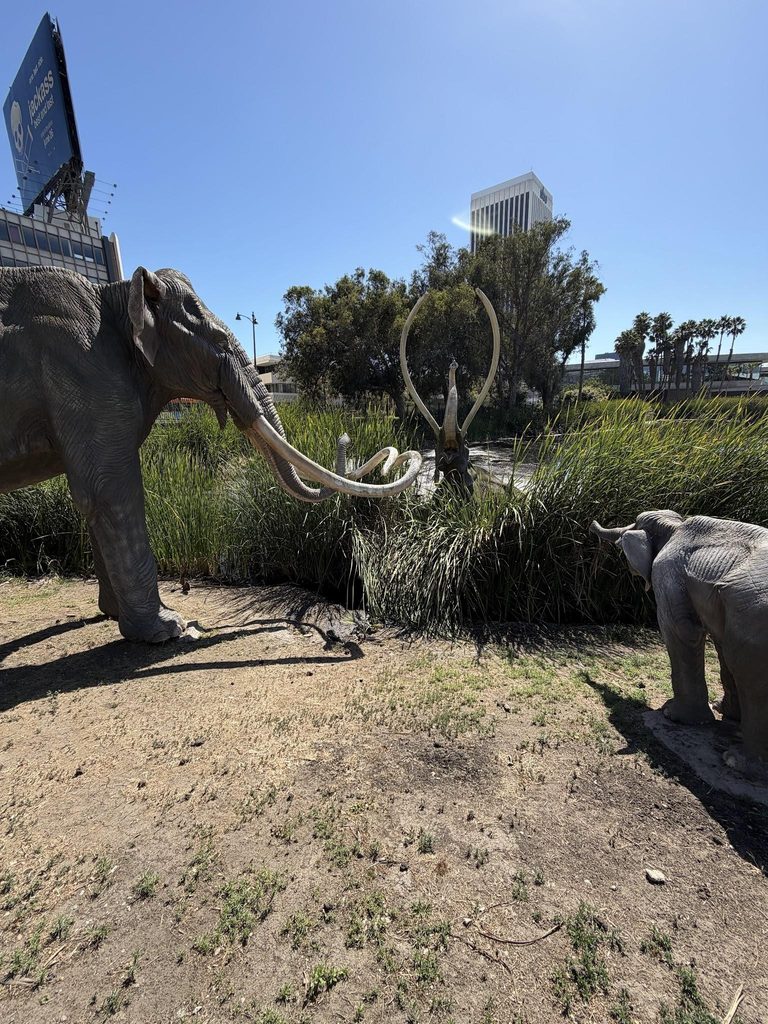
Viewing the displays at the museum, I began to wonder about how the fossils came to be deposited here. Outside the museum is a sculpture of two mammoths standing at the edge of a lake. The lake is artificial, though the petroleum that has seeped up through the ground gives it the appearance of being filled with “tar.” One of the mammoths is depicted as sinking into the lake, giving visitors the impression that the animals here were swallowed whole by the tar pits. But the geological and paleontological evidence points to a different origin for the fossils.
The Geological Context
The layer containing the fossils is not made exclusively of asphalt. Instead, it consists of mostly sand with pores filled in with asphalt, along with individual layers of clay and gravel, with asphalt lenses. The sand, mud, and gravel were eroded from the nearby Santa Monica Mountains and deposited at their base by streams. The sediments that contain the fossils are only 50 feet deep from the surface, indicating that they were deposited in the relatively recent past.5
Clues from the Bones
The condition of the large mammal bones at La Brea indicates that they were trapped by the asphalt and fed on by predators. These predators removed the bones containing large amounts of grease or marrow and left behind the skulls and mandibles. Many predators were apparently drawn to the tar pits by the mired herbivores, since predators like dire wolves and saber-toothed cats outnumber herbivores by 9:1.6
After the animals died and were preyed upon, stream deposition and flash floods rapidly buried the bones. When temperatures rose during the next warm season, asphalt would once again seep to the surface, trapping more animals, which would then be buried during the next rainy season.6
La Brea in a Young-Age Creationist Timescale
When did this occur from a young-age creationist perspective? Though radiocarbon dating has yielded ages from 45,000 to 4,000 years ago for the fossils at La Brea7, young-age creationist geologists and paleontologists would largely ascribe their deposition to the period after the Flood, 4,000-5,000 years ago. Plant fossils indicate this area was likely cooler and wetter at the time, consistent with the post-Flood Ice Age. The presence of many plants and animals that still live in the area indicates continuity between the time of the tar pits deposition and the present, which makes a Global Flood origin for the tar pits extremely unlikely. This is confirmed by the fact that the fossils were deposited near the surface by processes that are still occurring in the area.
Although the radiocarbon dates are interpreted as indicating short pulses of fossil accumulation interspersed over tens of thousands of years7, the physical features of the fossils and the sediments that contain them do not seem to require such a vast amount of time for their formation. Given their likely post-Flood origins, they probably formed in a short amount of time: decades to possibly centuries. The wetter climate of the post-Flood world gave rise to heavy seasonal rainfall and flash floods. Cascading down the newly-emerged Santa Monica Mountains, water carried large amounts of sediment that would be deposited at the bases of the mountains in large alluvial fans, burying any animal and plant material trapped in the asphalt.
If this explanation is correct, then young-age creationist geologists should seek to study the geological setting of the tar pits in more detail to test the hypothesis of rapid accumulation. For example, we should look for evidence for little time between each depositional event (e.g., little soil formation, few animal burrows, plant roots, etc.). This type of research could yield valuable new insights for both conventional and young-age creationist models!
Even so, how do we account for old radiocarbon ages within the creation model?
How Radiocarbon Dating Works
Radiocarbon dating calculates the age of a specimen using the amount of radioactive carbon (carbon-14 or C-14) relative to normal, non-radioactive carbon in the specimen. While an organism lives, it takes in carbon from the atmosphere directly (if it can photosynthesize) or from food. The ratio of C-14 to normal carbon will be approximately the same as what is in the atmosphere. But when the organism dies, it no longer takes in new carbon.
Assuming C-14 undergoes radioactive decay at a constant rate, if we know the C-14/normal carbon ratio in the specimen when it died (equal the atmospheric ratio) and the specimen’s present ratio, we can easily calculate its age.
Carbon-14 in the Creation Model
This is where things get interesting. Young-age creationist geologists think carbon-14 was much less abundant in the early post-Flood atmosphere than it is today, for two reasons.
First, in the creation model, earth’s magnetic field has been rapidly, exponentially decaying since Creation. The magnetic field before the Flood would have been much stronger, and therefore efficient at preventing cosmic rays from generating new atoms of C-14 in the upper atmosphere.8
Second, before the Flood the biosphere was far richer than it is today, as attested by abundant coal and oil deposits formed from buried pre-Flood organisms. If the number of C-14 atoms present in the atmosphere was similar to today, then the ratio of C-14 to normal carbon in the atmosphere may have been as low as 1/500 today’s level.8
After the Flood, the strength of the earth’s magnetic field rapidly decayed, allowing C-14 to begin building up in the earth’s atmosphere. Additionally, C-14 generated during the Flood due to accelerated nuclear decay inside the earth escaped into the atmosphere in carbon dioxide molecules. Nonetheless, it would have taken a long time following the Flood for the amount of atmospheric C-14 to build up to reach its present level.8
Implications for Radiocarbon Dates
What does all this mean for the ages of the La Brea Tar Pits fossils? Creation geologist Dr. Andrew Snelling writes that, “for early post-Flood dates, the levels of contained carbon-14 would be such that, if “ages” were then calculated on the basis of the present equilibrium conditions [referring to the amount of C-14 in the atmosphere] and [decay] rates, they would be very much older than their real-time ages, with the amount of error increasing progressively with the age of the material.”9 [brackets and emphasis added]
In other words, because radiocarbon dating does not take into account the lower amount of atmospheric C-14 present in the early post-Flood period (or the possibility of accelerated nuclear decay during and after the Flood), we would not expect radiocarbon ages for early post-Flood specimens to be consistent with the biblical timescale.
Nevertheless, because the amount of atmospheric C-14 built up progressively over time, we would still expect C-14 dates to be useful in constructing a relative timeline of when certain bones were deposited at the tar pits. In other words, bones in the pits that date older are actually older than ones that give younger ages. Thus, radiocarbon dating remains a useful tool for creationist geologists and paleontologists studying early post-Flood history.
In fact, if there were a way to calibrate radiocarbon ages with a young-age creationist model of earth history, it might be possible to calculate approximate dates for post-Flood fossils like those at La Brea. From insider knowledge, I can say that this is likely to become a reality in the not too distant future (stay tuned)!
Concluding Thoughts: A Call for “Outrageous Hypotheses”
Since I visited the tar pits and started writing this article, I’ve become convinced that the fossils of La Brea need to be looked at again with creationist eyes. Very little has been written on them by creationist scholars. Even in secular literature, there are surprisingly few studies on how the fossils and the rocks that contain them came to be. Could this be because, given its fame, most conventional geologists and paleontologists assume all the mysteries of Rancho La Brea have been solved?
Perhaps our understanding of La Brea Tar Pits would be helped by bringing in an outsider perspective. It has been observed that geology benefits from those who propose “outrageous hypotheses,” challenging the status quo, prompting questions, and searching for answers in places no one else will.10, 11 Who knows what surprising discoveries may be lurking around the corner for young-age creationists brave enough to look?
Footnotes
- Weston, W. (2002). La Brea Tar Pits: An Introductory History (1769-1969). Creation Research Society Quarterly, 38(4), 174-180. ↩︎
- Hayden, T. Dire Wolf Skull Wall Reinstall. La Brea Tar Pits & Museum. Retrieved August 8 from https://tarpits.org/stories/dire-wolf-skull-wall-reinstall ↩︎
- Mayo Clinic Staff (2024). Hip dysplasia. Mayo Clinic. Retrieved August 8 from https://www.mayoclinic.org/diseases-conditions/hip-dysplasia/symptoms-causes/syc-20350209 ↩︎
- The name for the sub-discipline that studies diseases in fossils is paleopathology. ↩︎
- Shaw, C. A., & Quinn, J. P. (1986). Rancho La Brea: A Look at Coastal Southern California’s Past. California Geology, 39(6), 123-133. ↩︎
- Spencer, L. M., Van Valkenburgh, B., & Harris, J. M. (2003). Taphonomic analysis of large mammals recovered from the Pleistocene Rancho La Brea tar seeps. Paleobiology, 29(4), 561-575. ↩︎
- Friscia, A. R., Van Valkenburgh, B., Spencer, L. M., & Harris, J. (2008). Chronology and spatial distribution of large mammal bones in Pit 91, Rancho La Brea. Palaios, 23(1), 35-42. https://doi.org/10.2110/palo.2005.p05-143r ↩︎
- Baumgardner, J. R. (2005). 14C Evidence for a Recent Global Flood and a Young Earth. In L. Vardiman, A. A. Snelling, & E. F. Chaffin (Eds.), Radioisotopes and the Age of the Earth: Results of a Young-Earth Creationist Research Initiative (pp. 587-630). Institute for Creation Research and the Creation Research Society. ↩︎
- Snelling, A. A. (2011). The Pitfalls in the Radioactive Dating Methods—the Radiocarbon Dating Method. In Earth’s Catastrophic Past (Vol. 2, pp. 863). Institute for Creation Research. ↩︎
- Davis, W. M. (1926). The Value of Outrageous Geological Hypotheses. Science, 63(1636), 463-468. https://doi.org/10.1126/science.63.1636.463 ↩︎
- Brand, L., & Chadwick, A. (2016). Two Geology Theories. In Faith, Reason, & Earth History (pp. 270). Andrews University Press. ↩︎

 Kurt Wise
 Abigail Van Huss
 Peter
Peter
 Christian Ryan