
 Peter
PeterA cloud of dust billowed up from the unpaved South African road. An aging bespectacled man gripped the steering wheel. A black vest covered his white, long-sleeve shirt. The man’s face glistened with sweat; it was 1938 and air conditioning was a novelty. His name was Robert Broom. Broom was a Scottish medical doctor, but his interest in fossils brought him to South Africa. He now lived in Pretoria, where he served as curator at the Transvaal Museum.12
The views expressed in this article reflect those of the author mentioned, and not necessarily those of New Creation.
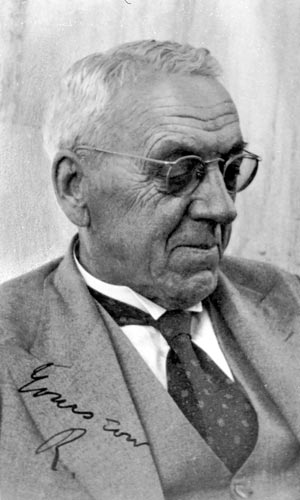
Broom’s car slowed as he pulled up to the Sterkfontein Lime quarry. He regularly visited the site because the quarrymen often found fossils. The quarry’s manager, George Barlow, saved fossils for Broom. Sterkfontein had previously yielded remains of the “man-apes”, or australopithecines. But today Barlow had something new. His weathered hands dove into his pocket and produced a beautiful upper jaw. Broom took the fossil in his hands, squinting at it through his spectacles. Unlike any of the previous fossils found at Sterkfontein this jaw bore huge molars. Its molar teeth were nearly twice as large as human molars.
Terblanche’s Skull
Barlow took credit for the find, claiming to have found the fossil in his quarry. Broom was skeptical of this claim because the fossil was unlike previous finds. Under Broom’s intense questioning, the quarry manager admitted his lie. He had received the fossil jaw from a local boy named Gert Terblanche. Broom set out to find the boy, hoping that more of the skull could be found. His car rocketed back down the dusty road, headed for the Terblanche residence.
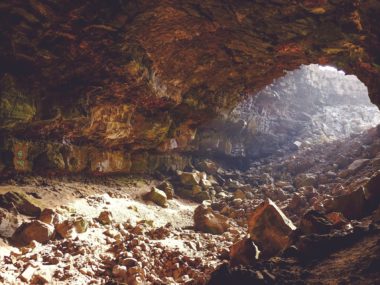
The old man bounded up to the house where Gert’s younger sister greeted him. It was midmorning on a weekday, so Gert was in school. Fortunately, the little girl knew where the jaw had been found. She led Broom through the tall grass to a nearby hilltop. In the collapsed remains of an ancient cave, they found another tooth and a few bone fragments. Then, Broom then set out for the boy’s school. Gert was called in from recess and produced four additional teeth from his pocket. Broom stayed the afternoon and taught the children about local caves and the fossils they contained. When school let out at 2 PM, Broom returned to the hill with Gert. There, Gert retrieved a lower jaw which he had left hidden at the site. This skull and jaw became the type specimen of a new species, Paranthropus robustus.3
Defining Paranthropus
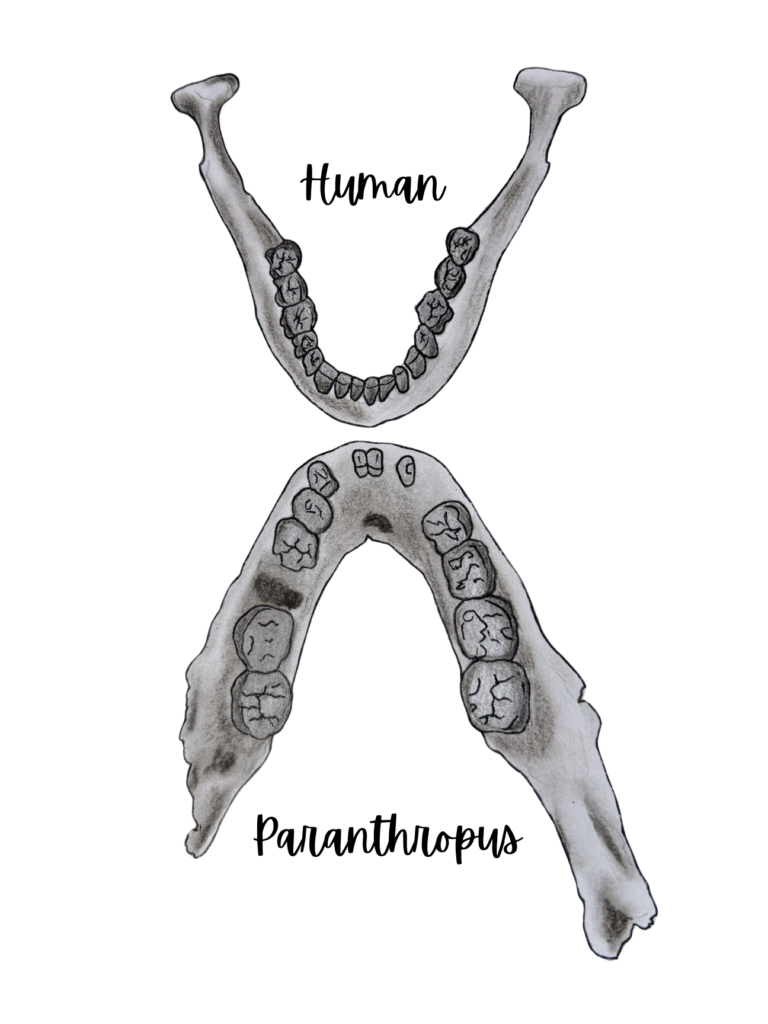
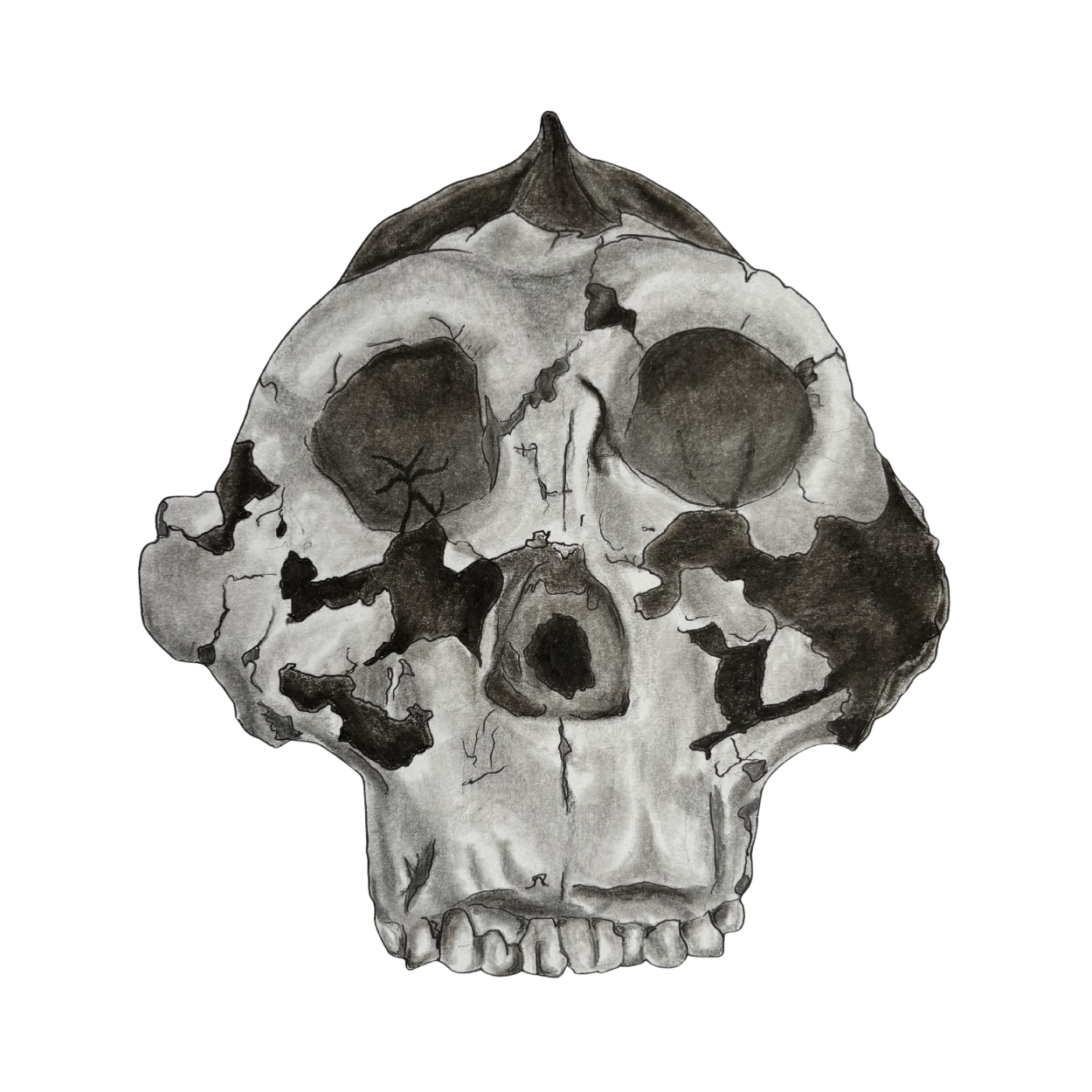
When Broom picked up the fossil jawbone, he must have immediately noticed its huge teeth. Paranthropus fossils have massive molars and premolars. These teeth are covered by an extra thick layer of enamel. Interestingly, Paranthropus had relatively small incisors and canines.4
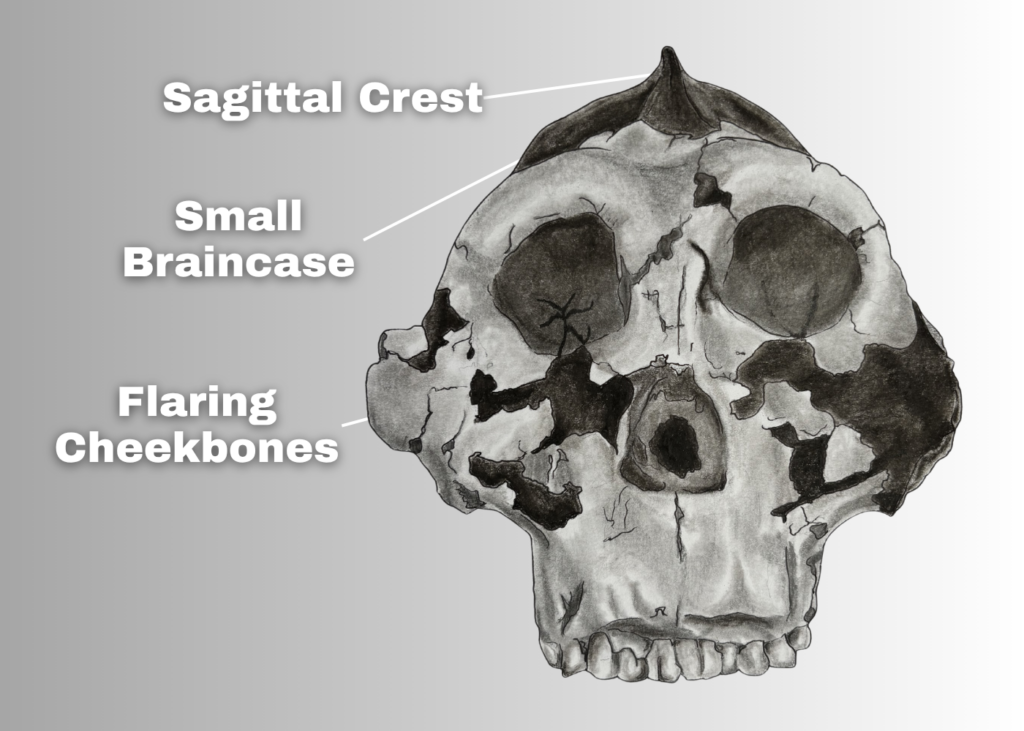
Paranthropus had a broad and slightly concave face. This appearance is produced by a prominent brow ridge, projecting cheekbones and a jaw that jutted forward.5 Unlike humans, Paranthropus had massive cheekbones that angled forward.
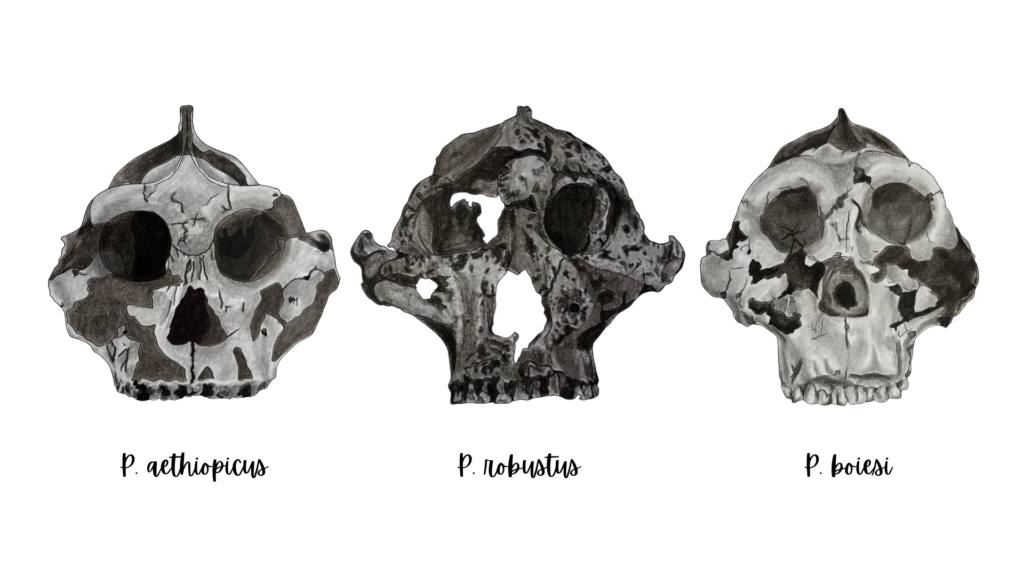
Paranthropus had a small brain, comparable in size to that of a modern chimpanzee.6 The bottom of the braincase is broad and narrows as it rises. Male individuals had a tall crest atop their skull, like a bony mohawk. Together with the side of the braincase, it anchored powerful jaw muscles. The back of the skull bears a distinct ridge indicating the presence of strong neck muscles. In P. robustus and P. boiesi the base of the skull is strongly curved, bending upward into a flattened area where the neck muscles attach.7
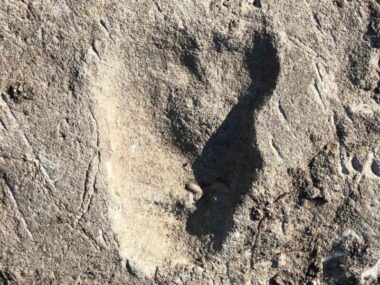
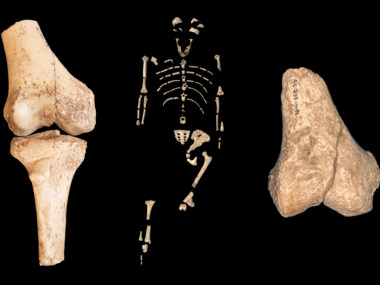
Scientists believe that Paranthropus was bipedal because of the placement of its foramen magnum. This structure is a hole on the bottom of the skull, where the spinal cord attaches to the brain. Like humans and other bipedal apes, Paranthropus’ foramen magnum was placed centrally.8 The recent discovery of additional skeletal material confirms this conclusion. Paranthropus individuals probably spent some time on the ground, walking on their hind legs. They were likely good climbers, ascending trees to escape predators and pick fruit.
Is Paranthropus our Cousin?
Conventional scientists view Paranthropus as a human relative. Their anatomical resemblance to humans is interpreted as evidence that they share a common ancestor. Evolutionists estimate that Paranthropus and Homo diverged from an ancestral population that lived roughly three million years ago.
Creation scientists unanimously agree that Paranthropus was not human.9,10,11,12 Their cranial anatomy clearly distinguishes them from our genus, Homo. A 2021 study published in the Answers Research Journal suggests that Paranthropus may be a distinct created kind. The analysis found Paranthropus species strongly clustered together, to the exclusion of humans and australopithecines.13 This finding supports the conclusion that God may have created multiple ape kinds.
Where did Paranthropus Live?
Paranthropus once lived across eastern and southern Africa. Fossils of Broom’s species, Paranthropus robustus have only been found in a few South African caves. Paranthropus boiesi lived throughout the East African countries of Ethiopia, Kenya, Tanzania, and Malawi. The fossil record of Paranthropus aethiopicus is very sparse, but the species appears to have had a similar distribution to P. boiesi.14
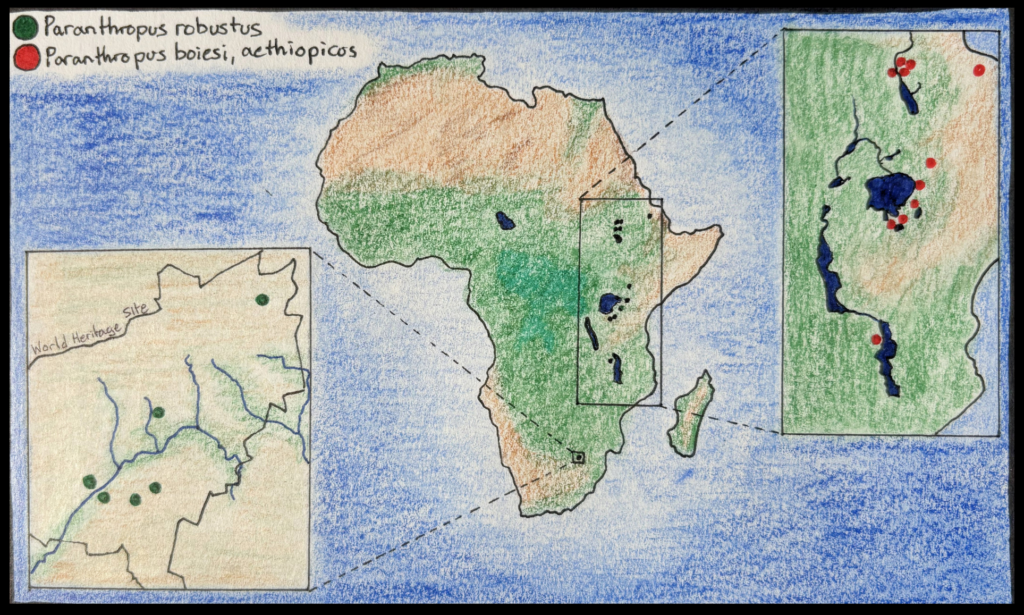
By studying which types of animals were buried alongside Paranthropus scientists can reconstruct what sort of environment they inhabited. One study analyzed the fossils of bovids (antelope and wildebeest). It found that P. boiesi, an East African species, is usually associated with wet, wooded environments. In contrast, the South African P. robustus appears to have lived in dry grasslands.15 Isotopic analysis of Paranthropus teeth indicates that P. boiesi and P. robustus had distinct diets. P. boiesi ate grass and sedges, while P. robustus had a more diverse diet including fruit.16
Conclusion
The genus Paranthropus is often overlooked in discussions of human origins. Creationists tend to focus on the Australopithecines, since they are claimed to be directly ancestral to humans. But Paranthropus fossils provide a fascinating illustration of the diversity of early apes. Contrary to evolutionary claims, Paranthropus is not a human relative. Their distinctive cranial anatomy sets them apart from both humans and australopithecines.
Footnotes
- Raymond A. Dart, “Robert Broom—His Life and Work,” South African Journal of Science, 48 (1951): 1–19. ↩︎
- Bernard Wood and Daniel Biggs, “Birth of Paranthropus,” Evolutionary Anthropology: Issues, News, and Reviews, 34, no. 1 (March 2025): e70000. ↩︎
- Robert Broom, “The Pleistocene Anthropoid Apes of South Africa,” Nature, no. 3591 (1938): 377–379. ↩︎
- Bernard Wood and Kes Schroer, “Paranthropus: Where Do Things Stand?,” in Human Paleontology and Prehistory, ed. Assaf Marom and Erella Hovers (Cham: Springer, 2017), 95–107. ↩︎
- Dean Falk, John C. Redmond Jr., John Guyer, Glenn C. Conroy, Wolfgang Recheis, Gerhard W. Weber, and Horst Seidler, “Early Hominid Brain Evolution: A New Look at Old Endocasts,” Journal of Human Evolution, 38, no. 5 (May 2000), 695–717. ↩︎
- Louise Nevell and Bernard Wood, “Cranial Base Evolution within the Hominin Clade,” Journal of Anatomy 212 (2008): 455–468, doi:10.1111/j.1469-7580.2008.00875.x, published by Blackwell Publishing for the Anatomical Society of Great Britain and Ireland. ↩︎
- William H. Kimbel and Yoel Rak, “The Cranial Base of Australopithecus afarensis: New Insights from the Female Skull,” Philosophical Transactions of the Royal Society B, 365 (2010), 3365–3376. ↩︎
- Elizabeth Mitchell, “Building Nutcracker Man from the Ground Up,” Answers in Genesis, January 18, 2014. ↩︎
- Jerry Bergman, “Paranthropus Not a Missing Link,” Creation Evolution Headlines, December 11, 2024. ↩︎
- John Woodmorappe, “The Non-Transitions in ‘Human Evolution’—on Evolutionists’ Terms,” Creation.com, January 28, 2006. ↩︎
- “Why Creationists Should Rejoice at Two Skulls Found,” Creation.com, April 30, 2000. ↩︎
- Sinclair, P., & Wood, T. C. (2021). “Revising hominin baraminology with medoid partitioning and fuzzy analysis.” Answers Research Journal, 14, 451–462. ↩︎
- Bernard Wood and Kes Schroer, “Paranthropus: Where Do Things Stand?,” in Human Paleontology and Prehistory, ed. Assaf Marom and Erella Hovers (Cham: Springer, 2017), 95-107. ↩︎
- Pat Shipman and John M. Harris, “Habitat Preference and Paleoecology of Australopithecus boisei in Eastern Africa,” in The Evolutionary History of the Robust Australopithecines, ed. Frederick E. Grine (New York: Aldine de Gruyter, 1989), 343–381. ↩︎
- Pat Shipman and John M. Harris, “Habitat Preference and Paleoecology of Australopithecus boisei in Eastern Africa,” in The Evolutionary History of the Robust Australopithecines, ed. Frederick E. Grine (New York: Aldine de Gruyter, 1989), 343–381. ↩︎
- Thure E. Cerling et al., “Diet of Paranthropus boisei in the Early Pleistocene of East Africa,” Proceedings of the National Academy of Sciences 108, no. 23 (2011): 9337–9341. ↩︎
 Abigail L.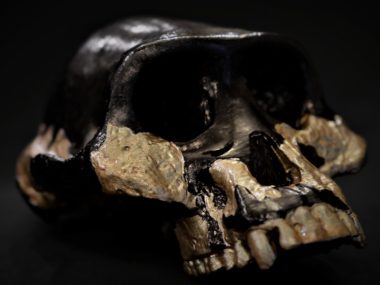


 Christian Ryan


 Hannah Klein
I still prefer the older taxonomic name – Australopithecus robustus/boiesi. The name “Paranthropus” implies that these apelike creatures were anatomically right alongside human beings, which is simply not true.
I believe that baraminology needs to zoom out and look at some larger taxonomic groups, as the recent conclusions that separates genera like Australopithecus and Paranthropus from each other and other simians is just not compelling enough. Great article as always, and the illustrations are very good!
Agreed, I don’t think we have enough evidence to conclusively say that Australopithecus and Paranthropus are separate kinds. I think the baraminology does indicate that Paranthropus is distinct from humans.