
 Christian Ryan
Just behind Christmas trees and holly, mistletoe is probably one of the most iconic plants of the Christmas season. Couples constantly find themselves under hanging mistletoe in Hallmark movies and must kiss, as per tradition. But did you know that mistletoe is actually a parasite? It grows on larger plants, sapping their nutrients. Something interesting to think about next time you find yourself expected to kiss under the mistletoe.
The views expressed in this article reflect those of the author mentioned, and not necessarily those of New Creation.
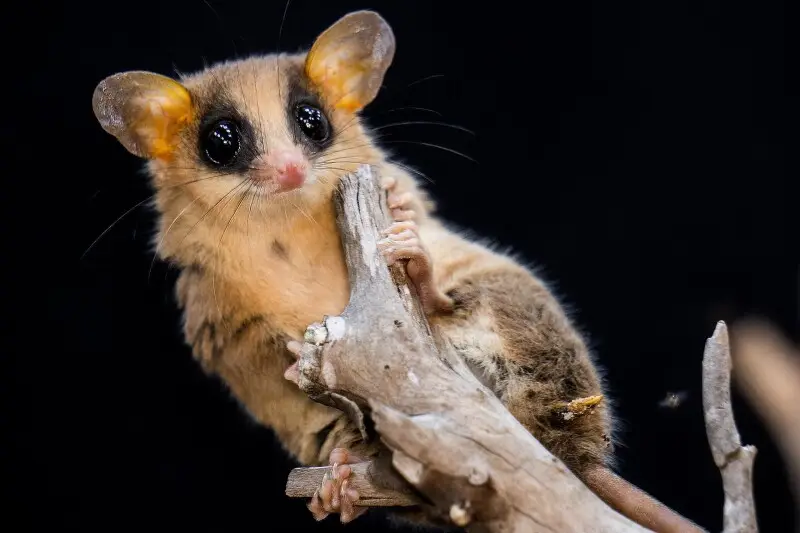
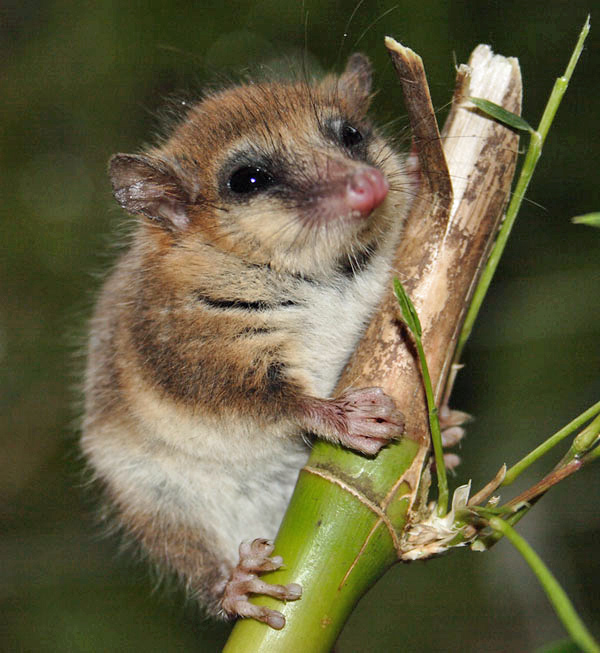
But not all interactions mistletoe has with other organisms are negative. One mistletoe species native to South America has a very special relationship with a little opossum-like animal called the monito del monte. This mistletoe species grows the favorite food of the monito del monto, and the monito del monto is the only species capable of spreading the mistletoe’s seeds. Just how did this strange relationship develop? And what does it have to teach us about this most festive time of year?
This Relationship Takes Two
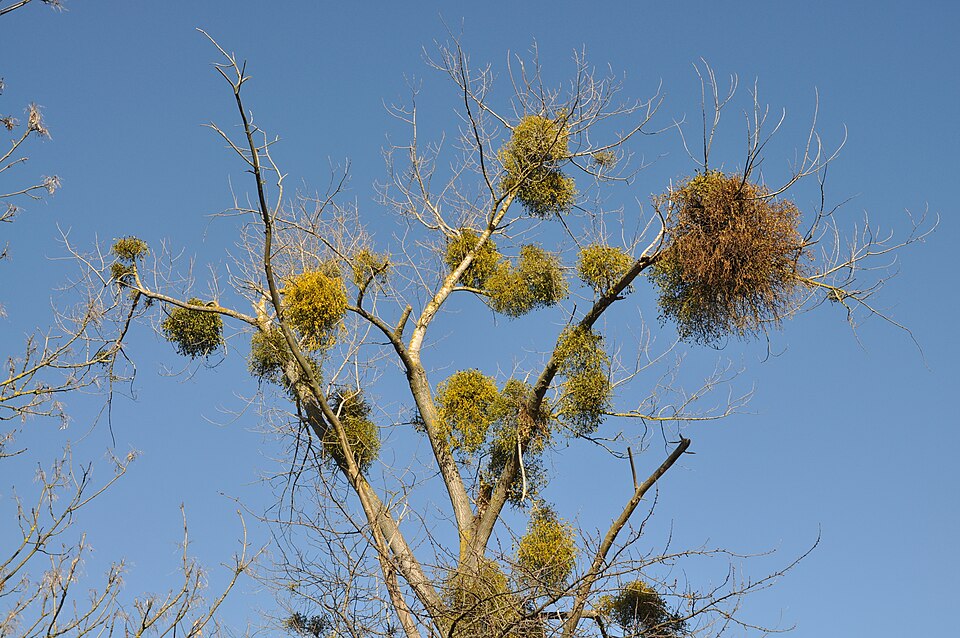
The mistletoe is the commonly-used name for plants in the order Santalales that exhibit parasitism. They grow attached to other plants, usually a tree or shrub, using a root-like structure called a haustorium. They also use this structure for extracting the nutrients and water they need to survive from the host plant.
The particular mistletoe species of interest in this article is called the quitral (Tristerix corymbosus). It is native to the temperate biome and Mediterranean-like climate zones of Chile and northwest Patagonia in South America. It produces tiny fruits that are the favorite food of the monito del monte (Dromicops gliroides). The monito del monte means “little monkey of the bush” in Spanish. But it is actually a marsupial, meaning it carries its young in a pouch on the mother’s stomach. It looks kind of like an opossum the size of a mouse. And just like opossums, it can grab branches with its prehensile tail as a fifth limb.
The special relationship they share is an example of mutualism.
What is Mutualism?
“Louis, I think this is the beginning of a beautiful friendship.”
– Rick Blaine, Casablanca (1942)
Mutualism is a pairing between two species where they both benefit the other. This is quite the opposite from parasitism, the relationship mistletoes share with most other plants they interact with! Even if you had not heard the term before, you are probably familiar with several examples of the natural world.
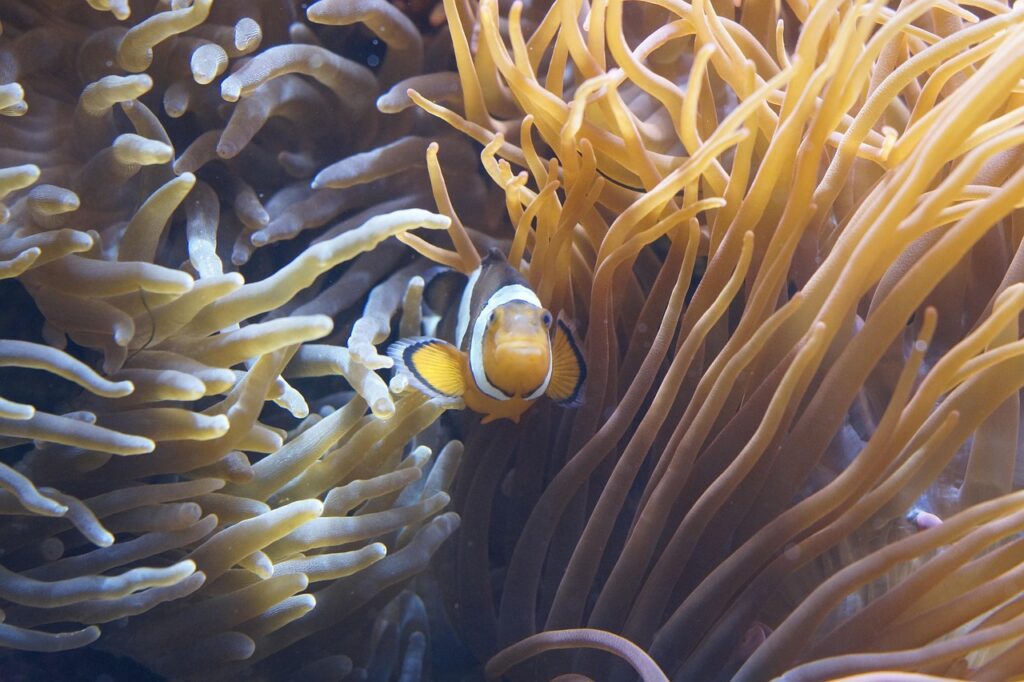
Clownfish and sea anemones are in a symbiotic relationship. The sea anemone provides shelter and protection for the clownfish, and the clownfish keeps away other fish that eat sea anemones. Bees and flowers are another example. Bees seek out flowers for their sweet liquid called nectar, and flowers rely on bees to carry their pollen to other flowers, helping them reproduce. There is even a species of tarantula that keeps dotted humming frogs as “pets” in their dens. The frog protects the spider’s eggs from egg-eating ants, and the frog gets a safe home (who is going to mess with a tarantula?!). Mutualism can be found in abundance throughout the natural world.
Best Friends Forever
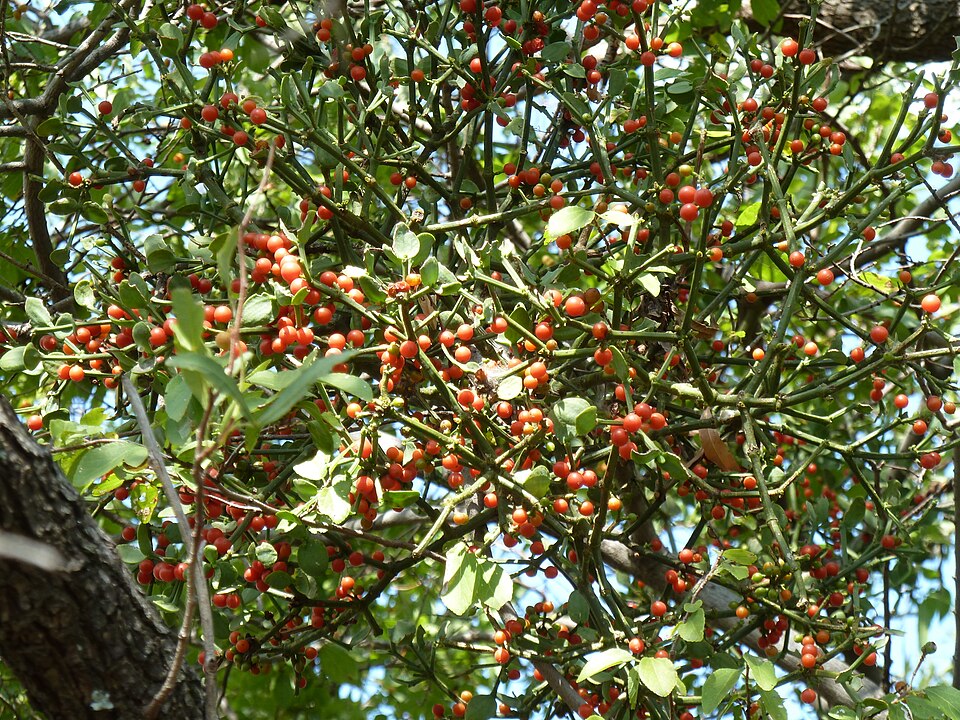
What could the monito del monte and a mistletoe have in common with each other? Well, while the monito del monte can eat insects or fruit, its absolute favorite food are the berries from the quitral mistletoe. The flesh from the berries is digested in the tiny marsupial’s gut, but the seeds are indigestible and get pooped out a distance away from the parent plant. Both species benefit from this relationship: the monito del monte gets a nutritious meal, and the mistletoe gets to spread its offspring far and wide. How did this intriguing relationship arise in the first place?
On the Origin of a Beautiful Friendship
Creationists often use examples of mutualism as evidence of God’s design. And rightfully so, but probably not exactly in the way they are thinking. Think about it: the Book of Genesis describes a global Flood that wiped out all air-breathing land animals except those on Noah’s Ark. Plants were able to repopulate the earth from seeds and spores that survived the Flood through various means.1 But quitral mistletoes would have had to wait a very long time for the ancestors of the monito del monte to migrate from the Ark to South America to eat its seeds so it could reproduce. So clearly, this relationship did not exist before the Flood.
Creation biologist Chad Arment paints this as an excellent case study of how these species developed after the Flood. He says, “This mutual relationship is clearly a post-Flood adaptation, otherwise the mistletoe’s ancestors would have died out long before any marsupial arrived in South America.”2
In reality, this case study in mutualism is an example of post-Flood adaptation of both the quitral mistletoe and the monito del monte. Before the Flood, the ancestors of these lifeforms lived independently from each other. Then, after the Flood, the ancestors of monito del monte developed a fondness for berries of the quitral mistletoe’s ancestor. Overtime, the two became inseparable. This is called co-adaptation. It is likely that many mutualistic relationships developed this way after the Flood. In discussion of mutualism more broadly, Arment says:
“After the Flood, as plants and animals were once more expanding throughout a new world, many were pre-adapted in anatomy or behavior to certain situations (or diversified early enough for such pre-adaptations to be available as they reached new territory)…An evolutionary scenario would be forced to accept this as a fortunate but random event, but from a creationist perspective it is feasible to suggest that this may have been a triggered adaptation. The genetic template was already present.”3
– Chad Arment
The relationship between the monito del monte and the quitral mistletoe is probably not the direct result of special creation by God. More likely, God designed the ancestors of these lifeforms with the hidden genetic potential to change and adapt situationally. When the time came, the monito del monte and quitral mistletoe began a beautiful friendship.
Conclusion
We live in a world that has fallen greatly from the way God has made it. No longer are all relationships in the natural world beneficial. This extends even to our own species, especially at this time of the year. Christmas is considered a time for putting aside our differences and coming together. But this often manifests itself in the form of a nice idea rather than reality. For many, grudges come to the forefront and infighting breaks out, even amongst Christians.
But that same Babe whose birth we celebrate at Christmas has given us a higher calling. He prayed, “I do not ask for these only, but also for those who will believe in me through their word, that they may all be one, just as you, Father, are in me, and I in you, that they also may be in us, so that the world may believe that you have sent me.” (John 17:20-21, ESV) As Christians, we are called to work together in our mission to bring light to a lost and dying world.
In other words, we must be like the quitral mistletoe and the monito del monte, producing fruit good to God and helping one another to spread the seeds of His word.
Footnotes
- Darrall, N. (1986). “Survival of plant life during the Flood in the time of Noah.” Biblical Creation 24:81-96. ↩︎
- Arment, C. (2025). “To the Ark, and Back Again? Using the Marsupial Fossil Record to Investigate the Post-Flood Boundary: A Reply.” Answers Research Journal, 18, 5–11. ↩︎
- C. Arment, “Obligate Mutualism: A Creationist Perspective,” ZooCreation, accessed December 19, 2025. ↩︎


 Noel Grimes
 Paul Garner
 Todd Wood

 Abigail Van Huss
 Peter
Peter
