
 Abigail L.
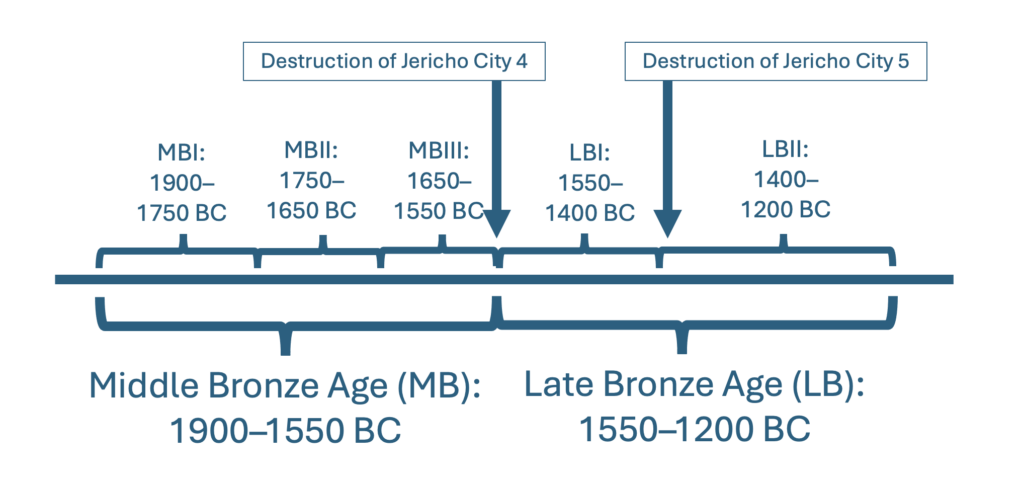
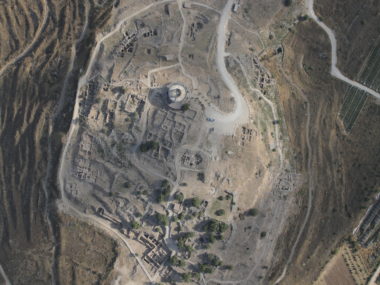
Biblical scholars and archaeologists have long debated the question of the battle of Jericho as described in Joshua 6. Multiple archaeologists have excavated at Tell es-Sultan (ancient Jericho) over the past century. Some asserted that they found evidence of Joshua’s destruction of the site; others claimed that the site was not even occupied at the time of Joshua. The debate centered around Jericho City 4. Was City 4 destroyed in 1550 BC, long before the Israelites arrived at Jericho? Or was it destroyed around 1400 BC, the way the Bible described? Bryan Windle’s new book, Joshua’s Jericho, looks at the issue from a new perspective. Windle proposes that it was Jericho City 5, not Jericho City 4, that the Israelites destroyed during the conquest.
The following is a summary of Joshua’s Jericho: The Latest Archaeological Evidence for the Conquest by Bryan Windle, and of the surrounding debate and research pertaining to it. The views expressed are not necessarily those of New Creation.
Previous Work at Jericho
Multiple excavations have taken place at Jericho, beginning in 1907 and continuing to the present. Over time, archaeological methodology has improved, so the more recent excavations generally provide better data and more accurate interpretations than older excavations. All the archaeologists who have worked at Jericho agree that there was a significant Bronze Age city at Jericho (City 4) that suffered a violent fiery destruction. The evidence includes a thick layer of ash and jars full of burnt grain.
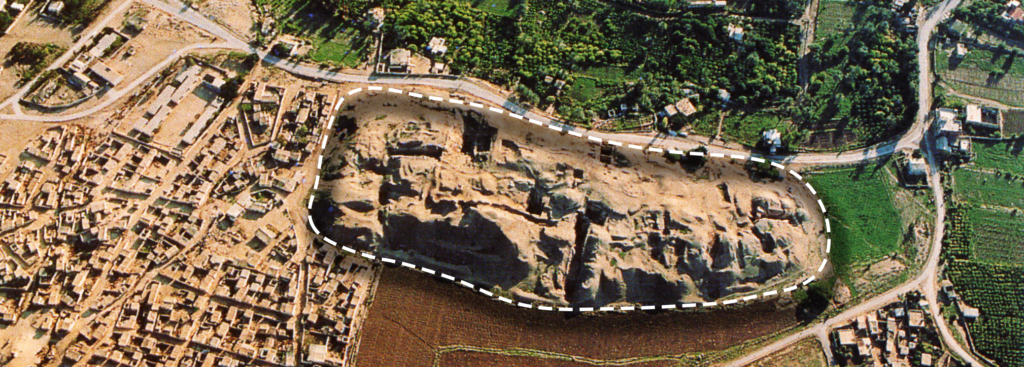
However, archaeologists disagree on when the destruction took place. John Garstang, who excavated at Jericho in the 1930s, dated the destruction of City 4 to the Late Bronze Age, ca. 1400–1385 BC.1 Kathleen Kenyon, who excavated there in the 1950s, dated the same destruction level to the Middle Bronze Age, ca. 1550 BC.2 Bryant Wood did not excavate at Jericho, but in the 1990s, he analyzed the pottery from the site and concluded that the site was occupied in the Late Bronze Age.3 He agreed with Garstang that the destruction of City 4 was from the time of Joshua. Lorenzo Nigro, who currently excavates at Jericho, agrees with Kenyon and suggests a Middle Bronze Age date for the destruction of City 4.4
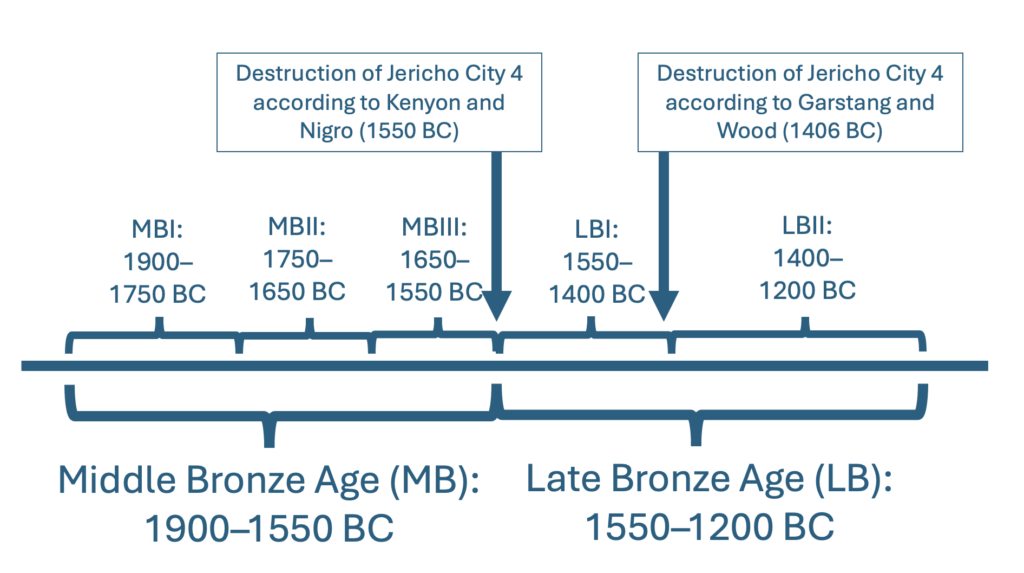
Until now, discussions on Joshua’s destruction of Jericho have centered around City 4 and whether or not the destruction of City 4 dates to the period of the conquest. City 5, the occupational level that followed City 4, has garnered very little attention, probably because there are far fewer remains of City 5 than of City 4. In his new book, Windle examines the possibility of Jericho City 5 being the city destroyed by Joshua.
A Criterial Screen
In order to determine if City 5 qualifies as Joshua’s Jericho, Windle lays out a criterial screen based on the biblical description of the destruction of Jericho. His criterial screen includes three points.
- The city must show evidence of occupation at the time of Joshua. Windle points out that there are several variables that make it difficult to pinpoint the date of Joshua’s destruction of Jericho. You can read more on the topic here. Instead of pinning down a specific date, Windle proposes a chronological window for the destruction of Jericho: 1426–1346 BC.
- There should be evidence that the city was fortified. The biblical account of Joshua’s destruction of Jericho clearly identified Jericho as a fortified city with walls and a gate. Thus, in order for City 5 to qualify as Joshua’s Jericho, it must have been fortified.
- There should be evidence of destruction. According to Joshua 6:17, Jericho was devoted to God as an offering. Joshua 6:20 describes the city wall falling down, and Joshua 6:24 records that the Israelites burnt the city of Jericho.
Jericho City 5
Every major excavation team at Jericho published evidence of occupation at the site during the Late Bronze Age. Late Bronze Age remains appeared all around the tell, although the Late Bronze Age layer was better preserved in some areas than in others. For example, the Late Bronze Age remains on the top of the tell were almost entirely removed in later construction projects at the site. There are three Late Bronze Age structures at Jericho that are reasonably well preserved. These include a Middle Bronze Age palace that was re-used in the Late Bronze Age, a structure known as the “Middle Building,” and a house.

The Middle Building, which lies near the spring at Jericho, is particularly significant. Archaeologists had difficulty dating the Middle Building because erosion caused pottery to wash into the building that may not have originally belonged there. Garstang originally dated the Middle Building to the Late Bronze Age I, but later re-dated it to the Late Bronze Age II.6 Wood dates the pottery from the Middle Building to the Late Bronze Age I and associates it with City 4.7
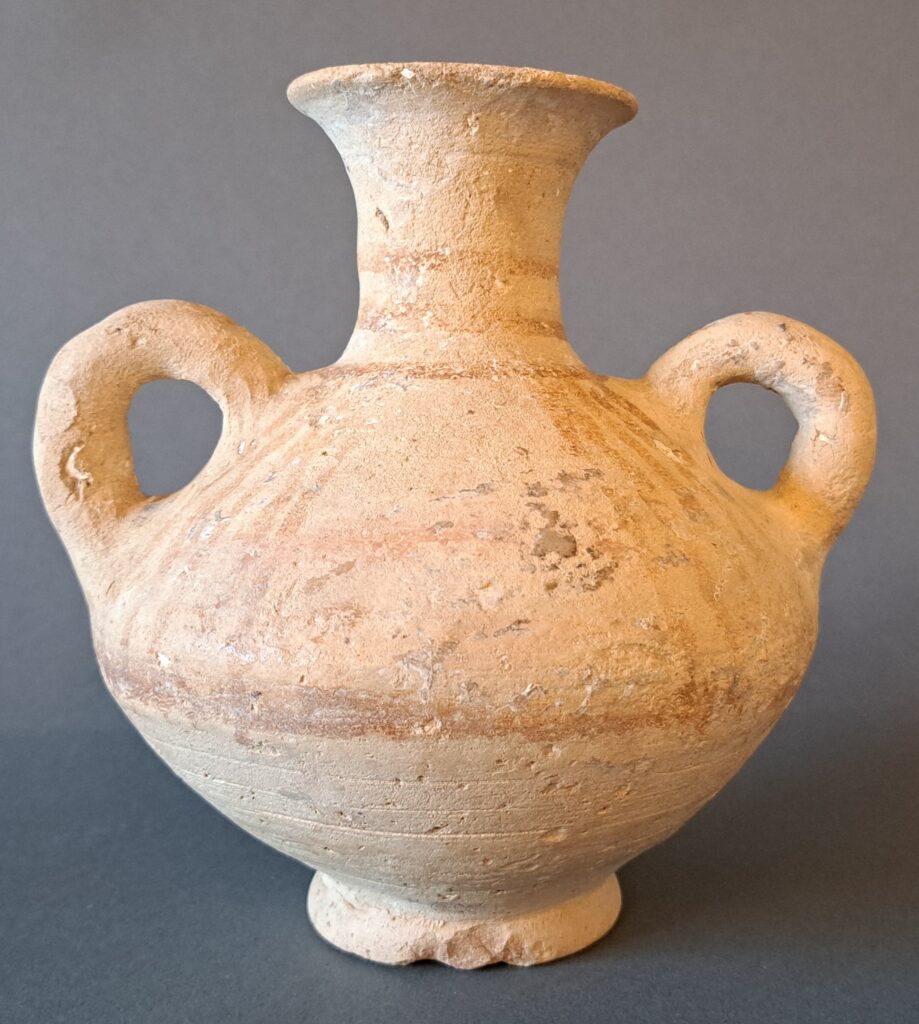
Windle’s new book provides an analysis of the Late Bronze Age pottery from Jericho and shows that it dates to the Late Bronze Age IB/IIA horizon (ca. 1450–1300 BC). Pottery from the Late Bronze Age tombs at Jericho fit nicely within that window as well, dating primarily to the Late Bronze Age IIA. Windle argues that Kenyon and Nigro correctly dated the pottery from City 4 to the Middle Bronze Age II, and it is City 5, not City 4, that dates to the Late Bronze Age.
Carbon-14 Dates
Carbon-14 dating can be helpful in identifying the dates of various strata, or occupational layers, at a site. There are multiple carbon-14 test results from Jericho. Nineteen samples of grain and wood from Kenyon’s excavation of City 4 yielded dates suggesting that City 4 was destroyed sometime in the first three quarters of the 16th century BC.8 Notably, one carbon-14 sample that originally yielded a date of around 1410 BC was later found to have been improperly calibrated. When the sample was re-calibrated, it matched well with the other samples dating to the 16th century BC.9
Samples from Nigro’s excavation are problematic. One dates to the 17th-16th centuries BC, while another dates to the 15th-13th centuries BC. Both the differences in dating and the wide ranges of dates render these samples unuseful.10
Overall, the carbon-14 dates for Jericho City 4 seem to suggest a 16th century BC (Middle Bronze Age) date for the destruction of the city. Carbon-14 dates are not available for City 5, so they do not help with dating the Late Bronze Age city.
The Fortifications at Jericho
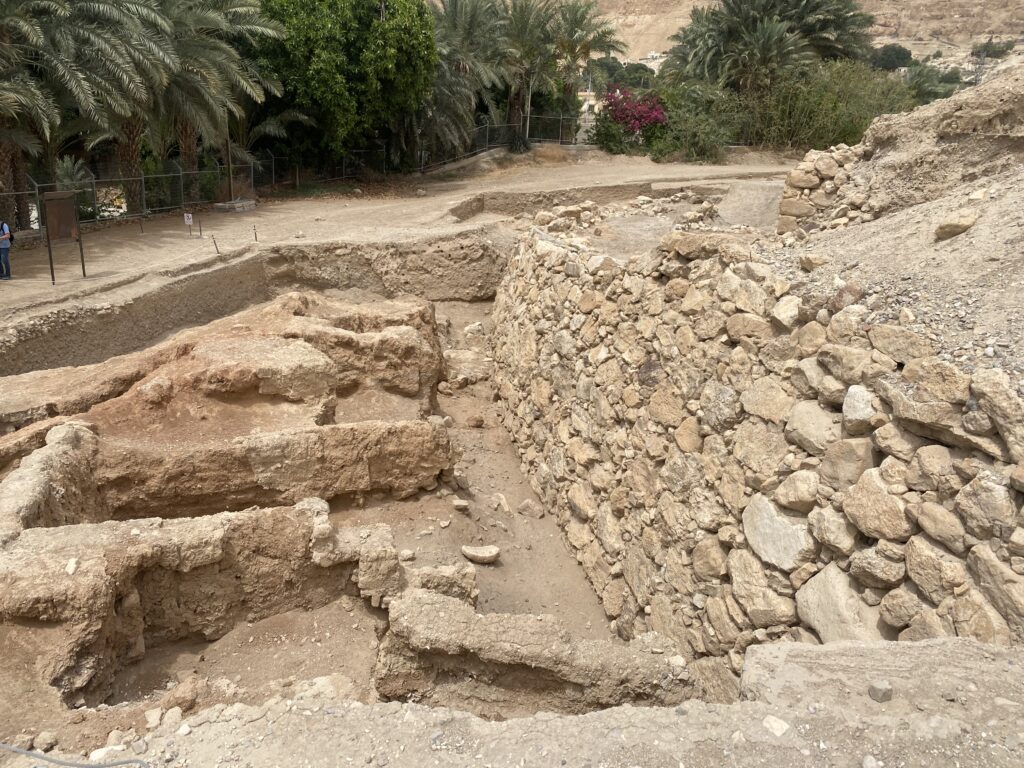
The fortifications at Jericho, which are still visible today, consist of a stone retaining wall upon which stood a mudbrick superstructure. Most scholars agree that the initial construction of the stone retaining wall dates to the Middle Bronze Age. The date of the mudbrick superstructure is less certain. When was it constructed? And more importantly, when did it fall?
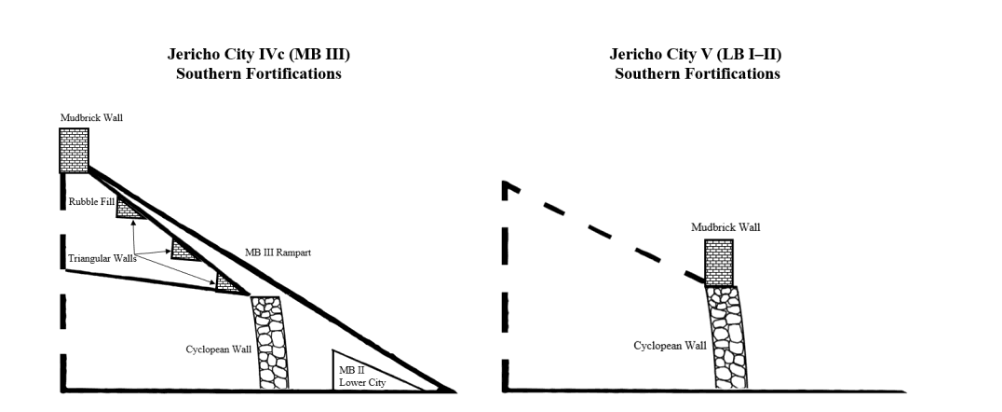
Kenyon believed that the entire lifespan of the superstructure was confined to the Middle Bronze Age.11 Wood proposed that the superstructure was built in the Middle Bronze Age and fell in the Late Bronze Age.12 Nigro’s recent excavations have provided clarity regarding the question of Jericho’s walls. Nigro found evidence of four successive phases of the city wall in the Middle Bronze Age followed by an abandonment of the site for over a century.13, 14 Then, around 1450, or possibly closer to 1400 BC, a new city, Jericho City 5, was built.15, 16 The inhabitants of City 5 reused the stone retaining wall that encircled the city. They built a new mudbrick superstructure on the retaining wall because the Middle Bronze Age superstructure was long gone. Thus, if Nigro is correct in his dating of the superstructure, Jericho City 5 was a fortified city in the Late Bronze Age.
The Destruction of Jericho City 5
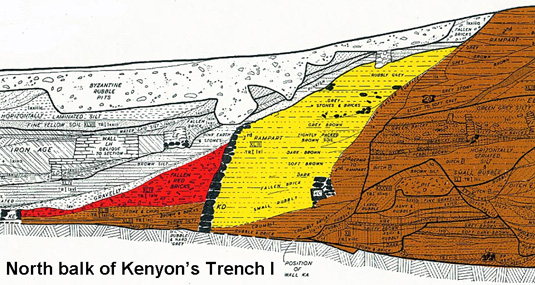
If Jericho City 5 is to qualify as the city destroyed by the Israelites in Joshua 6, there should be evidence that it suffered a destruction such as described in the biblical text. There is clear evidence at Jericho that the mudbrick superstructure of the city wall fell outward, forming a ramp into the city. In the past, biblical archaeologists have pointed to this as evidence of Joshua’s destruction of Jericho.18, 19 However, Windle points out that if Nigro is correct in assigning the fallen mudbrick superstructure to the Late Bronze Age and City 5 rather than City 4, then the fallen wall accords well with the biblical text.
Additionally, some of the excavation teams found evidence of a destruction layer in some of the buildings of Jericho City 5. Kenyon dated the destruction of a Late Bronze Age house at Jericho to the 14th century BC.20, 21 Garstang found evidence of destruction by fire near the city wall.22 And Nigro noted that the Late Bronze Age occupation of Jericho ended in a fiery destruction.23
Conclusion
In his new book, Windle examines the archaeology of Jericho from a new perspective. Instead of trying to match the dating of Jericho City 4 with Joshua’s destruction of the city as previous biblical archaeologists have done, he looks at Jericho City 5. Using a criterial screen, he analyzes City 5 to see if it dates to the time of Joshua, was a fortified city, and shows evidence of destruction.
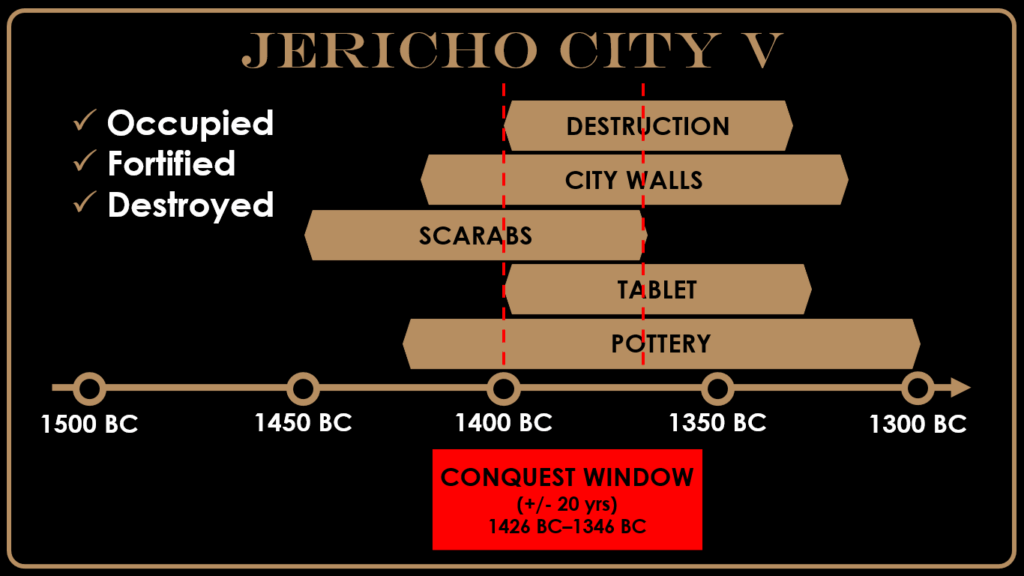
Windle’s research suggests that Jericho City 5 does indeed fit within the chronological window that he established for the date of Joshua’s destruction of the city. The city was fortified, and the fallen mudbrick wall surrounding the city likely belonged to City 5 rather than City 4, as previously thought. Finally, there is evidence that City 5 was destroyed by fire. Thus, Windle suggests that Jericho City 5 qualifies as the city that Joshua and the Israelites destroyed.
Footnotes
- John Garstang and J. E. B. Garstang. The Story of Jericho (London: Marshall, Morgan & Scott, Ltd., 1948), 128. ↩︎
- Kathleen Kenyon. “Jericho,” Archaeology 20:4 (October 1967), 275. ↩︎
- Bryant Wood. “Dating Jericho’s Destruction: Bienkowski Is Wrong on All Counts.” Biblical Archaeology Review 16:5 (September/October 1990), 45–68. ↩︎
- Lorenzo Nigro. “The Italian-Palestinian Expedition to Tell es-Sultan, Ancient Jericho (1997–2015): Archaeology and Valorisation of Material and Immaterial Heritage,” in Digging Up Jericho: Past, Present and Future, eds. Rachael Thyrza Sparks et al. (Oxford: Archaeopress, 2020), 178. ↩︎
- John Garstang. “Jericho: City and Necropolis,” Liverpool Annals of Archaeology and Anthropology XXI (1934) 91–148. ↩︎
- Garstang and Garstang, The Story of Jericho, 177–180 (footnote 1). ↩︎
- Wood, “Dating Jericho’s Destruction” (footnote 3). ↩︎
- H. J. Bruins and J. van der Plicht. “Tell es-Sultan (Jericho): Radiocarbon Results of Short-Lived Cereal and Multiyear Charcoal Samples from the End of the Middle Bronze Age.” Radiocarbon 37 (1995) 214. ↩︎
- Kathleen Kenyon and T. A. Holland. Excavations at Jericho, Vol. Five. (London: British School of Archaeology in Jerusalem, 1983), 763. ↩︎
- Nicolo Marchetti and Lorenzo Nigro. Quaderni di Gerico 2. (Rome: Uniersita Di Roma, 2000), 329–332. ↩︎
- Kenyon, “Jericho,” 275 (footnote 2). ↩︎
- Bryant Wood. “Did the Israelites Conquer Jericho? A New Look at the Archaeological Evidence,” Biblical Archaeology Review 16:2 (March/April 1990), 50. ↩︎
- Nigro, “The Italian-Palestinian Expedition,” 196 (footnote 4). ↩︎
- Lorenzo Nigro. “Tell es-Sultan/Jericho in the Late Bronze Age,” in Durch di Zeiten: Through the Ages, eds. Katja Soennecken, Patrick Leiverkus, Jennifer Zimni, and Katharina Schmidt, (Munich: Gütersloher Verlagshaus, 2023), 600. ↩︎
- Nigro, “Tell es-Sultan/Jericho,” 600 (footnote 14). ↩︎
- Chiara Fiaccavento and Elisabetta Gallo. “Protecting the People: The Fortification Systems of Middle Bronze Age Jericho in Light of the Italian-Palestinian Excavations,” in Digging Up Jericho: Past, Present and Future, eds. Rachael Thyrza Sparks, Bill Finlayson, Bart Wagemakers, and Josef Mario Briffa, (Oxford: Archaeopress, 2020), 240. ↩︎
- Rachel Thyrza Sparks et al. Digging Up Jericho: Past Present and Future, (Oxford: Archaeopress, 2020). ↩︎
- Wood, “Did the Israelites Conquer Jericho?” 37, 40, 54 (footnote 12). ↩︎
- Titus Kennedy. “The Bronze Age Destruction of Jericho, Archaeology, and the Book of Joshua,” Religions 14 (2023), 796. ↩︎
- Kathleen Kenyon. Digging Up Jericho, (New York: Frederick A. Praeger, Inc. 1957), 262. ↩︎
- Piotr Bienkowski. Jericho in the Late Bronze Age, (Oxford: Aris & Phillips, 1986), 114. ↩︎
- John Garstang. “Sir Charles Marston’s Expedition of 1930,” Palestine Exploration Quarterly 62:3 (1930), 132. ↩︎
- Lorenzo Nigro. “Tell es-Sultan/Jericho in the Iron Age,” (conference presentation, 2021 ASOR Annual Meeting Virtual Component) (2021), Slide 7. ↩︎

 Abigail L.


 Hannah Klein
 Christian Ryan

Excellent article. Its obvious this jericho city was the destroyed city in the bible. its poor or evil scholarship to have them twist away the truth. its actually as one expects to find. its unique in its runins because the walls fell down all around. it was strong and thus only God could break it quick enough. iTs great evidence for biblical truth and evidence for hopeless attempts to deny that truth.