
 Abigail L.
Each year, the week before Thanksgiving is an exciting time for archaeologists and biblical scholars alike. Several major archaeology and theology conferences take place this week. These include annual meetings of the Evangelical Theological Society (ETS), the Near East Archaeological Society (NEAS), the American Schools of Overseas Research (ASOR), and the Society for Biblical Literature (SBL). These conferences are on a rotating schedule. They move between various cities each year, but this year (2025), they all converged in Boston. That made it possible for me to attend three of the four conferences: ETS, NEAS, and ASOR. I wasn’t able to stay for SBL.
These conferences, especially ETS, are huge events and very well-attended. ETS averaged 36 parallel sessions at any given time, totalling over 750 lectures and panel discussions over the course of three days. NEAS is a small part of the ETS conference, with only one session in progress at any given time and a total of 20 lectures. ASOR averaged 11 parallel sessions at any given time and a total of nearly 650 lectures, panel discussions, and workshops.
These three conferences provided a wide range of topics and viewpoints. Major components of the ETS conference included Old Testament and New Testament studies, church history, Hebrew and Greek studies, doctrine of various denominations, systematic and practical theology, evangelical philosophy, Christian ethics, and a variety of other topics. NEAS focuses strictly on biblical archaeology. ASOR is a secular archaeological conference with sessions on the archaeology of various regions and periods, the philosophy of archaeology, cultural heritage, small finds, ancient architecture, digital archaeology, ancient texts, and much more.
Over the course of four days and three conferences, I attended 37 sessions on a wide variety of topics, mostly archaeology-related. I also gave a lecture at ASOR. Space does not permit me to provide a detailed report on each session I attended. Instead, I will provide the speaker’s name, lecture title, and a brief explanation of the topic.
Evangelical Theological Society (ETS): Tuesday
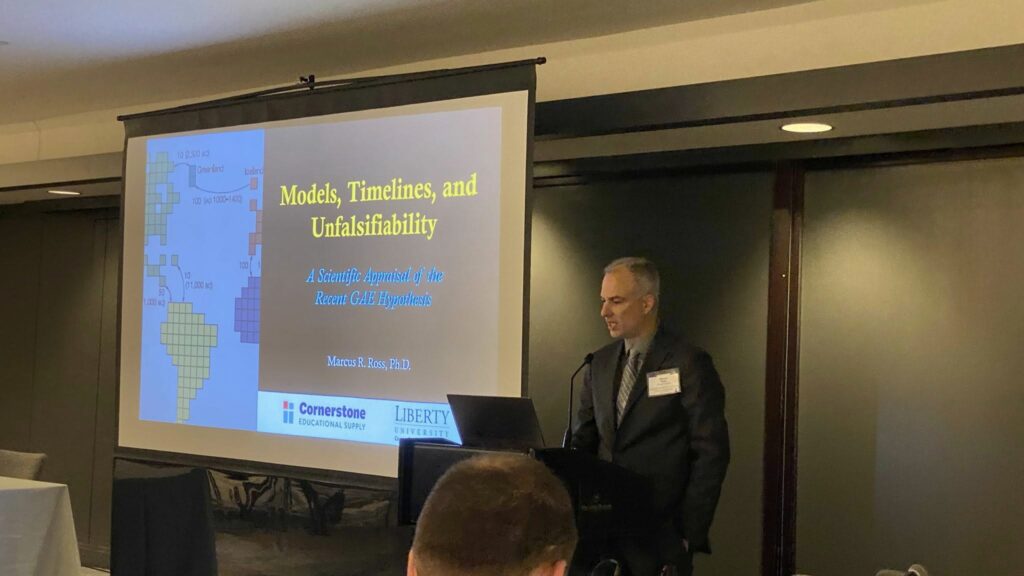
Marcus Ross: “Models, Timelines, and Unfalsafiability: A Scientific Appraisal of the Recent GAE Hypothesis.” Ross’ lecture consisted of a scientific evaluation of Joshua Swamidass’ Genealogical Adam and Eve (GAE) hypothesis. Ross argued that the GAE hypothesis has never been modeled or simulated, and thus we don’t know if it would work.
Jonathan J. Routley: “‘I Sent the Hornet Before You’: A Critical Examination of הצרעה in Joshua 24:12.” Routley discussed previous interpretations of the “hornet” of Joshua 24:12. He suggested that the hornet represents fear, specifically that instilled in the Canaanites by the Israelite’s conquest of two Amorite kings. A summary of Routley’s presentation is forthcoming as a separate blog post.
Near East Archaeological Society (NEAS): Tuesday
Douglas Petrovich: “Dating the Construction of David’s Dynastic Palace.” Petrovich suggested a modified timeline of 1002 BCE for David’s conquest of Jerusalem; 1001 BCE for the transfer of the Ark of the Covenant; 1000 BCE for the Davidic Covenant, and 979–972 BCE for the construction of David’s dynastic palace.
Jordan McClinton: “Shiloh Season 7 Update.” McClinton provided a report on the recent excavation season at Shiloh. He highlighted recent findings at the city gate, a monumental building, and a cultic favissa (sacred dump).
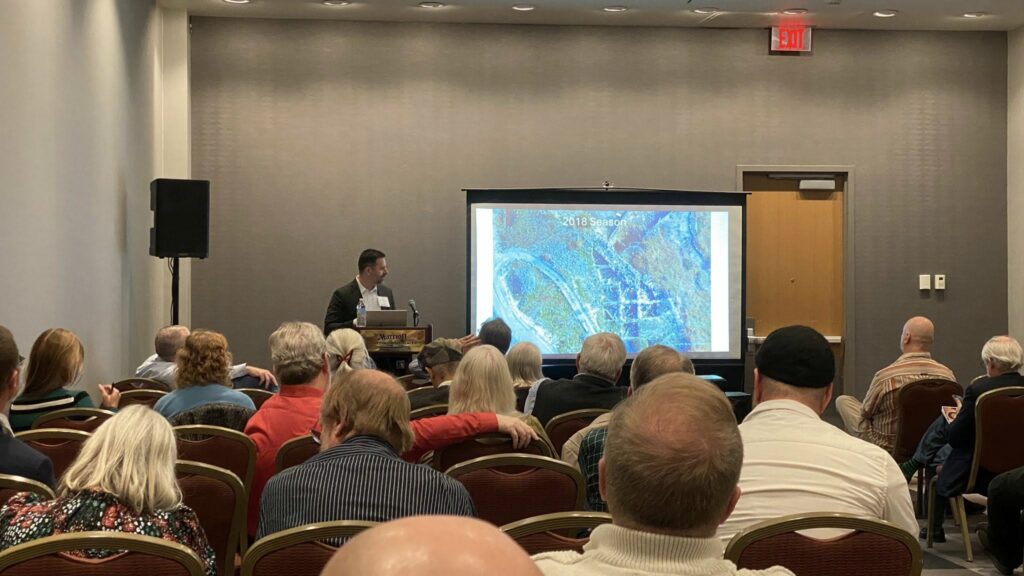
Seth Rodriquez: “Ashdod: Past Excavations, Future Prospects.” Rodriquez presented the renewed archaeological work at Ashdod. There are plans to clean up the site, re-excavate previously excavated areas, and conduct new archaeological work in preparation for Ashdod becoming a national park.
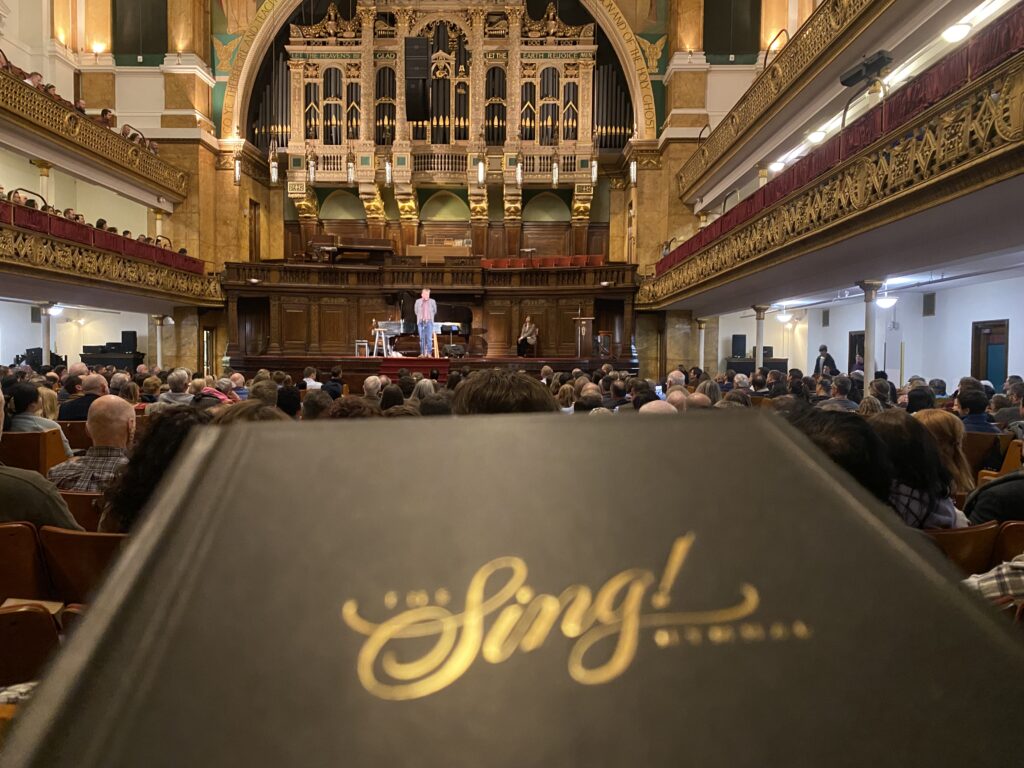
Keith and Kristyn Getty: “Sing! Hymnal Introduction.” The Getty’s introduced their newly published hymnal, The Sing! Hymnal, with a 1.5 hour long hymn-sing event. They gave away free copies of the hymnal and explained the need for a new hymnal, the process of choosing songs, and the reason for the way the hymns are arranged in the hymnal.
Near East Archaeological Society (NEAS): Wednesday
Ralph Hawkins: “Khirbet el-Mastarah and other Enclosure Sites in the Jordan Valley.” Hawkins presented his excavations at Khirbet el-Mastarah, an enclosure site near the ‘Auja spring in the Jordan Valley. He explained the difficulties in dating the site, and provided the results of new optically-stimulated luminescence (OSL) testing at the site.
David Ben-Shlomo: “The Fortified Biblical Site of Aujah el-Foqa in the Jordan Valley.” Ben-Shlomo presented his excavations at Khirbet Aujah el-Foqa. He described three occupational strata: a Middle Bronze Age tower, an Iron Age military outpost, and a Mamluk/Ottoman village.
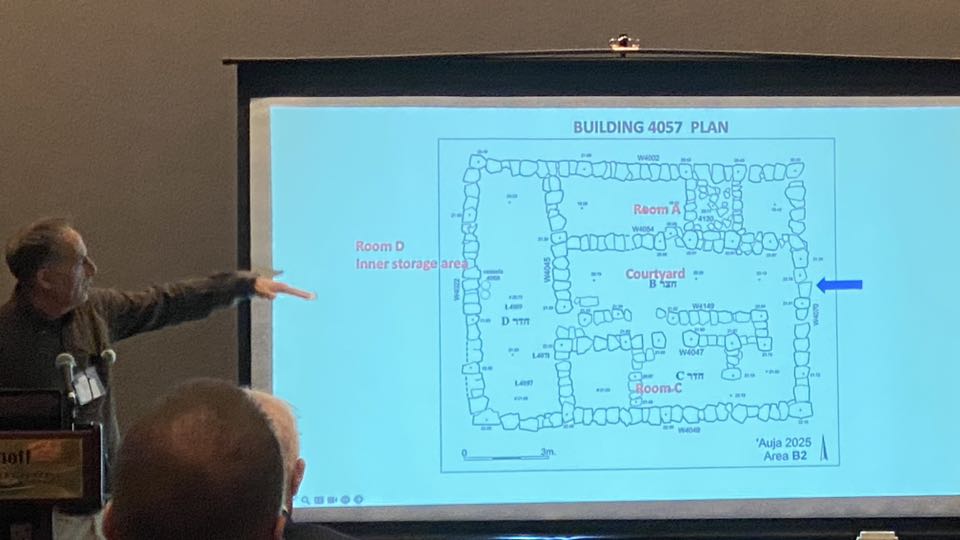
David Ben-Shlomo: “Biblical Hebron: Archaeological Remains from the First and Second Temple Periods.” In his second presentation, Ben-Shlomo presented his excavations at Tel Hebron. He excavated on the southern side of the site outside the ancient city wall. In addition to fortifications, his team uncovered a water system, a street, a pottery workshop, and two large mikvaot (Jewish ritual baths) from the first century AD.
Scott Stripling: “Roman Crucifixion: An Archaeological Perspective and its Implications for the Execution of Jesus of Nazareth.” Stripling presented the first of a two-part lecture on Roman crucifixion. He discussed the known skeletal remains of crucifixion victims and provided historical details regarding the nature of crucifixion including its purpose, method, and results. He also discussed ancient depictions of crucifixion.
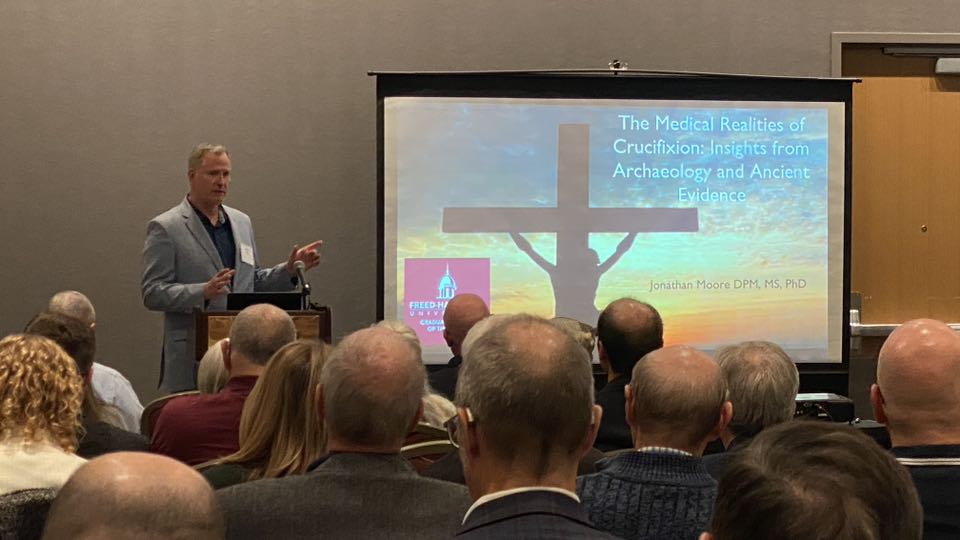
John Moore: “The Medical Realities of Crucifixion: Insights from Archaeology and Ancient Evidence.” Moore provided the second part of the lecture on Roman crucifixion. He offers the unique perspective of a medical doctor who is also a trained archaeologist. His lecture focussed on the piercing of hands and feet in crucifixion.
Gary Urie: “A Seal Impression from Shiloh.” Urie’s lecture focused on a seal impression with hieroglyphic text found in the gate area at Tel Shiloh. He identified a known scarab from Jerusalem that is similar to the one that made the impression, and he suggested that the legible portion of the text reads, “Seal keeper of the king of Lower Egypt and overseer of the great house and arable land in the midst of…”
Mark Criss: “A Biblical & Historical Investigation into the Lost Tribe of the Perizzites.” Criss discussed the origins, homeland, and descendents of the Perizzites. He suggests that they inhabited the central hill country and that they eventually moved northward to Phoenician areas.
Near East Archaeological Society (NEAS): Thursday
Steve Rudd: “Archaeology of Daniel.” Rudd discussed two inscriptions that refer to Belshazzar. He argues that they refer to Daniel and not to King Belshazzar.
Ryan Wood: “What Architecture Says about Shiloh’s Monumental Building.” Wood analyzed the architecture of the Monumental Building at Tel Shiloh. He compared the structure with numerous other Late Bronze Age/Iron Age temples from the region.
Joshua Hunter: “Jeremiah and the Tale of Two Potters.” In Hunter’s presentation, he discussed the presence of Egyptian terminology in the book of Jeremiah. He argued that Jeremiah likely spent some time in Egypt and learned local terminology there.
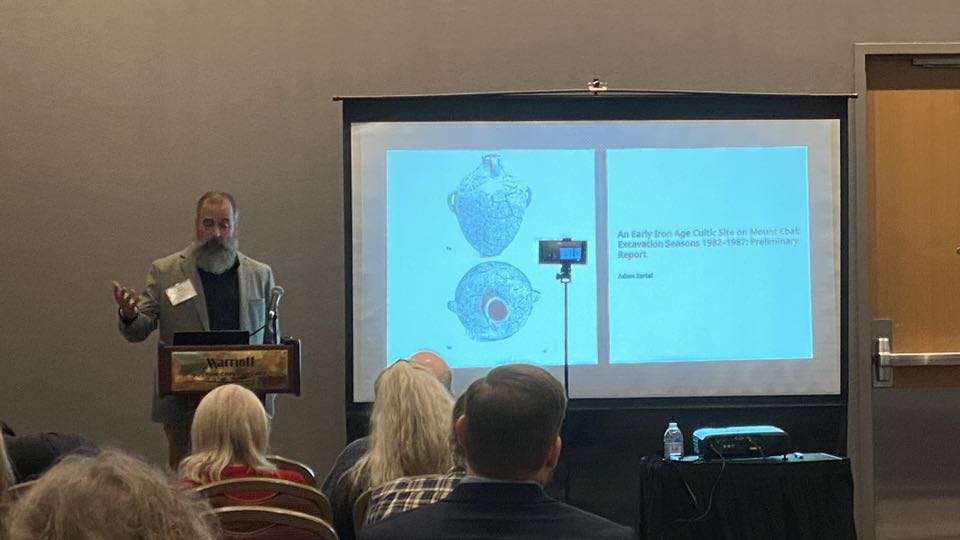
Jerry Boyce: “Shiloh’s Jar: Three Handles and Three Hypotheses.” Boyce presented an unusual jar found in the excavations at Tel Shiloh. He noted that the only known parallels came from religious sites, suggesting that this vessel type was for use in the sacrificial system.
American Schools of Overseas Research (ASOR): Thursday
Avraham Mashiach: “The Emergence and Development of the Oasis of En-Gedi During the Late Iron Age.” Mashiach discussed a structure at En-Gedi. He noted that although it may have been a tower guarding the water source, it is also possible that it was a cultic site.
David Vanderhooft: “The ‘Gibeon’ Storage-Jar Handle Phenomenon: A New View from Jerusalem.” Vanderhooft discussed the implications of a storage-jar handle found in Jerusalem that bore the name of Gibeon and was stylistically similar to 61 handles found at Gibeon.
Rachel Hallote: “The Place of ISAC* and Megiddo in the History of Archaeology.” Hallote presented on the history of American involvement in Ancient Near Eastern archaeology. She focussed on the early Megiddo excavations.
Francesca Romana Stasolla: “Archaeology at the Holy Sepulchre in Jerusalem: Problem, Data and Hypothesis.” Stasolla reported on recent excavations within the Church of the Holy Sepulchre in Jerusalem. She noted the presence of a pavement from the Early Roman period but clarified that contrary to previous thought, there was no evidence of a pagan temple on the site.

Eric Cline: “Rummaging through the ISAC* Megiddo Archives: Everything You Wanted to Know but Were Afraid to Ask.” Cline reported on his work in the Megiddo archives and provided little-known trivia about the excavation team.
*ISAC, the Institute for the Study of Ancient Cultures
American Schools of Overseas Research (ASOR): Friday Morning
Frederico Zangani: “Global Trade and Local Structures of Power in the Bronze Age: Contrasting View from Egypt and Cyprus.” Zangani noted that in the Bronze Age, urban development generally required non-local goods. This need could lead to either trade or imperialism.
Jordan Galczinski: “Textiles in International Exchange Networks During the Egyptian New Kingdom.” Galczinski presented her research on ancient textiles. She noted that textiles were commonly-traded commodities of high value. However, they are often overlooked in scholarship.

Zhenfang/Aren Zhou: “Cooking Pots and Negotiating Identity: Material Culture and Adaptive Agency during the Egyptian Occupation of Beth She’an.” Zhou discussed a particular style of cooking pot from Beth She’an that was found with large quantities of fish bones. She suggested that this style of cooking pot was an Egyptian-type pot used for cooking fish.
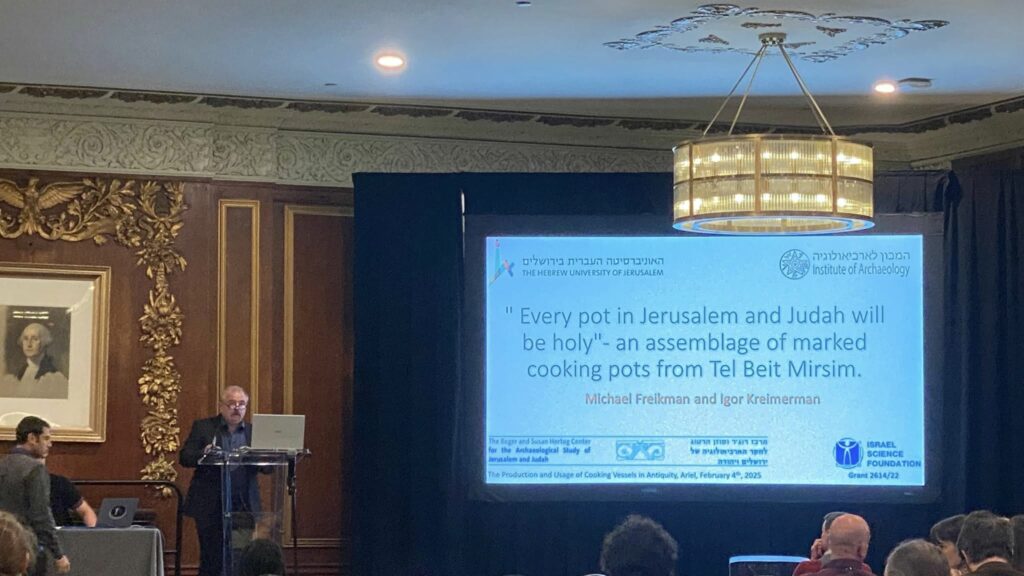
Michael Freikman: “‘Every Pot in Jerusalem and Judah Will By Holy’: An Assemblage of Stamped Cooking Pots from Tel Beit Mirsim.” Freikman reported on stamped cooking pot handles that suggest some kind of administrative system at Tel Beit Mirsim.
Abigail Van Huss: “The Israelite Tabernacle at Shiloh: An Archaeological and Textual Exploration.” My presentation compared textual references to the Israelite Tabernacle with the monumental building at Tel Shiloh. I discussed the idea that the monumental building may have served as the Tabernacle at Shiloh. A separate blog post on this topic is forthcoming.
Aharon Tavger: “The Mount Out of the Mound: The Geographical Nature of Iron Age Cultic Sites in Jerusalem and Environs.” Tavger discussed the concept of “high places,” particularly in regard to cultic sites found near, but outside of, ancient cities.
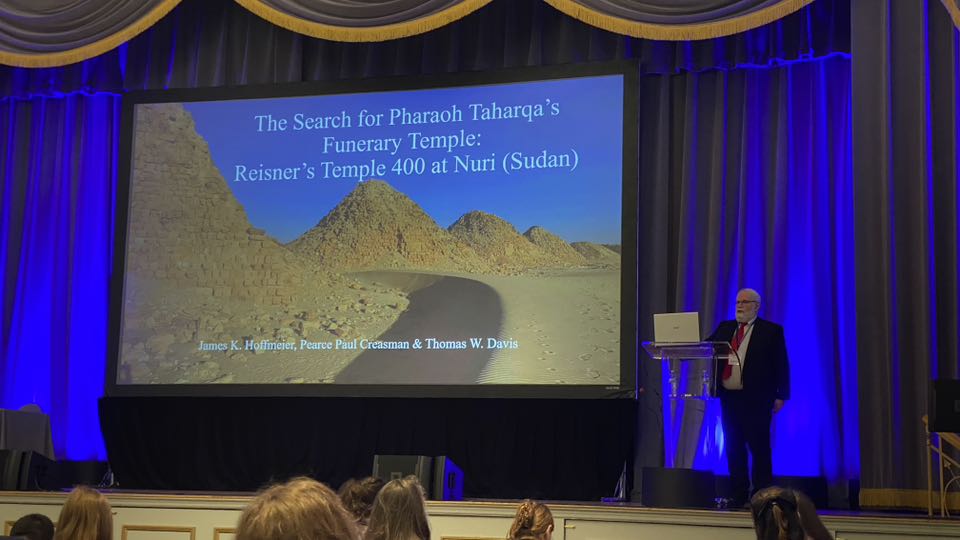
James Hoffmeier: “The Search for Pharaoh Tahaqa’s Funerary Temple: Reisner’s Temple 400 at Nuri (Sudan).” Hoffmeier presented his recent re-excavation of a site previously excavated by Reisner. He suggests that this structure may have been Pharaoh Tahaqa’s funerary temple.
Lauren Doger: “Mapping the Dead: A Social Profile of Tomb Reuse in Ptolemaic Thebes.” Doger discussed burial Ptolemaic burial practices, particularly the re-use of old tombs. She suggested that socio-political groups tended to be buried together, but that outsiders were sometimes buried with them as well.
American Schools of Overseas Research (ASOR): Friday Afternoon
Igor Krierman: “The Power and Peril of Size: How Scale Shaped Possibility and Constraint at Late Bronze Age Hazor.” Krierman presented recent findings in the Hazor excavations. He noted that Hazor prospered in the Late Bronze Age IIA, which is odd, given that the city’s supply network had already collapsed at this point in history. He suggests that Hazor may have relied on nomads to supply the city.
Sabine Kleiman: “Ceramic Projection and Distribution under the Empire – A View from the Late Bronze Age Shephelah.” Kleiman analyzed three aspects of pottery—petrography, techno-style, and typology—to determine that every city in the Late Bronze Age Shephelah produced its own pottery.
Ofer Naveh: “Egyptian Administrative Presence in the Sharon Plain? A View from Tel Zeror.” Naveh presented findings from Tel Zeror that suggest that the city functioned as an Egyptian administrative center during the Late Bronze Age.
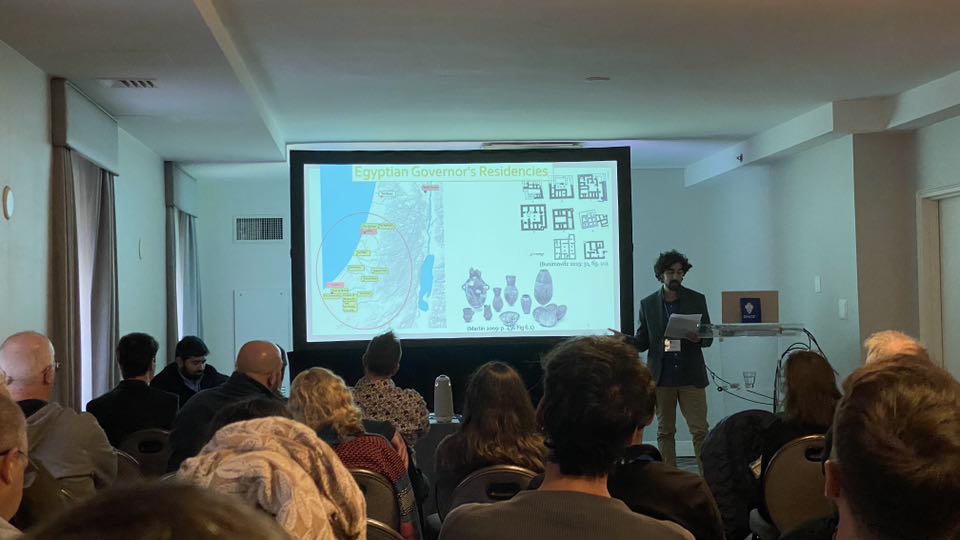
Omer Sergi: “The Egyptian Colonial Network and its Impact on Urban Communities in the Jezreel and Beth-Shean Valleys.” Sergi proposed that Egypt confiscated croplands in the Jezreel Valley and forced local Canaanites to work the fields. Some of the locals rebelled against Egypt’s extortion and attempted to put a stop to it.
Andrew McCarthy: “Margaret Cavendish and the Roots of Fringe Archaeology.” McCarthy discussed the ties between philosophy, science fiction, and pseudo-archaeology.
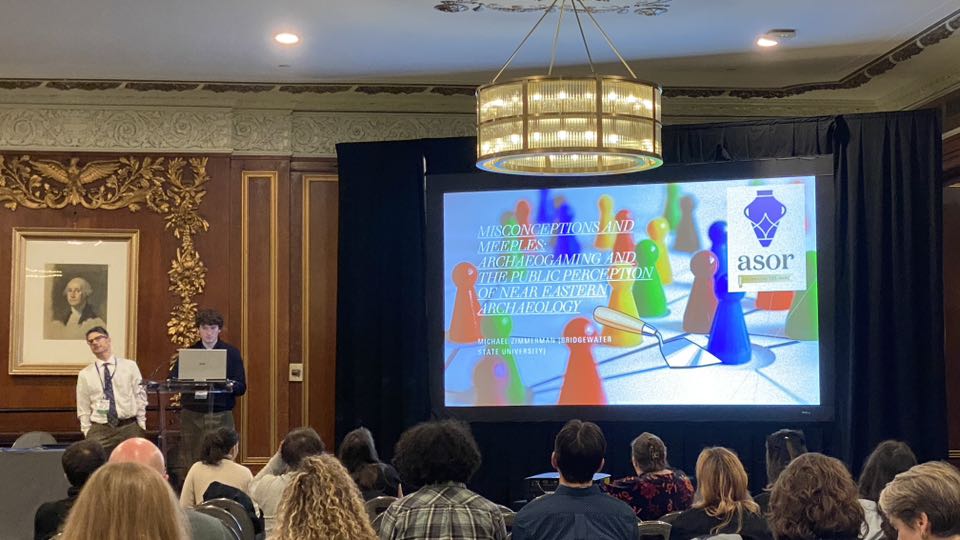
Michael Zimmerman: “Misconceptions and Meeples: Pseudoarchaeology and the Public Perception of Archaeology in Gaming.” Zimmerman discussed the false perceptions of archaeology perpetrated in video games and suggested that such depictions are harmful in terms of public understanding of what archaeology is.
Robyn Price: “Shaping the Past: Language, Bias, and the Intersection of Academic and Pseudo-archaeological Narratives.” Price discussed the negative side of the science of archaeology, accusing past archaeologists of being racist and imperialistic.
Debra Trusty: “Ancient Aliens in the Classroom: Building First-Year Undergraduate Skills in Rebuking Pseudoarchaeology.” Trusty described a first-year class that she developed to educate students on the dangers of pseudo-archaeology.
Conclusion
I very much enjoyed the conferences. While I agreed with some of the presentations and disagreed with others, I learned from all of them and came away recharged and full of new research ideas.
For more information on the 2025 conferences; how to join ETS, NEAS, or ASOR; or how to attend the 2026 conferences, you can visit the organization’s respective websites:
The Evangelical Theological Society
The Near East Archaeological Society
The American Schools of Overseas Research

 Abigail L.



 Peter
Peter
 Hannah Klein
 Christian