
 Christian
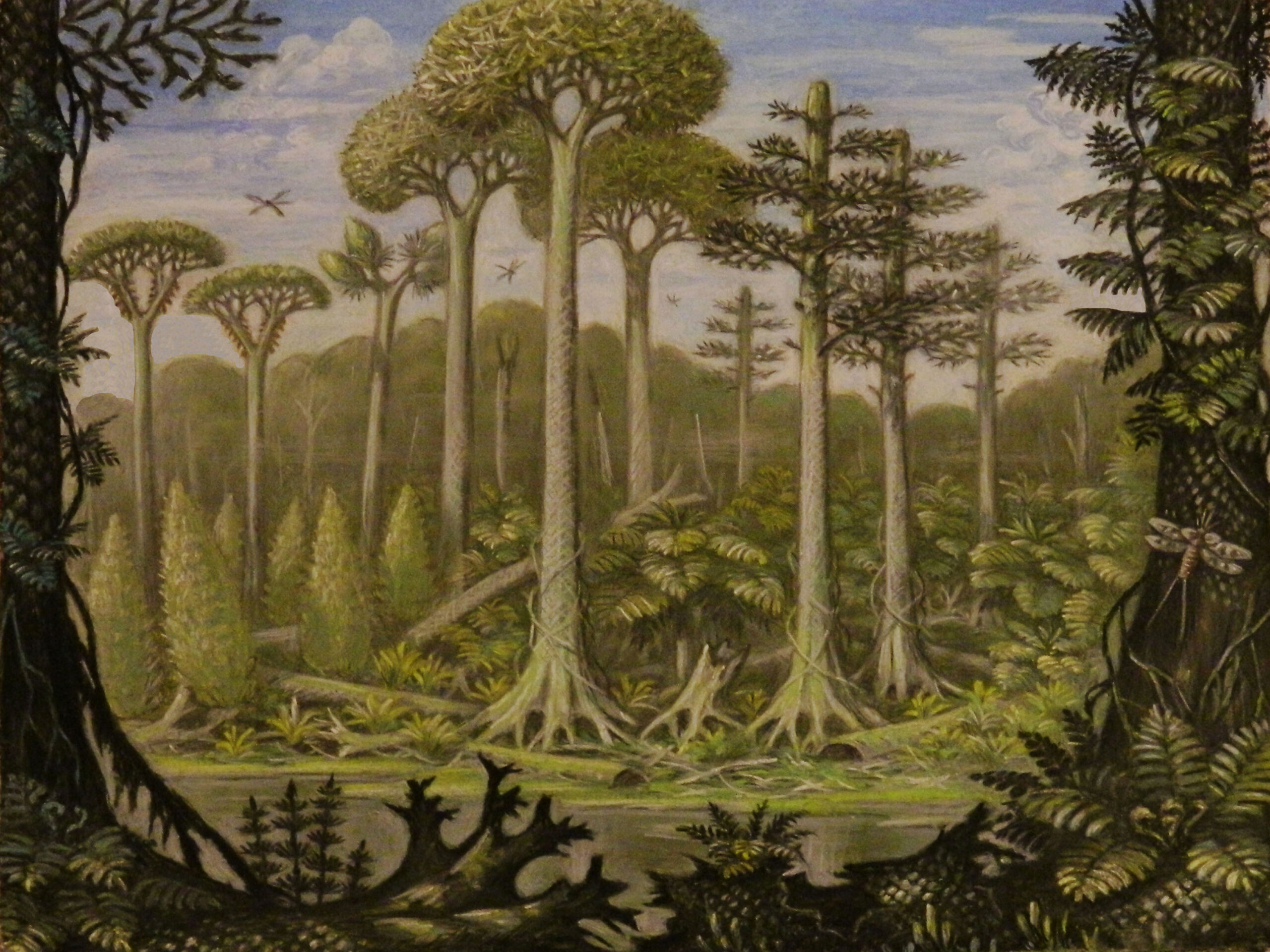
The world is home to a remarkable array of ecosystems, each with unique plant and animal inhabitants. From expansive grasslands and dense rainforests, each one showcases the awe-inspiring diversity God created upon the Earth. There are also ecosystems of the past we will never get the chance to see because they were lost to the pages of history. However, by carefully studying the clues left behind, we can resurrect them in at least a piece of their splendor. One of these ancient ecosystems appears to have been a forest rooted not on firm ground, but on a floating vegetation mat atop the ocean!
The following article is a summary of the research pertaining to “Paleobotany Supports the Floating Mat Model For the Origin of Carboniferous Coal Beds” by Roger Sanders and Steven Austin. The views expressed reflect those of the authors mentioned, and not necessarily those of New Creation.
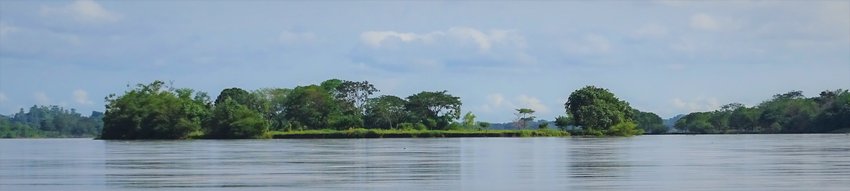
Nothing quite like this extraordinary ecosystem exists today. There are parallels, though. For example, today there are quaking bogs, sometimes known as trembling bogs or quagmires. A characteristic of this unique type of wetland is their unstable surface that appears to “quake” when walked upon because they grow out over a body of water. A number of small floating islands on isolated bodies of water have also been spotted adjacent to the Magdalena River of northwest Columbia. The rafts are composed of aquatic plants, bound together and floating. As the floating islands grow, they can support large, woody vegetation, like trees. These floating islands usually measure about 100 feet long, but some have gotten reached than 300 feet long. One floating island was observed to have trees up to 30 feet tall with monkeys on their limbs. We have never observed floating across the ocean. However, researchers hypothesize that river floods could pick up one of these floating islands before sending it downriver and on its merry way across the ocean with monkeys in tow. The researchers believe this might explain how monkeys could get to far-off places they would not ordinarily reach.1,2
If “floating forests” are possible—although rare—today, what more can we say about floating forests of the past?
What is the Floating Forest Model?
In its modern form, the floating forest model was proposed independently in its modern form by paleontologists Dr. Joachim Scheven in 19863,4 and Dr. Kurt Wise in 2003.5As its title suggests, this model hypothesizes that the Carboniferous coal deposits carpeting much of eastern North America, Europe, and parts of Russia, consists of plant material that once made up a “coal forest.” This floating forest would have drifted across the ocean of the world before the global Flood of Noah’s time.
Dr. Wise suggests that the forest consisted of an ecological succession of plants that steadily increased in size closer to the forest’s center. Small, more water-dependent plants made up the edges of the forest. Meanwhile, at the center a full forest biome formed, rooted in a thick mat of vegetation and soil. Dominating the forest were tree ferns like Psaronius, and truly enormous lycopods such as Lepidodendron.
At some point during the Flood, these forests were destroyed and became much of the coal deposits we find across the northern hemisphere today.
Floating Through History
Drs. Scheven and Wise can be credited with developing the floating forest model in its modern form. But as it happens, they were not the first to come up with this idea. In fact, the floating forest model in some way, shape, or form, has existed for the past 300 years or so!
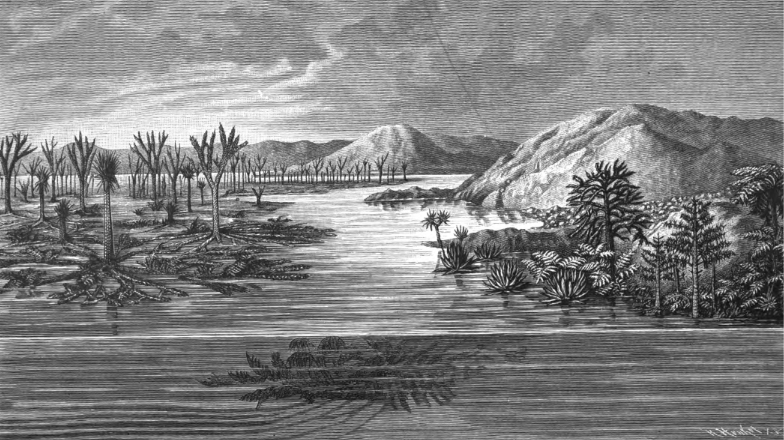
Most of this history has been sadly forgotten in recent times. However, the recent historical survey published by the late botanist Dr. Roger Sanders and geologist Dr. Steve Austin has unfurled the pages of a long gone past.6 We can trace the earliest known advocates of this model back to German botanist Otto Kuntze (1884). Others include British-American engineer and geologist William Gresley (1894), and Cambridge University paleobotanist Albert Seward (1895). Interestingly, none of them appear affiliated with what is now known as young-earth creationism. Yet, they all agreed that the coal-forming plants existed on large, floating rafts of living vegetation. Coal formed from vegetation that sank to the water bottom, either as a chunk or in isolated fragments. They did not believe the root systems of these unusual plants, specifically the lycopods, were ever planted in firm soil. Instead, the plants began as solitary and prone-floating with water leaves. When they became entangled with floating debris, they became able to sprout an upright trunk.
If you are not familiar with this idea, there is a good reason for that. The floating forest model became superceded by what is now the conventional view. Old-earth geologists nowadays tend to believe that Carboniferous coal forests were planted in the firm soil of swamps and floodplains, just like modern wetland trees. Early advocacy for this idea came from two prominent geologists of the mid-1850’s. They were John Dawson and Charles Lyell. Lyell and Dawson examined the root systems and upright tree trunks of the Joggins Fossil Cliffs in Nova Scotia. They did not find them within the coal deposits. These geologists interpreted these root systems and tree trunks as once belonging to a forest. The coal formed from vegetation accumulated in the swamps where the trees lived. Later geologists followed suit and applied this interpretation to other fossil forests and coal deposits around the world. This view became dominant in the 20th century and still goes strong today.
How Does an Entire Forest Float?
Most arguments for or against the notion of a floating forest are based on the geology of the places where Carboniferous coal and other plant material are found. However, Sanders and Austin note that researchers often overlook the biology of the plants themselves. Since the swamp hypothesis for coal formation became commonplace, scientists have done much more research on their biology. We now have a much better idea of not only their physical structure, but also how they grew from spore to a mature plant. Sanders and Austin decided to study the biology of two particular plants associated with coal deposits: Lepidodendron (a type of lycopod) and Psaronius (a type of tree fern). What they discovered is that these plants were ill-suited for growing on solid ground. Instead, God designed these plants for life on the open water.
Lycopods: Lepidodendron
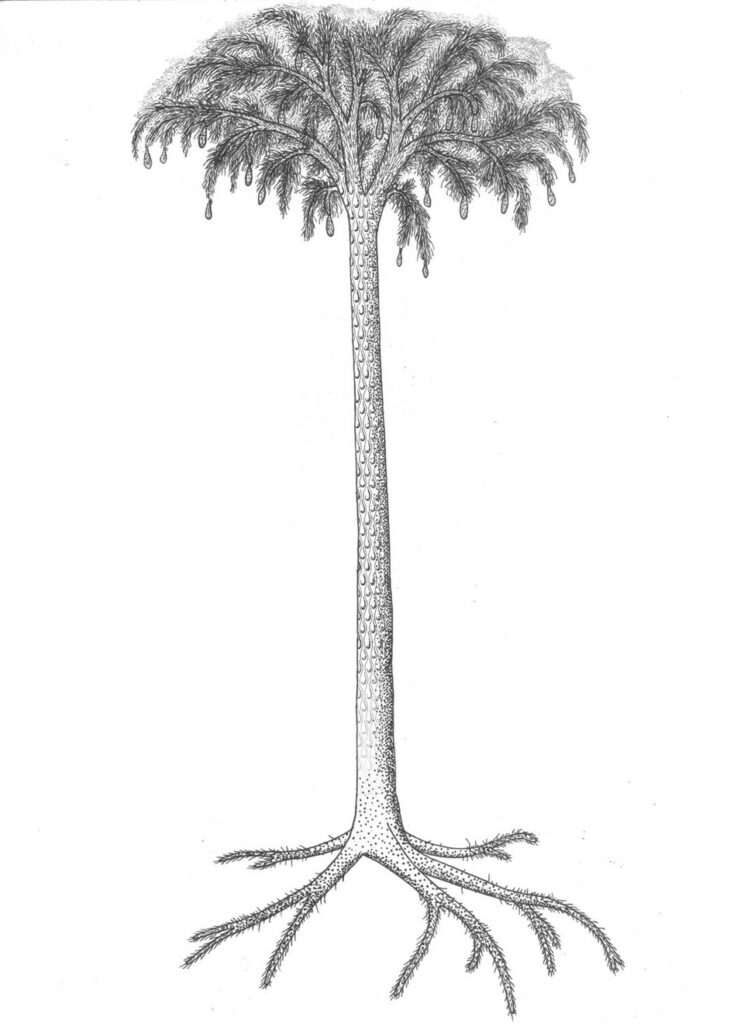
While Sanders and Austin’s research primarily focused on Lepidodendron, many of their findings can also apply to lycopods more broadly.
Airy Trunks
Lycopods are particularly interesting because their trunks and root systems are infiltrated by air-filled chambers. We commonly see this feature in modern day plants that float on the water because it helps them remain buoyant.
Root Systems
Scars cover fossils of lycopod roots, showing where appendages—called rootlets—once grew. They radiated out from the entire root, making it resemble a bottle brush or a pipe cleaner. Rootlets can measure quite long, a foot and a half or more, and branch four or five times. This would make it very difficult for the roots to penetrate and push their way through the soil as they grew like most plants do. As such, the most likely explanation is that God designed these plants to thrive on the water.
A Sailor From Birth
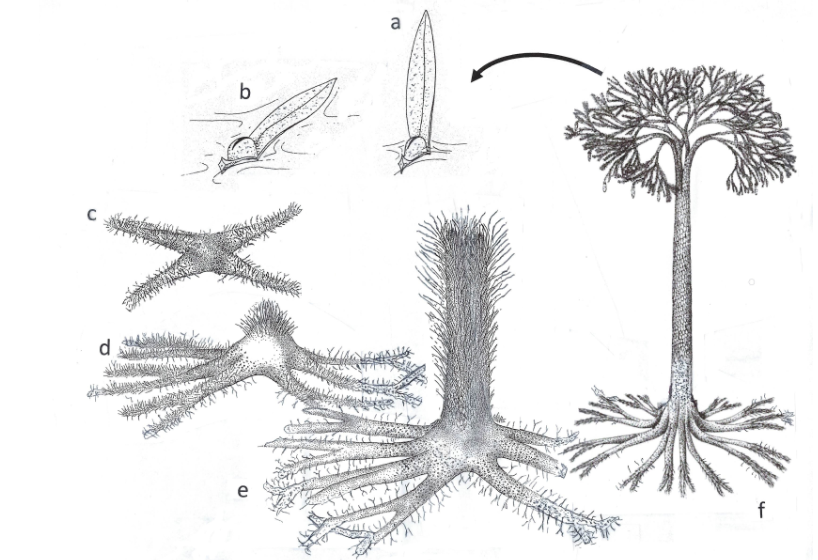
Lepidodendron and other lycopods started out as tiny, seed-like plant parts called propagules. While different from seeds in many ways, they served a very similar function. Each propagule contained one very large female spore (called a megaspore), and it stayed inside a structure called a sporangium. The sporangium attached at a modified leaf called a sporophyll. The whole thing lands on water and disperses by wind like a tiny sailboat. Unlike true seeds, these propagules were designed to be dispersed, fertilized, and grow while floating in the water. To distinguish them from real seeds, scientists often refer to them as “aquacarps.” Some lycopods produced smaller megaspores that released individually. These would fall onto the floating roots of larger plants or the tangled mat upon which the forest floated. Here, they would find fertilization and start growing as part of the floating vegetation. This reproductive cycle does not work in a land-based swamp, but is best explained as occurring in open bodies of water. As lycopods grew from aquacarp to full-grown tree, they quickly developed a root system that spread out like a starfish in the air. It floated around until its roots grew long enough and possessed enough rootlets to entangle with the root systems of other lycopods.
Light-Weight Forest
On top of an immature lycopod root system, a stem (or trunk) started growing upward as a dome shape. Unlike modern trees, it was the root systems (and not the leaves) that produced most of the food for the growing lycopod through photosynthesis. The trunk grew as a straight pole with tightly spiraled leaves at the top few feet. Branches only formed towards the end of the plant’s life to produce spores. This means that most of an ancient lycopod forest consisted of upright, unbranched poles, not a continuous canopy of branches and leaves. Because of this, it was the root systems and the trunk that were photosynthetic. This made the lycopods and the forest as a whole quite lightweight compared to today’s forests.
Tree Ferns: Psaronius
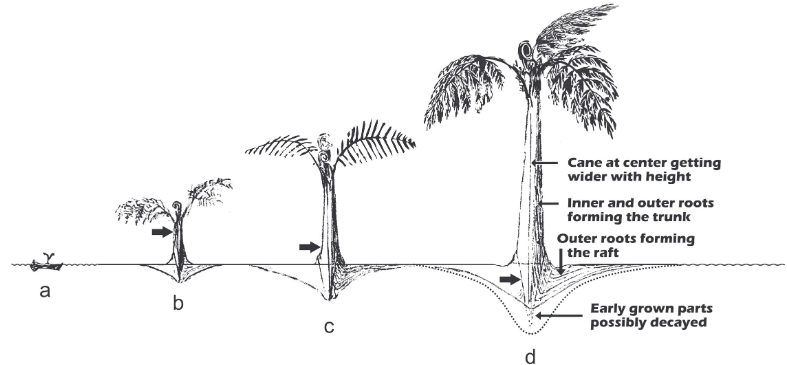
Psaronius is a type of tree fern, a large, lacy fern that grows its leaves from a crown at the top of an upright, unbranching stem. It is smaller than the tree lycopods, but still quite tall, growing over nine feet in height. The stem of Psaronius is slender compared to the overall size of the plant. It would be incapable of holding up the plant if not for its roots that grow over the stem and each other to form a strong, sturdy base. Like the lycopods, there are many lines of evidence which suggest that Psaronius also did not grow on firm, swampy soil.
Airy Roots and Stems
Similar to lycopods, the roots and stem of Psaronius consist of hollow air chambers. This special structure helped the plant transport gasses, like oxygen, which would have been an important factor in the plant’s survival and growth. This would also make the plants lighter, capable of floating on the water’s surface.
No Soil For This Plant!
All known specimens of Psaronius lack the very bottom part of the stem, and none show roots going into or covered by soil. Moreover, all fossils of the stem’s outer segments, far from the top, either had the stem and attached roots decayed, leaving a thick “doughnut” of free-hanging roots, or the “doughnut” had the stem and attached root layer only on the upper side. This clearly suggests that the stem and attached roots decayed, while the free root zone remained as the support at the base. Even more glaring is the fact that many fossils of sheet-like layers of free roots completely separated from the stem or bound roots have been found. This indicates that these roots had been laid on the ground and were not involved in anchoring the plant to the soil.
With Great Age, Comes Great Weight
As the tree fern grew, the diameter of Psaronius’ stem gradually increased, and the leaves in the crown became more and more numerous. The entangled roots at the base of the plants continued to increase in thickness to better keep it upright. In response, the heavier the trunk got, the more it forced the tree fern downward into whatever substrate it grew in. This observation works better if the plant is floating on the water rather than in soil.
When Tree Ferns Make More Tree Ferns
Like living ferns, Psaronius produced spores that it dispersed via the wind. Researchers suggest that after germination and fertilization of a spore that landed on floating debris or existing free-root mats, it began producing roots and more leaves. The top of the stem enlarged, becoming more complex and producing more leaves. This made the plant heavier, forcing its stem base downward into the water or water-saturated mud. The stem base rotted and the loose, free-root skirt began to develop and enlarge. Continued enlargement of the top of the stem, leaf crown, and roots forced the plant deeper under the water surface as a counterbalance, where rotting continued and the free-root skirt became a large encircling raft that stabilized the upright stance. The upright plant achieved buoyancy not so much because of its light-weight, but by the free-root skirt and raft containing enough hollow chambers to float on the surface of the water.
Animals of the Floating Forest
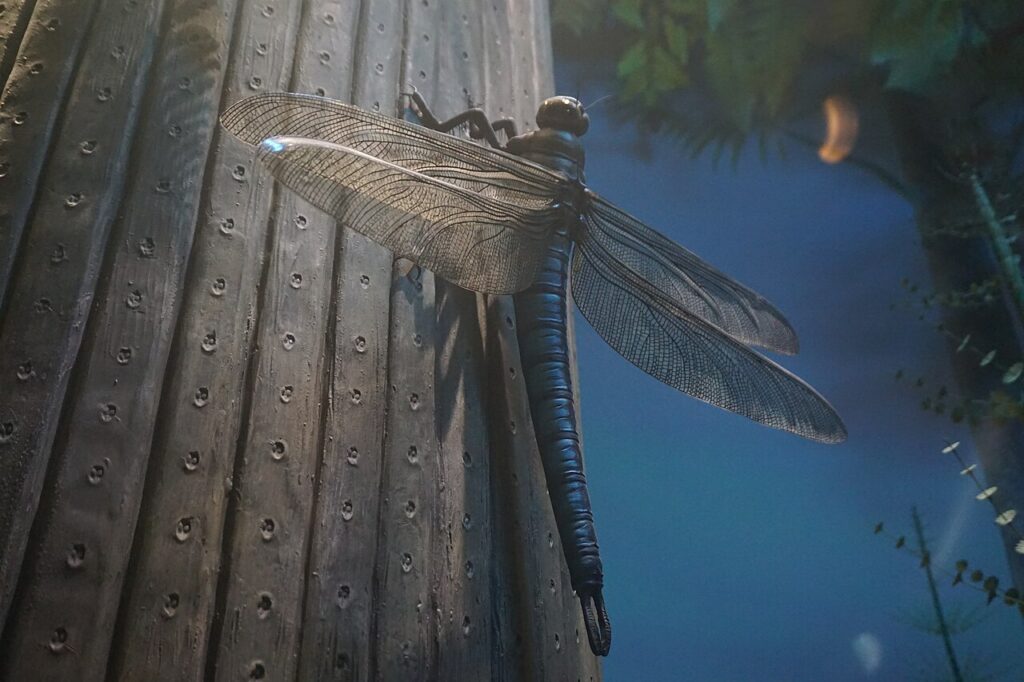
While not incorporated into Sanders and Austin’s research, we should note that plants made up only part of the floating forest ecosystem. Fossils found associated with Carboniferous coal and other plant material suggest that animals also called this unique habitat home.
Coal deposits are often found associated with what are commonly considered to be Paleozoic “land” animals. However, Wise suggests that since the coal seems to have been formed from floating forests, this is likely where the animals lived as well. This Carboniferous menagerie would have included large Paleozoic insects, like the griffinfly Meganeura which had a wingspan rivaling that of a seagull. Wise further suggests that the pools of the thinner portions of the forest floor were home to strange fish with bony, leg-like limbs, such as Tiktaalik. A wide variety of large amphibians, such as the labyrinthodonts, may have inhabited the thicker sections of the forest.
Robinson (1996) has suggested an additional assortment of amphibians and reptiles based on their association with coal deposits throughout Europe and North America.7 Fossils of the amphibian-like Crassygyrinus were discovered in mine heaps and quarries of Scotland. Hylonomus and Paleothyris were lizard-like reptiles not only found in coals and interbedded mudstones and sandstones of Nova Scotia, but also often preserved inside of fossilized lycopod stumps. Robinson further suggests that the floating forest was also home to a multitude of creepy crawlies—millipedes, centipedes, dragonflies, snails, spiders, and beetles. These are represented today by millions of living species; many may be descendants of ancestors that once lived on the floating forests and survived the Flood by clinging to debris from their destroyed home.
End of the Floating Forest
Even though a strong case can be made for the floating forest hypothesis from the biology of the plants themselves, many geologists continue to resist this way of thinking. Sanders and Austin suggest that one reason for this has to do with the thickness and extent of the coal beds which they formed. This, they argue, can only be accomplished by the laying down of colossal amounts of sediment associated with marine flooding of the continents. As such, Sanders and Austin’s work here challenges the long-standing paradigm that says lycopods and tree ferns of the coal forests were lodged in mucky, land-bound swamps.
On the contrary, the biology of both lycopods and tree ferns associated with the coal suggests they formed a living, floating mat capable of supporting tall trunks. And the detritus of these plants is what formed Carboniferous coal beds. A better understanding of these incredible habitats gives us a glimpse into just one of the amazing ecosystems that thrived in the world before the Flood.
Learn More about Coal & the Floating Forest Hypothesis
Did Fossil Grove Grow in Place?
What Should Creationists Think About Fishapods?
Footnotes
- Ali, J.R., Fritz, U., and Vargas-Ramírez, M., monkeys on a free-floating island in a Columbian river: further support for over-water colonization, Biogeographia—J. Integrative Biogeography 36(a005):1–8, 2021. ↩︎
- Lawton, G., On a raft and a prayer, New Scientists 3365/66:50–52, 18/25 Dec 2021. ↩︎
- Scheven, J. (1986). Karbonstudien — Neues Licht auf das Alter der Erde, Hanssler, Stuttgart. ↩︎
- Scheven, J., (1992). Gleanings from Glossopteris. In: Proceedings of the Fifth European Creationist Congress, pp. 53-58. ↩︎
- Wise, Kurt P. (2003). “The Pre-Flood Floating Forest: A Study in Paleontological Pattern Recognition,” The Proceedings of the International Conference on Creationism: Vol. 5 , Article 31. ↩︎
- Austin, S., and Sanders, R. (2018). “Historical Survey of the Floating Mat Model for the Origin of Carboniferous Coal Beds.” The Proceedings of the International Conference on Creationism 8 (1): 277–86. ↩︎
- Robinson S. 1996. “Can Flood Geology Explain the Fossil Record?” CEN Tech. J, vol. 10 nr 1: p. 32–69. ↩︎

 Noel Grimes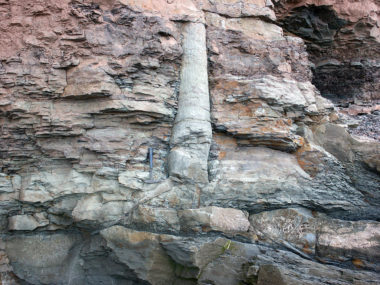
 Ken Coulson

 Kurt Wise

 Peter
Peter

 Hannah Klein