
 Christian Ryan
Late last year, the Carreras Pampa Tracksite in Bolivia was recognized as the largest fossil tracksite in the world! That was the headline ringing across just about every science news outlet in December 2025. Indeed, this locale is an absolute marvel, boasting more than 16,000 footprints from dinosaurs. But impressive numbers aside, there was another significant aspect of this research: this study brought together scientists from vastly different worldviews—creationists and non-creationists—working collaboratively on the same team!
The following is a summary of “Morphotypes, preservation, and taphonomy of dinosaur footprints, tail traces, and swim tracks in the largest tracksite in the world: Carreras Pampa (Upper Cretaceous), Torotoro National Park, Bolivia,” by Raúl Esperante et al., and of the surrounding discussion and research pertaining to it. The views expressed do not necessarily reflect those of New Creation.
The study was funded by the Geoscience Research Institute (GRI) and led by GRI paleontologist Dr. Raúl Esperante. The research team consisted of scientists who accept a young-age understanding of Genesis, including Dr. Esperante himself. But it also consisted of scientists who hold to the conventional geological timescales—some of whom identify as atheists. Importantly, the findings were published not in a technical creationist outlet, but in the mainstream, peer-reviewed journal PLOS One.
While the collaboration itself was notable, some responses to the paper focused less on the team’s diversity and more on how the findings were interpreted. Biologist and theistic evolutionist Dr. Joel Duff is a frequent and thoughtful critic of Flood geology. He expressed surprise that biblical Flood-affirming geologists could have published a paper that, in his view, operates within an old-earth geological framework and contradicts “what a global catastrophe looks like.”1 He further adds that this study “raises uncomfortable questions about compartmentalization and what happens when the evidence simply doesn’t cooperate with your theological commitments.”2
There has been relatively little discussion about this research from the young-age creationist sphere. Ken Ham, CEO of Answers in Genesis, has shared his reflections on the paper’s conclusions on his blog. He posits that the tracksite is excellent evidence for the Flood, and that the study’s authors are presenting conclusions “according to an evolutionary interpretation.”3 This raises important questions about how the study’s findings should be understood within different interpretive frameworks.
How should we evaluate these differing responses? This article will take a close look at the research published by the Carreras Pampa Tracksite team. We will take careful note of what the researchers documented, what interpretations can (and cannot) be gleaned from the data, and explore the broader implications this incredible site has for young-age geology. What we will discover is that this paper neither promotes an “evolutionary interpretation” nor undermines Flood geology. Instead, it is a launch into an interdisciplinary study that will take us on a journey through the study of the sediments the footprints are found in and how they were preserved, the environment the footprints were formed in, and even biblical studies in an attempt to understand this remarkable trackway site in the context of a young-age creationist perspective.
To do so, we will explore why this is an excellent case study that can be used to:
- Address common misunderstandings about our understanding of the biblical Flood
- Demonstrate how creation scientists actually do their science
- Provide a working example of how creation scientists can collaborate with their non-creationist colleagues to accomplish great work
- Explore how the Carreras Pampa Tracksite integrates with other fields of research for a possible understanding of how it might fit within a young-age creationist framework
Carreras Pampa Tracksite
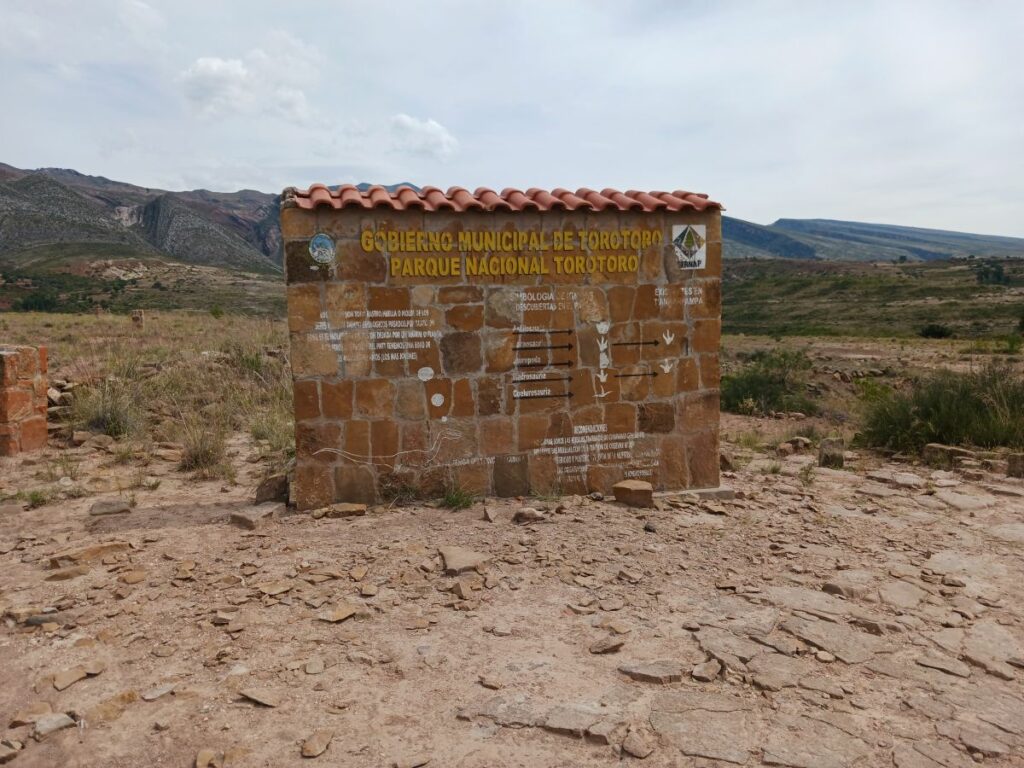
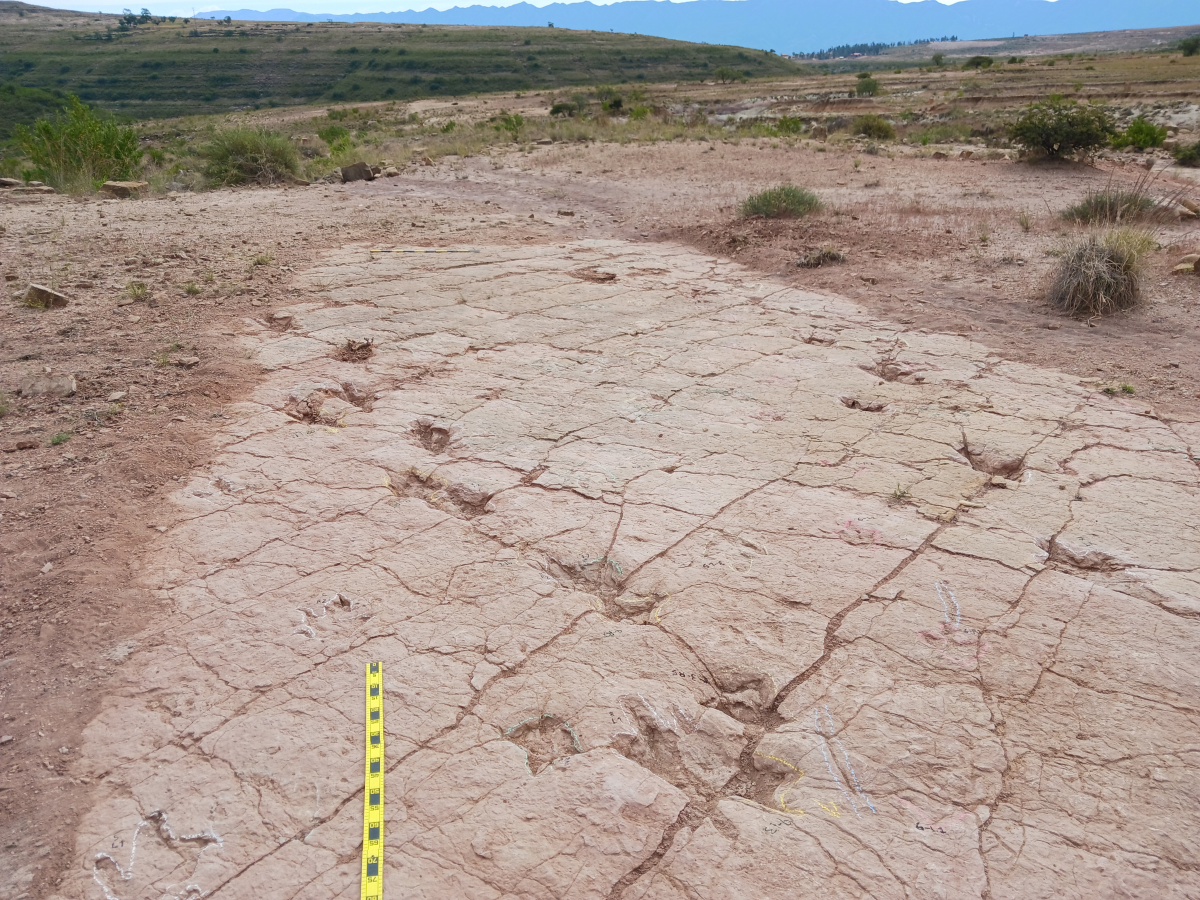
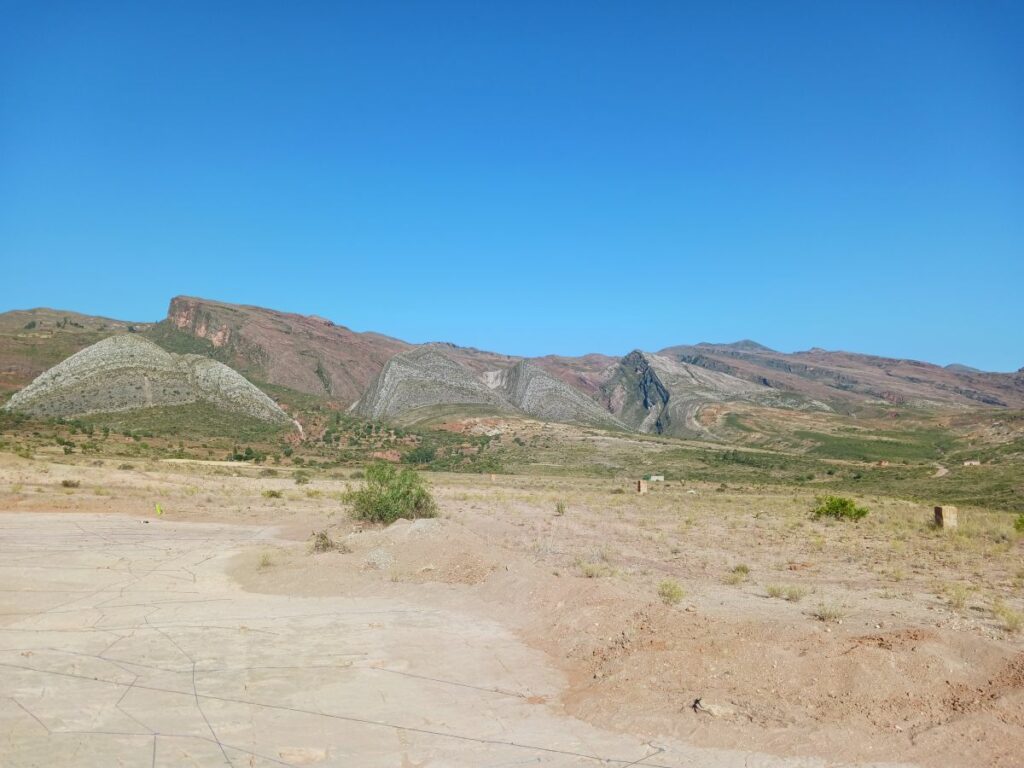
The Carreras Pampa Tracksite is located in Bolivia’s Torotoro National Park, just 1.5 kilometers southeast of the nearest village, Torotoro Town. It covers a total area of about 7,485 square meters and is now recognized as the largest dinosaur tracksite in the world. While the tracksite itself is exposed at nine different nearby locations, all of the footprints are preserved in the same rock layer.
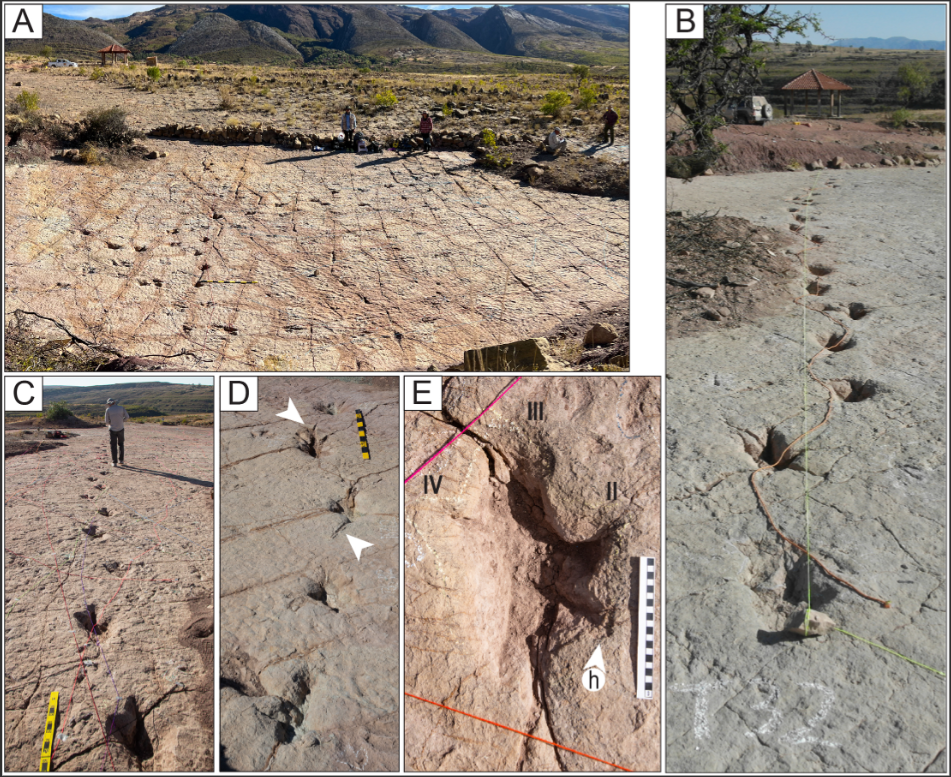
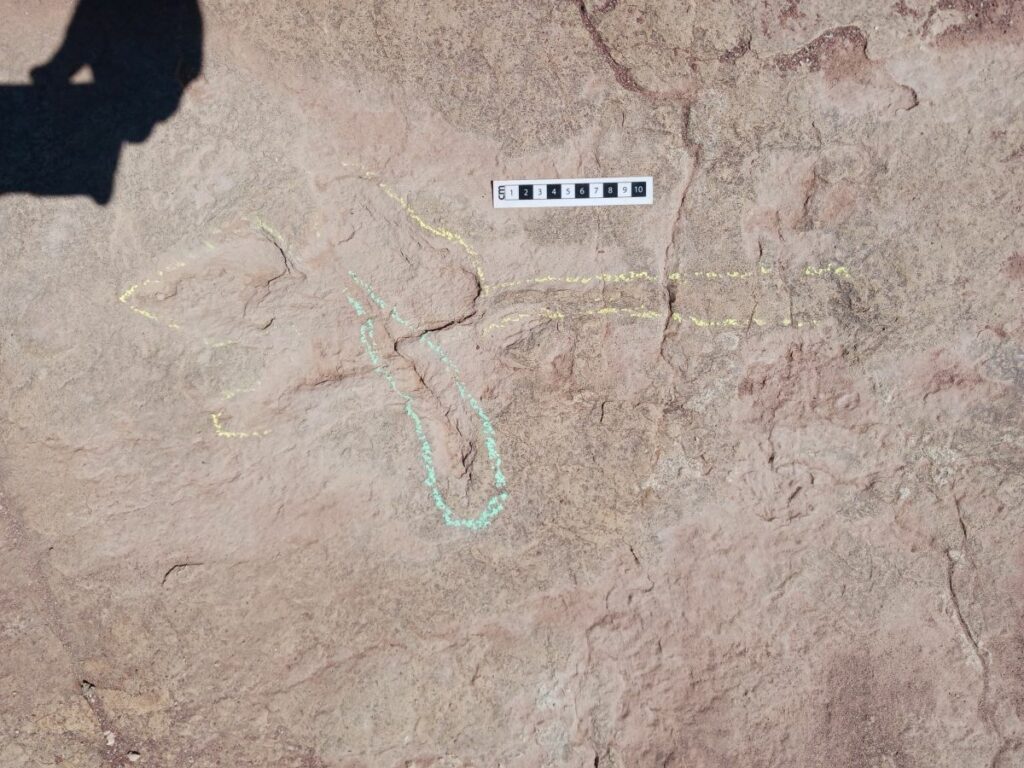
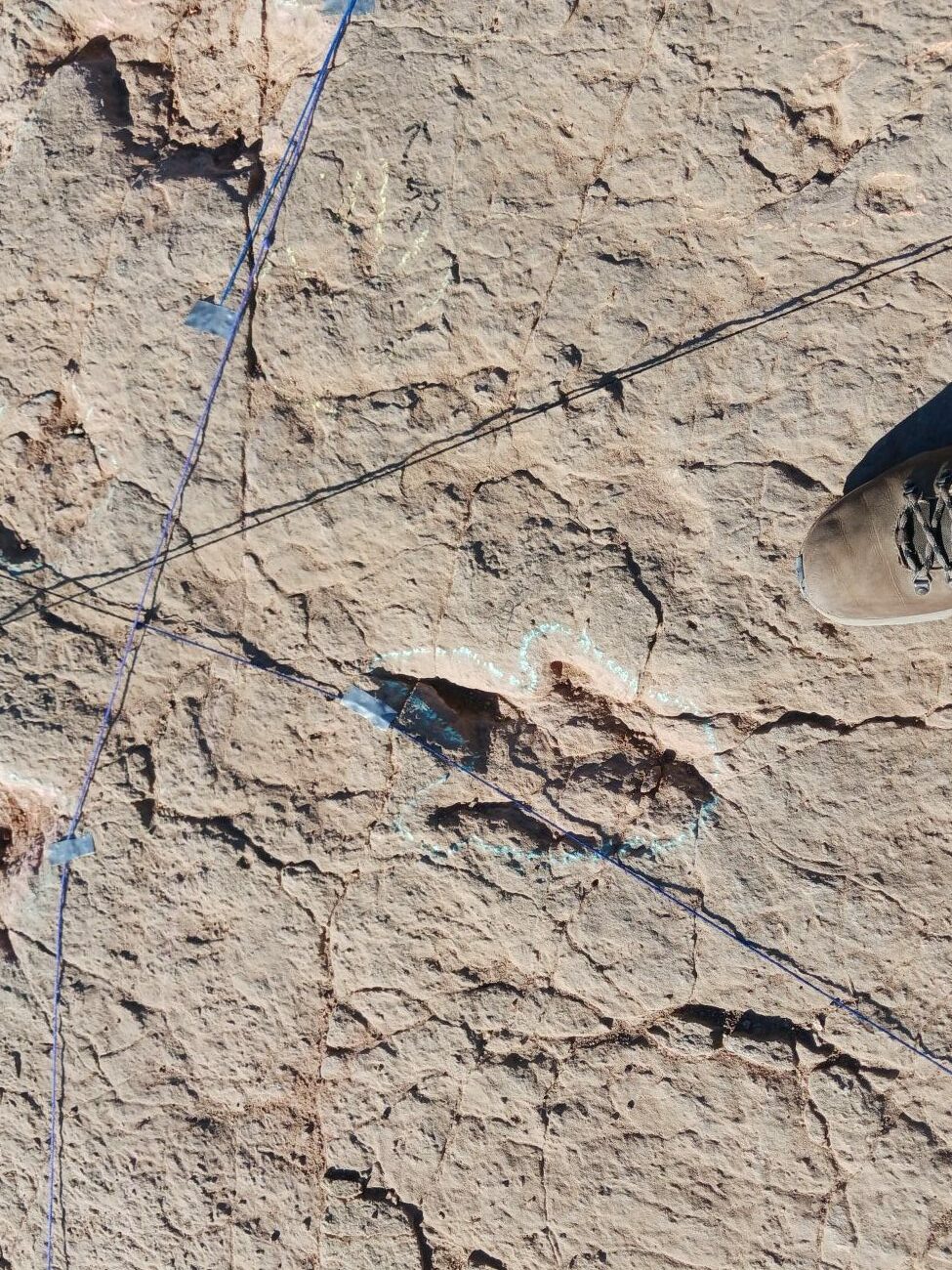
More than 16,000 dinosaur footprints have been discovered so far, ranging in size from less than 10 centimeters to over 30 centimeters. The footprints also vary in terms of depth, with some being only shallow impressions and others being very deep impressions. Among them are isolated footprints, trackways, swim tracks (made by swimming dinosaurs as their toes barely touched the bottom), and even rare trackways showing directional turns and occasional tail drag marks, formed when the dinosaurs were walking through very deep mud. Tail drag marks are rare in the dinosaur fossil record because the anatomy of these animals is best suited for carrying their tails up off the ground.
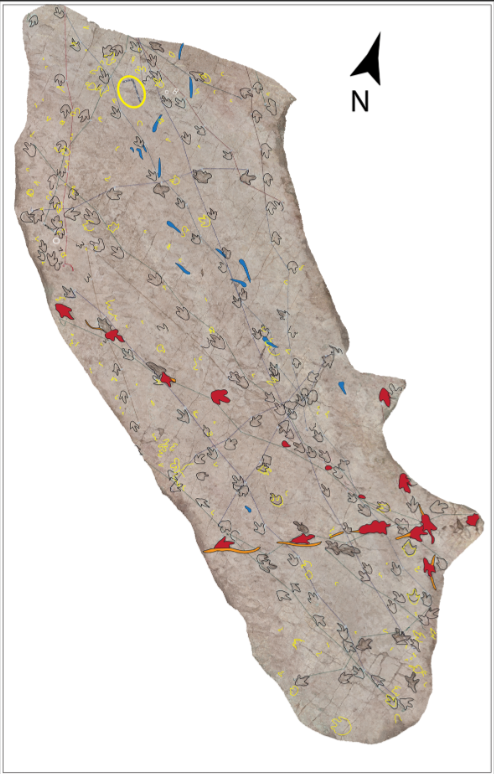
Reproduced from Esperante et al., PLOS One, CC BY 4.0.
Almost all of the footprints are from dinosaurs walking in a Northeast-Southeast direction. This suggests there was a high-traffic pathway, perhaps influenced by a geographic feature that restricted their movement. The tracks cut ripple marks in the surface of the layer. Ripple marks are made when a body of water covers the sediment surface. Therefore, the presence of ripple marks in the same rock layer with tracks suggests that water had covered the sediment surface before or at the time the trackways were made. With so many trackways preserved parallel to each other, Esperante and his team suggest many of these animals may have been walking together in groups.
What Made the Footprints?
All of the footprints discovered at the tracksite so far come from theropod (meat-eating) dinosaurs. We know this because they all have three forward-facing toes ending in sharp claws. Some of the footprints have an extra, backwards-facing toe; these are from birds.
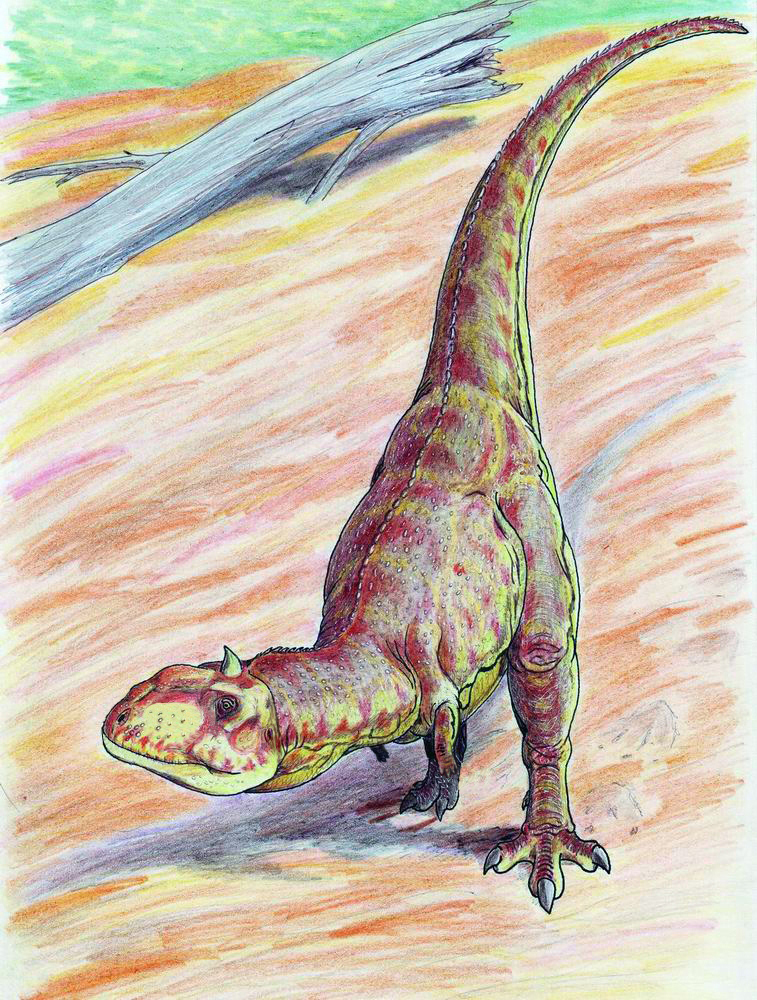
Because very few bones have been recovered from the site, we cannot tell exactly what species of dinosaurs made all of these tracks. However, by comparing the sizes of the footprint to feet of known theropods, the researchers were able to estimate that 80% of the trackmakers stood about as tall as an average human’s waist or chest at the hip (between 65 cm/2.13 ft and 1.15 meters/3.77 ft). There were also a few very large theropod trackmakers at the site that exceeded 1.25 meters/4.10 ft high at the hip. While we cannot know for sure, the researchers raise the possibility that the smaller footprints are from younger animals of this larger theropod or a different species of theropod.
Only one trackway belonged to what the scientists refer to as a “megatheropod,” weighing over 2,000 pounds in life. They note the curious absence of other megatheropod trackways at Carreras Pampa, as this is a common occurrence at dinosaur tracksites around the world, like China, South Korea, and Colorado. It is possible that the absence of megatheropods from tracksites could reflect the absence of these animals in the area. Another hypothesis is that this is a by-product of the relatively short period of time during which the tracksites were made, meaning they were in the area, but did not have time to leave the footprints.
Geological Context
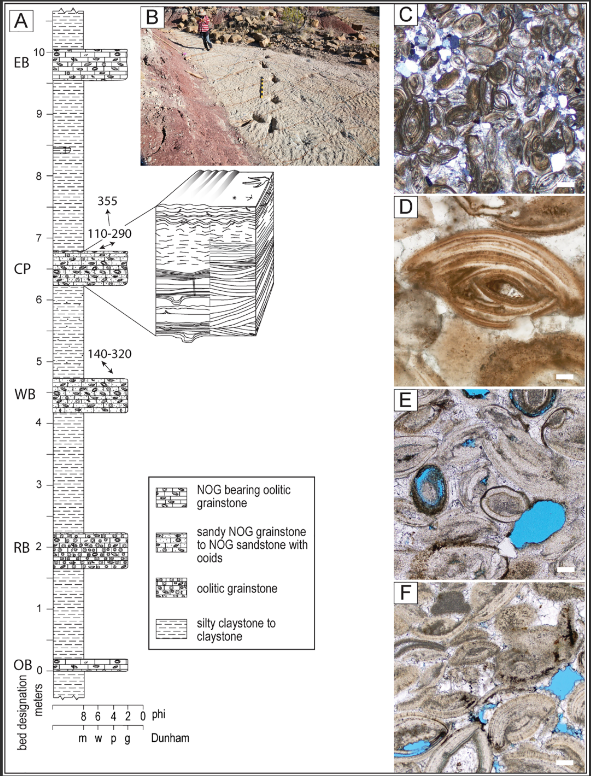
(A) Measured stratigraphic section showing the ostracod-rich, dinosaur-tracked bed within the El Molino Formation.
(B) Field photograph of the tracked surface.
(C) Photomicrograph of abundant ostracod shells composing the sandy layer.
(D) Detail of ripple-marked sedimentary structures.
(E–F) Thin-section images illustrating ooids and early cementation within the tracked horizon, contributing to rapid footprint preservation.
Image Credit: Esperante et al., PLOS One (CC BY 4.0).
Geologically speaking, the Carreras Pampa Tracksite is situated in the El Molino Formation. This is a rock unit located in the uppermost part of the Cretaceous System, called the Maastrichtian Stage (after Maastricht in the Netherlands).
When we think of footprints, we usually think in terms of the last time you left footprints on a beach or perhaps an animal walking through the mud. But at Carreras Pampa, these dinosaurs were stamping on a firm, sandy layer mostly made up of the tiny shells of microscopic organisms called ostracods. The layer is bounded top and bottom by sharp contacts with silty claystone formed underwater.
The dinosaur-tracked surface of the layer is polka-dotted by worm burrows, some of which penetrate the footprints themselves. However, the researchers observed that the actual diversity of worm burrows was rather low, and that there was no evidence of weathering, the development of soils, or root structures (called rhyzoliths). This suggests that while enough time passed for some worm burrowing to occur, there was not enough time for weathering and plant alteration of the layer. The amount of time between when the footprints were formed and when they were buried by another, protective layer, was relatively brief.
Depositional Environment
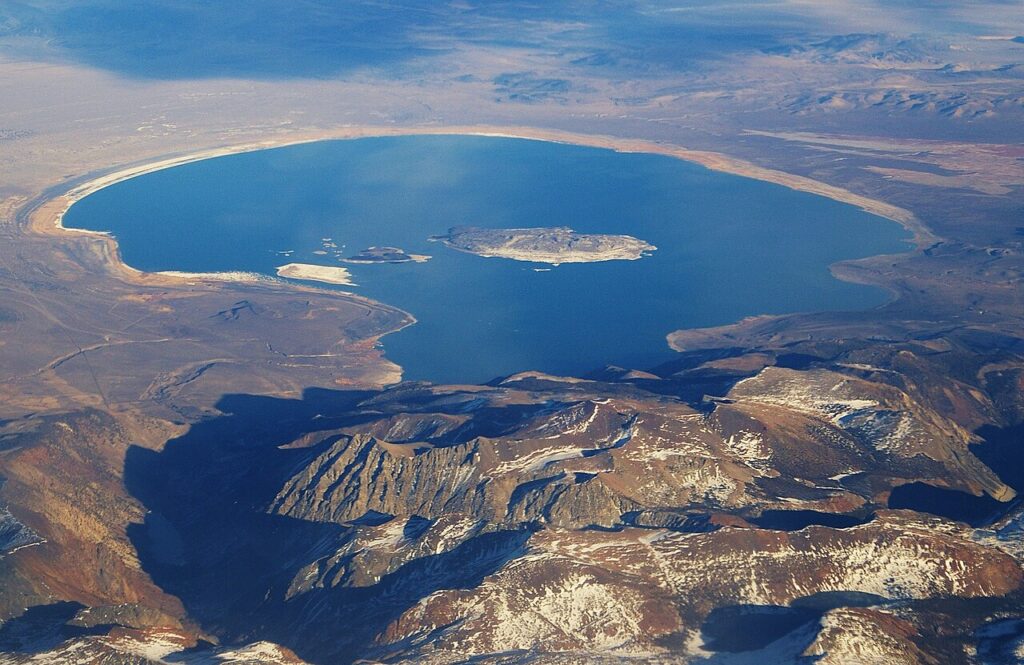
As mentioned above, the presence of ripple marks shows that the dinosaurs were walking along the edge of a body of water. But was this waterbody a freshwater or saltwater environment? Geologists studying the rocks in the El Molino Formation as a whole have been debating this very question since the 1990’s, with no sign of agreement in sight. Some geologists think it was formed in a freshwater lake system that sometimes flowed out into the ocean. Others think it was a saltwater lake system that received inflow flooding from the ocean. The reason for all of this disagreement has to do with how geologists interpret ancient environments based on what fossils are found in the Cretaceous rocks and comparing these to similar living creatures. Fossils reported from the El Molino Formation include analogs of both land-living (frogs, reptiles, and mammals), freshwater (salamanders, frogs and some fish) and saltwater environments (certain marine fish).
Esperante and his team do not address this debate in their research paper, but plan to in the future, as the evidence is inconclusive. However, based on the evidence on the table so far, they favor a freshwater to alkaline lake system, meaning varying water chemistry, associated with the tracked bed. The most direct evidence is from tiny, lake-dwelling crustaceans called ostracods and freshwater algae and fern fossils in the mudstone layers directly below and above the tracked bed. Further study will be required to extend these interpretations to the hundreds of meters of layers in the rest of the El Molino Formation.
How It All Happened
By looking at the collected evidence, Esperante and his team were able to put together a model that illustrates the sequence of events preserved at this tracksite.
Event #1: The Carreras Pampa Tracksite Was Underwater
The Carreras Pampa Tracksite layer is directly underlain by layers of silty claystones. Geologists can use the size of sediment grains to determine how fast and deep the water was that deposited them. Layers of finer materials, like silt and clay, tend to form in deeper, lower-energy water than materials like boulders or gravel.
Event #2: Ostracod-rich Sandy Layer is Formed as Water Locally Shallows
The sandy, ostracod-rich layer is composed of larger grains arranged in layers that show structures consistent with higher water energy in shallower water. These include cross-bedded and rippled layers, and the fact that the ostracod shells are well-sorted into layers by size and shape. Importantly, this shows that the ostracod shells did not live, die, and accumulate where they are found. They lived and died somewhere else and were transported to this region by water. If the ostracods died here and sank to the water bottom, they would be poorly-sorted by size and shape.
Event #3: Carreras Pampa Bed is Exposed and Theropods Walk Across It
Once the area is above water level, theropods can readily walk across its surface. They left footprints and trackways behind in the exposed sandy, ostracod-rich material. Some of the footprints are shallow, and others are deep, often within the same trackways. This suggests that some parts of this layer were firmer than other parts. Enough time passed for dinosaurs to walk or run around, perhaps in social groups.
Event #4: Worms Make Burrows
As dinosaurs are making tracks, worms are moving through sediment layers and leaving burrows. In some cases, they altered the quality of the trackway preservation without modifying its general appearance. Interestingly, the worms did not obliterate the fine, well-preserved bird footprints, suggesting that erosion and extensive modification by the worms were minimal. The researchers say that, “The timing was essential to preserve structures from modification by wind, rain, waves, or currents and before extensive invertebrate burrows could alter them.”
This is an interesting tie-in to recent work by friends of GRI and paleontologists, Drs. Leonard Brand and Art Chadwick. They observed that burrowing by worms and other animal is far less common than would be expected if the geologic record had accumulated over multi-million-year timescales.
Event #5: Water Level Rises Again
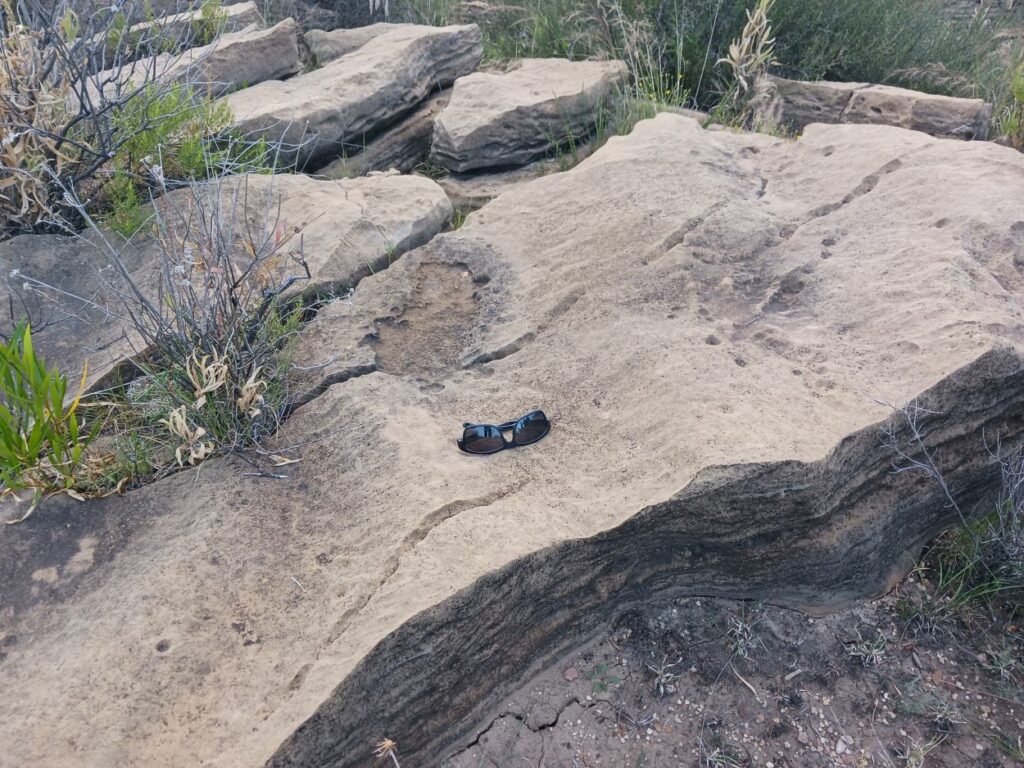
Interestingly, some of the dinosaur swim tracks cut across previously formed dinosaur walking tracks and ripple marks. This suggests that the dinosaurs were in the area as the water level was rising again. To stay afloat, the dinosaurs began paddling. In doing so, they left scratch-like swim tracks with just the tips of their toes touching the soft sediment surface below.
Event #6: Early Cementation
At the beach, all it usually takes is the next wave to completely destroy any footprints you have made. The presence of an additional silty claystone layer above the footprints indicates that water rose and covered them. So why weren’t these footprints destroyed? Esperante and his team discovered that the tracksite layer is rich in calcite. Initially, the layer was soft enough for walking and swimming dinosaurs to leave foot impressions. But soon after the footprints were formed, the tracked layer underwent a process called “early cementation.” Put simply, calcite in the sediment acted like a natural cement, binding the grains together. This preserved the foot impressions, and prevented water currents, waves, and burrowing organisms from destroying them.
According to the researchers, “The excellent preservation of the swim tracks with expulsion rims, the previously formed theropod and avian tracks, and the exquisite preservation of the tail traces suggest that incipient cementation occurred rapidly after the tracks were made. This is further supported by the absence of bioturbation altering the swim traces.”
The Carreras Pampa Tracksite: Evidence for or Against the Biblical Flood?
After examining the evidence Esperante and his team documented from the tracksite, we can now re-assess the public responses to this research from Ken Ham and Joel Duff. How should their feedback be evaluated in light of the data?
An Assessment of Ham’s Response
Starting with Ham, his assessment appears to rest on a conflation between the study’s trackway and sediment-related findings with broader worldview assumptions. As stated earlier, the research team includes scientists who hold a range of views about the Flood involvement in Earth history (or lack thereof). Dr. Esperante’s team is not offering up an “evolutionary interpretation” any more than it is providing a creationist interpretation. It is simply describing the researcher’s findings within standard geological jargon.
Additionally, Ham is correct that there are trackways showing that some of the dinosaurs were actively engaged in running behavior. But there are even more trackways made by dinosaurs walking at a steady and directional pace. The Carreras Pampa Tracksite does have some important implications for young-age geology models (as we shall discuss later). However, it does not appear to reflect the chaotic fleeing behavior we might expect from an immediate life-threatening scenario.
An Assessment of Duff’s Response
Duff asserts that the Carreras Pampa Tracksite “destroys Flood geology.” This appears to reflect how young-age creationists often describe evidence for the Flood. Creationists often emphasize features resulting from large-scale, rapid, and high-energy geologic events for these discussions. Perhaps bonebeds containing thousands of dinosaurs in Wyoming or continental-scale lower Cambrian sandstones come to mind. From this perspective, it is understandable why Duff might view a dinosaur-tracked land surface around a low-energy lake system as contrary to a worldwide deluge.
Even if one were to conclude that the Carreras Pampa Tracksite does not fit within certain models of the biblical Flood, this would not automatically undermine young-age geology as a useful, interpretive framework. There already exist several young-age scientists who propose that the dinosaur fossil record reflects post-Flood recolonization of the Earth rather than the order of burial during the Flood. While this model is not widely accepted among young-age geologists, it demonstrates that the difficulty of integrating this tracksite into certain Flood models is not an automatic failure for Flood geology as a whole.
Perhaps, though, this tension lies not with the observed evidence at the tracksite, but in how different people conceptualize the timing and progression of events described in the Bible’s Flood account.
Noah’s Flood Was Different Than You Imagine
Many who read the account of Noah’s Flood in the Bible envision a near-instantaneous submergence of the whole planet, including the tallest mountains of that time. Then, somehow, all of the floodwaters suddenly disappear, everyone can leave the Ark, and things are back to normal. Clearly, the Carreras Pampa Tracksite invites us to reconsider that simplified understanding. And the biblical record appears to suggest this as well.
The Waters Prevail
By adding up the timestamps provided in the Flood narrative, we can deduce that the Flood lasted for about a year from start to finish. Within this timeframe, it is recorded that the floodwaters prevailed for 150 days (Genesis 7:24). This represents five months within the roughly year-long duration of the Flood. The Hebrew verb translated into English as “prevailed” is גָּבַר (gābar). It means “to prevail, to be strong, to increase.” The text is not describing a static, unchanging water level. Rather, the emphasis here is on the strength or dominance of the waters. It is a vivid account of a period of time during which the waters surged over the land.
Rise & Fall of the Floodwaters
Likewise, a closer look at the Flood’s broader timeline provides further evidence for the successive nature of this cataclysmic event. First, the text describes the floodwaters as increasing and prevailing before even the highest mountains are submerged (Genesis 7:17-20). This is consistent with a progressive rise, rather than an instantaneous coverage of the whole planet. Then, the Flood narrative places the Ark’s coming to rest in the 7th month of the year since the Flood began. Yet, the Ark’s passengers are not told they can leave the Ark until the second month. During those many months, the text describes the spying of newly-emergent mountains, the gradual driving back of the floodwaters, and the drying of the Earth’s new land surface.
A Dynamic Deluge
All of this paints a far more active picture of the floodwater activities during the year-long deluge. The Flood narrative itself describes the successive rise of the floodwaters, followed by a temporary peak, and successive recession of the floodwaters. This has the potential to create a series of unique, temporary depositional environment settings during the Flood. A closer look at the geologic evidence further illuminates this point.
A Lake System During the Flood?
Recall that the Carreras Pampa Tracksite is bounded top and bottom by sharp contacts with silty claystone. This suggests that prior to the formation of the dinosaur-tracked layer, the region was underwater. After the dinosaur tracks formed, the region was once again underwater. In principle, tectonic uplift interacting with fluctuating water levels over uneven terrain could result in temporary ponded environments amid transitional phases of rising or receding floodwaters. Whether these conditions occurred at Carreras Pampa remains an open question for further research. However, geologists Dr. John Whitmore and Paul Garner (neither of whom were involved with this study) suggest that the appearance of lakes is consistent with a late-Flood environment as floodwaters gradually receded from newly-exposing land surfaces.4
When exactly would this lake system have existed during the Flood? Obviously not during the time of worldwide submergence. This connects to ongoing discussions about the timing of when the last air-breathing land animals perished during the Flood. Exactly when they expired is not explicitly stated in Scripture, and there are various opinions on the topic. Some creationists propose that they all perished prior to complete worldwide submergence. But some recent studies by Hebraists who affirm the historical reliability of Genesis have explored whether portions of the Flood narrative may be organized thematically rather than strictly chronologically.5,6 This allows for the possibility that some fossil trackways, such as Carreras Pampa, may have formed during the later phases of the Flood.7 This is an intriguing area of further research.
Conclusion
“Several of us biologists or geologists…collaborate as researchers in one way or another with unbelievers. Our consistent experience is that although they may think our beliefs odd, as they learn about the science we do, they respect us. That would not be the case if we were argumentative and tried to prove them wrong. If we become their friends, that relationship can, if they are open, some day lead them to begin asking questions. And it will be by their choice.”8
– Dr. Leonard Brand, paleontologist
This article has traversed a wide range of topics, from early cementation and theropod hip heights to questions about Flood chronology. Yet, each of these discussions has been shaped by a singular theme: collaboration. The Carreras Pampa research team itself is made up of non-creationist and creationist scientists working together both in the field and in publication. In the same way, a proper understanding of this tracksite within a young-age interpretive framework also relies on the experience of other fields of research that go beyond the scope of the research team.
The Carreras Pampa research project proves that serious scientific inquiry need not be hindered by worldview differences. Even many secular scientists are willing to work alongside colleagues who openly affirm the historicity of Genesis when the research is careful and rigorous, and the researchers are professional. Likewise, creation scientists of a particular field of research can benefit from engaging with specialists across other disciplines, whether in geology, paleontology, or Hebrew studies. We even have public reactions to this study to thank, like those of Ken Ham and Joel Duff, for sharpening important questions. These thoughtful critiques have allowed us to explore areas we might not have otherwise. In this way, the Carreras Pampa Tracksite is not just an incredible fossil discovery, but also a catalyst for productive dialogue.
Ultimately, this tracksite is not a weapon against Flood geology or a confirmation of an overly-simplistic Flood model. Instead, it is an invitation for intellectual humility, further careful study, and continued collaboration. The Carreras Pampa Tracksite is an excellent case study in how creation scientists can (and should!) engage in rigorous research, all while participating in a meaningful way with the broader scientific community.
Acknowledgement
The author is grateful to Drs. Raúl Esperante and Jeremy McLarty, along with their research team, for reviewing this article prior to publication and offering constructive feedback, particularly on the sedimentological aspects of the discussion. Responsibility for the final content rests with the author.
Footnotes
- Joel Duff, “YEC Scientists Published a Paper—And It Destroys Flood Geology,” YouTube video, December 13, 2025. ↩︎
- Duff, “YEC Scientists Published a Paper—And It Destroys Flood Geology,” see footnote 1. ↩︎
- Ken Ham, “Dino Trackway in Bolivia,” Answers in Genesis, December 23, 2025. ↩︎
- Whitmore, John H., and Paul Garner. “Using suites of criteria to recognize pre-Flood, Flood, and post-Flood strata in the rock record with application to Wyoming (USA).” In Proceedings of the International Conference on Creationism, vol. 6, no. 1, p. 35. 2008. ↩︎
- Stroup, Thomas L. “The Charybdis of Morphology: The Sequentiality of Wayyiqtol.” In Grappling with the Chronology of the Genesis Flood: Navigating the Flow of Time in Biblical Narrative, edited by Andrew A. Snelling and Steven W. Boyd, 299–363. Green Forest, AR: Master Books, 2014. ↩︎
- Stroup, Thomas L. “Reading the Literary Currents: The Complexity of Hebrew Narrative and Model of Discourse—Temporal Progression at the Mega-Level.” In Grappling with the Chronology of the Genesis Flood: Navigating the Flow of Time in Biblical Narrative, edited by Andrew A. Snelling and Steven W. Boyd, 609–35. Green Forest, AR: Master Books, 2014. ↩︎
- Christian Ryan, “A Reassessment of the Timing of Terrestrial Tetrapod Extinction and the Period of Worldwide Submergence During the Flood.” New Creation Studies. 2025 Jul 1 (1): 92-93. ↩︎
- Brand, Leonard. “Kindness? Or Set Them Straight?” North American Division of Seventh-day Adventists, October 28, 2020. ↩︎

 Noel Grimes
 Ken Coulson

 Kurt Wise


 Joshua Cedar

 Abigail Van Huss
Thanks for this thoughtful article.
The Bolivian trackways do indeed challenge the “all-in-the-flood” model.
But also any creationary model of dinosaur trackways (especially Cretaceous) has to take into account the Biblical text and what it says about The Flood. I believe that there are 2 things we need to bear in mind.
Firstly, mabbul (the word translated flood) is not the usual word for flood (a better translation of mabbul might be ‘cataclysm’) and we are told that it was on the Earth for 40 days.
Genesis chapter 7 verse 17:
· The flood continued for forty days on the earth; the water increased and lifted up the ark so that it rose above the earth.
Secondly, the purpose of the mabbul as is clearly stated in Genesis 6 verse 17:
Now behold, I Myself am bringing the mabbul of mayim upon the earth, to destroy all flesh in which there is the breath of life, from under heaven; everything that is on the earth shall perish.
Genesis 7 verses 21 to 23 tells us that this literally happened:
· So all creatures that moved on the earth perished: birds, livestock, animals, and every swarming thing that swarms upon the earth, and all mankind; of all that was on the dry land, all in whose nostrils was the breath of the spirit of life, died. So He wiped out every living thing that was upon the face of the land, from mankind to animals, to crawling things, and the birds of the sky, and they were wiped out from the earth; and only Noah was left, together with those that were with him in the ark.
It seems that the most straight forward way to understand this is that by the end of the 40 days of the mabbul all air breathers were dead – wiped out is very strong language – and gone.
Reference to Genesis 6 verse 17 indicates that the mabbul / cataclysm (aka flood) is the period of judgement on the earth. After no more than 40 days of judgement all air breathing land animals (including flying creatures) were wiped out. There was 40 days of unimaginable destruction caused by water which wiped out all land-dwelling air breathers.
In conclusion, it would seem impossible for any dinosaurs to be wandering around on Cretaceous sediment if it was laid down around 150 days after the start of the mabbul, which seems to be what geologists who hold to flood geology believe.
This is why I believe that the dinosaur tracks were made by animals descended from dinosaur kinds which were on Noah’s ark.
Flood geology has to work really hard to make sense of the geological data and work even harder to explain dinosaur palaeobiogeography, which is why I proposed an alternative post-flood diversification model at the last ICC.