
 Hannah Klein
Last month saw the second annual New England Creation Reformation Conference in Springfield, Massachusetts. Hosted by our very own Jake Ramgren and Ivan Kirpichev of Bible Adventure Land (Feeding Hills, MA), this conference is part of a new effort to bring the creation science movement to New England. This year I had the honor of joining the speaker line up, along with Jake, Ivan, and Dr. Neal Doran (a paleontologist at Bryan College, Dayton TN).
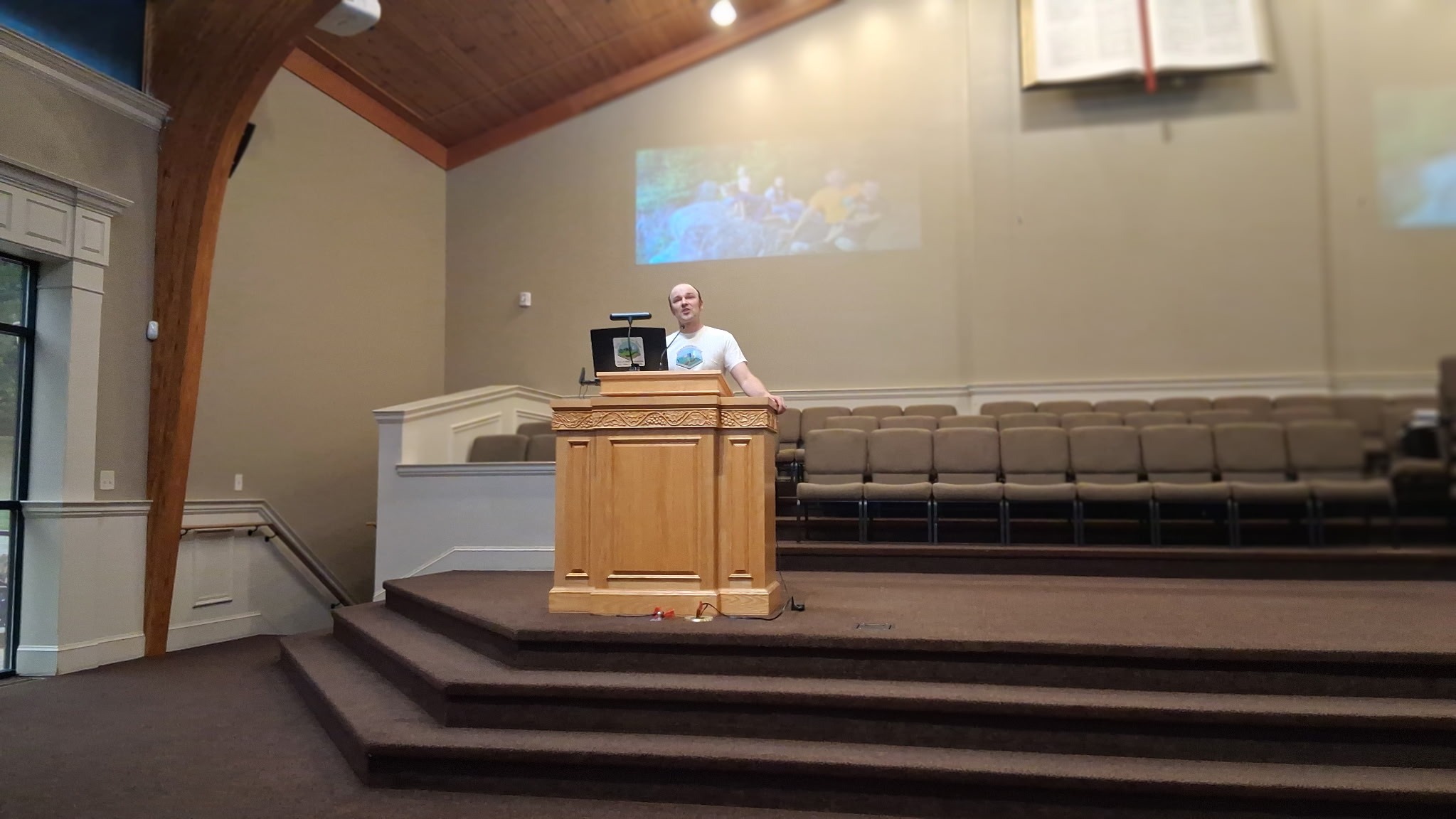
Ivan Kirpichev opened the conference with a presentation on the local geology of the Connecticut River Valley, walking us through the major rock formations in the region and interpreting them from a young-age perspective. New England has a rich geological history, and Ivan did a great job of explaining the rock record in the Springfield area in the context of the creationist model of catastrophic plate tectonics.
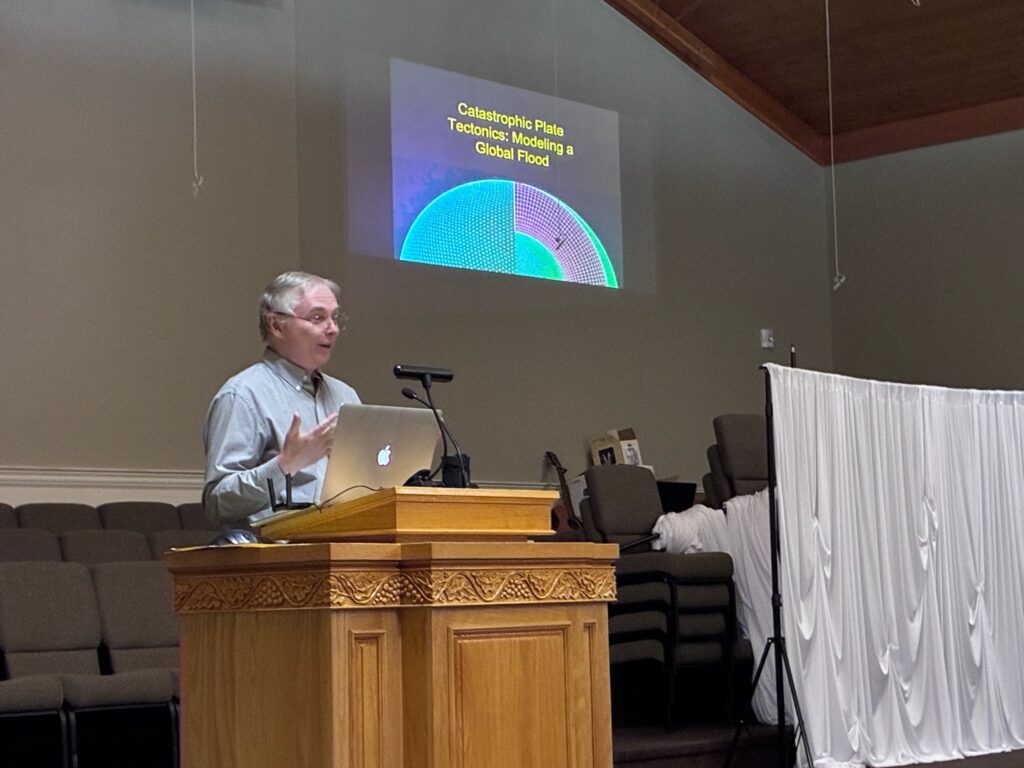
According to Dr. Neal Doran, paleontology is somewhat of a cross between the worlds of geology and biology. Appropriately, therefore, Dr. Doran’s first presentation gave us an overview of catastrophic plate tectonics, the young-age creationist framework for understanding geology in light of Noah’s Flood. He showed us some of the models developed by Dr. John Baumgardner using the TERRA software he created while at Los Alamos laboratory. The story of how Dr. Baumgardner pioneered a breakthrough in geophysical modeling is an amazing one. It was impressive enough to motivate his employers at Los Alamos to fund his work on Noah’s Flood, You can read more about catastrophic plate tectonics here.
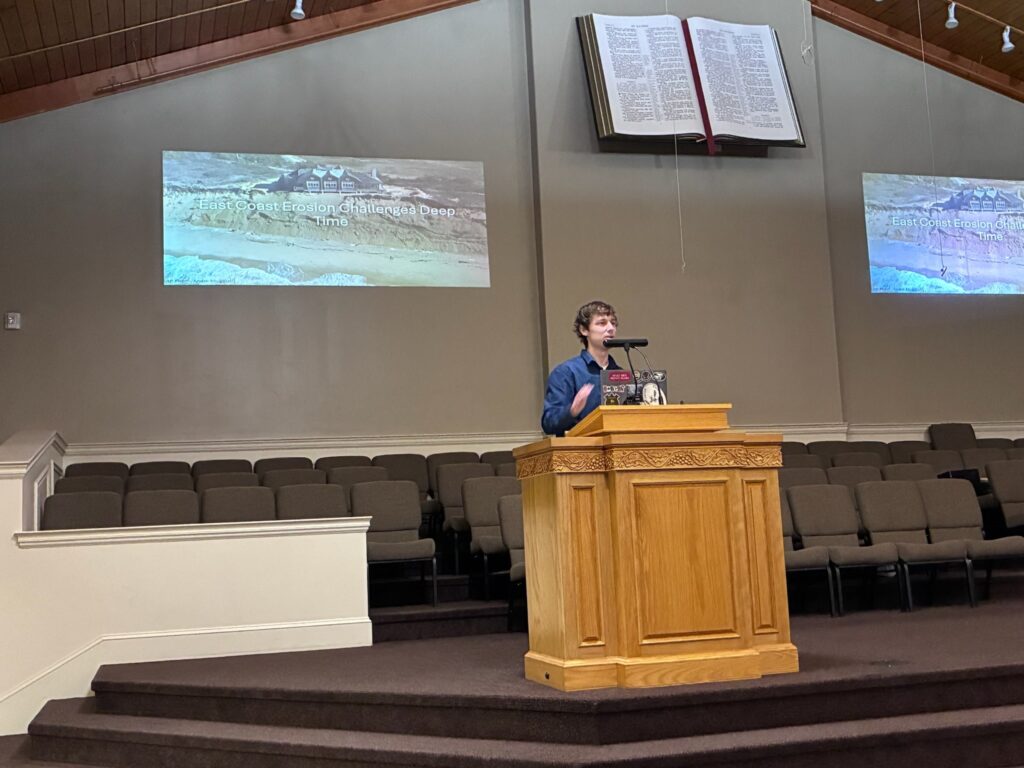
Jake Ramgren opened on Saturday morning with (surprise!) more geology, giving a presentation on the implications of coastal erosion for conventional geology. Starting us out with the Nauset lighthouse of Cape Cod, Jake explained how the erosion rates along the coast of New England (as well as on the West Coast) present a major problem for conventional geology. The North American continent should have eroded away completely many times over in the amount of time since the continent’s formation, in the conventional model. You can read more about this topic in Jake’s recent blog post on the topic.
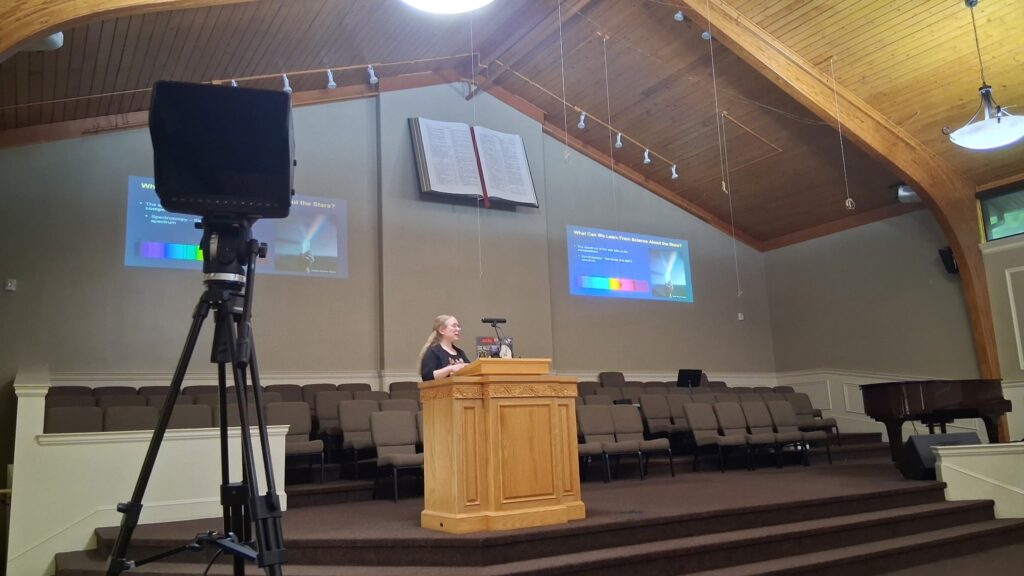
I gave the only non-geological presentation of the weekend, as I spoke about what the Bible and science have to tell us about the stars. Though Genesis 1 doesn’t give us a lot of information about the stars and their creation, we can learn more about their purpose and design from other places in Scripture. I discussed how we know what we know about astronomy, given the very hands-off nature of the discipline, and how math and physics work with observation to build our understanding of the universe. Then I compared what we learn from science about the stars and what the Bible teaches, to see how our understanding of God’s word and His world work together. (Look for a post on this blog about the topic in the future!)
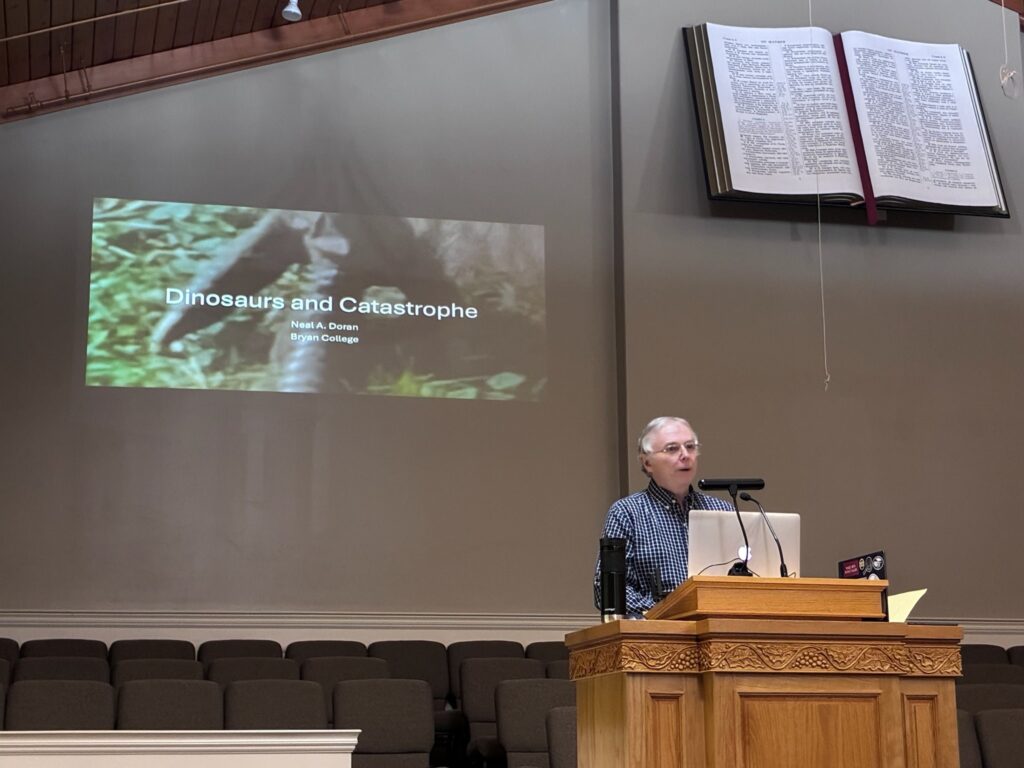
Dr. Doran brought us back to Noah’s Flood with a closing presentation on dinosaurs. From the fossil record, it appears that the dinosaurs lasted until somewhat late in the Flood, when the Chicxulub impactor put the final nail in their coffin. He gave us a step by step walk through the dinosaurs’ last day on Earth, taking us through each step of how the impactor would have affected any creatures still alive (and outside of the Ark) at that stage of Noah’s Flood. You can read more about the Chicxulub impact here.
As a speaker for this event, I was encouraged by the enthusiastic and engaged audience that came out for this event. We had some good Q & A sessions, as well as conversations that lasted well after the conference wrapped up for the day. Due to technical complications, only a few of the sessions from this year’s event were recorded. You can look for them on the Creation Reformation New England YouTube page in the coming weeks.
The second annual New England Creation Reformation Conference was a great event. Keep an eye out for next year’s conference announcement!


 Christian Ryan
 Jake Ramgren
 Noel Grimes
 Sara Anne
 Peter
Peter

 Abigail L.