
 Peter
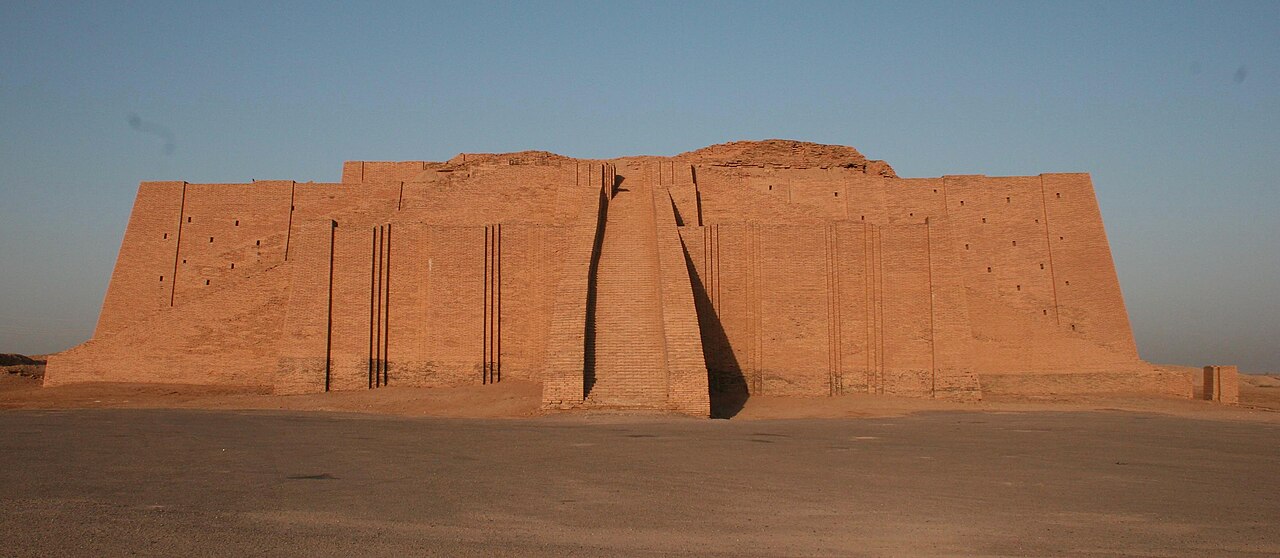
PeterWho built the Tower of Babel? At first, this might seem like an obvious question. Creationists have traditionally assumed that all of Noah’s descendants were involved in the tower’s construction. But some biblical archaeologists have questioned this assumption. They suggest that only a few Middle Eastern people groups were involved. In this article, I hope to demonstrate that the Hebrew text strongly supports a global interpretation of Babel. A regional interpretation rests on the insertion of artificial breaks into the narrative and inconsistent translation of universal phrases.
The views expressed in this article reflect those of the author mentioned, and not necessarily those of New Creation.
What Does אֶרֶץ Mean?
Genesis 11 begins by providing a backdrop to the story of Babel. The characters and their motives should be understood in light of one fact. Before the dispersion, “the whole earth had one language”. The Hebrew word translated “earth” is אֶרֶץ (pronounced eh’-rets). This term can refer to a particular region or the entire planet, depending on the context.1 The word אֶרֶץ is used in a local sense in Genesis 12:1. God called Abram to travel “to the אֶרֶץ that I will show you.” In context, the term refers to a geographically limited area: the land of Canaan. In the Babel account, אֶרֶץ is modified by כָל־, meaning “whole” or “all.” This combination gives us the phrase “the whole earth/land.”
This Hebrew phrase appears in Genesis 41:57 where it describes the extent of Joseph’s famine. We read that “all the earth came to Egypt… because the famine was severe over all the earth.” Here, the term is used in two distinct senses. At the beginning of the verse, “all the earth” refers to the people who travelled to Egypt. At the end of the verse, “all the earth” refers to the geographical area affected by the famine. Context makes it clear that neither of these statements is universal.2 The phrase is used to emphasize the famine’s extent beyond the borders of Egypt. The writer undoubtedly has in mind the famine’s impact on the land of Canaan. The scarcity of food in Canaan drives the narrative forward, eventually causing Joseph to reunite with his family. In this context, the phrase might be better translated as “the whole/entire land.” But in Genesis 11, “the whole earth” takes on a broader meaning.
The Context of Genesis 11
To identify “the whole earth” we must understand Babel’s timing and significance. Genesis 11 sits between two major events, the Flood and the call of Abram. The Flood was a global cataclysm that killed everyone but Noah and his family. Genesis 9:18-19 tells us that “The sons of Noah who went forth from the ark were Shem, Ham, and Japheth… from these the people of the whole earth were dispersed.” Here, “the whole earth” is used in an expansive geographical sense, referring to the entire planet.
Just a few chapters after the Flood account, Genesis mentions the existence of separate ethnic groups like the Canaanites and Egyptians. This causes the reader to question how Noah’s descendants rapidly developed distinct cultures and languages. Genesis 11:1 explains that after the Flood, “the whole earth” had one language. At Babel, God confused this language. In this context, “the whole earth” is used in an expansive, anthropological sense. Even creationists who view Babel as a local event believe that this verse refers to a universally shared language.3
Who is “They”?
But creationists disagree on the interpretation of the next verse, Genesis 11:2. It describes the migration of Noah’s descendants to the land of Shinar. Unfortunately, modern translations tend to obscure the migrant’s identity. Compare the three translations below.
“And as people migrated from the east…” – ESV
“As people moved eastward…” – NIV
“And it came to pass, as they journeyed from the east…” – KJV
Both the ESV and NIV refer to the travelling group as “people.” However, the Hebrew word for “people” does not appear in the text. The KJV translates the verse more accurately, referring to the traveling group as “they.” Modern translators substituted the word “people” for “they” in an attempt to clarify the verse. In context, “they” seems to be an obvious reference to “the whole earth” whose universal language was mentioned in the preceding verse.
Dr. Douglas Petrovich, a young-age archaeologist, argues that “the whole earth” was not present at Babel. He suggests that the Genesis 11 narrative begins in the second verse of the chapter. Genesis 11:1 serves only to provide context for the narrative. It informs us that all of Noah’s descendants spoke a single language. He views the reference to “the whole earth” as disconnected from the identity of the group that migrated to Shinar. Petrovich interprets “they” as an unspecified group of people.4 Unfortunately, this interpretation creates artificial divisions within the text and overlooks the antecedent to the pronoun “they.”
Genesis 11:2 contains three plural verbs that imply a referent. These can be translated: “when they journeyed,” “then they found,” “and they dwelt.” Petrovich claims that these verbs have no referent. The group which they describe is never directly mentioned. However, a natural reading of the text associates these verbs with “the whole earth.” In context, it is clear that these verbs describe the actions taken by “the whole earth.” It seems unjustified to dismiss the obvious association between these verbs and “the whole earth” mentioned in the next verse.
The Global Bookends of Babel
The story of Babel is bookended by the phrase “the whole earth.” This phrase is first used in Genesis 11:1, but it appears again in verse 8, and twice in verse 9. Scholars suggest that it forms an inclusio, an intentional repetition that creates emphasis.56 The use of repeated universal phrases in Genesis 11 indicates that everyone was implicated in the events of Babel. Consistent translation of כָל־ אֶרֶץ (the whole earth) throughout the Babel narrative results in a global interpretation. If “the whole earth” of Genesis 11:1 is a reference to the entire human population, then “the whole earth” of Genesis 11:8-9 must also be a universal reference. Genesis 11:8 states that “the Lord dispersed them from there over the face of all the earth…” This indicates that the inhabitants of Babel were scattered over the globe, not just the Ancient Near East. The migration from Babel was global, not regional.
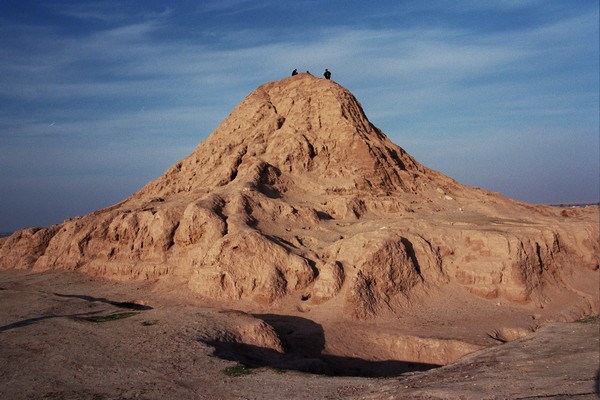
Genesis 11:9 seems to imply that mankind was gathered at Babel when their languages were confused. But Petrovich argues that God simultaneously confused the languages of everyone on earth, even though most people were not at Babel. The text states “there (at Babel) the Lord confused the language of all the earth…” This suggests that God’s act of confusion was effected at the location of Babel. Its universal impact implies that mankind was gathered at Babel.
Fear of Dispersion
The Babelites’ motives shed further light on their identity. The primary motive behind the construction of Babel was the fear of dispersion. The people planned to build a city “lest we be dispersed over the face of the whole earth.” A regional interpretation of the text does not clearly explain this fear. If the earth was already populated at this time, why did the builders of Babel fear or anticipate dispersion? This statement implies that the builders expected or knew that they should be dispersed. Their fear is probably a response to God’s command in Genesis 9:1, “Be fruitful and multiply and fill the earth.”7
Conclusion
The biblical text strongly supports the traditional, global interpretation of Babel. The city and tower of Babel were built by mankind, not a small group of Mesopotamians. A regional interpretation overlooks the story’s context. Genesis 11 is intended to explain how Noah’s descendants dispersed over the earth after the Flood. The global language used by the text indicates that mankind as a whole was responsible for the construction of Babel.
Footnotes
- C. J. H. Wright, “אֶרֶץ (ʾeres),” in New International Dictionary of Old Testament Theology & Exegesis, ed. W. VanGemeren (Grand Rapids: Zondervan Publishing House, 1997), 519.. ↩︎
- Douglas K. Smith Jr., “Whom, Where, or What Could ‘All the Earth’ Mean? A Case Study in the Implications of Context and Intertextuality for Translating and Interpreting כָּל הָאָרֶץ in the Pentateuch,” Interdisciplinary Journal on Biblical Authority, 1, no. 2 (2020): 135–153. ↩︎
- Thomas Purifoy Jr., “Was the Tower of Babel at Eridu?” YouTube video, December 8, 2020, by Is Genesis History?, https://www.youtube.com/watch?v=D1b3jzT5GkE ↩︎
- Purifoy, “Tower of Babel at Eridu” (Footnote 3). ↩︎
- Smith, “All the Earth,” 135–153 (Footnote 2). ↩︎
- Sung-Han Hong, “Unity, Context, Rhetoric and Meaning in Genesis 11:1-9: Unity without God as Rebellion against ‘Dispersion,’ the Core of God’s Creation Order,” Korea Presbyterian Journal of Theology, 51, no. 4 (2019): 7–30, https://doi.org/10.15757/kpjt.2019.51.4.001. ↩︎
- Hong, “Unity, Context, Rhetoric,” 7–30 (Footnote 6). ↩︎
 Abigail L.

 Todd Wood
 Christian Ryan


 Hannah Klein
Thank you for the reference to Douglas Petrovich’s talk, “Identifying Babel and Its Tower”: https://youtu.be/D1b3jzT5GkE I have his book, “Origins of the Hebrews”, and I highly recommend it for aligning the chronology of Egypt with Genesis and Exodus.
Although I am not an expert at this when looking at Genesis 11:1-2 I think Petrovich’s interpretation is correct. All people spoke one language. Some people moved from the east to Shinar where they built a tower. From these people we get the diversity of languages. Noah landed to the north of Shinar. If it had said these people came from the north, rather than the east, that would be more evidence that all the people went to Eridu to build the tower, but even then it may not be the case.
Petrovich does note in his video that he does not agree with the dates he lists. Those are just consensus dates. I think his actual dates would align with Henry B. Smith, Jr’s textual reconstruction of the Genesis 5 and 11 genealogies which can be read at the 2018 International Conference on Creationism, “The case for the Septuagint’s chronology in Genesis 5 and 11”.
He also mentions that Enki was the deity at Eridu who confused the languages and is associated with the waters below. To get a better picture of what physically happened during the flood, I recommend Walt Brown’s hydroplate theory at the Creation Science Center site. Bryan Nickel has a series of YouTube videos explaining Brown’s theory.
Although there are places where I disagree with them, I have found, Douglas Petrovich, Henry B. Smith, Jr and Walt Brown to be very helpful guides in understanding Genesis and Exodus.