

 Christian Ryan
In the film Jurassic Park, John Hammond and the other creators of the titular dinosaur-centered zoo thought they had complete control over their genetically-engineered creations. Another character, Dr. Ian Malcolm, fervently disagreed. He argued that the type of control Hammond claimed to have over his park was not possible, telling Hammond that, “Your scientists were so preoccupied with whether or not they could, they didn’t stop to think if they should.” As the film plays out, we see that Dr. Malcolm was right, even before power to the fences was lost and the dinosaurs escaped. But how was Dr. Malcolm able to predict the park’s failure, even before actually seeing it? The answer has to do with chaos theory.
The following article is a summary of the research pertaining to “The Implications of Chaos Theory for Understanding Creation,” by Andrew Sibley. The views expressed reflect those of the author mentioned, and not necessarily those of New Creation.

As an expert chaotician, Dr. Malcolm was largely concerned with the Jurassic Park project’s assumption of control over what they had made. In the film, genetic engineering of long-extinct animals had just emerged, but Hammond and his fellow Park creators expressed great confidence in their ability to predict the outcomes of their actions enough to display their resurrected lifeforms in a Mesozoic-themed wildlife park. However, as Dr. Malcolm and the other scientists in the film discover, this control is simply an illusion. The unpredictability of unknown variables in Jurassic Park led to a variety of problems. How could Hammond and his scientists know that their Velociraptors would be as intelligent as they were, or the possibility of corporate espionage committed by a disgruntled employee? How could they know about adverse weather conditions occurring at an inopportune time, or the ability of the animals to reproduce? They couldn’t, and this is the whole point. Though often perceived as generic monster movies, the Jurassic franchise beautifully interwoven with these themes of illusioned control due to seemingly insignificant variables in initial conditions (yes, that includes the newer films like Jurassic World Dominion).
Still Not Clear on Chaos?
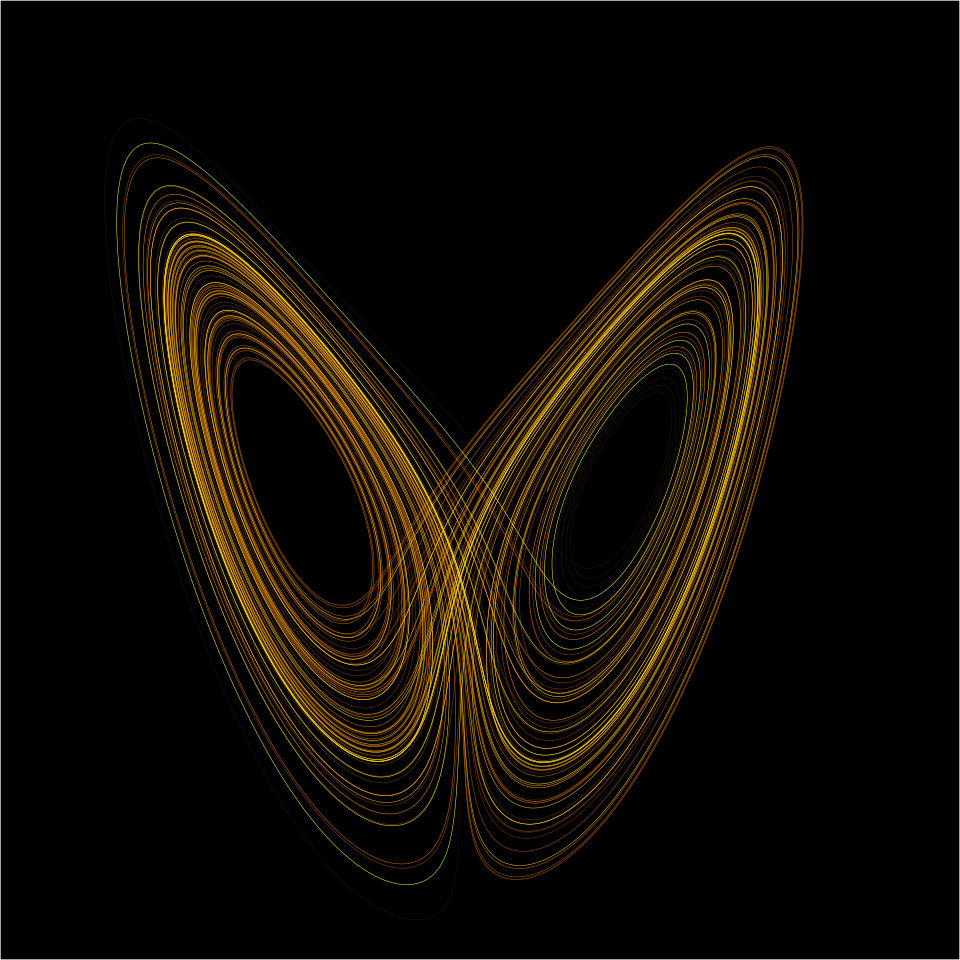
Don’t worry, Dr. Ellie Sattler, the paleobotanist character in Jurassic Park (played by Laura Dern), wasn’t either. In a nutshell, chaos theory is where science and mathematics overlap to study the behavior of complex systems. It seeks to describe the apparent randomness of nature as being managed by underlying patterns and hidden regularities. Complex systems of interest to chaos theory are wide-ranging, and can include anything from the water coming out of a faucet to blood pumping throughout your body, or even the weather.
In order to help Dr. Sattler (and us the viewers!) better understand the concept, Dr. Malcolm introduces us to the classic example of a metaphorical butterfly that creates tiny air displacements with its wings, causing rain instead of sunshine in another part of the world. Hence why this idea is called the butterfly effect.
In order to continue flirting with Dr. Sattler more clearly drive his point home, Dr. Malcolm places two drops of water onto the same spot on Dr. Sattler’s hand. Each water droplet goes a different direction because of different initial starting conditions. The orientation of the hairs on Dr. Sattler’s hand, the amount of blood running through her vessels, and the microscopic imperfections in her skin all affect the direction the water droplet decides to go. The result is unpredictable, and importantly, completely random.
At least, it should be random. What chaos theory observes, however, is that complex systems are not random, and actually have an underlying order. There are certain factors in place that put restraints on the complex behavior a system can produce. Returning to our weather system example, tornadoes rarely ever occur in mountainous regions because they are limited by atmospheric and geographic features.
Where Did Chaos Theory Come From?
Many naturalists of antiquity believed that the universe ran like clockwork, designed like a complex machine governed by the laws of physics, such as Newton’s Laws of Motion. 19th century polymath, Pierre-Simon Laplace, took this logic so far that if one knew the starting conditions of a system, the exact arrangement of the Earth and the Moon, for example, they could perfectly predict the entire future of that system.1 The problem with this logic is quite obvious: small errors in our approximation of initial conditions can have enormous consequences in the future.
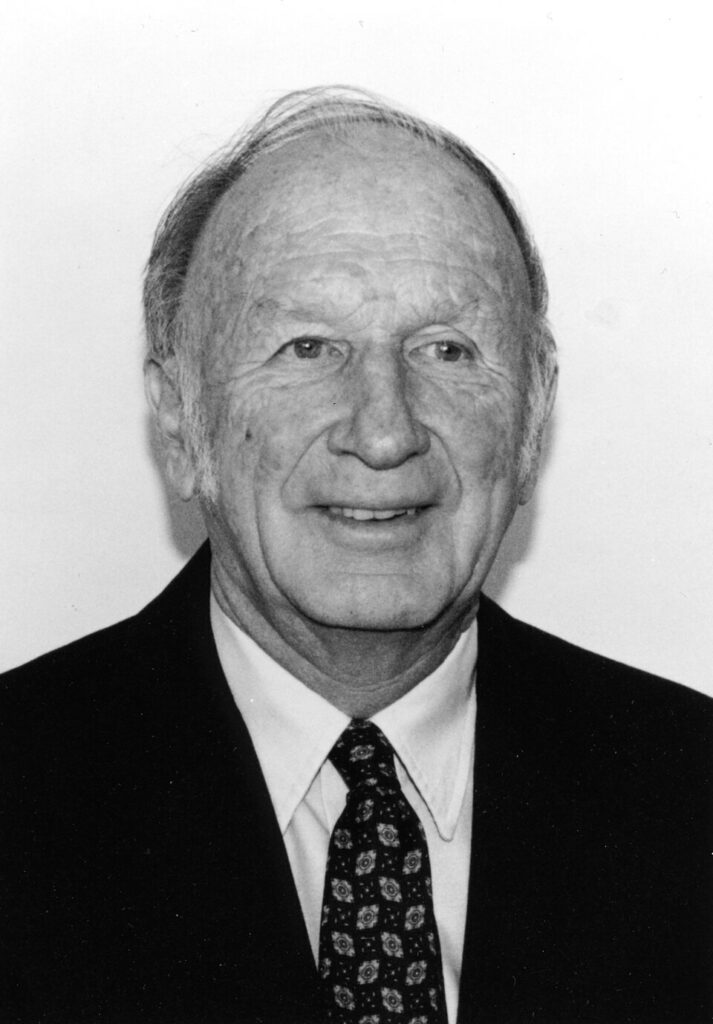
Chaos theory in its modern form was developed by meteorologist and mathematician Edward Lorenz.2,3 He developed an early numerical weather prediction model in the 50’s and 60’s. In 1961, Lorenz had just run simulations of 12 weather variables and decided to re-run one of his simulations. Instead of restarting all the way at the beginning, he started halfway through and input the numbers from halfway through a previous printout. Lorenz was surprised to see that his rerun simulation produced a completely different weather forecast that bore no resemblance to the previous simulations he ran. Looking over the computer’s work, the only difference he could find was that the numbers on the printout were rounded to three decimal places, while the numbers in the computer memory retained six decimal places. As it happens, Lorenz discovered that tiny variations in initial starting conditions can lead to drastically different outcomes!
The Chaotic Implications for Creationism
Chaos theory has some very clear implications within biblical creationism as well. For example, we know from Genesis 1:31 that the world as God originally made it was “very good.” But how could unpredictable forces as suggested by chaos theory be at work in such an environment? How should we describe the movement of unpredictable systems in a “very good” setting? And how can we reconcile chaos theory and how God interacts with the world He created? These are just some of the questions Andrew Sibley attempts to address in his recent publication in the Journal of Creation.4
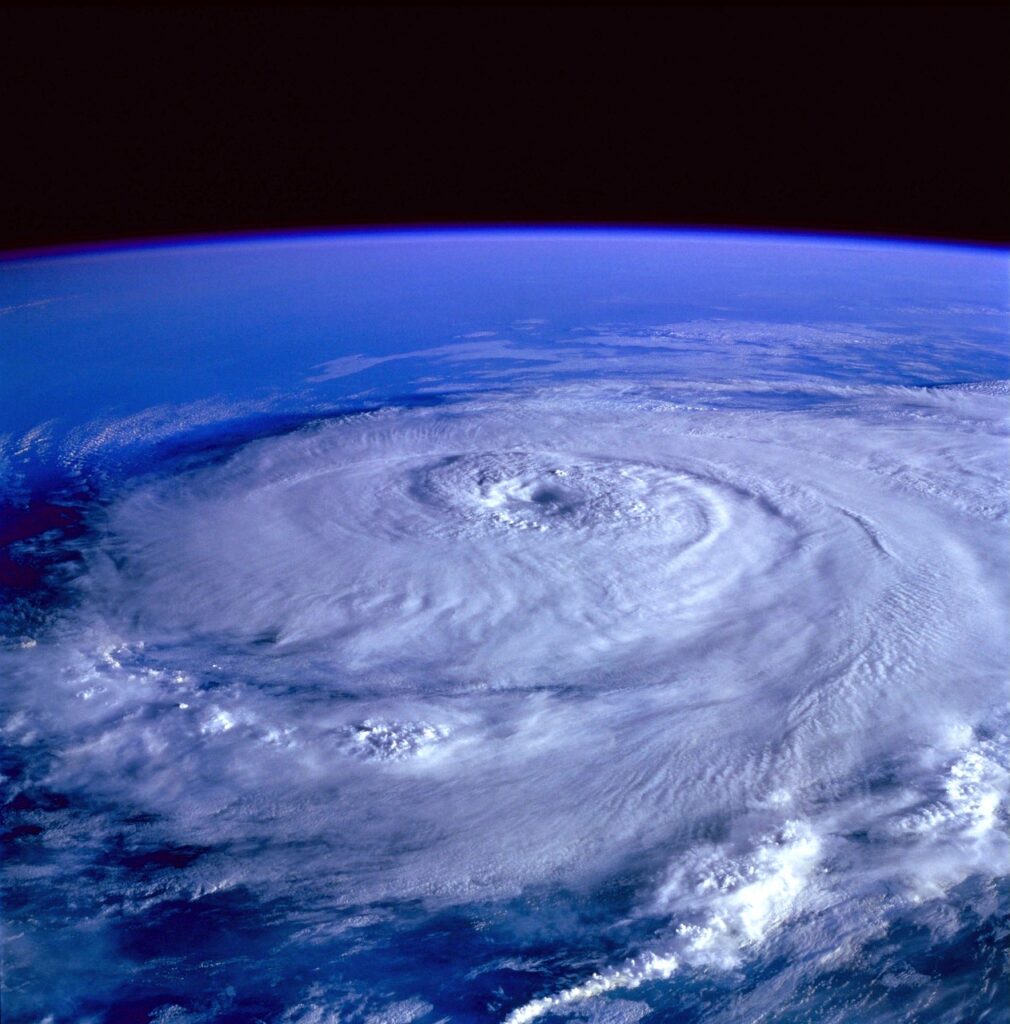
Building on Lorenz’s work, modern meteorologists have more powerful supercomputers that run dozens of numerical weather prediction models at a time when small changes in initial weather conditions occur. It then becomes possible for meteorologists to determine the most likely outcome, which is presented as a weather forecast. Huge improvements in forecasting the weather have been made since Lorenz’s early work. Nevertheless, the fact remains that small changes in conditions can occur at any time, like barely noticeable changes in atmospheric pressure or temperature. Hence, the weather will always be a chaotic, unpredictable system. Now you know why the weatherman never seems to get the forecast right!
“Change is like death. You don’t know what it looks like till you’re standing at the gates.”
– Dr. Ian Malcolm, Jurassic World: Fallen Kingdom (2018)
Chaos Theory and Biblical Creation

People who accept a created universe tend to envision it in one of two ways. Some people view the universe like clockwork. It was intelligently designed by a Creator who then stepped back to let it run by the natural laws He set in place. This view is problematic because it not only promotes a very deistic view of God, but Scripture specifically describes God as involved in the natural processes. He is responsible for sending the rain (Mathew 5:45), controlling the weather (Job 38:33 – 37), and upholding the very elements of the universe (Hebrews 1:3).
Other people envision the Creator as a Being who actively determines every change, even at the level of quantum mechanisms. Sibley suggests that this view is also problematic because it renders God as some kind of “cosmic juggler.” It presents a view of God that implies an incessant need for direct involvement in the functioning of the universe. Sibley has a problem with this view because it might diminish the idea that established natural laws or processes exist at all. This is inconsistent with passages that describe God-designed ordinances in nature (Jeremiah 33:25).
Chaos At Work in God’s World
Sibley indicates an alternative third view. The view he suggests is one where the universe does run according to natural laws God set in place at Creation and sustains by the power of His Word. This means He does not have to actively determine or interfere with every little detail. However, since God knows each little change that happens in the universe and how everything will play out, He can also countermand or add to those laws whenever it suits His will. Sibley argues that applying chaos theory to the functioning of the universe may help us understand how God actively intervenes in Creation, even in minimal ways.
Can Chaos Be “Very Good?”
Many young-earth creationists think that “chaos” cannot have been in effect when Creation was “very good.” This is because they think that original world was in a state of perfection. However, this view probably stems from the notion of physical perfection. This, in turn, is rooted in the Aristotelian view that planetary bodies had unblemished characteristics in terms of the ideal shape and orbital plains. When originally created, Earth could not fit this description. From the Bible and geology, we know it had mountains (Genesis 7:19-20) and deep ocean basins (“great deep” in Genesis 7:11). With this defined topography, the Earth would violate the Greek understanding of the word “perfect.”
More recent analyses of how the phrase “very good” is used in the Bible suggests that this is not how the term is used in Genesis. The Greek Old Testament translates “very good” as καλὰ λίαν (kalá lían), which refers to an intrinsic benevolence in the created order. The word καλός (kalos) also appears in the New Testament. It is used to mean that something is directed towards its end goal (Matthew 12:33 & Romans 7:16), or in terms of being moral or honorable, or acting in line with righteousness (Galatians 4:18). So when God says everything He has made is “very good,” He seems to be saying that everything He made was complete, a sacred place, and ethically in line with His will.
This makes more sense than “perfection” because there is good reason to think complex systems were at work in the universe, even before Creation became corrupt at the Fall.
The Essence…of Chaos…
…in a Pre-Fall World

It is very difficult to imagine a pre-Fall world in which “chaos” and its results do not exist. (And by “chaos” we mean complex, unpredictable systems.) This is especially true since processes that result in unpredictability are interwoven into the very fabric of Creation itself. God created a solar system where the Earth, Sun, Moon, and stars interact with each other. This is a complex system with complex interactions between participating parties. The results of which will be unpredictable due to the sheer amount of variables. God created birds, bats, pterosaurs and flying insects, all of which generate mini-vortexes by displacing the air with their wings. Fish do the same in the water with their fins. He also made river systems and seas with flowing water capable of affecting the surrounding environment. We assume physical laws acted as they currently do, as we have no reason to think they didn’t. Therefore, we must also assume that the world experienced the essence of chaos.
All of this suggests that chaos has been in effect since the beginning of Creation, but God upheld the universe in such a way as to protect it from the worst outcomes of chaotic motion. Sibley suggests that the solution to reconciling these two seeming contradictions is to recognize that diverging outcomes are dependent upon very small differences in starting conditions. The fact that very small, imperceptible changes in starting conditions can have observable outcomes, often very different ones, implies that God could actively adjust the created system in order to bring about a desired benevolent outcome, even in ways that are not scientifically discernible.
…in a Post-Fall World
Creation, once in a “very good” state, was subjected to the Curse that corrupted it. In Romans 8, the Apostle Paul provides helpful commentary on the transition from a “very good” world to one that fell into corruption:
“For the creation waits with eager longing for the revealing of the sons of God. For the creation was subjected to futility, not willingly, but because of him who subjected it, in hope that the creation itself will be set free from its bondage to corruption and obtain the freedom of the glory of the children of God.”

Sibley points out that there are two words of interest here. The first is “futility,” which is translated from the Greek word mataiotēti, ματαιότητι. It refers to the emptying or loss of something spiritual in Creation. The result of this is that it is not fulfilling its original purpose. The second is “corruption,” translated from the Greek word phthoras, φθορᾶς. This word refers to the implication that something has fallen into a lesser state.
While the Curse had devastating effects on the physical Creation as a whole, it also fell spiritually. Fear not, the Bible assures us that He continues to hold the universe together to this day, but in a lesser state (Hebrews 1:3 & Colossians 1:17). We also see this emphasized in God’s promises to Noah and the rest of the world after the Flood. Not only did God promise never to flood the world again, but also:
“While the earth remains, seedtime and harvest, cold and heat, summer and winter, day and night, shall not cease.”
Conclusion
Prior to the publication of Sibley’s paper, chaos theory has had little attention in creationist circles. This is unfortunate, as it has major ramifications of an understanding of the universe from a biblical creation perspective. Sibley observes that the existence of chaos theory in a pre-Fall world only seems at first glance to pose a stark contradiction to the “very good” description of Creation in Genesis. Rather, chaos theory allows us to marvel at God’s power and wisdom. It illuminates our understanding of how He interacts with the natural world on a daily basis. Our modern experience pales in comparison to what the universe must have been like before the Fall. As such, we look forward to a day when chaos’s reigns will be further restrained.
Footnotes
- Dizikes, P., When the butterfly effect took flight, technologyreview.com, 22 Feb 2011. From Laplace, P.-S., A Philosophical Essay on Probabilities, 1814. ↩︎
- Lorenz, E.N. (1963). “Deterministic nonperiodic flow.” Journal of Atmospheric Sciences 20:130–141. ↩︎
- Lorenz, E. (1972). Predictability: does the flap of a butterfly’s wing in brazil set off a tornado in texas? (pp. 0260-0263). na. ↩︎
- Sibley, A. (2022). “The implications of Chaos Theory for understanding creation.” Journal of Creation, 36, no. 2: 124-128. ↩︎


 Joshua Cedar
 Abigail L.
 Hannah Klein
 Ken Coulson
 New Creation Staff
