

 Abigail L.
For centuries, the Israelites had lived as foreigners and slaves in Egypt. But, when the time was right, God freed the Israelites through a series of plagues (Exodus 7–13) and led them out of Egypt, through the Red Sea (Exodus 14), and into the wilderness. He supernaturally fed them and allowed them to defeat their enemies along the way (Exodus 16–17).
The Israelites’ destination was the land of Canaan, which God had promised to their forefathers. When God instructed the Israelites to go to Canaan, he made a unique promise to them. He promised to send a hornet to drive out the Canaanites who were living in the land. But, what (or who) was the hornet?
The following is a summary of “‘I Sent the Hornet Before You’: A Critical Examination of הצרעה in Joshua 24:12” by Jonathan J. Routley, and of the surrounding debate and research pertaining to it. The views expressed are not necessarily those of New Creation.
The Hornet in the Old Testament
The Old Testament contains three references to the mysterious hornet. In Exodus 23:28, God promised the Israelites, “I will send hornets before you, which shall drive out the Hivites, the Canaanites, and the Hittites from before you.” Moses reminded the Israelites of this promise in Deuteronomy 7:20: “Moreover the Lord Your God will send hornets among them, until those who are left and hide themselves from you are destroyed.” And, in Joshua 24:12, God recounted, “I sent the hornet before you, which drove them out before you, the two kings of the Amorites; it was not by your sword or your bow.”
The literal English translation for the Hebrew word הצרעה (hatzirah) is hornet. In all three instances where this term appears in the Old Testament, it is in the singular form. However, some English translations use the plural hornets.
Interpretations of the Hornet
Routley lists four ways in which scholars have interpreted the biblical references to the hornet. These include literal, representative, psychological, and other.
Literal

Some scholars believe the hornet refers to a literal flying insect, or perhaps a collective swarm of hornets.1, 2 In this view, the hornet functioned in a similar fashion to the plagues of Egypt, several of which included swarms of insects.
Representative
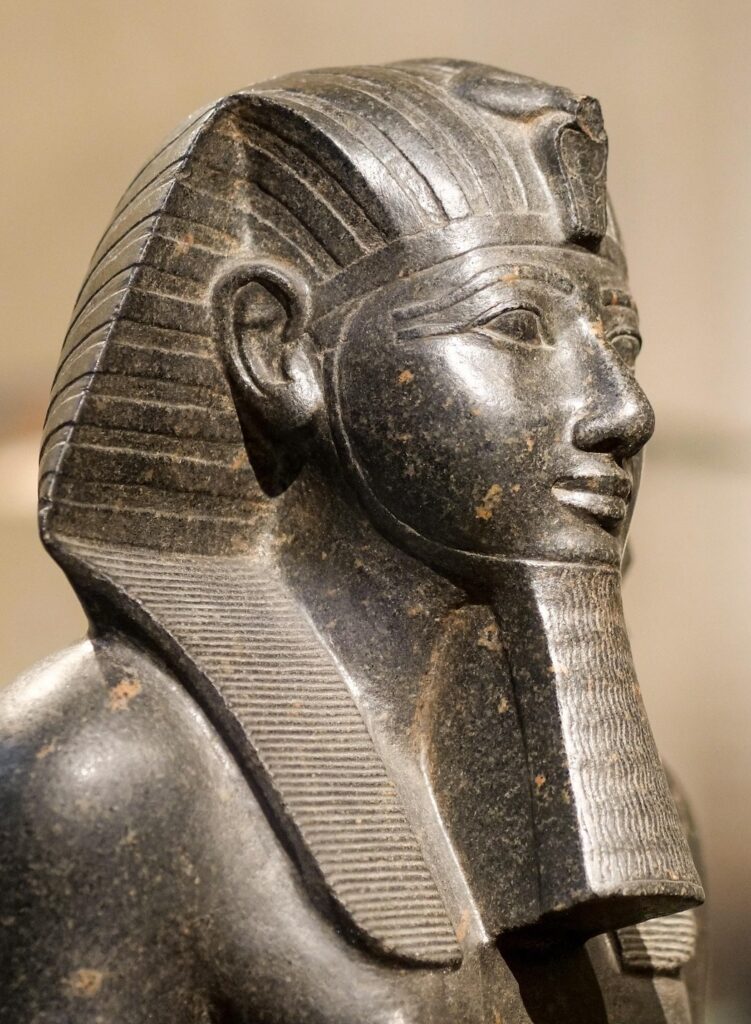
Another view is that the hornet is an ideogram representing Egypt, the Egyptian army, or Pharaoh.3, 4 Proponents of this view note that the bee/hornet represents Lower Egypt in Egyptian iconography. In this view, an Egyptian military campaign swept through Canaan and weakened the Canaanites prior to the Israelites’ arrival in the region.
Psychological
A third view, which is the predominant view among current scholars, is that the hornet represents fear or terror.5, 6 This view suggests parallelism between Exodus 23:27 and 28. In verse 27, God announces that He will send his terror before Israel; in verse 28, He announces that He will send the hornet before them. In this view, the Canaanites were terrified of the Israelites and fled like they would flee from hornets.7 Routley’s proposed identification of the hornet, which will be discussed further below, fits within the psychological category of interpretations.
Other
There are a variety of other less popular interpretations for the hornet. These include dejection or discouragement;8 a skin disease that caused welts similar to hornet stings,9 and the messenger of the Lord.10
When Did God Send the Hornet?
Exodus 23:28 and Deuteronomy 7:20 both use a future verb tense in referring to the sending of the hornet. Joshua 24:12, on the other hand, refers to the sending of the hornet in the past tense. This provides a window of time for the sending of the hornet that lies between when Israel was camped at Moab preparing to enter Canaan and when Joshua gave his final address to the Israelites at Shechem.
Why Did God Send the Hornet?
God’s promise to send the hornet served as encouragement that God would enable the Israelites to take the land. In Deuteronomy, the promise of the hornet falls within a passage highlighting God’s power to drive out the Canaanites (Deuteronomy 7:16–24). In verse 17–19, God instructs the Israelites to remember what He did to the Egyptians and to not be afraid.
Routley notes that the psychological view of the hornet fits nicely within this context. If the hornet represents fear or terror, then this passage is encouraging the Israelites not to fear the Canaanites because God would cause the Canaanites to be terrified of them!
The Problem of the Amorite Kings
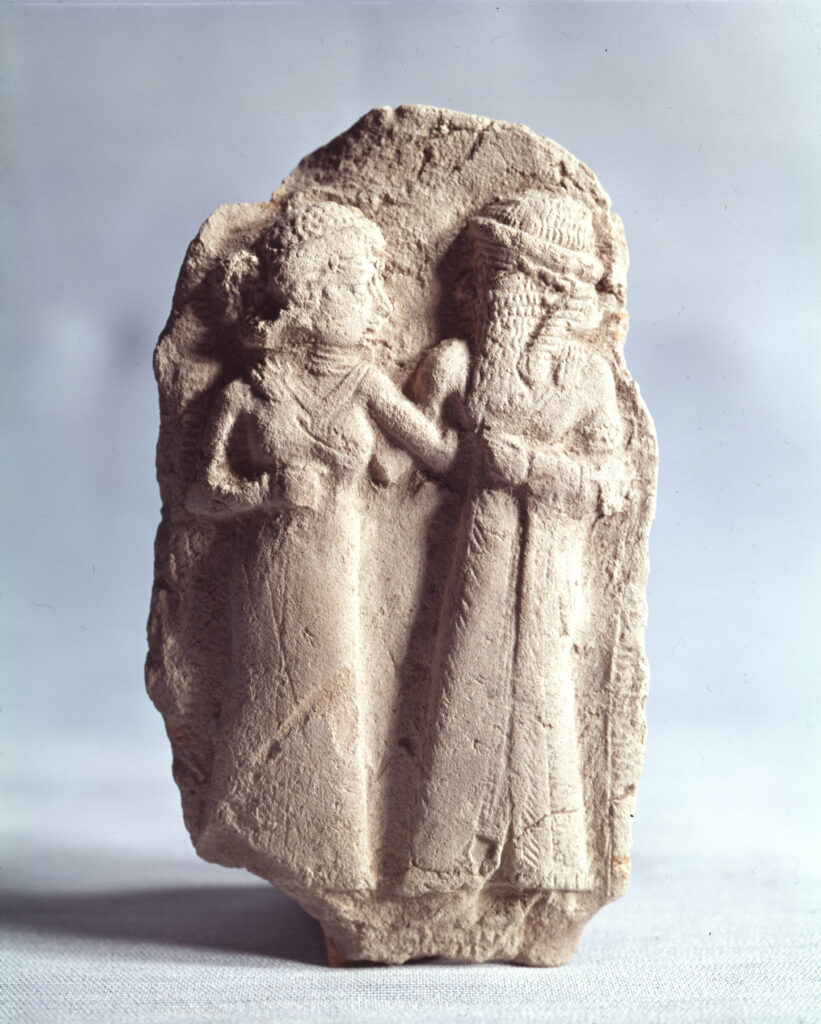
Joshua 24:12 mentions two Amorite kings in conjunction with the hornet. It says, “I sent the hornet before you, which drove them out before you, the two kings of the Amorites.” At first glance, this seems to indicate that the hornet drove out the two kings of the Amorites. Yet, this reference is problematic because the Israelites conquered the Amorite kings (Sihon and Og) before the window of time designated for the sending of the hornet. In fact, Joshua had already alluded to the defeat of those Amorites earlier in his speech (Joshua 24:8).
One possible solution to this problem is that the Amorite kings mentioned in Joshua 24:12 were not Sihon and Og but Adoni-zedek and Jabin of Joshua 10:1 and 11:1.11 While these kings may fit chronologically, there are difficulties in identifying them as the Amorite kings since the other biblical references to the two Amorite kings clearly refer to Sihon and Og.
Instead, Routley suggests that the reference to the two Amorite kings is an appositional phrase. An appositional phrase is a noun phrase that modifies a previous noun or noun phrase. For example, if I tell you that my friend Mary wants to meet you, Mary is the apposition that modifies friend. It provides additional information to help you understand who my friend is. But what noun or noun phrase does the appositional phrase the two kings of the Amorites modify? Routley discusses the possible options in Joshua 24:11–12. He shows that the only option that works grammatically and chronologically is the hornet.
Routley admits that identifying the hornet as the two Amorite kings is problematic. How could Sihon and Og drive out the Canaanites? They were already dead by the beginning of the time window for the hornet.
Sihon and Og, the Two Kings of the Amorites
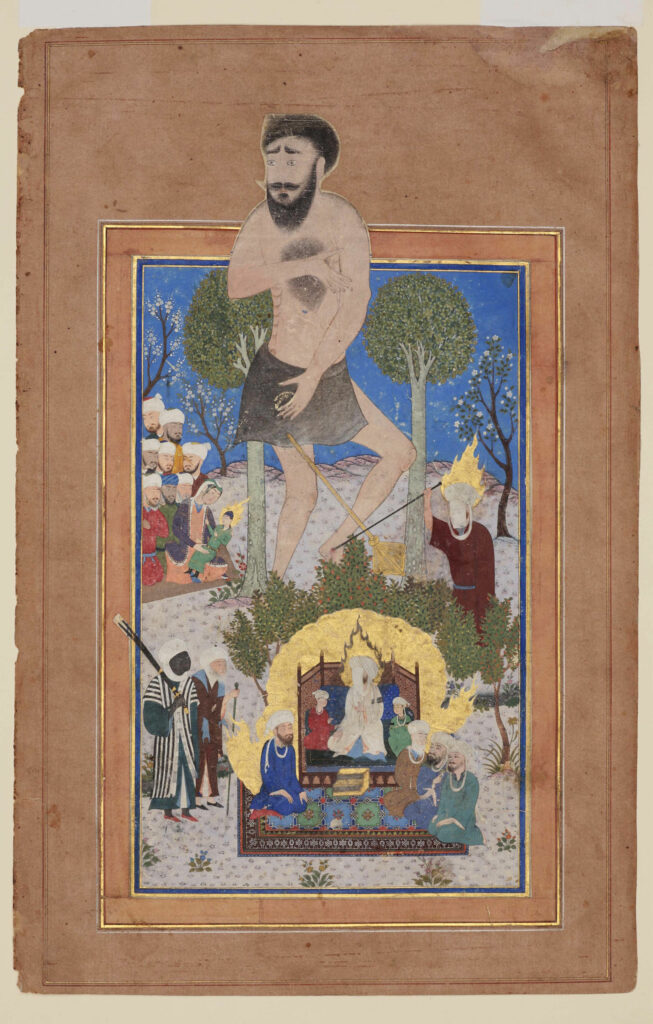
To solve the problem of the Amorite kings, Routley examines other passages that mention the two Amorite kings. Both of the Amorite kings were formidable foes. Sihon was a legendary conqueror (Numbers 21:26–30). Og was one of the Rephaim, a lineage of unusually large people.
In Deuteronomy 2:24–25 Moses recounts God’s instructions to the Israelites. God told the Israelites to engage Sihon in battle and he encouraged them:
“This day I will begin to put the dread and fear of you on the peoples who are under the whole heaven, who shall hear the report of you who shall tremble and be in anguish because of you.”
Thus, the Israelites’ victory over the Amorite kings seems to mark the point at which the Canaanites began to fear the Israelites. If the Israelites could conquer the two kings of the Amorites, they must be unstoppable.
Dread and Fear
The conquest narrative in Joshua highlights the Canaanite’s fear of the Israelites, particularly regarding the two kings of the Amorites. According to Joshua 2:9–10, Rahab mentioned the two Amorite kings to the Israelite spies:
“I know that the Lord has given you the land, and that the fear of you has fallen upon us, and that all the inhabitants of the land melt away before you. For we have heard how the Lord dried up the water of the Red Sea before you when you came out of Egypt, and what you did to the two kings of the Amorites who were beyond the Jordan, to Sihon and Og, whom you devoted to destruction.”
Similarly, the Gibeonites, who tricked Joshua into agreeing to a peace treaty, reported that they had heard what God did to the two kings of the Amorites (Joshua 9:9–10). They later explained that they had tricked Joshua because “we were very much afraid for our lives” (Joshua 9:24b).
It is clear that the Israelites’ victory over Sihon and Og struck terror into the hearts of the Canaanites when they heard of it. This gave the Israelites a psychological advantage over the Canaanites during the Israelites’ conquest of the Promised Land.
Conclusion
Routley concludes that the hornet represents “the psychological terror that resulted in the peoples of Canaan as a direct result of Israel’s destruction of Sihon and Og, the two kings of the Amorites who lived east of the Jordan.”
Routley’s identification of the hornet solves not only the question of the hornet’s identity, but also the problem of the phrase “the two kings of the Amorites” in Joshua 24:12. His identification aligns with the psychological interpretation of the references to the hornet. However, it provides greater precision in the identification than has previously been achieved. It also fits well within the overarching conquest narrative. Routley’s study of the hornet is an excellent example of how an in-depth study of biblical passages demonstrates internal consistency in the Bible.
References
- Edward Neufeld, “Insects as Warfare Agents in the Ancient Near East (Ex. 23:38; Deut. 7:20; Josh 24:12; Isa 7:18–20),” Orientalia 49 (1980), 30–57. ↩︎
- H. H. Hardy II and Matthew McAffee, Going Deeper with Biblical Hebrew: An Intermediate Study of the Grammar and Syntax of the Old Testament (Brentwood, TN: B&H Academic, 2024), 287–290. ↩︎
- John Garstang, Joshua-Judges (Grand Rapids: Kregal, 1978), 258–260. ↩︎
- Yigael Yadin, “The Transition from a Semi-Nomadic to a Sedentary Society in the Twelfth Century B.C.E.,” in Symposia Celebrating the Seventy-fifth Anniversary of the Founding of the American Schools of Oriental Research, ed. F. M. Cross(Cambridge: American Schools of Oriental Research, 1979), 67–68. ↩︎
- Trent C. Butler, Joshua 13–24 (Grand Rapids, MI: Zondervan, 2014), 295, 320. ↩︎
- John J. Davis, Conquest and Crisis: Studies in Joshua, Judges, and Ruth (Winona Lake, IN: BMH Books, 1969), 88–89. ↩︎
- John I. Durham, Exodus (Wako, TX: Word Books, 1987), 336. ↩︎
- Ludwig Koehler and Walter Baumgartner “צרעה” HALOT 3 (2000), 1056–1057. ↩︎
- John Goldingay, Joshua (Grand Rapids: Baker Academic, 2023), 421. ↩︎
- Michael Grisanti, “צרעה” In New International Dictionary of Old Testament Theology and Exegesis, ed. Willem A. Van Gemeren (Grand Rapids: Zondervan, 1997). ↩︎
- David G. Firth, Joshua (Bellingham, WA: Lexham Academic, 2021), 392. ↩︎


 Christian Ryan
 Brittany Martin

 Peter
Peter