
 Hannah Klein
And what it tells us about the Designer
The psalmist wrote that “the heavens declare the glory of God” (Psalm 19:1). Every piece of artwork reflects the character and personality of the artist behind it. The handiwork of God in the universe is no exception. Romans 1:20 makes this case explicitly: “since the creation of the world His invisible attributes, both His eternal power and divine nature, have been clearly seen, being understood through what has been made.” What are some ways in which God’s character is revealed through His creative work in the cosmos?
That’s a big question, with many multifaceted answers. For the present moment, let’s consider three different design elements of the universe, and what they can tell us about the Designer. These design elements showcase intentionality, forethought, and purpose, and thus reveal to us something about God’s character.
The views expressed in this article reflect those of the author, and not necessarily those of New Creation.
Habitability

It’s no secret that the universe appears to have been built to support complex, intelligent life. Naturalistic evolutionists sometimes explain this with the “anthropic principle”; the universe appears to be designed to support life, because if it wasn’t we wouldn’t be here to observe it.
Beauty
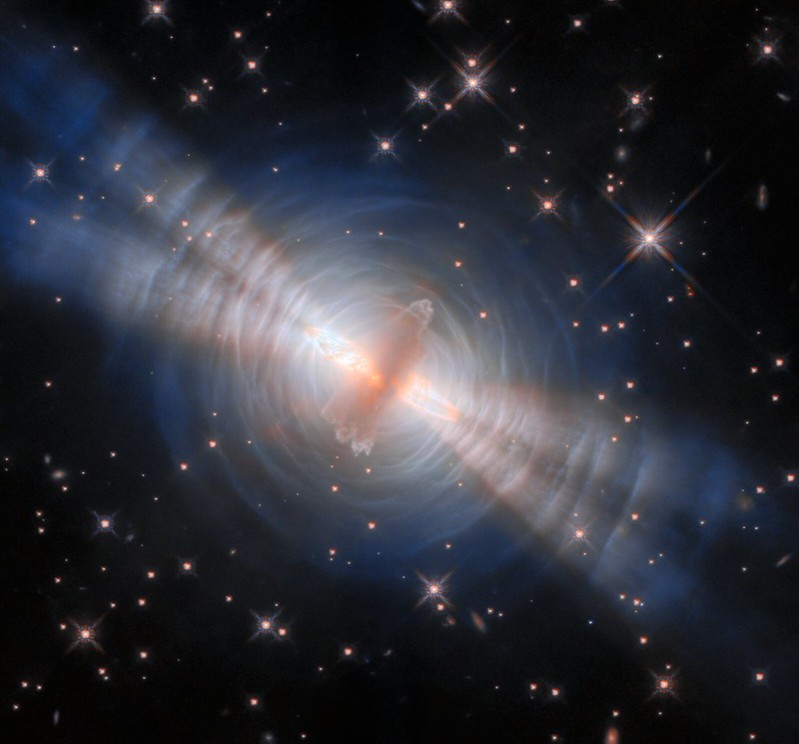
The universe is dazzlingly beautiful. It’s not something that gets discussed in textbooks as a feature of astronomy, but the beauty of the cosmos is a very real thing. In addition to its beauty, we can also consider our ability to see and appreciate the beauty of the cosmos.
Comprehensibility
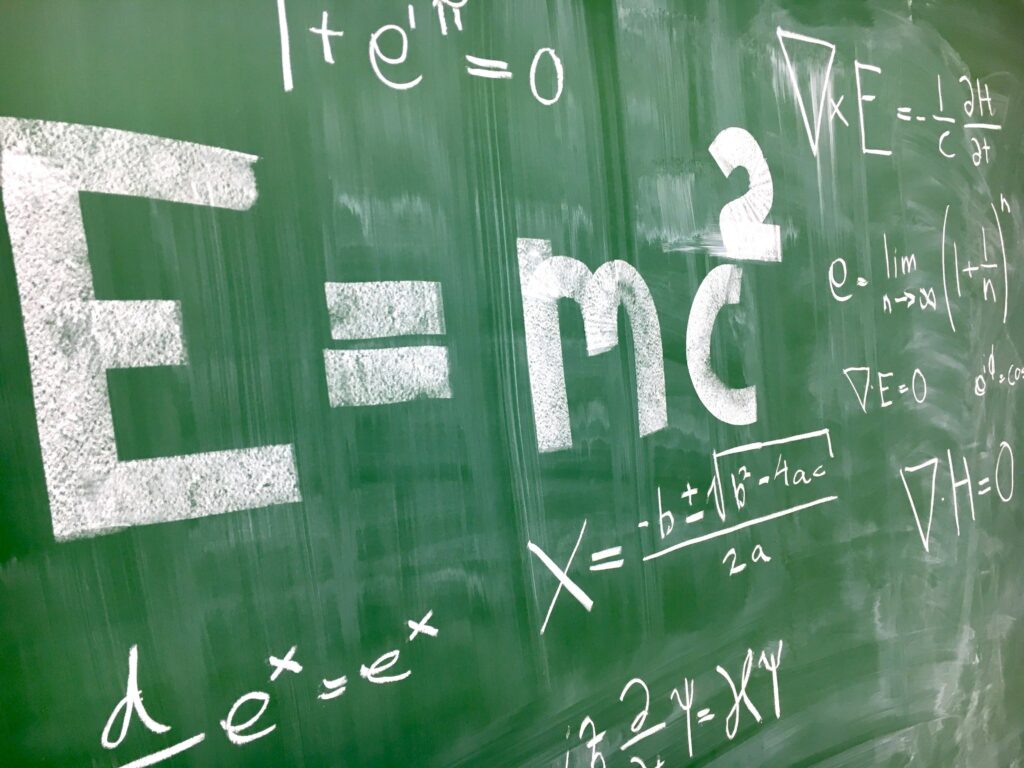
“The most incomprehensible thing about the universe is its comprehensibility.” Attributed to Einstein, this is a profound statement on the ability of humankind to understand the universe. Given the vastness of the cosmos, and the many phenomena and exotic objects that we can only perceive from the tiny pinpoints of light we see in the night sky, it’s a wonder how much we have been able to learn about the universe.
These three design elements in the universe don’t merely point to an intelligent Designer, they also show us what the Designer is like. Let’s take a little tour around our Solar System and consider how habitability, beauty, and comprehensibility have been built into our universe.
The Precision of the Laws of Physics
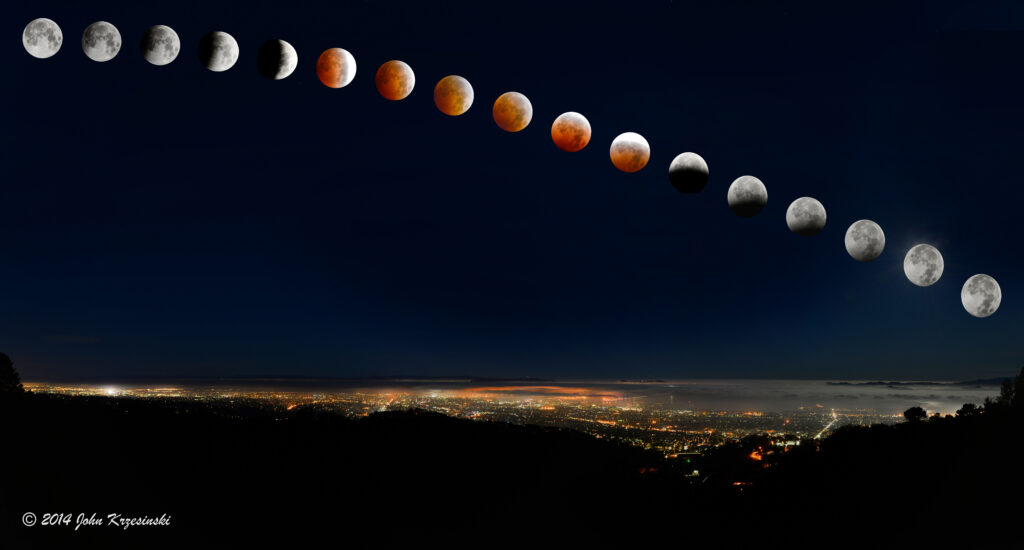
This photo sequence is from a total lunar eclipse in October of 2014. A lunar eclipse occurs when the Moon slips into the shadow cast by the Earth. Like all good eclipses, a lunar eclipse starts with the partial phase. During this phase, an ever-increasing portion of the moon’s surface is enveloped in the Earth’s shadow. The contrast between the shadowed and unshadowed regions on the moon is so stark, that it looks like the moon is being eaten away, a giant cosmic cookie being devoured by tiny ants. Once the moon is entirely within the earth’s shadow, however, the contrast goes away, allowing you to see the actual shade of Earth’s shadow on the moon’s surface. The reddish color you see is the sunlight reaching through the upper layers of Earth’s atmosphere and striking the moon’s surface. It’s red for the same reason that sunsets are red; the blue wavelengths of sunlight are scattered as the light travels through the atmosphere at a steep angle. After an hour or two, the moon begins to slip out of this shadow, going into a partial phase again, before returning to its unsullied brightness a few hours after the onset of the eclipse.
That night in 2014, I was in the parking lot of a hotel in Idaho, with a chart outlining the exact time stamps for each stage of the eclipse. It was kind of surreal to watch how the eclipse unfolded, right to the minute, as these astronomers had predicted. This precise prediction of astronomical events is made possible by the precision of the laws of physics.
The laws of physics are remarkably simple, in a certain way. When you think of space, there’s a lot of physical laws and forces that you can think about: the forces that keep the earth orbiting around the Sun, the forces that hold atoms together, the laws that decide that objects fall down. But it turns out that all of physics and astronomy can be boiled down to four fundamental forces that provide the foundation for all the phenomena we observe in the universe: gravity, electromagnetism, the strong nuclear force, and the weak nuclear force.
Gravity is perhaps the one we’re most familiar with: what goes up must come down. Electromagnetism deals, unsurprisingly, with electricity and magnetism, which are two sides of the same coin. The strong and weak nuclear forces have to do with the composition of matter at the atomic level. These four forces are finely tuned to create a universe capable of sustaining life.
Take gravity, for instance. If the force of gravity was stronger, it would alter the sun’s structure and cause it to burn through its fuel much more rapidly. This would shorten the sun’s lifetime but also make it less stable. Solar stability is crucial for life on earth to exist. In fact, the gravitational and electromagnetic forces have to be specifically balanced for yellow stars like our sun to exist at all. If this balance were shifted one way or the other, stars would be either red or blue. And it turns out that blue and red stars are both inhospitable for habitable planets. (We’ll go into this difference between stars a little later.) We can also consider the weak nuclear force. The precise value of this force is critical to the structure of the periodic table of the elements. If its value was different, certain elements that are important for life would not be able to exist.
But notice how we can encompass so much of the study of the universe with these four laws. And the laws themselves have an elegant simplicity. Richard Feynman, an American theoretical physicist who worked in quantum mechanics wrote that “the most impressive fact is that gravity is simple… It is simple, and therefore it is beautiful. I do not mean that it is simple in its actions… but the basic pattern or the system beneath the whole thing is simple.” He went on to say that this beauty and simplicity applies to the other fundamental forces as well.
Not only does this elegant, simple, predictability of natural law make life possible, it is also understandable because it is predictable. Eugene Wigner, another theoretical physicist, wrote a paper called “The Unreasonable Effectiveness of Mathematics in the Natural Sciences” which considered this comprehensibility. If the universe came into existence through chance, we would have no reason to expect to see order, regularity, and predictability in it. But instead we see, as he wrote, “a miracle that in spite of the baffling complexity of the world, certain regularities… could be discovered.” So we see, in the fundamental laws that undergird our universe, intentional design to make the universe comprehensible.
The Moon: Our Perfect Partner
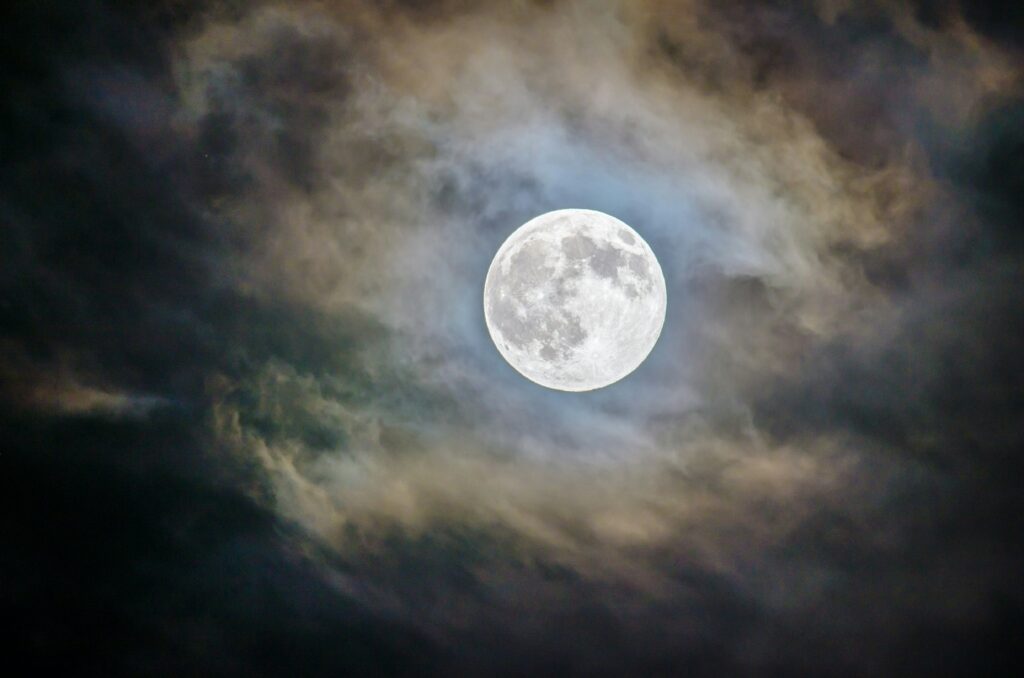
The moon is a unique planetary satellite in many ways, which speaks to the intentional care of the Designer. I want to focus on a particular set of characteristics of our moon which work together to sustain Earth’s habitability. First, the moon has an unusually high mass compared to its home planet. The Moon is about ¼ the mass of the Earth. Most planetary satellites are much smaller compared to their home planets.
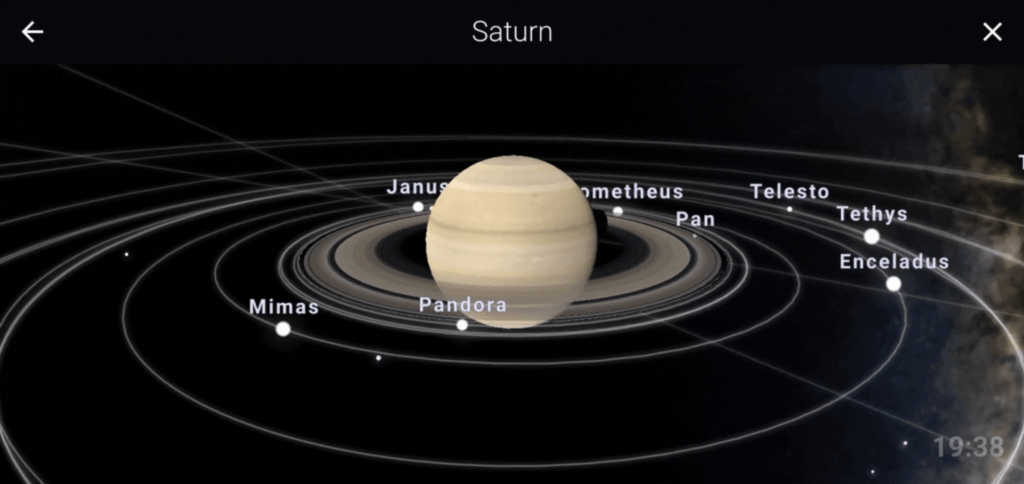
In addition, the Moon also has a unique orbital plane compared to other satellites. Most planetary satellites orbit their home planet around its equatorial plane (that is, directly above the planet’s equator). Saturn makes a nice example of this, since it conveniently illustrates its own equatorial plane by mapping it out with its beautiful rings. Most of Saturn’s major moons lie in this equatorial plane, defined by its rings.
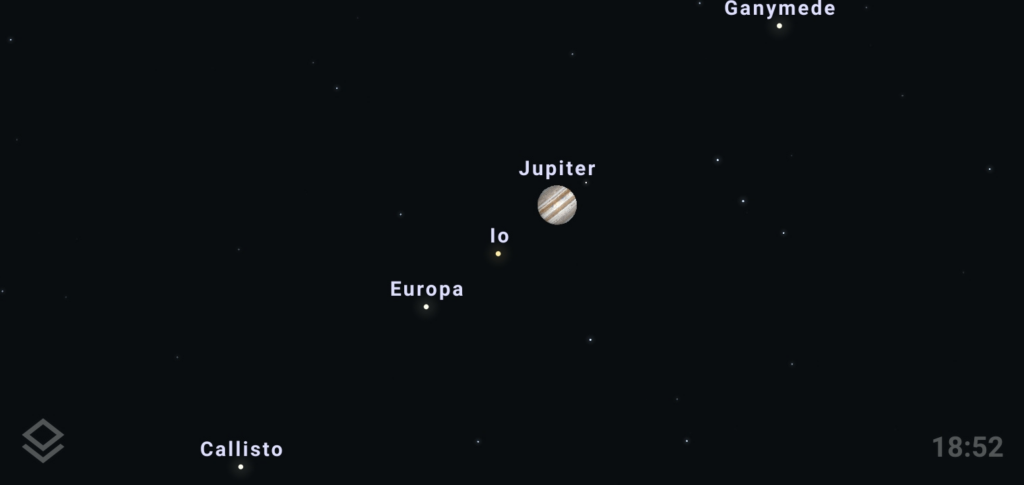
You see the same thing on Jupiter, where its major moons (the Galilean moons) are found along the line traced by Jupiter’s bands.
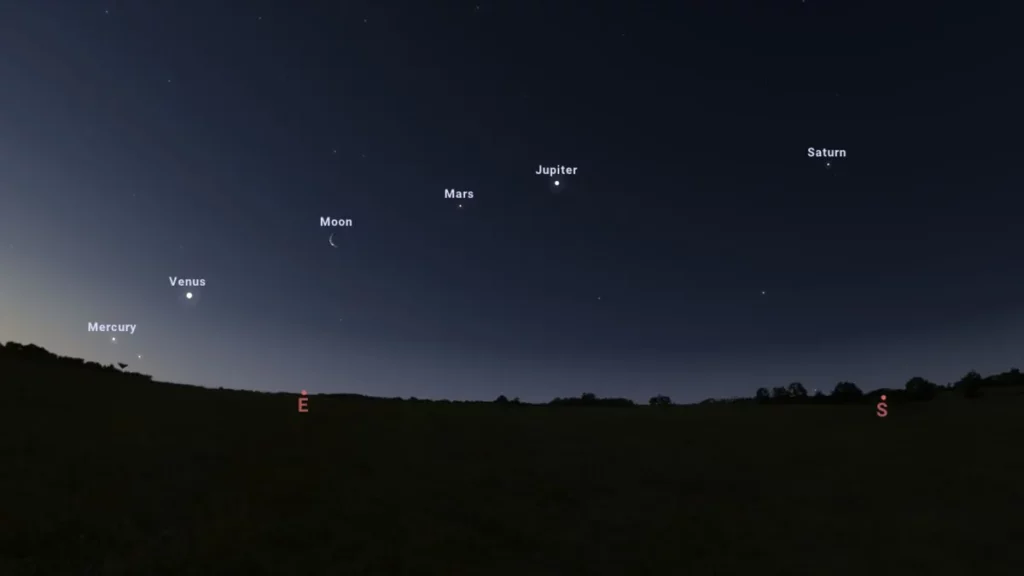
Our Moon is different. The Moon orbits the Earth in the ecliptic plane. The ecliptic plane is the same plane in which the Earth (and the other planets) orbit the Sun. Every so often you hear about planetary alignments, where several of the planets appear in the sky together. Whenever this happens, the planets form a line across the sky; this line is the ecliptic plane. It’s not uncommon for the Moon to join along in these planetary processions. This is possible because the Moon also orbits in this ecliptic plane. No other satellite in the Solar System has this unique orbital plane.
You can always look at unique phenomena such as these, and say they’re random trivia. However, a random collection of unique facts take on significance when the specificity is combined with meaning that makes it important. And that’s what we have with these unique characteristics of the Moon. The Moon’s unusual size and its unusual orbital plane work together to stabilize the Earth’s rotational axis. The Earth’s rotational axis shifts over time due to a phenomenon called axial precession. It’s the same effect that makes the center of a spinning top wobble as it spins. Over the course of 26,000 years, the Earth’s North Pole spins around a circle of about 1º. This means the North Star, Polaris, hasn’t always been the North Star; there have been times in Earth’s past when other stars were directly over the North Pole. This amount of precession is not enough to make any drastic differences on Earth’s climate, but that’s only thanks to our perfect partner, the Moon. Without the stabilizing effect of the Moon—which are effected by both its unique mass and its unique orbital plane—Earth’s rotational axis would shift around 85º. This would make the planet uninhabitable. In the unique characteristics of our Moon, we see intentional care towards our planet’s habitability.
The Sun: A Special Star

Our Sun is one star among many, but it also has a unique set of characteristics that make it particularly hospitable toward life. When astronomers are thinking about what makes a planet able to support life, they often talk about the habitable zone: the region around a given star where liquid water can exist. This is because liquid water is considered a fundamental necessity if you want to host life. All stars have a habitable zone, in that sense; but that doesn’t mean any star can support life. A star’s mass is the other important part of this equation. Stars more massive than the Sun tend to be less stable; thus, the habitable zone can fluctuate as the star itself undergoes dramatic changes in brightness and temperature. On the other hand, stars that are not massive enough can induce a phenomenon called asynchronous rotation on the planet. This is when the gravitational pull of the star forces the planet to only show one face to the star. This is how the Moon orbits the Earth, which is why we only ever see one side of the Moon. It’s not hard to imagine why such an arrangement would make a planet very inhospitable for life; one side of the planet would be baked with sunlight that the other side would never see.
In addition to its mass, our Sun is also a very stable star. Stars come in all kinds; from the bright and chipper blue stars to the tired and weary red giants. Red and blue stars are more prone to variation in brightness and temperature, while yellow stars, which fall in the middle of this spectrum, tend to be more stable. Specifically, our Sun is a yellow dwarf star; this category makes up about 7% of stars in our galaxy, and is a very stable kind of star.
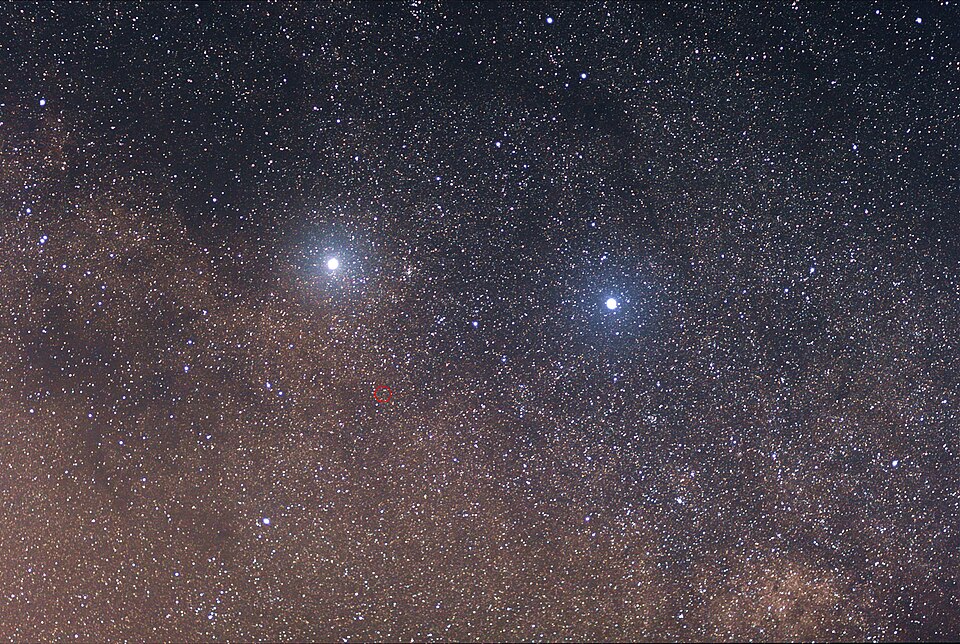
Lastly, our Sun is a single star. Most stars come in systems; the most common are binary stars (think the double sunsets of Tatooine), while star systems with three or more stars also exist. You may know that Alpha Centauri is the closest star to our Sun; what you may not know is that Alpha Centauri comes in a package with Beta Centauri and Proxima Centauri. Stars in these systems orbit each other, interacting with each other gravitationally in what can sometimes be violent exchanges of matter and energy. While it may have worked out for Luke Skywalker, planets orbiting stars within a star system are less likely to maintain stable habitability.
Total Solar Eclipses: Tying It All Together
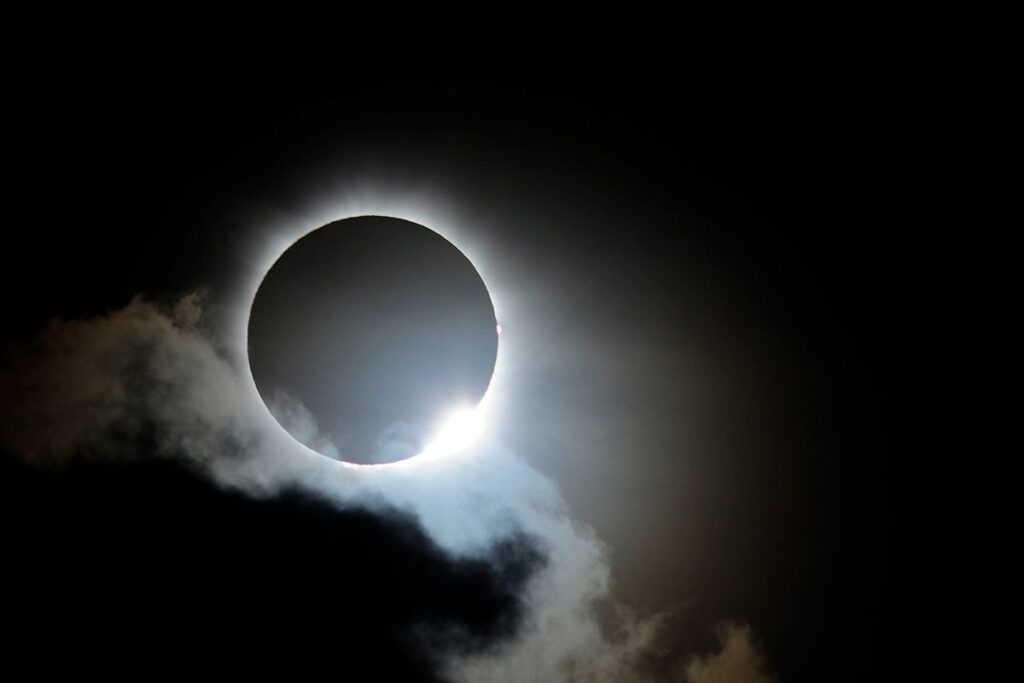
We’ve talked about the laws of physics and the way they allow us to predict celestial events; we’ve talked about the moon’s unique size and orbit; we’ve talked about the Sun’s particular characteristics in terms of size and distance from our planet. That’s not a random selection. I’ve taken you down this trail because now we can talk about total solar eclipses.
An eclipse is when one celestial object passes in front of another celestial object, relative to in our line of sight. There are different kinds of eclipses. An occultation occurs when a larger object passes in front of a smaller object, obscuring it entirely. The ones we hear the most about are lunar occultations; since the Moon is so much bigger in our sky than the stars and planets, every so often we can catch a lunar occultation of a planet or bright star.
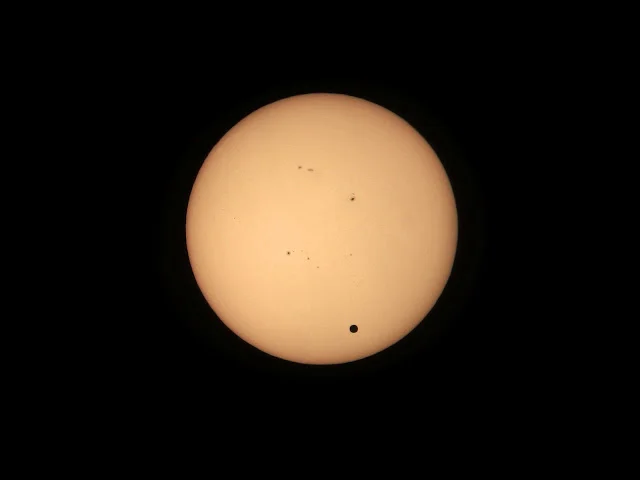
Another kind of eclipse is a transit, when a smaller object passes in front of a larger object. A good example is the transit of Venus across the surface of the Sun in 2012.
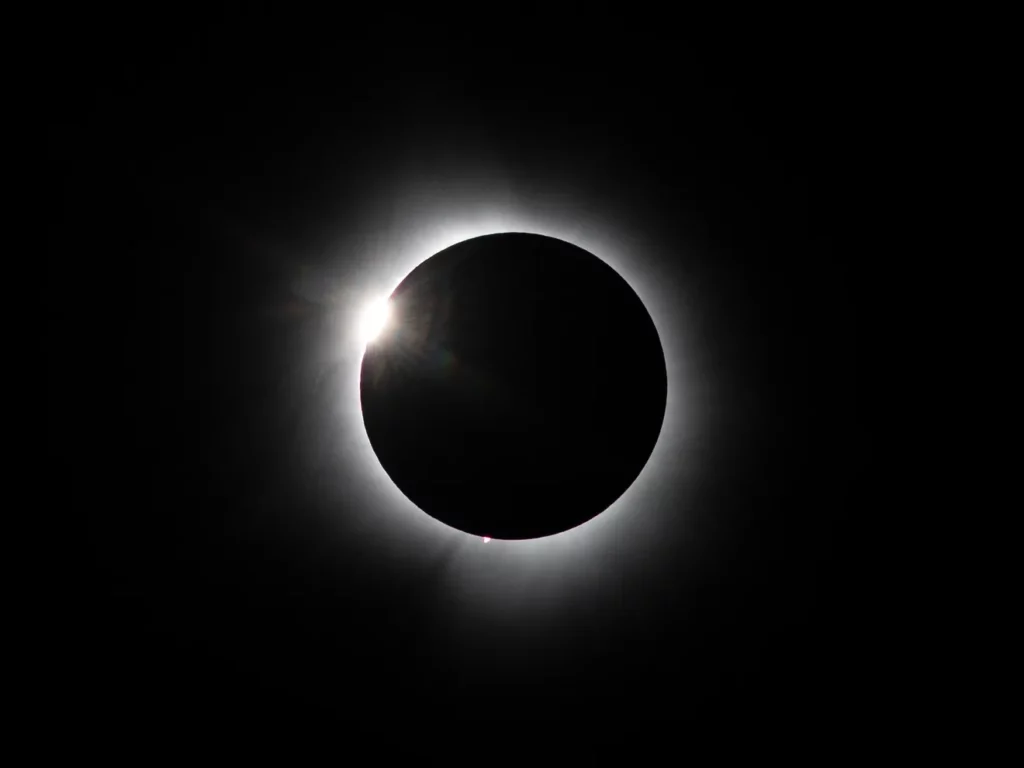
A total solar eclipse is special, however. This happens when the moon passes in front of our Sun. But it’s not a transit, nor an occultation. The Sun is 400 times larger than the Moon, but it’s also 400 times farther away from Earth than the Moon. This arrangement means that the Sun and Moon appear almost the exact same size in our sky. Remember how we said the Moon orbits the Earth in the ecliptic plane? That means the Moon follows the same path through the sky as the Sun. All of this together means that every so often we can have an alignment of the Sun and Moon, where the Moon just barely covers the surface of the Sun. When that happens, the bright photosphere of the Sun (the yellow part) is obscured, and the outer atmosphere (the corona) becomes visible. Feathery white gleams around the dark silhouette of the Moon’s surface for just a minute or two, in one of the most extraordinary sights in the universe.
This is a gift that only we on planet Earth get to enjoy. No other planet has spectacular solar eclipses. Planets farther from the Sun have eclipses often; but because the Sun is farther away, these eclipses are overtotal—more like occultations—and not nearly as spectacular as what we observe on Earth.
And they aren’t just magnificent: total solar eclipses have given us the opportunity to study the sun, the universe, even the laws of physics themselves. Experiments conducted during the optimal conditions of total solar eclipses have led to the discovery of helium in 1868, confirmation of Einstein’s physics in 1919, and better understanding of the solar atmosphere.
Thus, total solar eclipses are an example of intentional beauty designed into our perception of the universe, as well as the building blocks needed to help us comprehend and understand the universe. And they’re only possible because of the specific constraints on the Sun and Moon needed to guarantee habitability.
What Does This Tell Us About the Designer?
We’ve seen that the universe—particularly the Solar System and, of course, our home planet—have been designed for habitability. Specifically, we see designed habitability to support complex, intelligent life forms like ourselves. God created the universe with the goal of making a home for humankind to exist. Isaiah 45:18 says that He “formed the earth and made it…to be inhabited.” God wants us to exist.
We also see that God designed the universe to be spectacularly beautiful, and arranged things such that this beauty would be to our benefit. He gave us prime viewing on the majesty of the cosmos, and created us with the appreciation of beauty as well. As we saw earlier in Psalm 19:1, “the heavens are telling the glory of God.” God wants us to see His glory.
Lastly, the universe has been designed to be comprehensible to humankind. Even though our planet appears to be an insignificant little speck in the galaxy, much less the whole universe, there is an overarching simplicity and beauty of physical law such that we can take in and process phenomena that are mind-bogglingly bigger than us. In Psalm 111:3, David says, “great are the works of the Lord; they are sought by all who delight in them.” God wants us to study and be able to comprehend what He has created.
In summary, the universe shows evidence of having been intentionally designed to be habitable for life, beautiful, and comprehensible to humanity. This shows us that the Designer of the universe wanted us to exist, to see His glory, and to understand His workmanship—all so that we could come to know Him.


 Todd Wood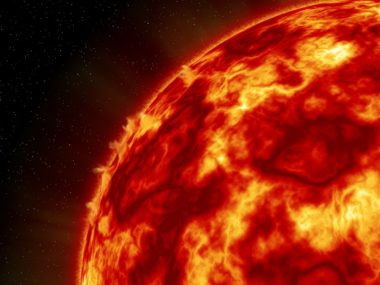
 Ken Coulson


 Christian Ryan
 Abigail L.

 Brittany Martin