
 New Creation Staff
This summer, two writers from New Creation, Jake Ramgren and Christian Ryan, traveled across the Atlantic for the first time to see the world on the other side of the globe. But they weren’t there to just sightsee. Both writers were also students engaged in creation research. They came to the United Kingdom to take part in the inaugural Creation Reformation Student Summer School.
What was the Creation Reformation Student Summer School?
The Cambridge House Project (unaffiliated with Cambridge University) is an effort by the Biblical Creation Trust to restore Scripture to its rightful place as a guide for scientific investigation. Led by Dr. Stephen Lloyd and Paul Garner, and located in the heart of academic history, Cambridge, England, the goal is to establish a study center where students can collaborate on novel research projects relating to understanding the natural world from a biblical perspective.
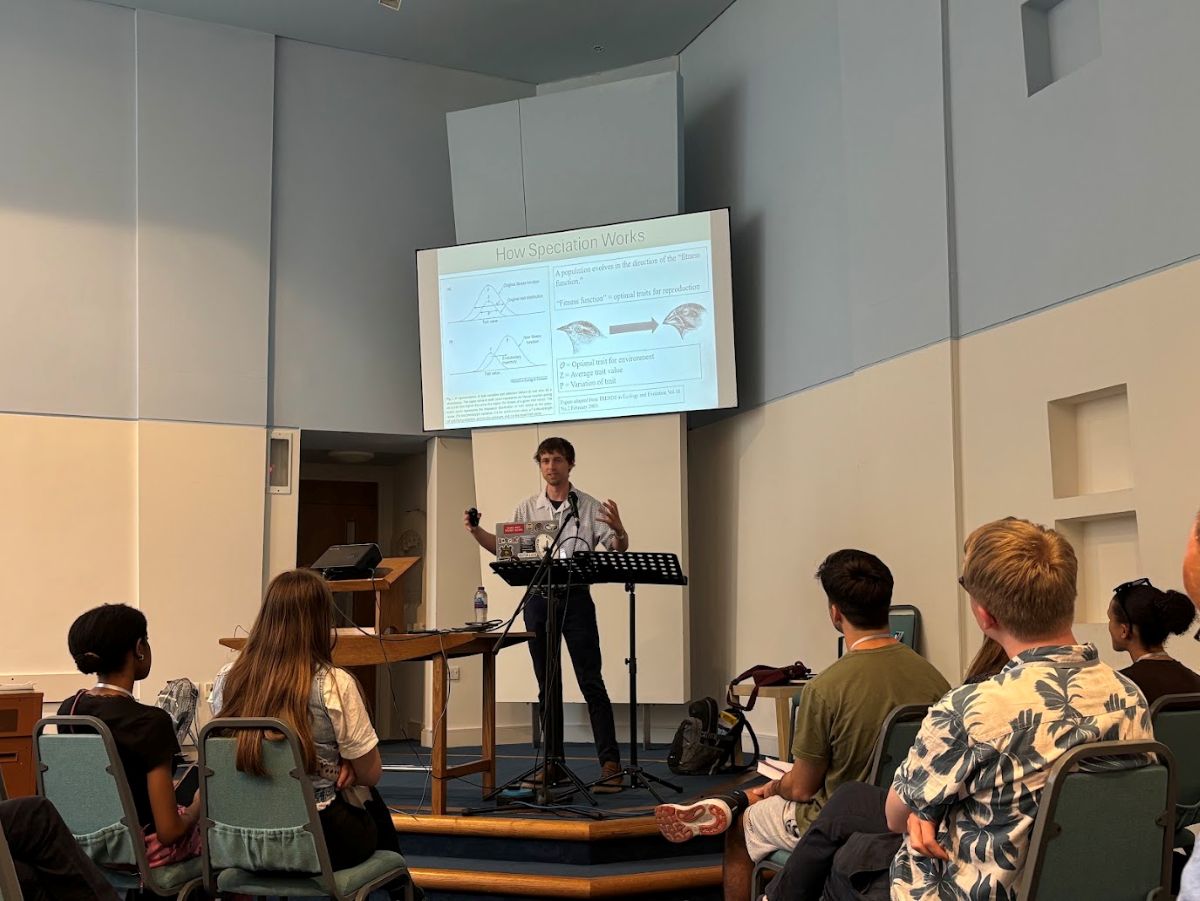
The Cambridge House Project launched its first major effort of the with a student summer school held on June 29th to July 1st, 2026 in Highbury, London. This was a three-day event that allowed students to explore and interact with various aspects of creation research (including theology, geology, and biology) in the form of general talks, research presentations, panel discussions, and research posters.
Students in attendance came from far and wide to attend, and from a variety of different scientific backgrounds. Jake and Christian traveled from the United States to attend (their first visit to the UK). For the past half year or so, the Biblical Creation Trust has been sponsoring some research projects with them. Christian and Jake had the opportunity to present their preliminary research at the summer school. Biologist Dr. Todd Wood (president of Core Academy of Science and co-host for the Let’s Talk Creation podcast) and Dr. Brad Green from Union University also joined them.
Much Ado About the United Kingdom
Arriving in the UK
Jake’s travel to the United Kingdom was smooth and uneventful. Christian’s involved a late incoming and connecting flight, an adventure through the United Kingdom’s system of metros, and a phone on the brink of dying, but he finally arrived in Cambridge sometime after 11:00 p.m.
If there was one thing that overshadowed their entire trip, it was the heat! You have probably read in the news that the Northern Hemisphere is undergoing an unprecedented heat wave. Cambridge was no exception. Though, thankfully they experienced nicer weather for the few days they were in London. Many of the older buildings in Cambridge do not have centralized air conditioning. More than a few businesses and museums were closed because the buildings had become too hot to safely accommodate visitors. This did not stop us from enjoying our time in the UK though!
Exploring Historic Cambridge
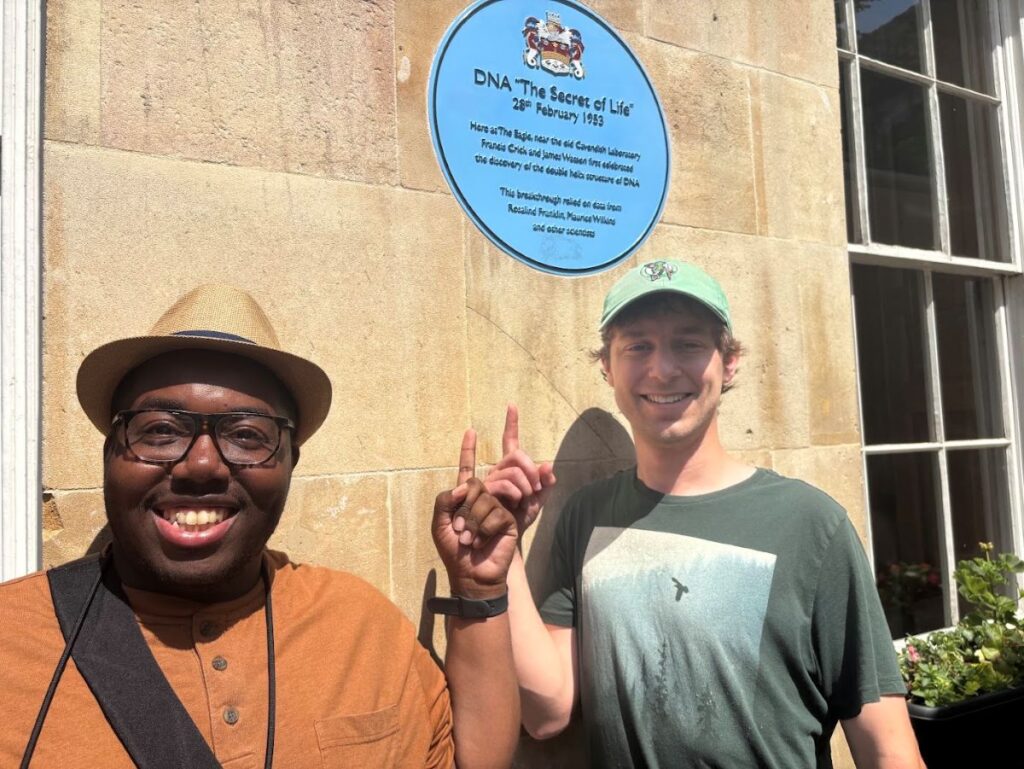
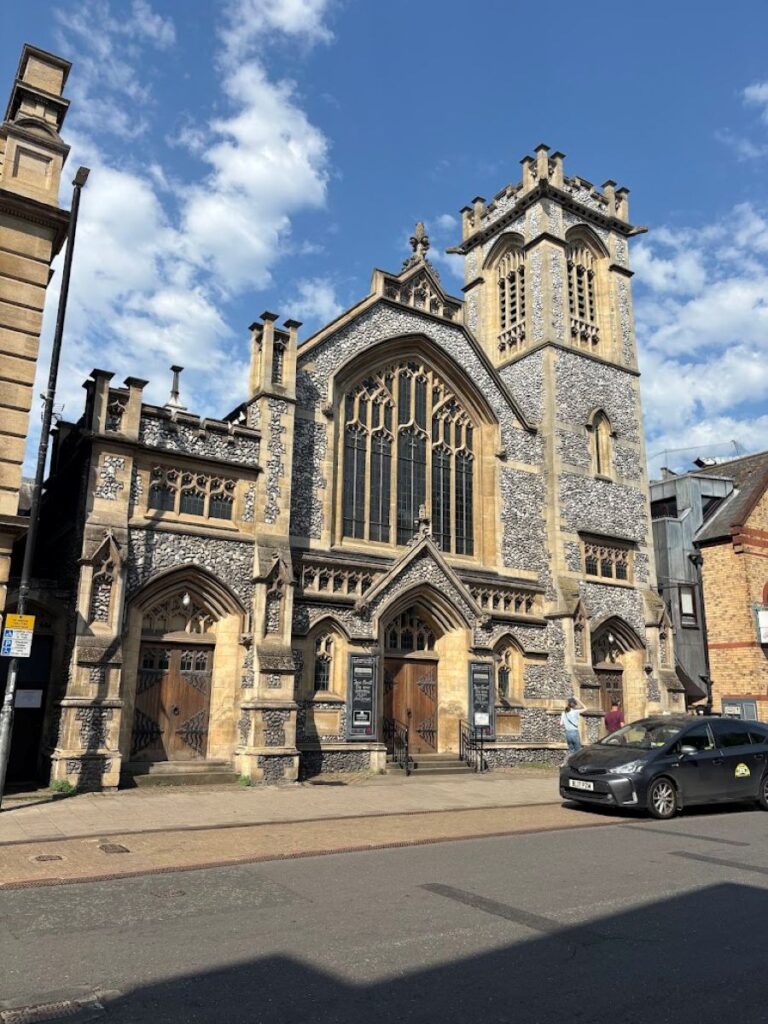
Stephen and Paul took the New Creation crew on an exciting tour of Cambridge. This small city is packed with church history and academic landmarks. While punting down the River Cam, they glided past Cambridge’s many colleges. Among these was Clare College, where Sir David Attenborough studied natural sciences. They later strolled past the Cavendish Laboratory, where James Watson and Francis Crick uncovered the double-helix structure of DNA in 1953…before stopping at the nearby pub where that discovery was first announced! While several of the natural history museums were closed, a couple withstood the heat and remained open for us to check out. They even saw St. Andrew’s Street Baptist Church, where the great Charles Spurgeon once preached. They also enjoyed spending an evening with a nearby church’s youth and young adult group. Stephen gave an excellent talk on the importance of a historical Adam to the gospel.
Discovering London
While in London, Jake explored Buckingham Palace, Westminster Abbey, and the glamours of the public transportation system. Though Jake has long been reluctant to immerse himself in European charm and culture, he was completely won over by the majestic glories of St. Paul’s Cathedral. He stared in awe at the ceiling frescos, silently looked down at the cathedral floor from the Whispering gallery, and climbed up to the dome to see a breathtaking view of London. Upon leaving the cathedral, he asked the locals if there were any grand or impressive buildings built to honor secular humanism, but strangely, no one could give him any information on this.
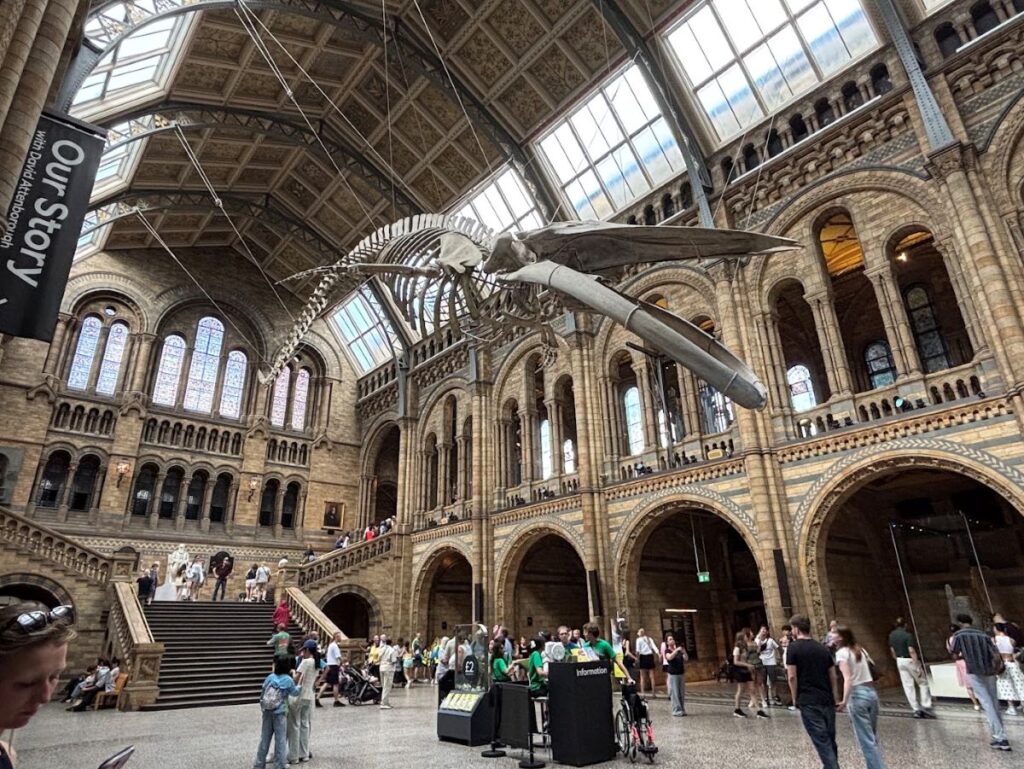
Christian, meanwhile, was dead set on exploring the Natural History Museum. This place was awe-inspiring inside and out. The exterior of the museum stood tall, like a medieval castle, with beautiful gardens surrounding the entry path decorated with Jurassic-looking plants and the bronze skeleton of Fern, a Diplodocus.
Inside, Christian entered Hintze Hall, a vast space that resembles a cathedral. Its archways and alcoves display life from around the world and across the fossil record. Hanging from the ceiling was the skeleton of Hope, an 83-foot young female blue whale. Various hallways branched off into various areas of biodiversity, from Mammals and Birds to a hallway dedicated to the fossils of marine reptiles and other creatures collected by Mary Anning. Despite spending almost six hours in the museum, split over two days, he still didn’t get to see everything. (Rumors have it that he spent a little too much time in the Dinosaur Hall.)
What Was It Like Attending the Student Summer School?
An International Gathering
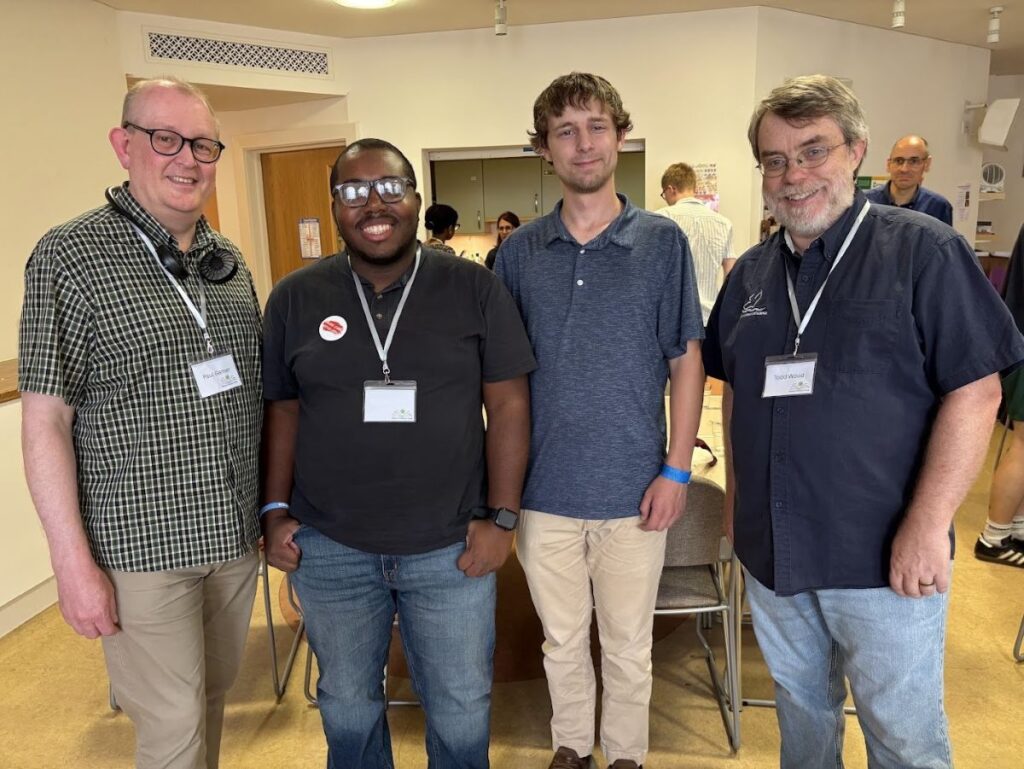
They were very satisfied with the turnout. Around 15 eager students attended. Jake and Christian stood out as two of the handful of Americans at this gathering. Students in attendance came from several fields of study and corners of the world, including across England (including Norfolk), Canada, Germany, the Netherlands, and even Nigeria! This stood out to Christian because creationism is often envisioned as an American aberration. But at this summer school, it was the Americans who were the odd ones out! While creationism is perhaps a more fiery topic in America, it is present and spreading across much of the world.
Speakers Galore!
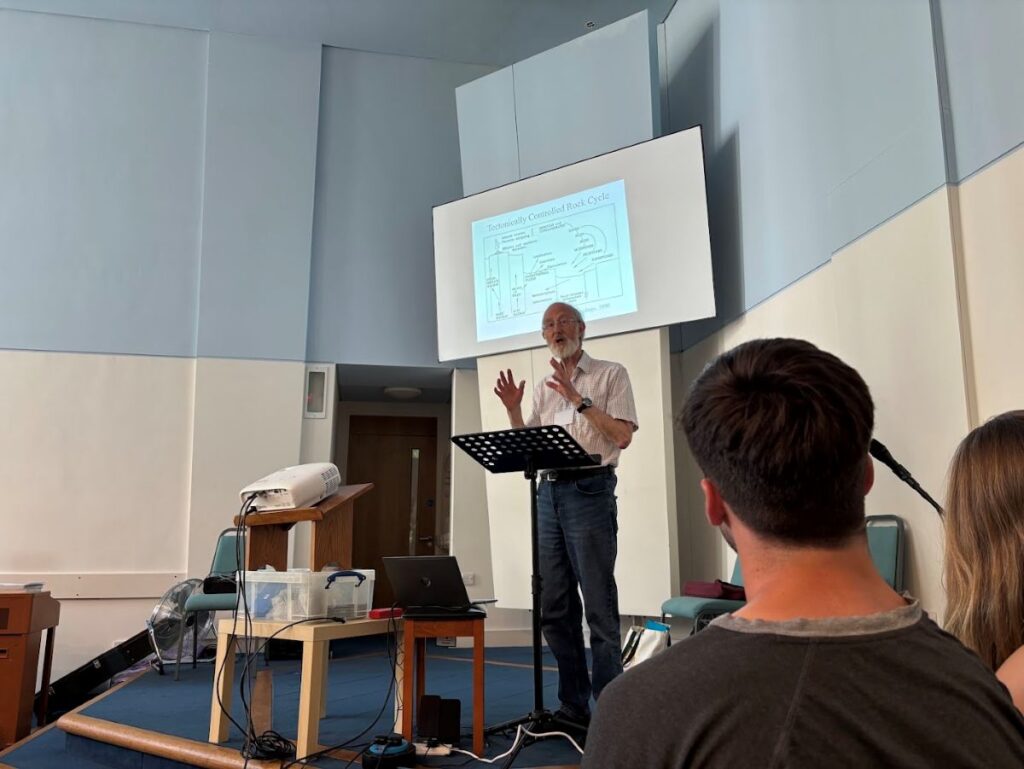
The three days of the summer school were jam-packed with interesting presentations ranging from theology to the natural sciences. To highlight just a few, Stephen Lloyd and Paul Garner started us off with a talk about “faith-fueled curiosity” to introduce the students to the idea of creation research. Then, Todd Wood zoomed in with a “brief” (his words) introduction to creation biology.
Dr. Brad Green introduced us to the often mischaracterized Augustine of Hippo. Biblical Creation Trust trustee David Tyler discussed tectonically-driven sedimentation processes in southwest England. And Stephen Lloyd returned with a look at the often-overlooked and fascinating connections between the Apostle John’s passion narrative and the Creation event. Todd Wood was going to give an introduction to the topic of hominids. However, he switched at the last minute to discuss the hominin fossil record in the Middle East to avoid overlapping with another of Stephen’s talks on the chronology of death and a historical Adam. All of the student attendees were eager to engage with the issues raised during talks and led to fruitful discussions during session breaks and mealtimes.
A Different Approach to Creation Research
One theme kept resurfacing throughout the week that seemed to resonate with many of the students. Instead of just critiquing evolutionary theory, the speakers consistently challenged them to build positive, testable models rooted in Scripture. Unfortunately, much of the public disucssion surrounding origins (on both sides of the Atlantic) centers on pointing out weaknesses in the other position. Productive criticism definitely has its place. No doubt about that. But students were encouraged to tackle some of the hardest problems in creation research by asking an entirely different question: “How might we explain that from a biblical worldview?”
The students found this approach both refreshing and motivating. It encourages new hypotheses, generates new observations, and provides ideas that can be tested against the natural world. As an added bonus, both sides of the aisle benefit. After all, what scientist would turn down more data? This emphasis on positive model building helped to shape the summer school. It left students in the posture to think not only as critics, but also to embrace the spirit of Proverbs 25:2: “It is the glory of God to conceal a matter; to search out a matter is the glory of kings.”
Research Presentations from Students
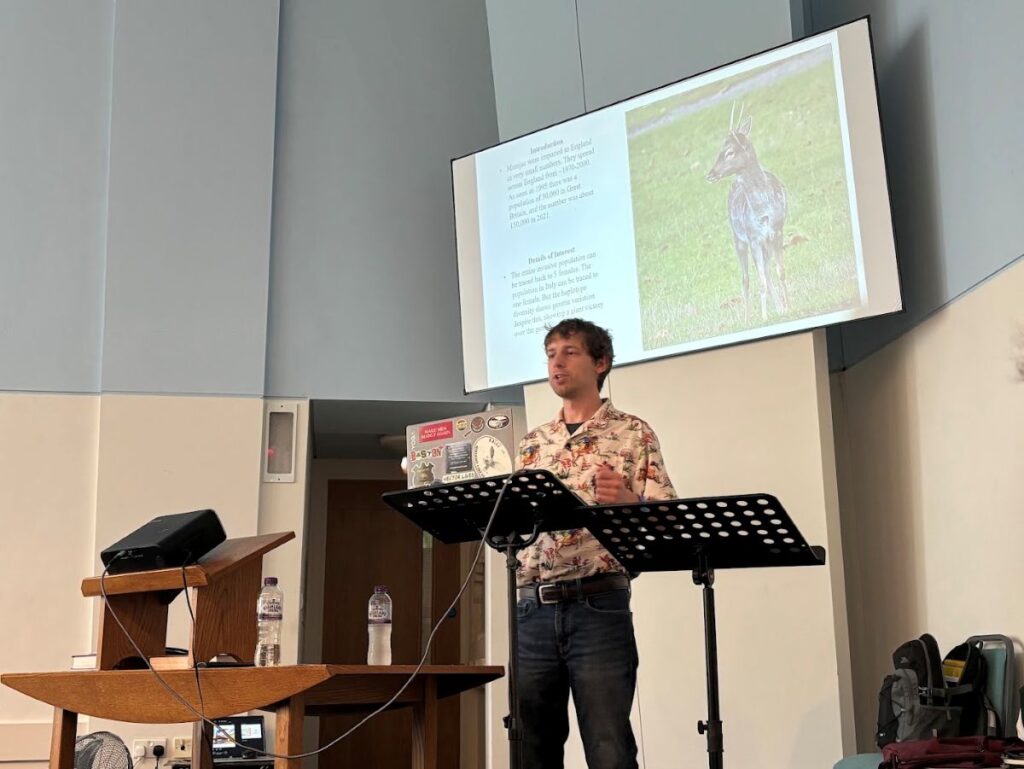
In addition to the more educational talks presented at the summer school were research presentations. The Cambridge House Project has been working with several students on a variety of research projects they hope will advance the young-age history model and answer questions that have arisen because of it.
Johanna has been studying metamorphic rocks and testing hypotheses proposed by creationist geologists in the past to see if that will help delineate in what sequence they were formed and how long ago. Jake has begun preliminary research on five species invasive to the United Kingdom—American bullfrogs, gray squirrels, muntjac deer, the sacred ibis, and the American mink. These species established thriving populations from only a small number of founders while retaining surprisingly high genetic diversity. Jake thinks they might provide some clues for how animals multiplied after the Flood from just two of each kind. Christian’s research has been focusing on the fossil record of shelled, squid-like creatures called ammonites, specifically a family called Cardioceratidae. He thinks this family of ammonites might provide clues for explaining the fossil order in light of the order of burial during the Flood.
Conclusion
As the world travelers all boarded their flights and trains for home, they carried with them far more than research notes and photographs. The Creation Reformation Summer School challenged them to think more deeply about Scripture, science, and the work that still lies ahead. They returned home encouraged and inspired, eager to continue asking questions about the world God created, and to keep pursuing answers that honor both His Word and His world.


 Christian Ryan
 Sara Anne

 Matt McLain

 Todd Wood

 Abigail L.

 Hannah Klein
Great post. And it’s wonderful to see this collaboration from all over the world. Great job Jake and Christian representing the States! Keep up the good work!